
Every operator knows the feeling: the truck is ready, the load is booked, and the seat is empty. According to the IRU’s latest global survey, around 2.9 million truck driver positions are unfilled across 18 markets — roughly 11% of the required workforce. Europe is among the worst affected, with about 502,000 vacancies, or 13% of positions.
The demographic engine
This is not a wage dispute that will pass. Europe’s driver population is old and getting older: roughly 660,000 European drivers are expected to retire by 2030, while young entrants remain scarce. The gap between retirements and recruitment is the structural core of the problem — freight demand softening merely hides it for a quarter or two.
Why the seats stay empty
- Cost of entry: licences and qualifications can cost thousands of euros — a serious barrier for exactly the young people the industry needs.
- Conditions: weeks away from home, chronic shortages of safe parking, and facilities that would embarrass any other industry.
- Image: a generation raised on flexible work is being offered the least flexible job in the economy.
- Demographics: the share of drivers under 25 remains in single digits across most of Europe.
What actually moves the needle
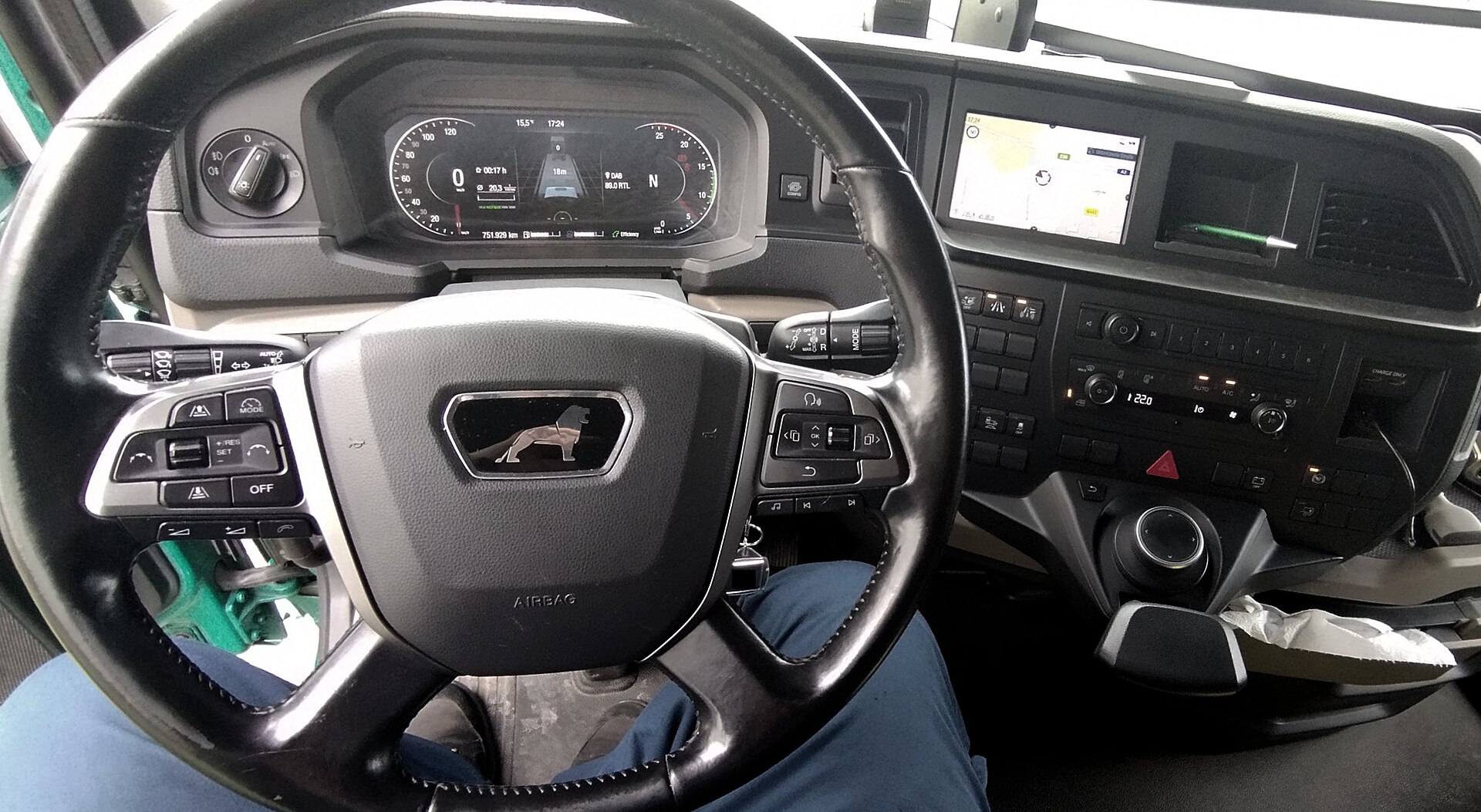
The operators holding their driver base tend to do the same things: pay competitively but compete on predictability (guaranteed home time beats a small per-kilometre bump), invest in decent trucks — a modern, comfortable cab is a recruiting tool — treat facilities and route planning as retention issues, and build pipelines: apprenticeships, licence funding, and serious onboarding rather than a fuel card and good luck.
And automation?
Autonomous trucks will eventually absorb some long-haul work — but deployment at scale remains years away, and yard, distribution and construction work will need humans far longer. Betting the workforce problem on robots arriving in time is not a strategy; it is a hope.
Sources: IRU, trans.info
Cover photo: Comyu via Wikimedia Commons, CC BY-SA 3.0
