
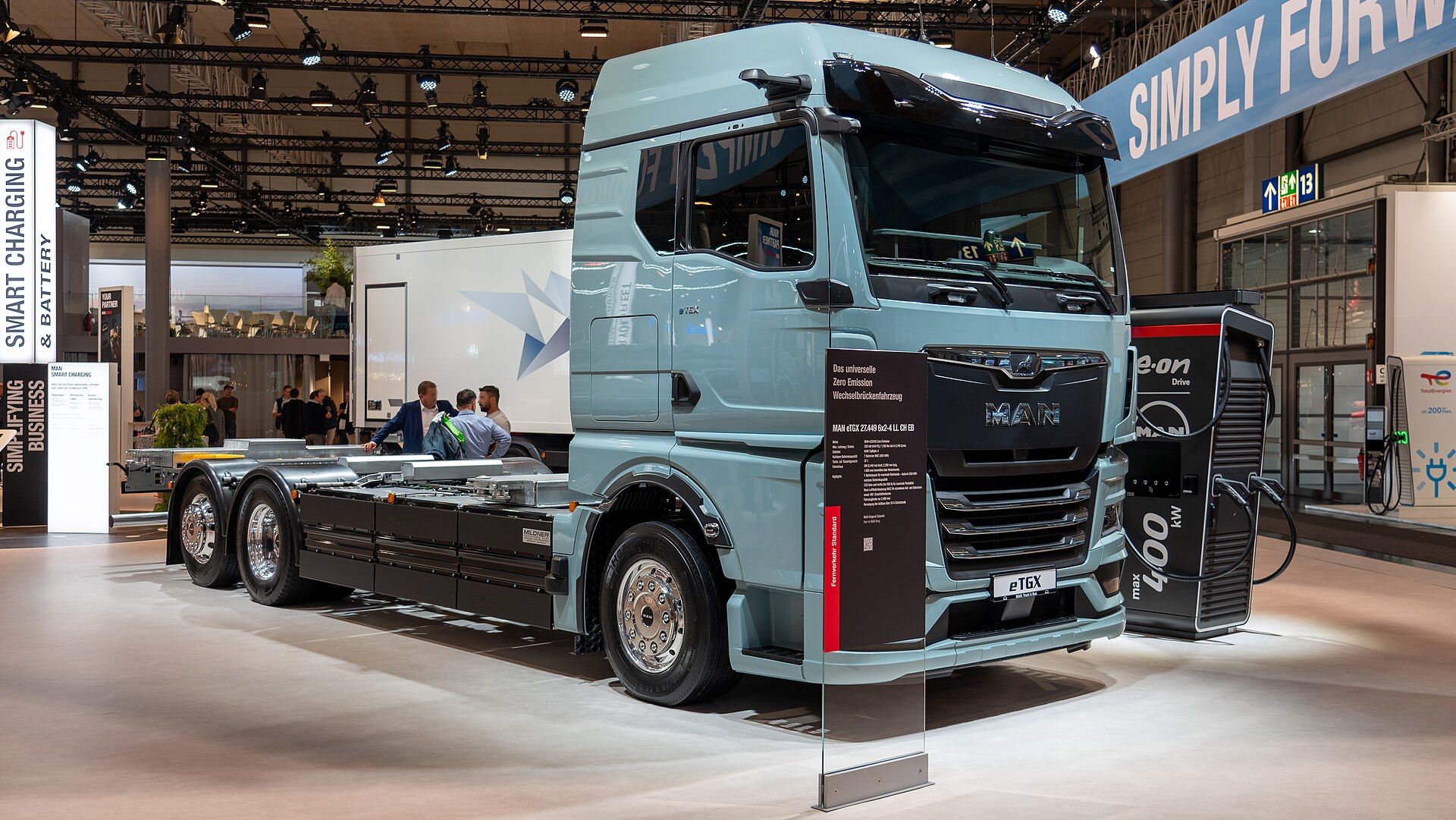
Every serious electric long-haul truck announced in the last two years shares one specification: readiness for the Megawatt Charging System. The eActros 600 is built for it, Volvo’s new generation supports it, and Scania now ships factory MCS ports. Understanding MCS is understanding the future shape of long-distance trucking.
Why CCS was never going to be enough
The car-derived CCS standard tops out at a few hundred kilowatts. A long-haul tractor carries 500–800 kWh of battery: at CCS rates, a meaningful recharge takes hours the schedule does not have. Trucks needed their own connector, engineered for truck-scale energy.
What MCS actually is
- A dedicated high-power DC standard developed through CharIN, the industry body behind CCS.
- A single conductive plug engineered for currents and voltages far beyond CCS — the specification is designed to scale to megawatt-class charging and beyond as vehicles and grids allow.
- Vehicle-side ports positioned for pull-through charging bays, because a 40-tonne combination does not parallel park at a car charger.
The 45-minute equation
EU rules require a 45-minute break after 4.5 hours of driving. At megawatt rates, an electric tractor can restore hundreds of kilometres of range inside that mandatory pause — the recharge disappears into time the operation already loses. That single fact converts electric long-haul from a compromise into a schedule-neutral operation, as trucks like the eActros 600 already demonstrate.
The catch: hubs, not plugs
An MCS hub with several bays draws power on the scale of a small town, which makes grid connections — not hardware — the pacing item. Dedicated truck-charging networks such as the manufacturers’ joint venture Milence are building corridor hubs across Europe, but coverage is still concentrated on core routes. For now, megawatt charging rewards planned, repeatable operations; spontaneous tramp traffic waits for the map to fill in.

What to watch
Three numbers will tell you when electric long-haul goes mainstream: public MCS bays in service, the price per kWh at those bays, and grid connection lead times for new hubs. When all three move the right way, diesel’s last structural advantage — refuelling anywhere in minutes — quietly evaporates.
Sources: electrive, Mercedes-Benz Trucks, Sustainable Truck & Van
Cover photo: MarcelX42 via Wikimedia Commons, CC BY-SA 4.0
.jpg)