
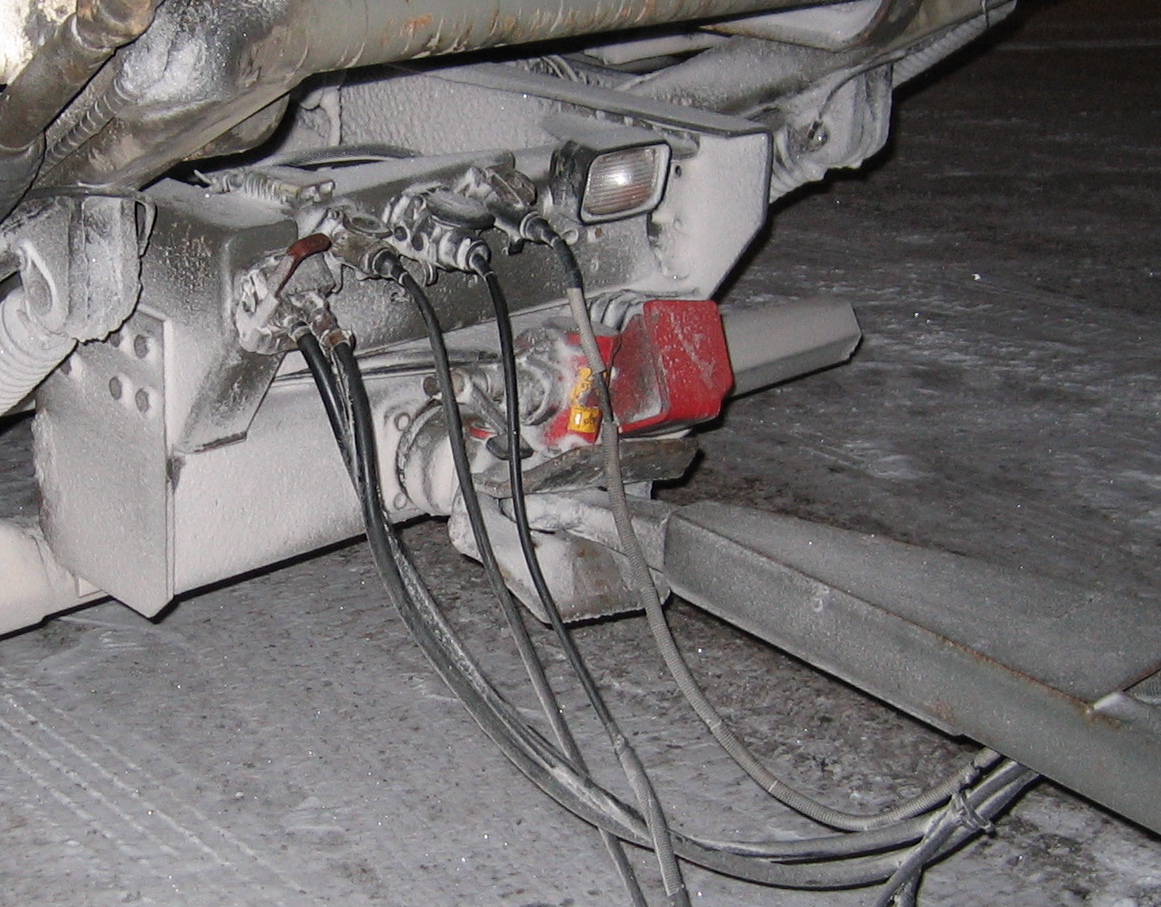
Every heavy truck and bus on the road relies on compressed air to stop. Unlike the hydraulic brakes in a passenger car, an air brake system is fail-safe by design: if the system loses pressure, powerful springs apply the brakes automatically. That design philosophy is why air braking has been the standard on heavy commercial vehicles for decades.
The main components
- Compressor — driven by the engine, it charges the system and is controlled by a governor that cuts in and out to hold working pressure.
- Air dryer — removes moisture and oil aerosols before air reaches the tanks. Its cartridge is a wear part, not a lifetime part.
- Reservoirs (tanks) — store enough air for repeated brake applications, split into independent circuits for redundancy.
- Foot valve and relay valves — meter air to the brake chambers in proportion to pedal input.
- Brake chambers and slack adjusters — convert air pressure into mechanical force at the wheel, through S-cam drum brakes or air disc brakes.
- Spring (parking) brakes — hold the vehicle when air is released, and clamp automatically if pressure is lost.
How the system behaves in daily use
When you press the pedal, air flows from the reservoirs to the chambers, pushing the pushrod out and applying friction at the wheel ends. Release the pedal and the air exhausts — that familiar hiss. The compressor then tops the system back up. A healthy system builds pressure quickly, holds it with minimal loss, and purges the dryer on a regular rhythm rather than constantly.
The maintenance habits that matter
- Drain the tanks regularly if the vehicle does not have automatic drain valves. Water in the tanks means the dryer is being overwhelmed.
- Replace the air dryer cartridge on schedule — typically once a year in heavy service. A saturated cartridge sends moisture downstream into valves. Component manufacturer Vaden covers cartridge service in depth in its heavy-duty air dryer guide.
- Do a leak-down check: with the engine off and brakes released, system pressure should hold nearly steady. Rapid drop means a leak worth finding.
- Check pushrod stroke on drum systems. Automatic slack adjusters can fail quietly; an over-stroking chamber is a weak brake.
- Watch compressor build-up time. Slow pressure recovery points to a worn compressor, a leaking circuit, or a blocked dryer.
- Look for oil at the dryer purge. Heavy oil carryover is an early sign of compressor wear and contaminates the whole system.
Warning signs you should never ignore
Slow pressure build-up, the dryer purging every few seconds, a truck that pulls to one side under braking, or a parking brake that drags — all of these are the system telling you something. Air brakes rarely fail suddenly; they fail gradually, and every step is visible to a driver or technician who knows what to look for.
This guide is general information for professional operators. Always follow the vehicle manufacturer’s service documentation and local regulations.
Cover photo: Teppo Lainio via Wikimedia Commons, CC BY-SA 2.5
