
Every fleet says it does preventive maintenance. The difference between the ones that mean it and the ones that hope for the best shows up in one number: unplanned downtime. Here is a practical framework used in some form by well-run fleets everywhere.
The foundation: daily walk-around
Five minutes, every departure. Lights, tyres, air build-up time, visible leaks, coupling, load security. The driver is the cheapest sensor the fleet owns — and the only one that can smell a dragging brake. Walk-around findings must flow into the maintenance system, or the habit dies.
The A-B-C service structure
- A service (light, frequent): lubrication, oil and fluid level checks, filter inspections, brake stroke checks, tyre condition and pressures, cab systems. Think of it as a structured health check.
- B service (intermediate): everything in A, plus engine oil and filter change, fuel filters, air dryer cartridge, valve clearance where scheduled, driveline inspection, ABS/EBS fault readout. Vaden’s air dryer service guide is a solid reference for cartridge intervals.
- C service (heavy, annual): everything in B, plus wheel-off brake inspection, wheel bearing checks, cooling system service, aircon service, chassis torque checks and a full diagnostic scan.
Set intervals by data, not folklore
Start from the manufacturer’s schedule for your duty cycle — long-haul, regional and construction work age components very differently. Then refine with your own data: oil analysis results, brake wear rates and fault trends will tell you where the factory interval is too generous or too cautious for your operation.
Make it stick
- Schedule services by kilometres or engine hours, whichever arrives first.
- Use telematics odometer feeds to trigger work orders automatically — calendar-based guessing leaks money.
- Track first-time-fix rate and repeat defects; both expose weak workshops and weak parts.
- Never let a vehicle leave a service with an open safety defect. “We will catch it next time” is how roadside out-of-service reports get written.
Intervals and scope vary by manufacturer, market and duty cycle. Use OEM documentation as the baseline and your own fleet data as the correction.
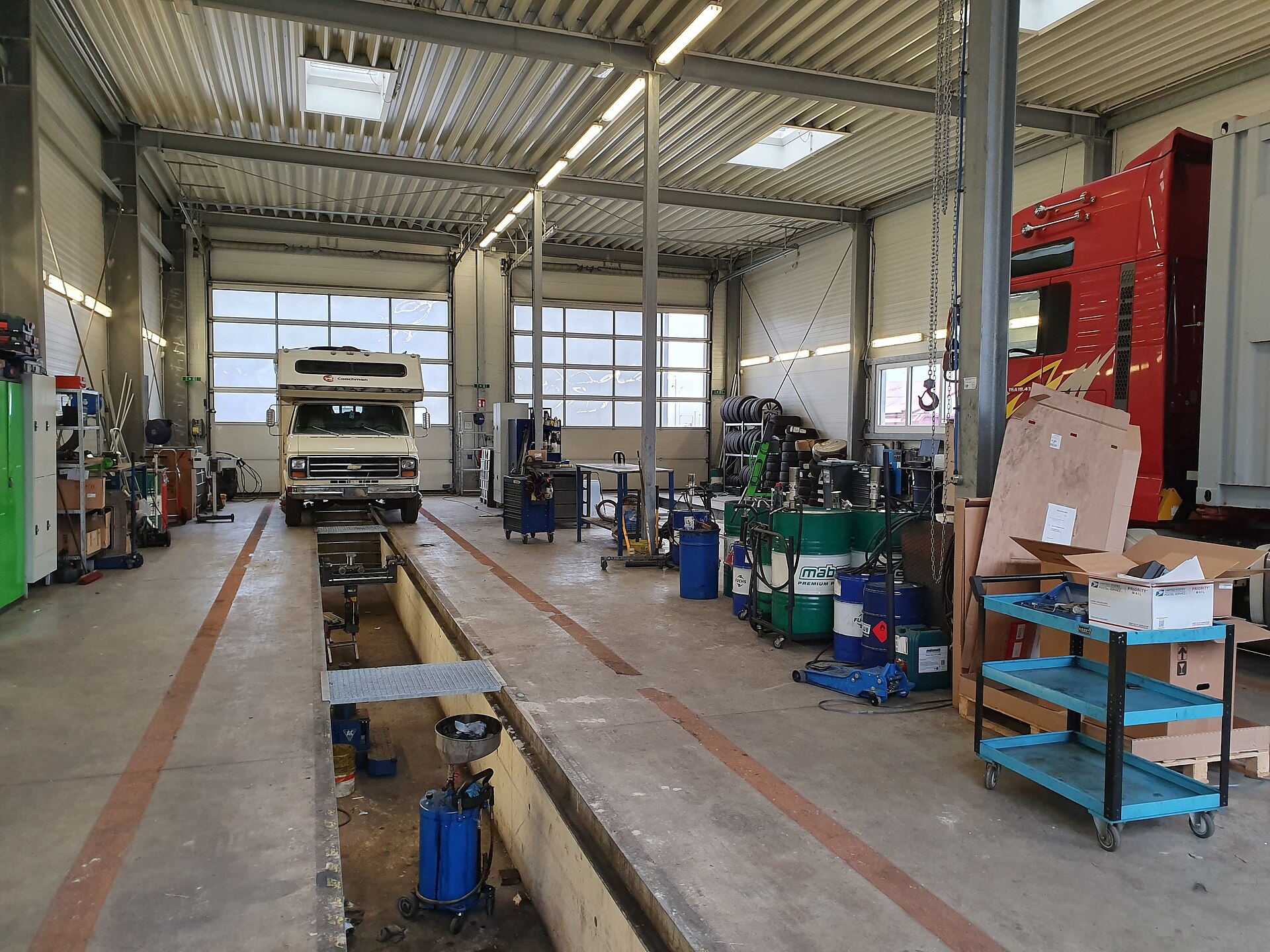
Cover photo: MatthiasK 1412 via Wikimedia Commons, CC BY-SA 4.0
