
Few faults are as unnerving as watching the air gauges crawl while the compressor labours. The good news: slow or no pressure build-up almost always comes down to a short list of suspects, and you can work through them in order — from free checks to workshop jobs.
First, know what normal looks like
A healthy system builds working pressure briskly from the governor cut-in point and stops climbing at cut-out. Learn your vehicle’s normal build-up time when everything is fine — that baseline turns “it feels slow” into “it is slow.”
The diagnostic sequence
- Listen for the obvious leak. Walk the truck with the system charged and engine off. A hiss you can hear is a leak you can find; soapy water on suspect fittings turns invisible leaks into bubbles.
- Watch the air dryer purge valve. A purge valve stuck open dumps everything the compressor produces straight to atmosphere — one of the most common causes, and often audible as continuous exhausting at the dryer.
- Check the governor. If the compressor never loads, or never unloads, the governor or its signal line may be at fault. It is a small, inexpensive component that gets blamed less often than it deserves.
- Drain the tanks and check for water or oil. Heavy water means the dryer cartridge is saturated; heavy oil points to compressor wear. Either way the system is telling you its history.
- Inspect the compressor drive and feed. Where applicable: drive condition, air feed from the engine intake (a clogged inlet strangles output), and the discharge line — carbon build-up in the discharge line chokes flow and cooks the compressor.
- Isolate circuits to trap the leak. If pressure holds with the trailer disconnected, the fault is in the trailer supply or the trailer itself, not the tractor.
- Check one-way and protection valves. A failed check valve can quietly bleed one circuit back into another and cheat both gauges.
When to stop and call the workshop
If build-up is slow and you find oil at the dryer purge or in the tanks, assume compressor wear and get it assessed — an overheating compressor can fail dangerously and contaminate the entire air system with carbon. For a component-level look at how compressors fail and what replacement involves, parts manufacturer Vaden’s air brake compressor guide is a useful reference. And if pressure drops fast enough to trigger the low-air warning while parked, the vehicle does not move until the leak is found. No load is worth a runaway.
General information for professional operators — always follow the vehicle manufacturer’s diagnostic procedures and safety rules.
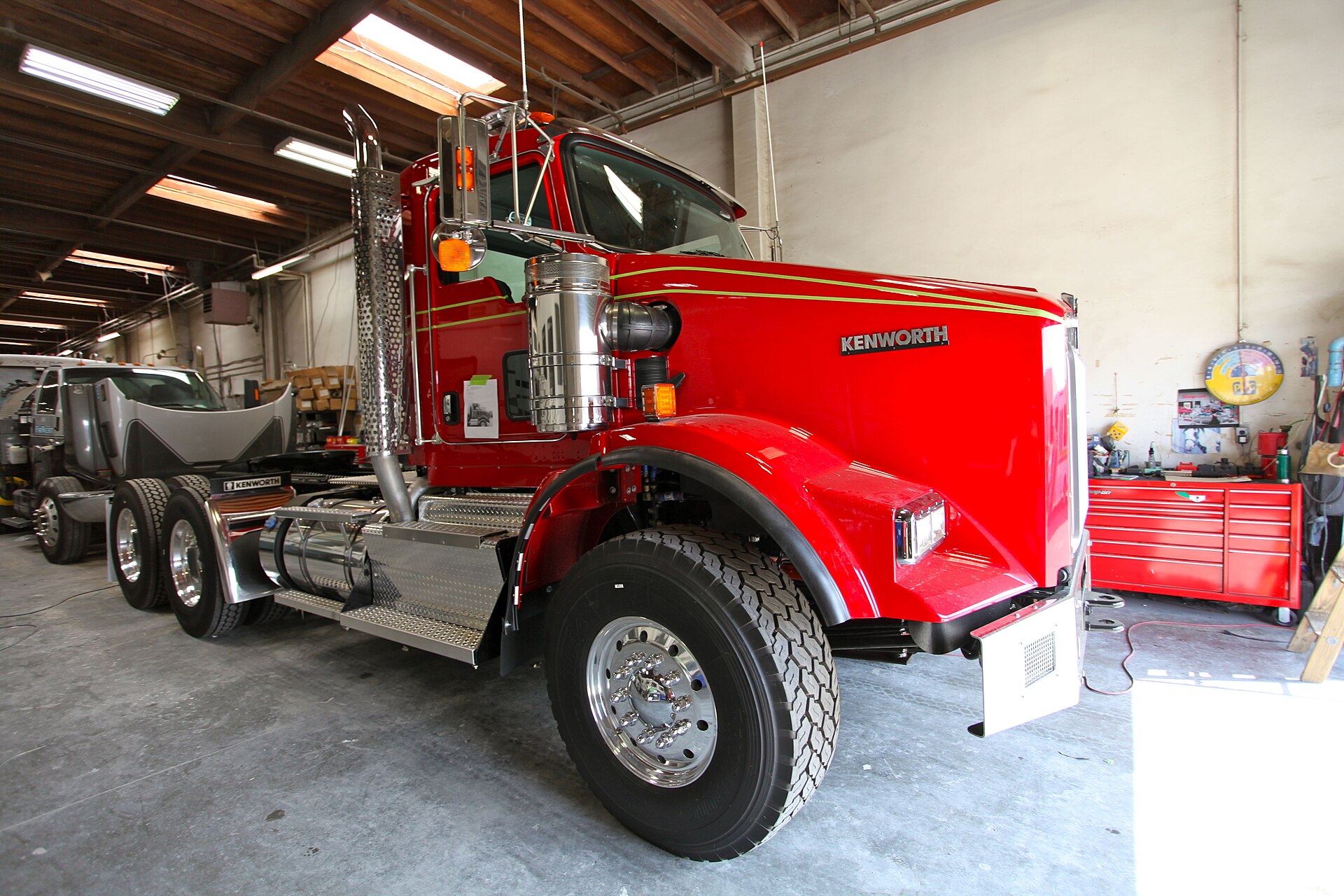
Cover photo: BEAR RV via Wikimedia Commons, CC BY 3.0
