
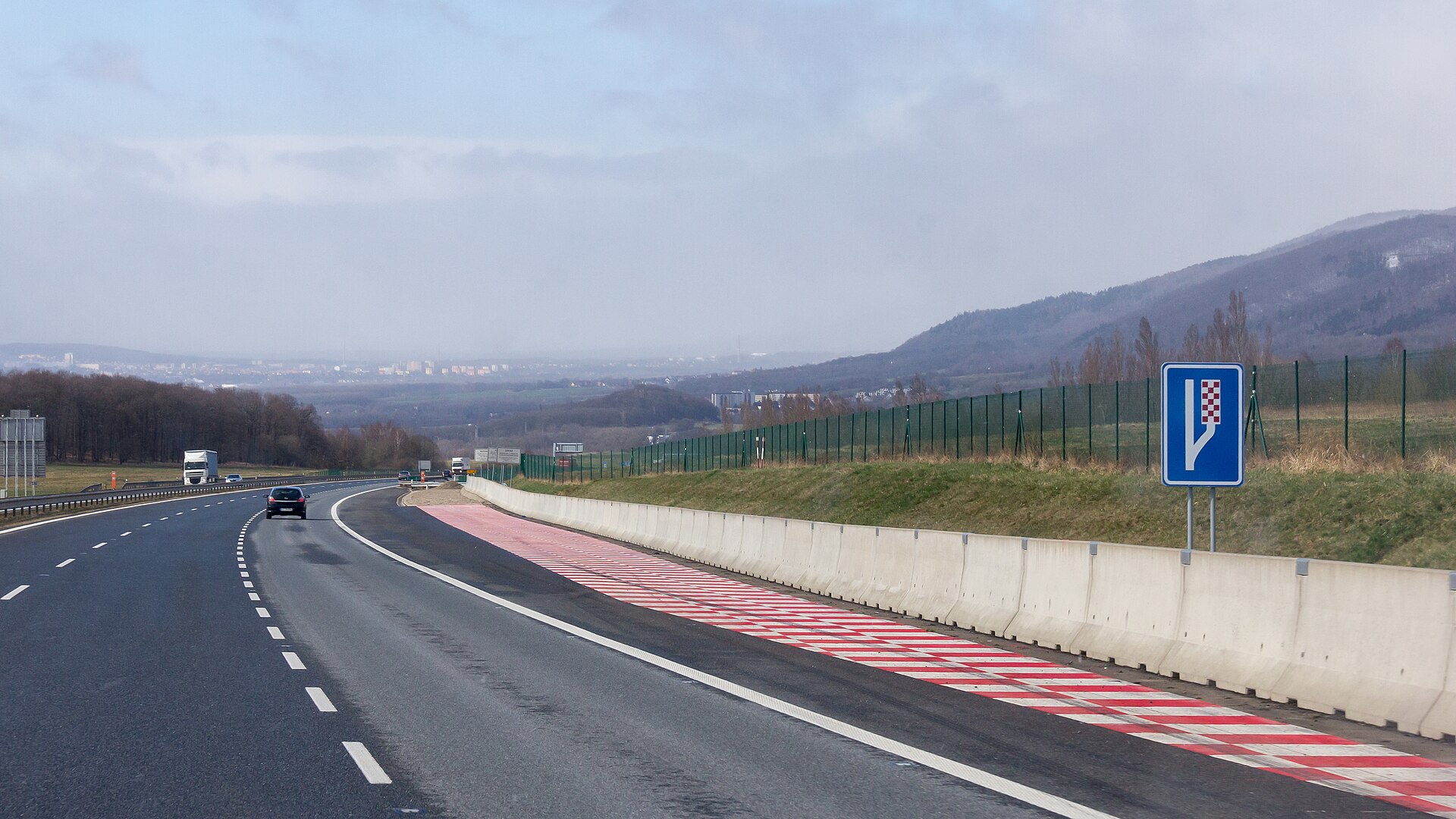
Every mountain pass has its stories, and most of them start the same way: hot friction brakes asked to do a job they were never designed for. On a long descent, a loaded combination converts staggering amounts of energy — and if that energy goes into the brake drums alone, they fade exactly when needed most.
Know your auxiliary brakes
- Exhaust and engine brakes: use engine compression to retard the driveline — simple, robust, most effective at higher revs.
- Hydraulic and electromagnetic retarders: powerful, smooth, fade-free braking through the driveline, controlled in stages. For a component-level view of how they work, see Vaden’s retarder explainer.
- Modern integration: most trucks blend them automatically through the brake pedal or cruise control — but the driver still decides the strategy.
The descent discipline
- Descend in the gear you would climb in — commit before the slope, not halfway down.
- Set the auxiliary brakes to hold a steady target speed; use service brakes only in short, firm applications, never dragging.
- Watch combination weight and weather: retarders act on drive wheels — on ice, aggressive retarding can push a unit into instability. Reduce stages in poor grip.
- If brakes ever feel long or soft, use the escape options early: runaway ramps exist for the moment before the emergency, not after.
Maintenance angle
Auxiliary brakes save friction brakes only when they work: retarder oil condition and coolers, engine brake actuation and control faults all belong in scheduled service. A fleet running mountain routes on worn auxiliary brakes is quietly moving that energy back into its brake linings — and its risk profile.
General information for professional operators. Always follow the vehicle manufacturer’s procedures and local regulations.
Cover photo: Raimond Spekking via Wikimedia Commons, CC BY-SA 4.0
