
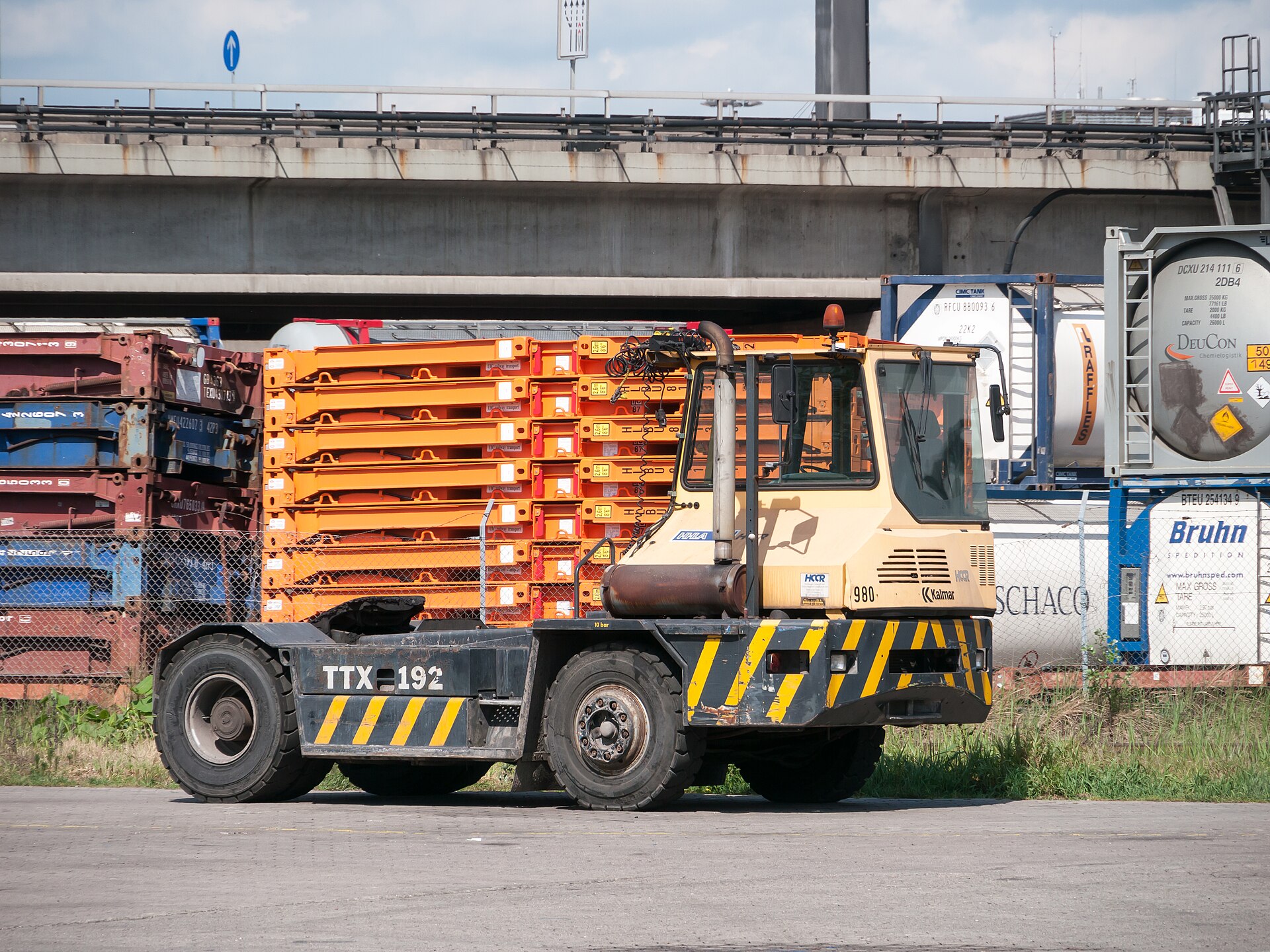
While long-haul electrification argues about chargers, one corner of the industry has quietly made its decision: the yard. Terminal tractors — the stubby shunters that shuffle trailers around ports, distribution centres and factories — are electrifying in the United States at a pace the rest of trucking can only envy.
The orders keep getting bigger
- Orange EV booked record volume in June, including a single order for 600 electric terminal trucks — the largest in the company’s history.
- Port of Long Beach is deploying 15 electric terminal tractors, and APM Terminals Los Angeles has ordered 40 more.
- Janus Electric, the Australian diesel-to-electric conversion specialist, landed another $45 million in US contracts from freight and port operators, taking its conversion order book past 100 trucks.
Why yards electrify first
Terminal work is the perfect electric duty cycle: low speeds, high idle time where diesel wastes fuel, predictable shifts, and the vehicle never leaves home — so charging is trivial. Add lower maintenance and the arithmetic closes quickly. Air quality rules around ports, particularly in California, seal the case.
The signal for everyone else
Yard tractors are a preview, not an exception. Every segment electrifies when three things line up: a duty cycle the battery can cover, a place to charge, and total cost that beats diesel. As our state-of-play analysis argues, that line is moving outward from the depot — the yard is simply where it crossed first.
Sources: Electrek, The Driven, EDF Energy Exchange
Cover photo: Matti Blume via Wikimedia Commons, CC BY-SA 4.0
.jpg)