
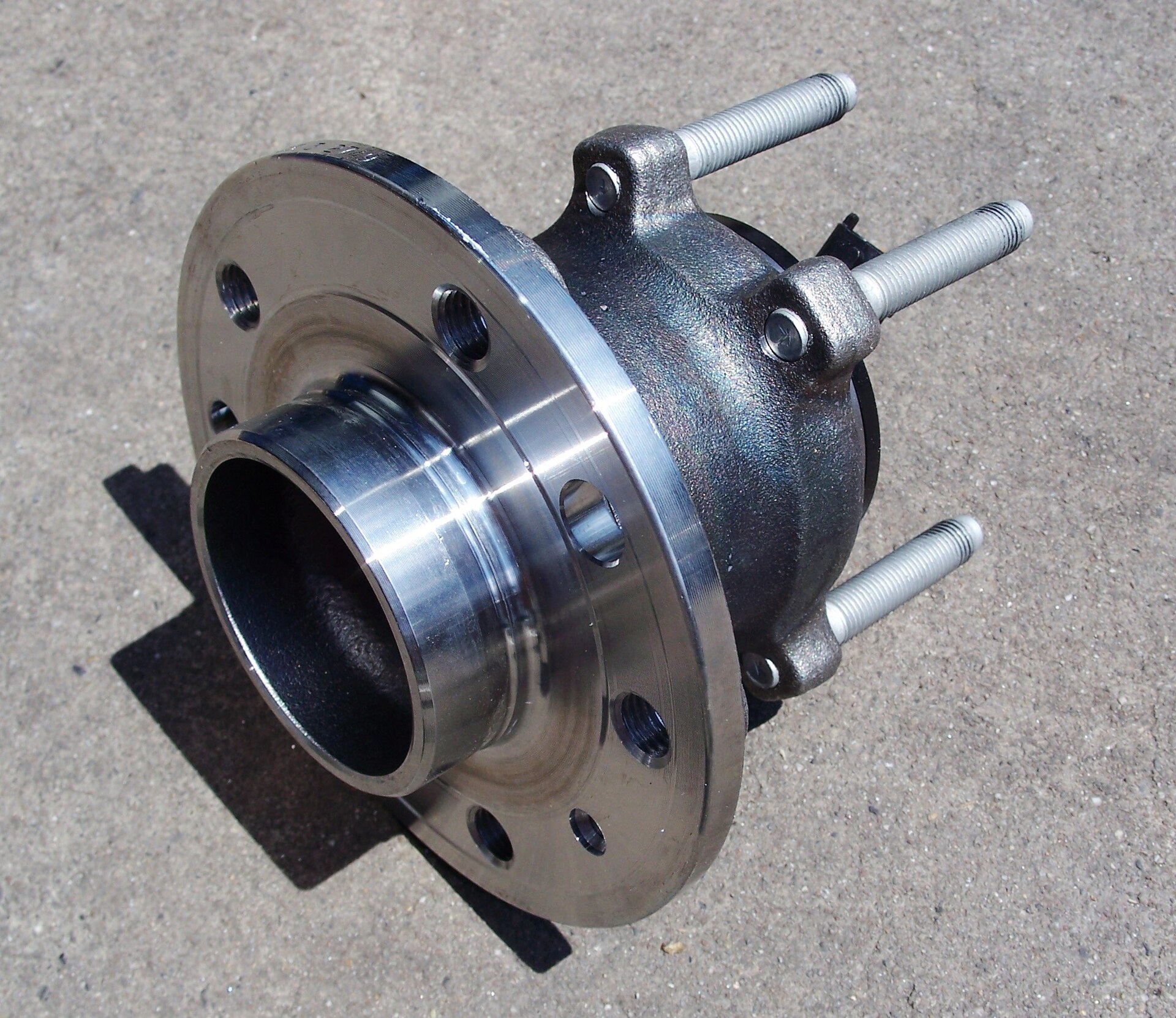
Few failures escalate like a wheel bearing: from a faint hum to seized-hub heat, and in the worst case a detached wheel. The good news is that bearings telegraph trouble early to anyone who checks.
The signals
- Noise: a hum or growl that changes with speed — and often with steering input. Load the bearing through a gentle curve: noise that changes when cornering points to the outside-loaded hub.
- Heat: after a run, compare hub temperatures side to side by careful touch near (not on) the hub or with an infrared thermometer. One hot hub is a message. It can be a dragging brake or a dying bearing — both need attention now.
- Play: wheel jacked, grip at 12 and 6 o’clock and rock. Any perceptible movement on a hub-unit design needs investigation.
- Leaking hub oil or grease: a failed seal starves the bearing next.
- ABS codes: excessive bearing play can corrupt wheel-speed sensor gaps before anything is audible.
Why bearings fail
Water and dirt past a tired seal, lost lubrication, incorrect preload after service work, and impact damage from kerbs and potholes. On oil-bath hubs, the sight-glass level is a one-second daily check that drivers skip at their own risk.
Service discipline
- Respect preload torque procedures exactly — bearings are killed at installation more often than on the road.
- Replace seals with bearings, always.
- On maintenance-free hub units, resist the urge to open: they are replaced as assemblies.
- Log hub checks in the walk-around — heat and noise findings belong in the defect book, not in memory.
General information for professional operators. Always follow the vehicle manufacturer’s service documentation.
Cover photo: Cschirp via Wikimedia Commons, CC BY 3.0
