
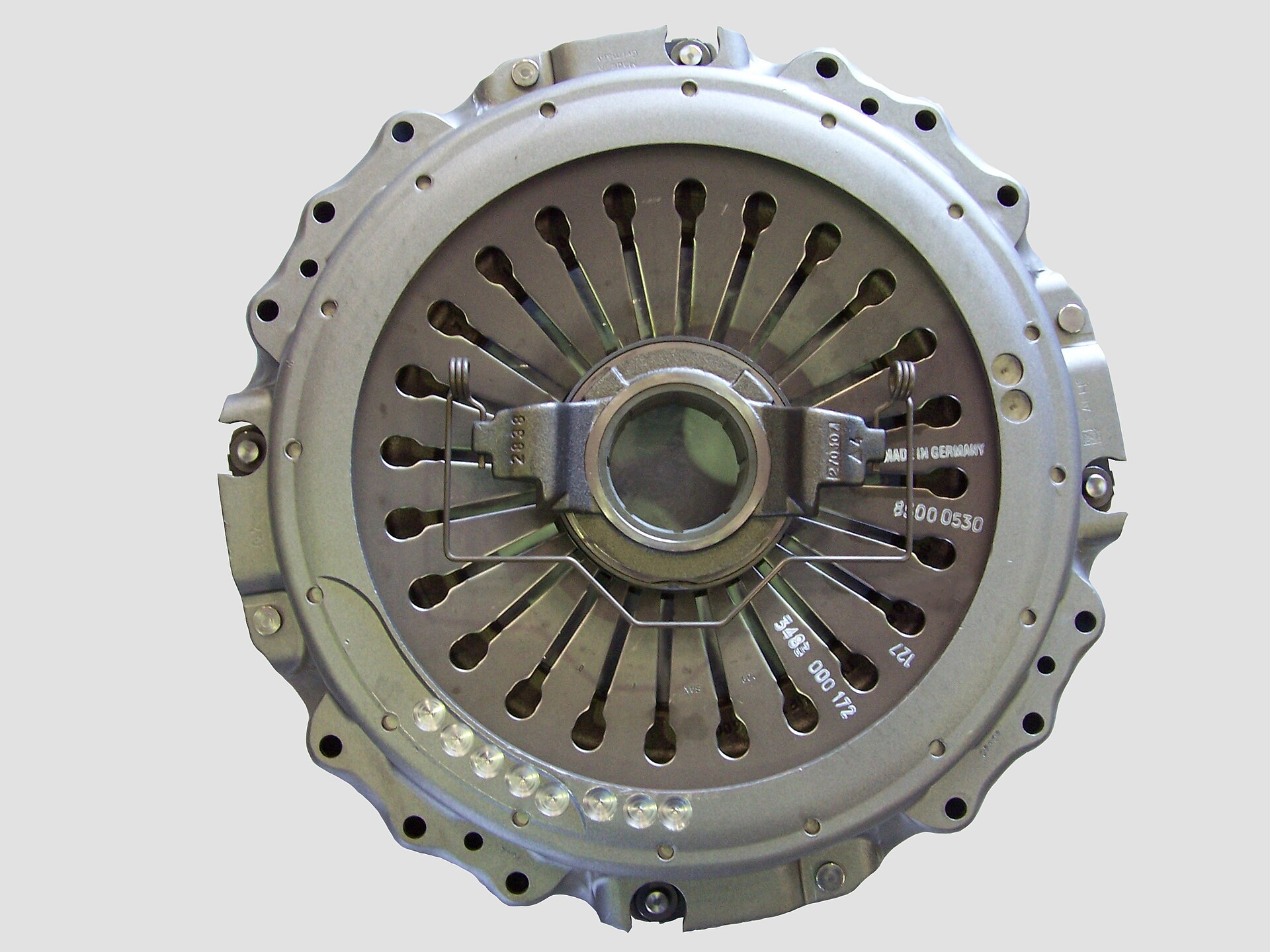
The clutch is a consumable, but it should be a slow one: hundreds of thousands of kilometres in well-driven trucks. When one fails early, there is almost always a story — and in today’s automated manual transmissions (AMT), the story often hides behind electronics until the damage is done.
The classic symptoms
- Slipping: revs rise, speed does not — worst under load uphill. Heat from slipping accelerates its own cause.
- Judder: shuddering on pull-away, often worst reversing uphill. Causes range from contaminated linings to worn engine mounts.
- Drag: gears crunch or the truck creeps with the clutch pedal down — the clutch is not fully releasing.
- Burning smell: unmistakable and never good news.
AMT changes the failure picture
Automated boxes launch and shift with actuator-controlled precision, which normally extends clutch life. But they also mask driver-visible feedback: no pedal feel, no obvious bite point. Watch instead for slow or harsh engagements, unexpected clutch-protection warnings, launch derates and shift refusals. Calibration drift and worn shifting cylinders produce symptoms that mimic mechanical failure — scan and calibrate before condemning hardware. Vaden’s guide to AMT and shifting cylinder failures maps the common patterns.
What kills clutches early
- Riding the clutch and creeping in traffic (manuals).
- Launching in too high a gear, fully loaded.
- Oil contamination from engine or gearbox seals — the lining never recovers.
- Hydraulic faults: a failing master or slave cylinder that never fully releases the clutch cooks it slowly.
- On AMTs: skipped calibrations after component replacement.
Repair judgment
A clutch job on a heavy truck is measured in four figures of parts and downtime, so diagnose completely: flywheel condition, release bearing, actuator or hydraulics, and seals. Replacing only the friction disc into a damaged system is how you buy the same job twice.
General information for professional operators. Always follow the vehicle manufacturer’s service documentation.
Cover photo: Panoha via Wikimedia Commons, CC BY-SA 3.0
