
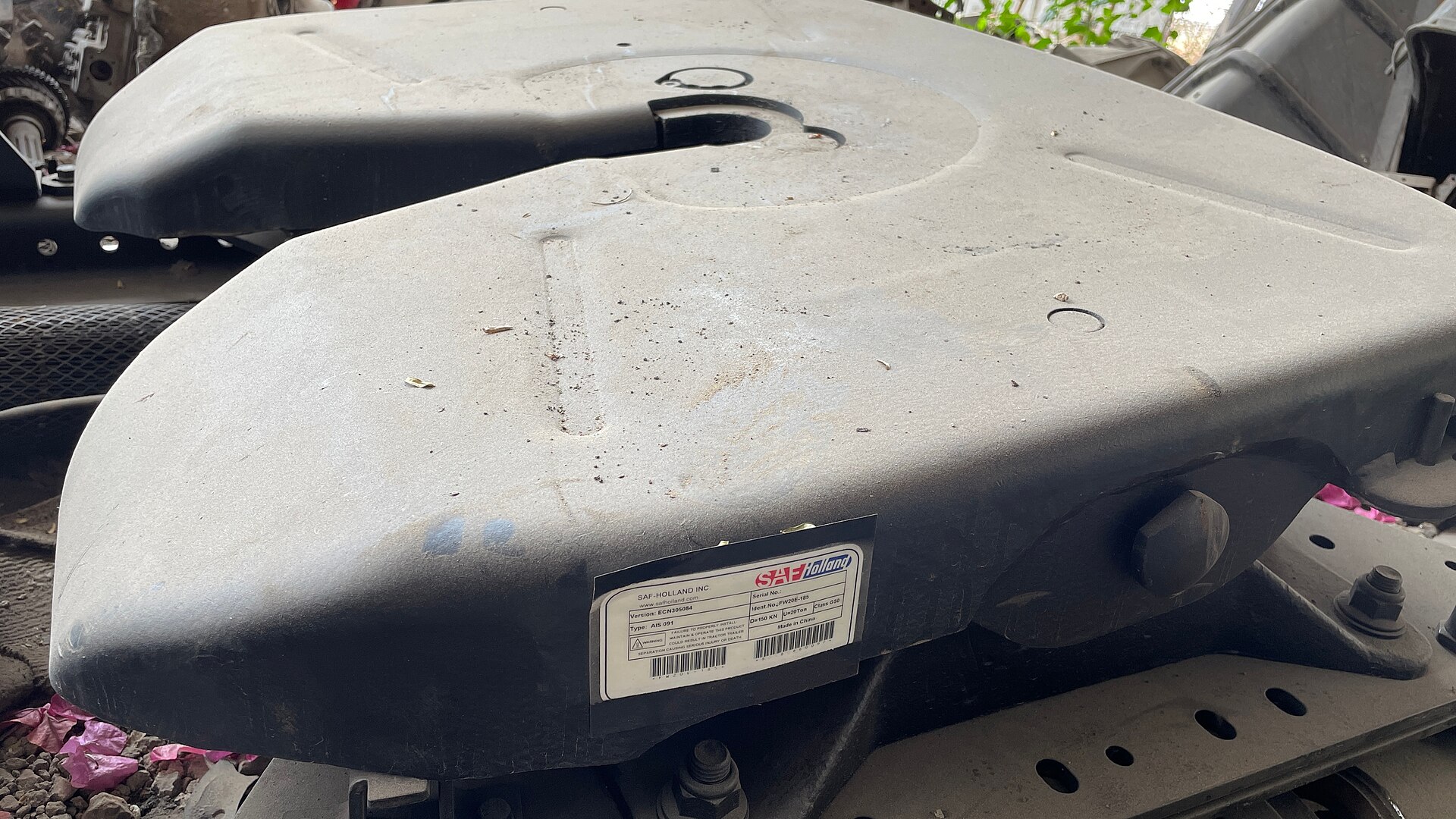
No component takes more sustained abuse with less attention than the fifth wheel. It transmits every tonne, every brake application and every turn between tractor and trailer — and on many trucks its entire maintenance plan is “grease it when it squeaks.”
The maintenance it actually needs
- Grease the plate and locks on schedule — a dry plate steers the truck badly, wears the kingpin, and can even transmit judder into the cab. Low-maintenance liners exist, but “low” is not “no”.
- Inspect the locking mechanism: jaw and wedge wear have specified limits; a worn lock is a dropped trailer waiting for its moment.
- Check mounting bolts and the slide mechanism (where fitted) for tightness and wear — movement in the mount is a chassis repair developing.
- Inspect the kingpin too: gauge wear at inspection intervals; an out-of-spec kingpin destroys good locks.
The coupling routine that prevents disasters
Most dropped trailers are procedure failures, not hardware failures. The non-negotiables: couple on level ground where possible; visually confirm the jaws have closed around the kingpin — not in front of it (the false couple); confirm the release handle is fully home; and do the tug test against trailer brakes before trusting it. Thirty seconds, every time, no exceptions for rain.
When to involve the workshop
Notchy or heavy release handles, visible cracks in the plate or mount, play you can feel when the combination rocks, and any coupling that needed more than one attempt to lock cleanly. A fifth wheel rebuild is cheap; the alternative is not.
General information for professional operators. Always follow the vehicle manufacturer’s service documentation.