
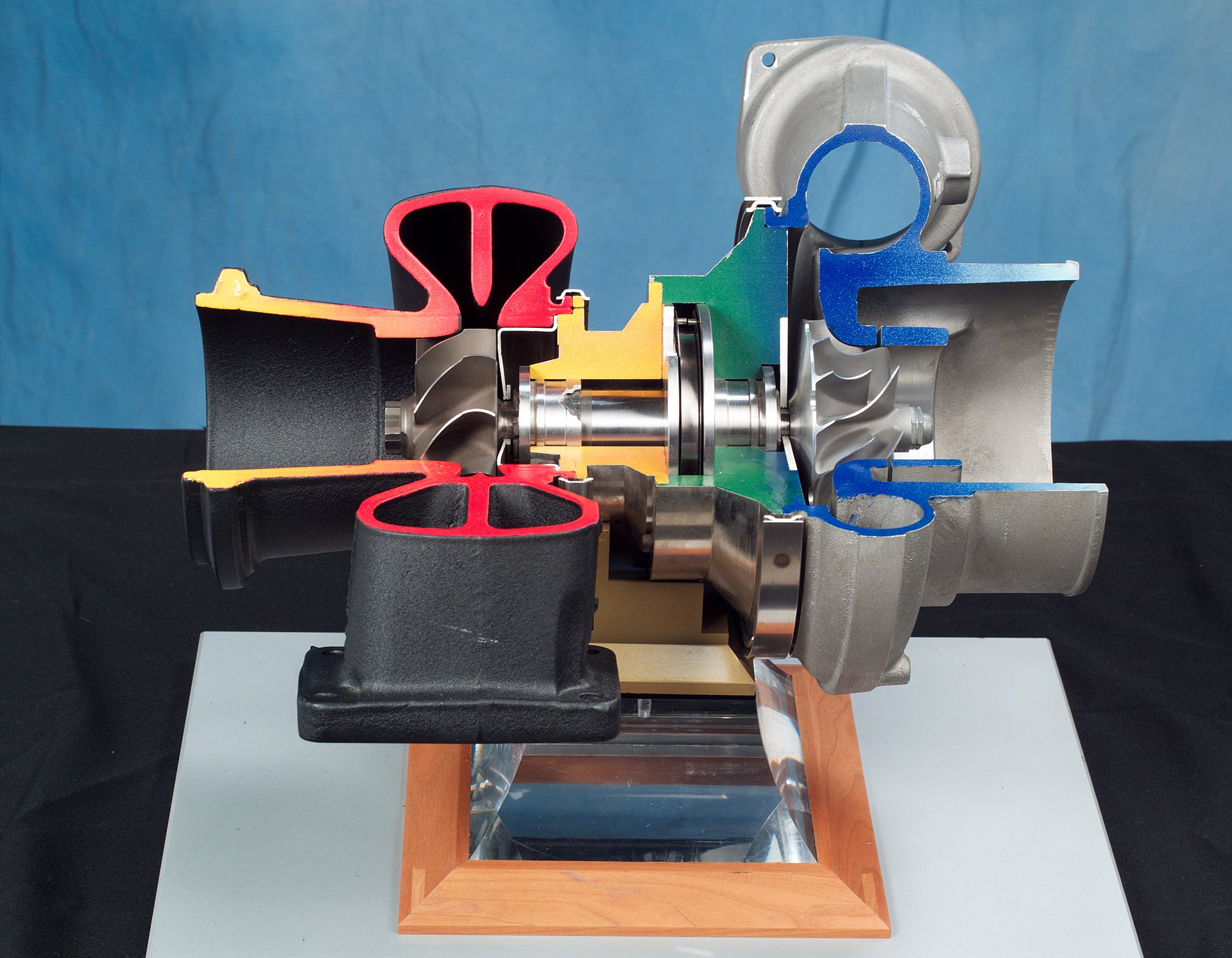
A modern diesel turbocharger spins at six-figure rpm on a thin film of oil. When it fails suddenly, it can take the engine with it — swallowed compressor fragments and oil-fed runaway are the nightmare scenarios. But turbos almost never fail without warning. Here is what they tell you first.
The warning signs
- A change in sound. Drivers know their truck’s whistle. A new siren-like whine, scraping or rattle from the turbo area is the single most valuable early warning there is.
- Loss of boost and power. Sluggish response, longer overtakes, the engine feeling “flat” on grades it used to hold — especially paired with higher exhaust temperatures.
- Blue smoke. Oil passing worn turbo seals into the intake or exhaust. Often worst on startup or after idling.
- Black smoke. Too much fuel for the available air — which can mean the turbo is not delivering the boost the ECU expects.
- Rising oil consumption with no external leak, sometimes with oil pooling in the charge-air (intercooler) pipes.
- Boost-related fault codes. Underboost and overboost codes deserve investigation, not deletion.
What actually kills turbos
- Oil starvation or dirty oil — the number one killer. Missed oil changes and clogged feed lines destroy bearings in hours, not months.
- Foreign objects — a failed air filter or debris in the intake shreds compressor blades instantly.
- Heat abuse — shutting down immediately after hard running cooks the oil in the bearing housing into carbon.
- Overspeed — often the result of chip tuning or a manipulated wastegate.
Habits that make turbos last
Give a hard-worked engine a minute of idle before shutdown; keep oil and filter intervals honest; treat the air filter as a safety part, not a consumable to stretch; and investigate any boost fault code the day it appears. A turbocharger replaced on condition is a planned repair — a turbocharger that grenades on the motorway is an engine rebuild and a tow. Replacement units are widely available in the aftermarket, catalogued by engine application — see ranges such as Vaden’s heavy-duty turbo line.
General information for professional operators — always follow the engine manufacturer’s service documentation.
Cover photo: Quentin Schwinn / NASA via Wikimedia Commons, public domain
