
Selective catalytic reduction injects urea solution — AdBlue, or DEF — into the exhaust, where it converts NOx into nitrogen and water. It works brilliantly until something in the dosing chain fails, and then the vehicle starts a legally mandated countdown toward torque and speed limits. Ignoring it is not an option: the endgame is a crawl-speed limp mode.
The usual suspects
- NOx sensors: the most common SCR-related failure on many platforms. When one drifts or dies, the system cannot verify emissions and assumes the worst.
- Crystallisation: AdBlue left to dry forms hard white crystals that choke dosing valves and injector tips — typical after small leaks or frequent short runs.
- Heater faults: AdBlue freezes around −11 °C. Tank and line heaters that fail show up on the first proper cold snap.
- Dosing pump wear: often accelerated by contaminated fluid.
- Quality sensor triggers: the system detects diluted or wrong fluid and treats it as tampering.
Fluid discipline prevents most of it
- Buy fluid meeting ISO 22241 from sealed containers; contamination measured in parts per million can poison the catalyst.
- Never top up with water, diesel or “additives.” The quality sensor will notice — and the repair bill will dwarf the saving.
- Store it cool and sealed; shelf life drops sharply in heat.
- Clean around the filler before opening. Dirt in the tank becomes dirt in the pump. For a plain-language primer on the fluid itself, parts manufacturer Vaden’s what AdBlue is and does explainer is a good starting point.
When the lamp comes on
Treat the first SCR warning like a fuel gauge on empty: you have a defined distance before derate stages begin. Scan for codes, check fluid level and quality first, then look at NOx sensor data and dosing tests. Crystallised injectors can often be cleaned; a poisoned catalyst cannot. Build SCR checks into scheduled service — our preventive maintenance framework shows where it fits.
And as with the DPF: emulators and delete kits are illegal in most markets and easily detected at inspection. They convert a component repair into a compliance problem.
General information for professional operators. Always follow the manufacturer’s diagnostic procedures and local regulations.
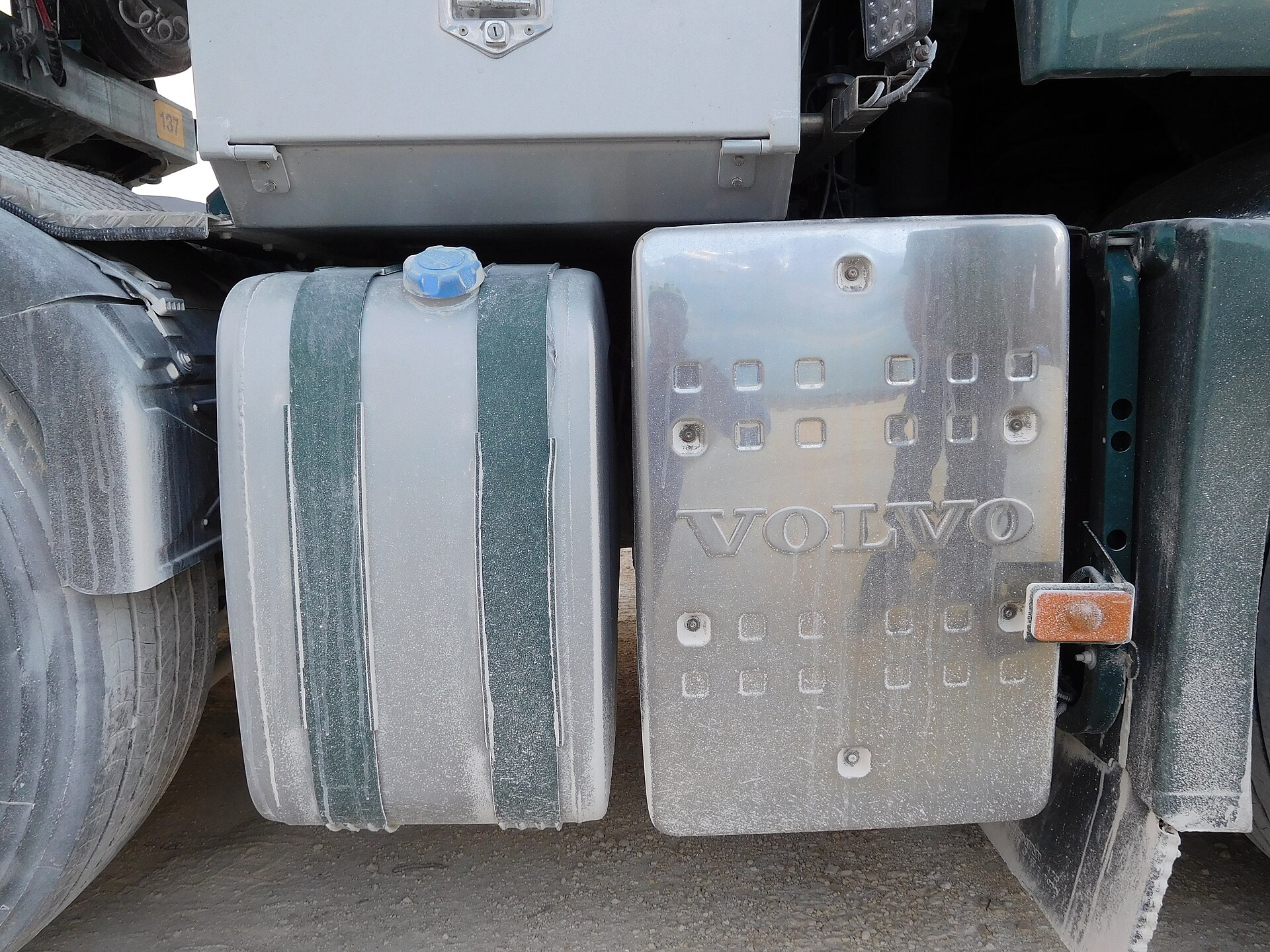
Cover photo: Cjp24 via Wikimedia Commons, CC BY-SA 4.0
