
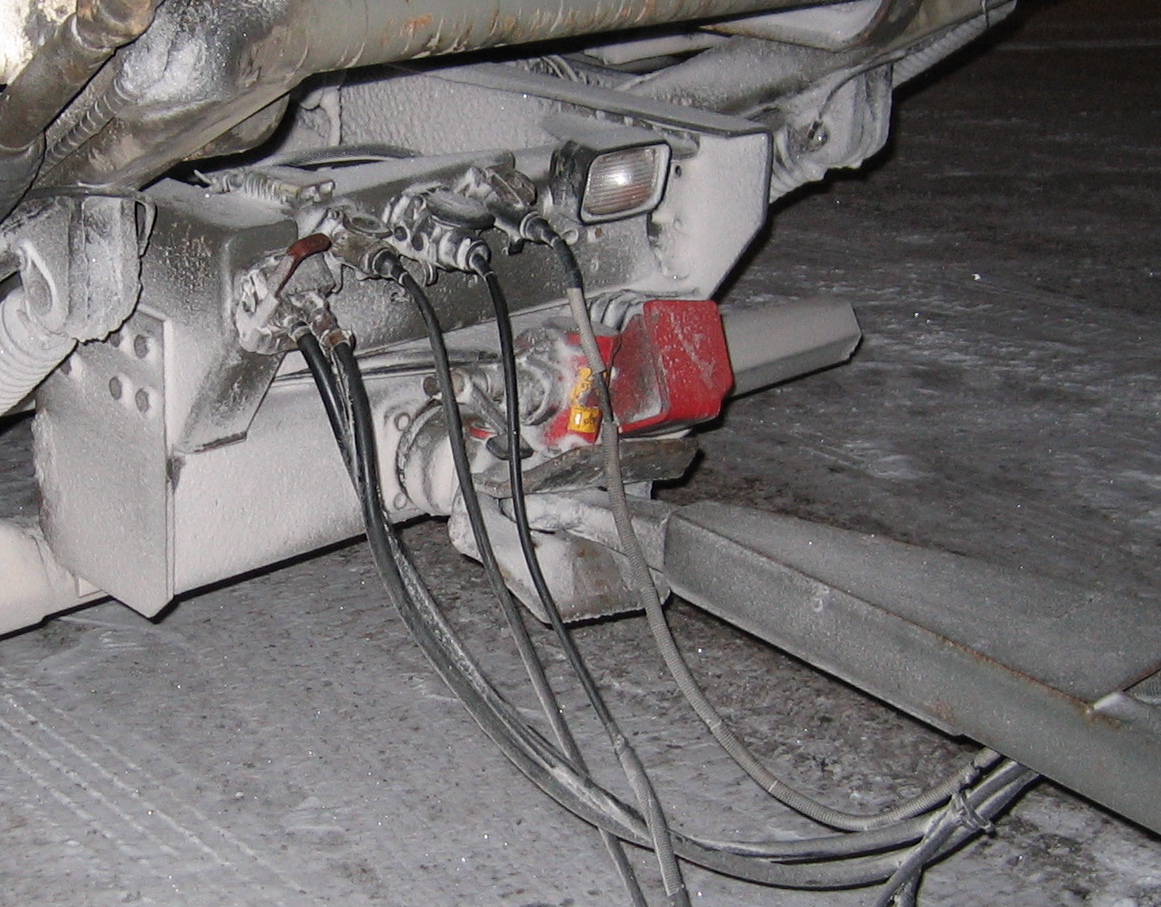
Air disc brakes have taken over the front — and increasingly the whole — of the heavy vehicle fleet for good reason: shorter stops, less fade, faster pad changes. But they demand their own service discipline, and a neglected caliper undoes every advantage.
Reading pad and disc wear
- Uneven pad wear (inner vs outer, or tapered) points to a sticking caliper slide, not just old pads.
- Cracked or heavily scored discs: fine crazing is normal; cracks reaching the edge are not.
- Blue discs: overheating — look for a dragging caliper or unbalanced braking across the axle.
- Pads at the wear limit: change in axle sets, never one wheel.
The caliper is the weak point
- Seized guide pins/slides: the classic air-disc failure, causing tapered wear and drag.
- Torn boots and seals letting water and grit into the mechanism.
- Worn tappets and a failing adjuster that stops taking up pad wear.
- Corrosion on the carrier and mounting.
Service and parts
Guide kits, boots, tappets and adjuster components are all serviceable — component supplier Vaden details them in its air disc brake caliper guide and stocks calipers and repair kits in its air disc brake caliper range. Rebuilding a sticking caliper in time is far cheaper than the discs, pads and tyres a neglected one destroys — the wear signatures show up in our tyre wear guide.
General information for professional operators. Always follow the vehicle manufacturer’s service documentation and local regulations.
Cover photo: Teppo Lainio via Wikimedia Commons, CC BY-SA 2.5
