
Every modern truck streams thousands of data points. The fleets that profit from telematics are not the ones collecting the most — they are the ones acting on the few metrics that move cost, safety and uptime. Here is where to focus.
Metrics that pay for themselves
- Fuel/energy per 100 km, per driver and per route: the single richest signal — it exposes coaching opportunities worth double-digit percentages, as in our fuel guide.
- Idle time: hours of fuel burned going nowhere, and easy to cut.
- Harsh braking/acceleration events: leading indicators of both crash risk and wear.
- Utilisation: loaded vs empty kilometres — the lever behind cost per kilometre in our TCO framework.
- Fault codes and predictive-maintenance alerts: catching failures before they become roadside breakdowns.
The noise to filter
- Vanity dashboards nobody acts on.
- Alerts so frequent they get ignored — tune thresholds or turn them off.
- Precision that outruns your ability to respond: data you will not act on is cost, not value.
Turning data into savings
Telematics only pays when it closes a loop: measure, coach or fix, then confirm the change. Feed maintenance alerts straight into the service schedule, review per-driver fuel monthly with the drivers themselves, and pick three metrics to improve this quarter rather than watching thirty. The goal is decisions, not dashboards.
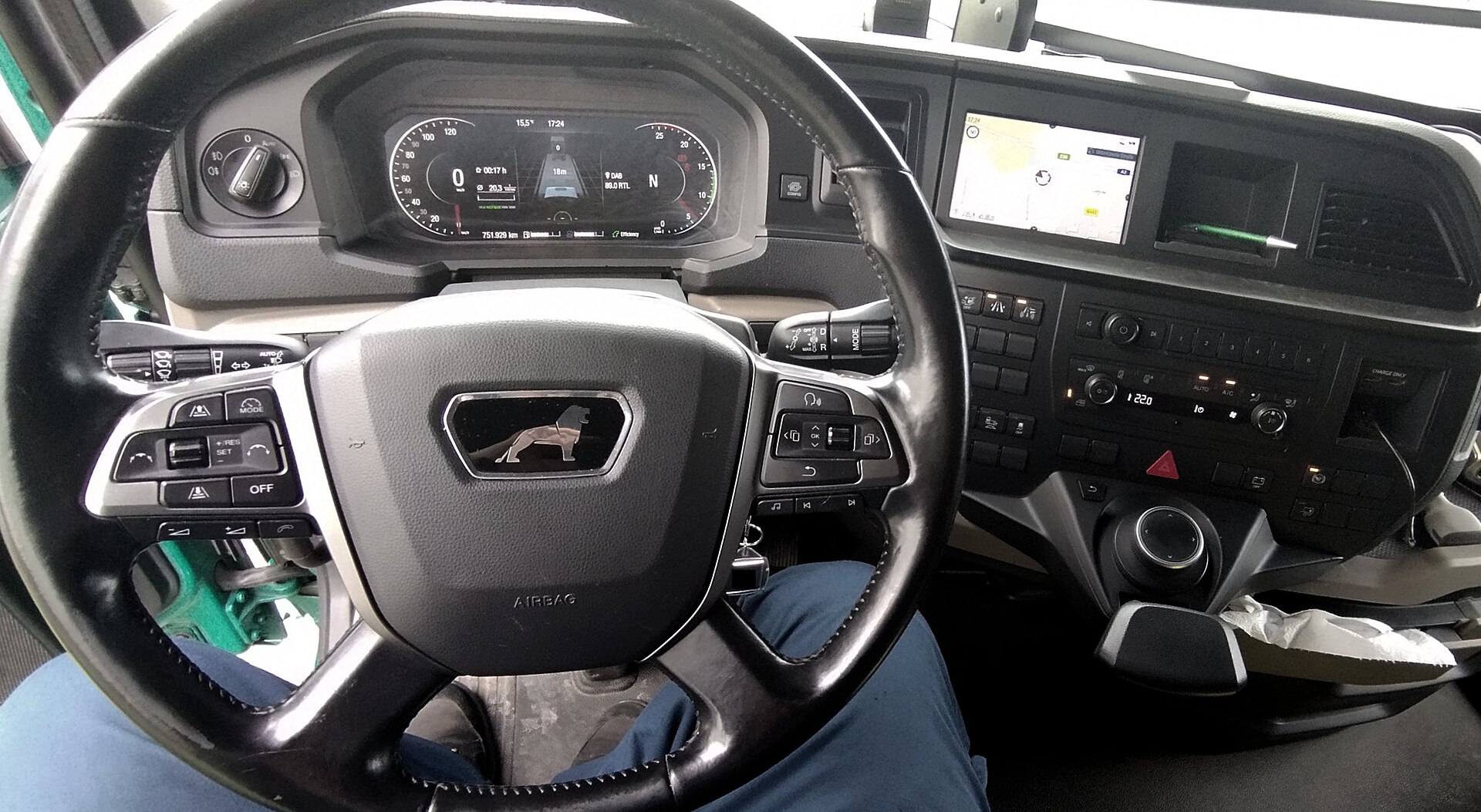
Cover photo: Grummelbacke via Wikimedia Commons, CC BY 4.0
