
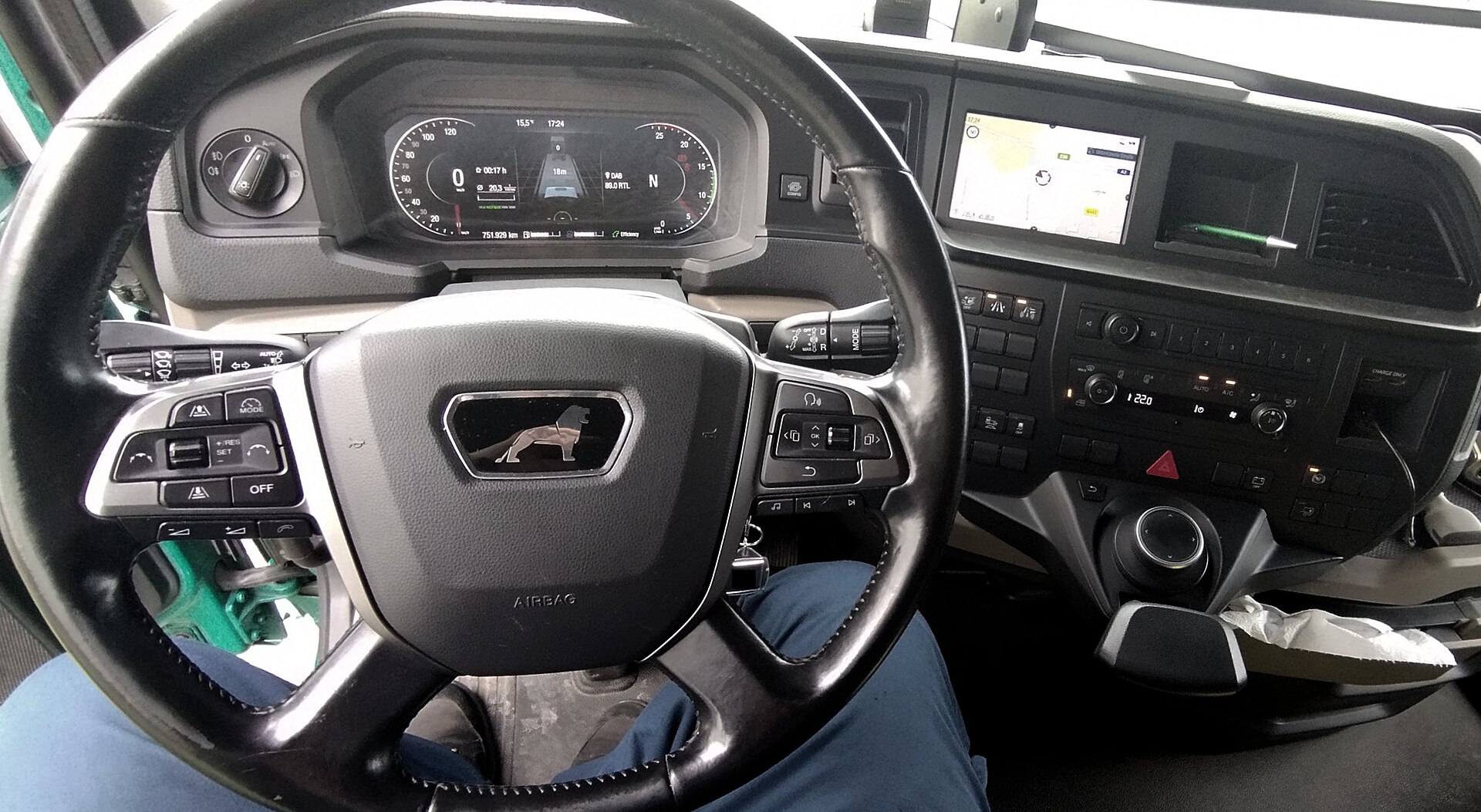
A truck that wanders, darts on white lines or needs constant correction is exhausting to drive and dangerous when tired. Steering slack almost always traces to a short list of components — and finding the right one beats replacing parts on guesswork.
Where the play usually hides
- Drag link and track rod ends: worn ball joints are the classic cause. Jack the axle, grip and rock — any knock or visible movement condemns the joint.
- Kingpins: worn kingpins and bushes give vertical play and heavy, notchy steering. Check with the wheel raised, rocking top and bottom.
- Steering box: excessive sector-shaft lash shows as a dead spot at the straight-ahead. Some boxes have an adjustment; over-tightening ruins them.
- Wheel bearings: play here mimics steering slack — rule them out first, per our wheel bearing guide.
- Loose or worn steering shaft U-joints between the box and column.
Beyond worn parts
Not all wander is play. Under-inflated or unevenly worn tyres, axle misalignment and tired dampers all make a truck feel vague — read the tyre wear patterns before condemning steering joints. A crabbing trailer will also fight a perfectly good tractor.
The hydraulic side
Heavy effort at low speed, whining or foaming fluid points at the power steering circuit — pump wear, low or aerated fluid, or a failing steering box valve. Replacement pumps are catalogued by application; component manufacturer Vaden covers the failure modes in its hydraulic steering pump guide.
Steering is safety-critical: any play beyond the manufacturer limit is an out-of-service defect, not a “watch it” item.
General information for professional operators. Always follow the vehicle manufacturer’s service documentation and local regulations.
Cover photo: Grummelbacke via Wikimedia Commons, CC BY 4.0
