
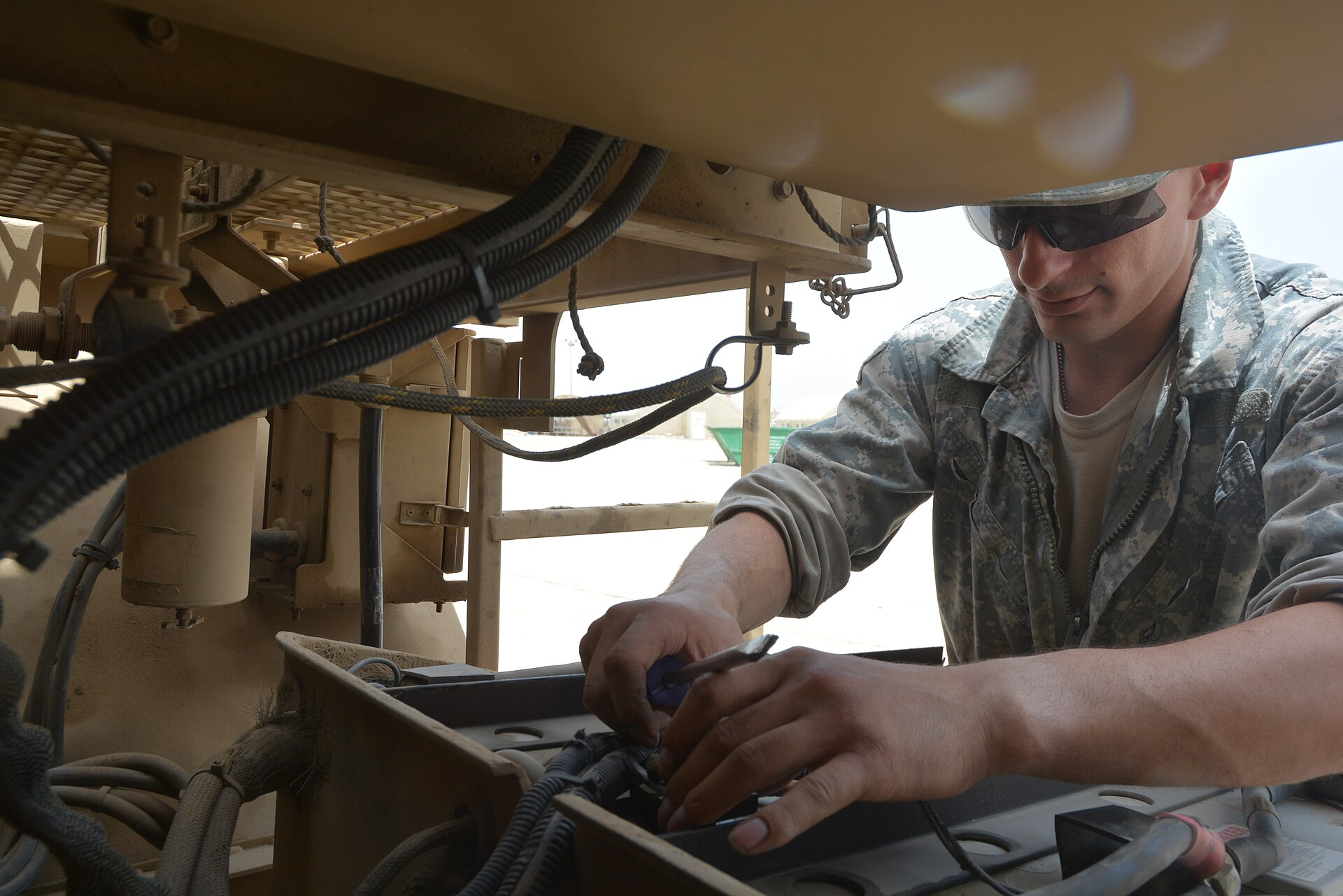
A heavy truck’s electrical system is built on two 12-volt batteries in series. That simple fact explains half of all cold-morning dramas: the pair is only as strong as its weaker member, and the weaker member is usually invisible until the first frost.
Why matched pairs matter
In series, the same current flows through both batteries. Pair a tired battery with a fresh one and the tired unit chronically undercharges its partner, drags the pair down, and both die young. The rule in serious fleets: replace in matched pairs — same type, same capacity, same age — and test both, not just the convenient one.
Warning signs worth respecting
- Slower cranking, especially cold — the earliest and most honest signal.
- Low-voltage fault codes from ABS, ECU or telematics after weekends parked.
- Charge voltage outside the healthy range at working revs (roughly 27.5–28.5 V on most systems) — alternator or regulator trouble.
- Corroded, loose or hot terminals: resistance where you least want it. A terminal you can move by hand is a breakdown on a schedule.
Parasitic drains: the modern epidemic
Trackers, cameras, inverters, fridges and cab electronics all sip current with the key out. Individually harmless, together they can flatten batteries over an idle weekend. If trucks that sit die and trucks that run daily do not, measure key-off draw before buying batteries.
Jump starting without casualties
- 24V to 24V, or a proper booster pack — never a 12V car.
- Follow the sequence: connect positive first, negative to a chassis ground away from the battery, and reverse to disconnect.
- On modern electronics-heavy trucks, prefer a booster or charger over vehicle-to-vehicle jumps; voltage spikes are expensive.
Battery checks belong in every service — capacity test, terminal torque, charge voltage. Two minutes with a tester beats a 6 a.m. call-out every time. See where it slots into our A-B-C maintenance framework.
General information for professional operators. Always follow the vehicle manufacturer’s electrical safety procedures.
Cover photo: Spc. Rochelle Prince-Krueger / U.S. Army via Wikimedia Commons, public domain
