
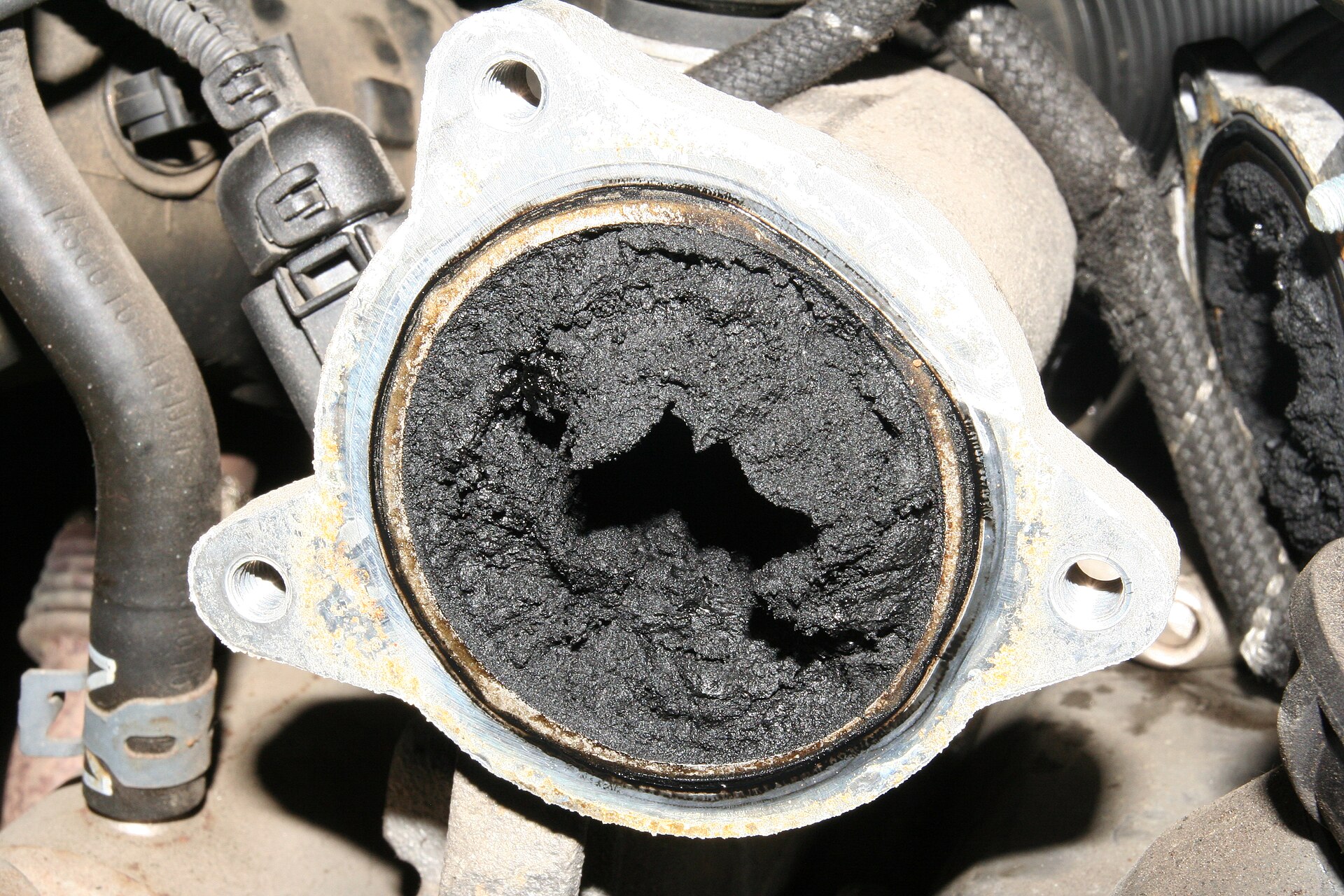
Exhaust gas recirculation cuts NOx by feeding a measured dose of exhaust back into the intake. It works — and it condemns the EGR valve and cooler to a life bathed in soot. Sooner or later, carbon wins: the only questions are when, and how you respond.
Symptoms of a struggling EGR system
- Rough idle and hesitation, especially when the valve sticks partially open at low load.
- Loss of power with black smoke when a stuck-closed valve skews mixture strategies — or excessive soot production feeding the DPF.
- EGR-related fault codes: flow too low, flow too high, position implausible.
- Rising DPF regeneration frequency — upstream soot has to go somewhere, as our DPF guide explains.
- Coolant loss with no external leak: a failing EGR cooler can pass coolant into the exhaust — take it seriously.
Cleaning: sometimes yes, sometimes theatre
A carbon-fouled valve that still actuates can often be professionally cleaned and returned to service. But cleaning does not restore worn actuator motors, cracked coolers or tired position sensors — and repeated fouling means the cause (duty cycle, injector condition, crankcase vapours) is untreated. Vaden’s EGR failure and cleaning guide walks through symptoms and service options in component detail.
Keep it alive longer
- Give the engine sustained-temperature work; endless idling is an EGR system’s slow death.
- Fix injector and boost faults promptly — extra soot ages the whole loop.
- Never blank or delete the system: it is illegal in most markets, detectable at inspection, and shifts stress to other components.
General information for professional operators. Always follow the vehicle manufacturer’s procedures and local regulations.
Cover photo: Moosealope via Wikimedia Commons, CC BY 2.0
