Ask which zero-emission technology wins heavy trucking and you will get an argument. The honest answer in 2026 is: it depends on the job — and the two are not as neatly split as either camp claims.
The case for batteries
- Efficiency: battery-electric drivetrains use far more of the original energy than hydrogen, which loses large fractions to electrolysis, compression and the fuel cell. That gap shows up directly in energy cost per kilometre.
- Momentum: the eActros 600, Volvo FH Aero Electric and MAN eTGX are shipping in volume with real range, and megawatt charging fits a recharge into a driver’s mandatory break.
- Infrastructure: electricity is everywhere; the build-out is chargers, not a new fuel network.
The case for hydrogen
- Fast refuelling and range for duty cycles that never stop — think back-to-back long-haul or remote regions with weak grids.
- Payload and weight: for the heaviest, longest work, hydrogen avoids carrying enormous battery mass.
- Grid relief: hydrogen sidesteps the enormous power draw of large megawatt charging hubs.
Where each fits
For depot-based and regional work — most of trucking — batteries have effectively won on cost and simplicity, as our state-of-play analysis argued. Hydrogen’s niche is the long, heavy, unpredictable haul where recharging time and battery weight bite hardest. The catch is infrastructure: refuelling coverage remains thin, which is why even its backers now talk in terms of the 2030s.
The verdict
This is not a winner-take-all fight. The likeliest outcome is batteries dominating the bulk of freight while hydrogen serves specific heavy, long-distance corridors — if the refuelling network arrives. Watch our companion report on the Toyota–Daimler–Volvo hydrogen alliance for where the industry is actually placing its bets.
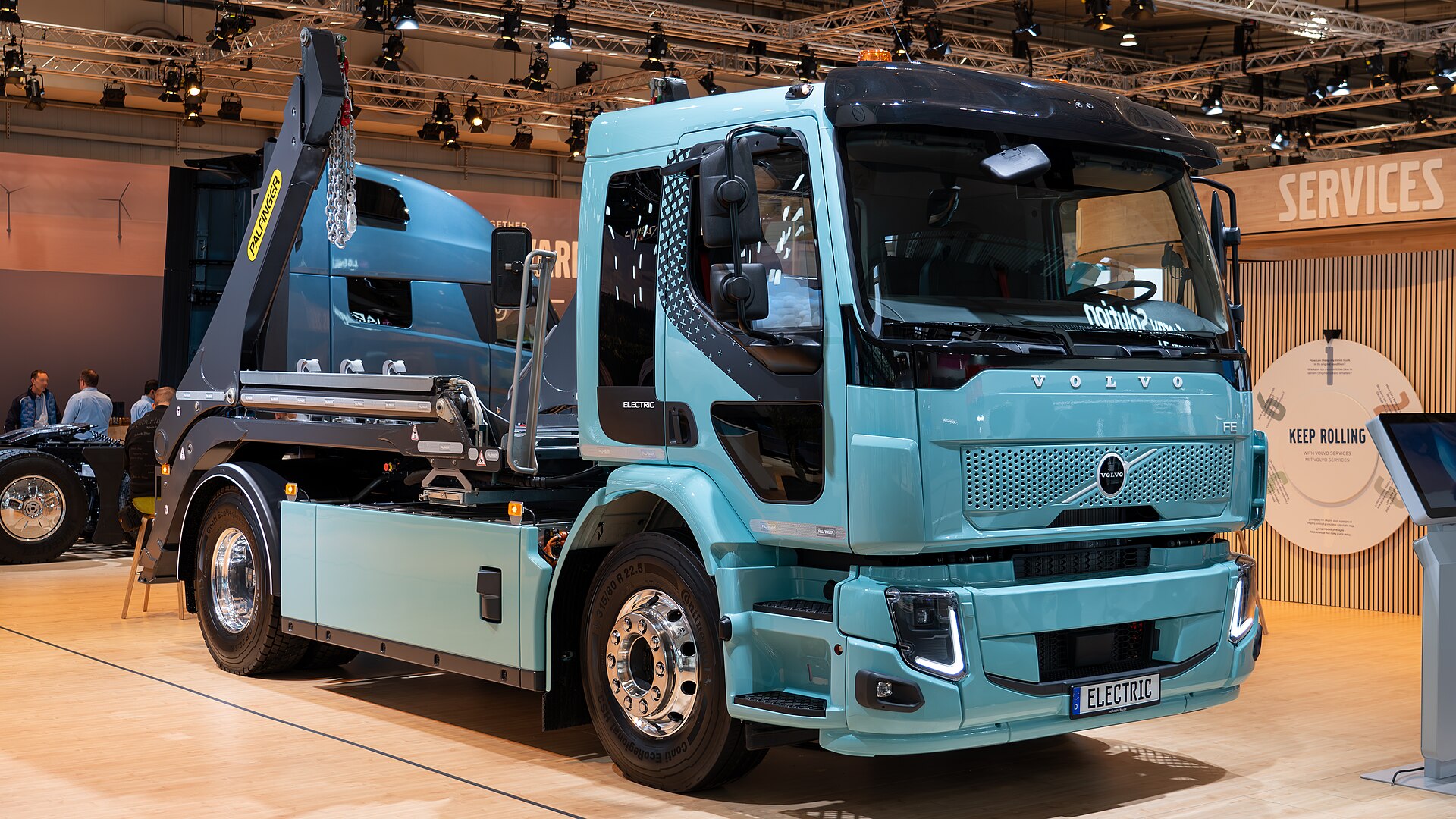
Cover photo: MarcelX42 via Wikimedia Commons, CC BY-SA 4.0
.jpg)