
Self-driving trucks stopped being a demo in 2026 and started hauling paid freight without a human in the cab — on carefully chosen highway routes. Understanding what that does and does not mean starts with the levels.
The automation levels, briefly
- Level 2: driver assistance — adaptive cruise, lane keeping. Widely fitted today; the human drives.
- Level 3: the system handles defined conditions but the human must take over when asked.
- Level 4: fully driverless within a defined operational domain (specific routes, weather, speeds) — this is what today’s pioneers are deploying.
- Level 5: drives anywhere a human can. Not on the horizon for trucks.
Where it actually is
The leaders are running Level 4 on fixed long-haul lanes, mostly in the US Sun Belt where weather and regulation cooperate — see our news report on the latest driverless-mile milestones. The work is real but bounded: hub-to-hub motorway running, not city streets or the first and last mile.
The hurdles that remain
- The long tail of edge cases: roadworks, debris, emergency vehicles, extreme weather.
- Regulation and liability that vary by country and state.
- Public acceptance of 40-tonne combinations with no one aboard.
- Economics: the sensors and redundancy are expensive; the payback needs high utilisation.
- The workforce question: even optimistic timelines leave yard, distribution and construction work to humans for years — relevant to the driver shortage.
The realistic timeline
Expect gradual expansion of driverless highway corridors through the late 2020s, not an overnight switch. Autonomy will arrive route by route, in good weather first — much like electrification is arriving segment by segment.
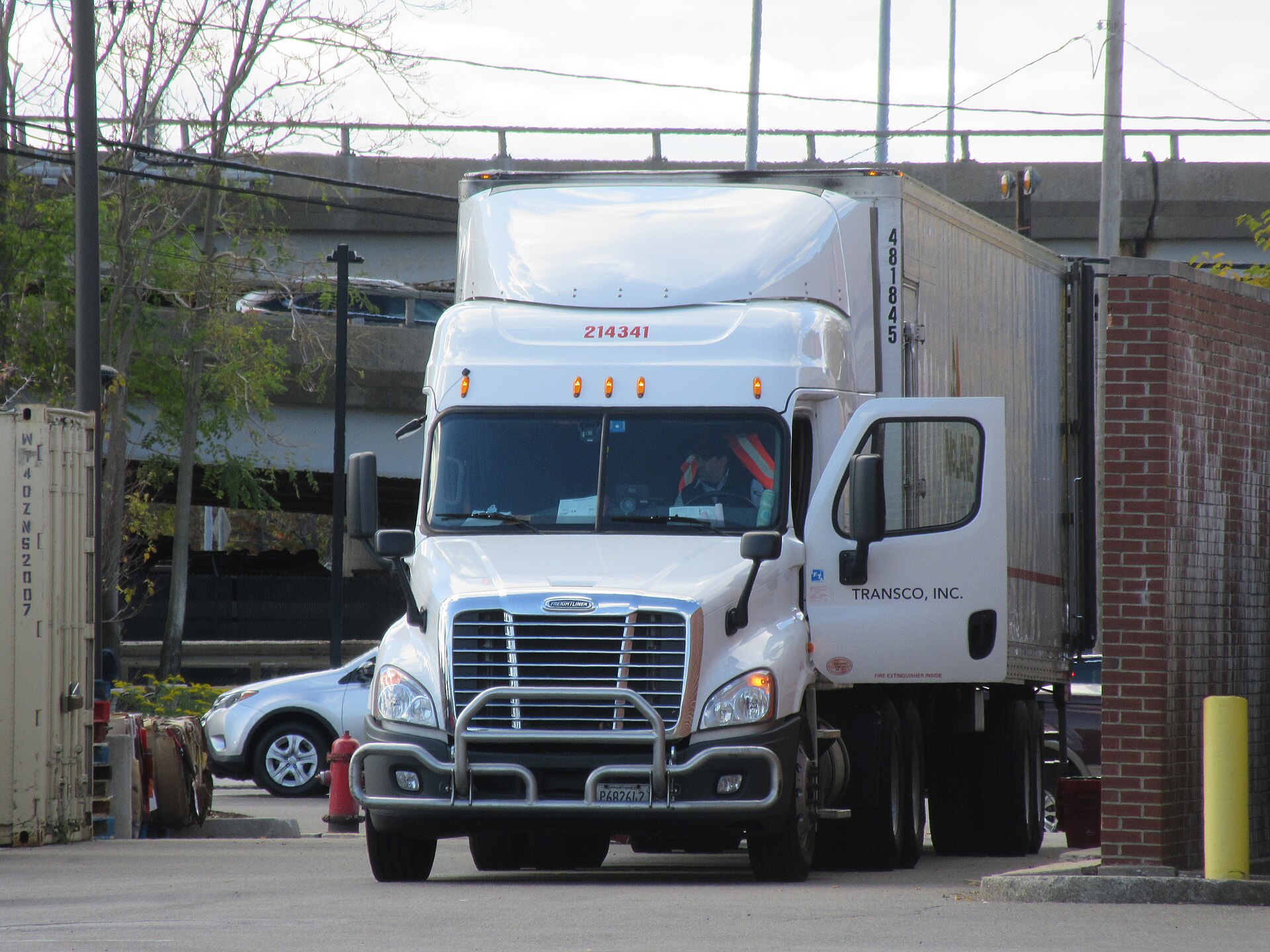
Cover photo: Jason Lawrence via Wikimedia Commons, CC BY 2.0
