
Driveline vibration is more than an annoyance — left alone it destroys gearbox and axle bearings, cracks mounts and can drop a propshaft on the road. The good news: it follows rules, and those rules point at the cause.
Read the vibration
- Rises with road speed, felt through the floor: classic propshaft imbalance or worn universal joints.
- Rises with engine speed regardless of gear: look at engine/gearbox mounts and the flywheel side, not the propshaft.
- A clunk on take-up or gear change: worn U-joints or a tired centre bearing with excessive backlash.
The usual culprits
- Worn universal (cardan) joints: rock the shaft by hand — any play in the cross means replacement. Check for rust-brown dust around the caps, a sign of a dry, failing joint.
- Missed greasing: many U-joints and slip yokes need periodic grease; a dry joint fails fast. Add them to the service schedule.
- Centre (hanger) bearing: a perished rubber mount or dry bearing on multi-piece shafts.
- Imbalance: lost balance weights, caked mud, or a shaft tweaked after a knock.
- Wrong working angles after a suspension change or overload sag.
Safety first
A propshaft that lets go at speed is catastrophic. Any perceptible U-joint play, a missing balance weight or a cracked centre bearing mount is a park-it fault. Balance and phasing are workshop jobs — replace joints in matched sets and re-check runout after fitting.
General information for professional operators. Always follow the vehicle manufacturer’s service documentation and local regulations.
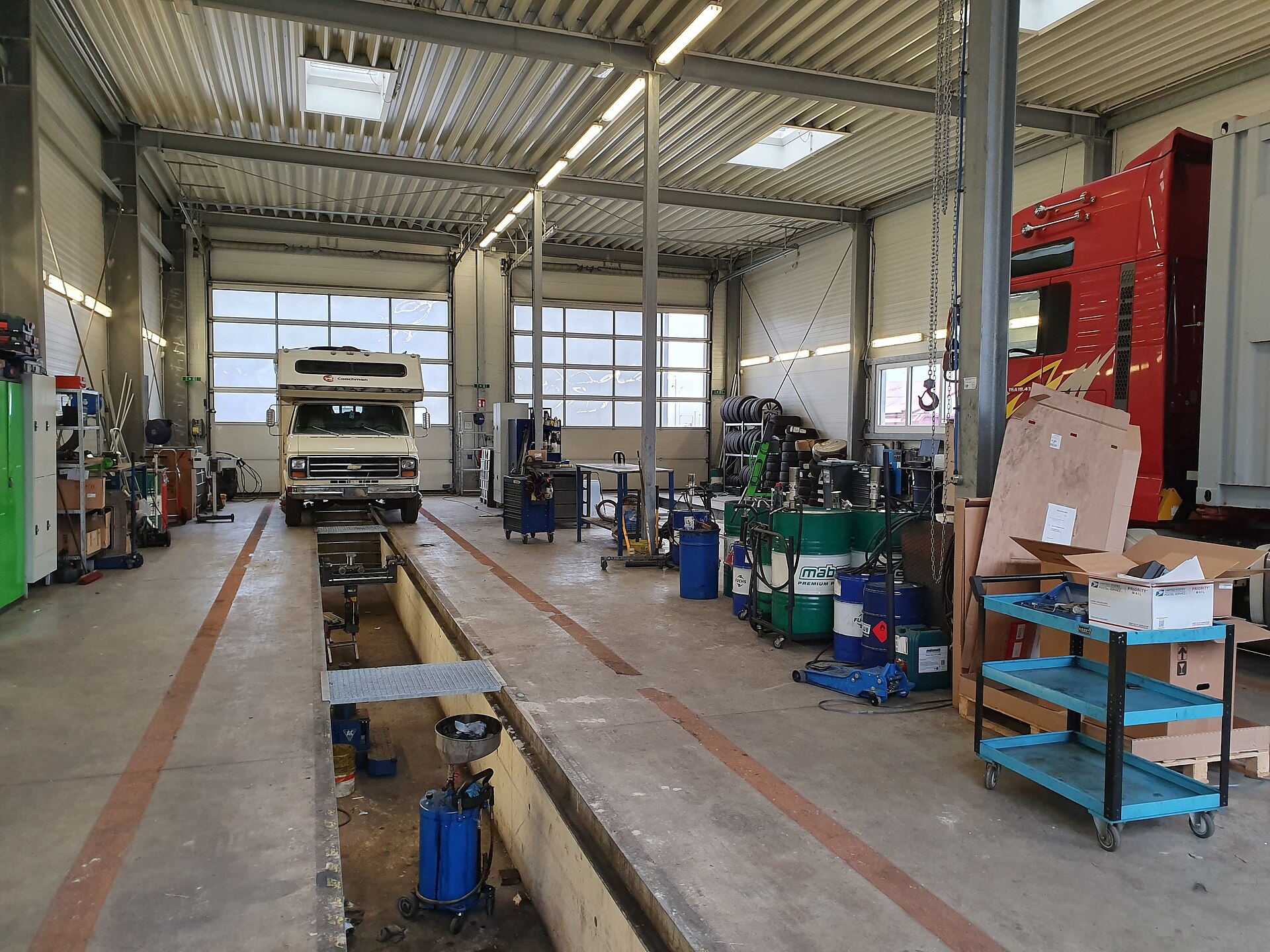
Cover photo: MatthiasK 1412 via Wikimedia Commons, CC BY-SA 4.0
