
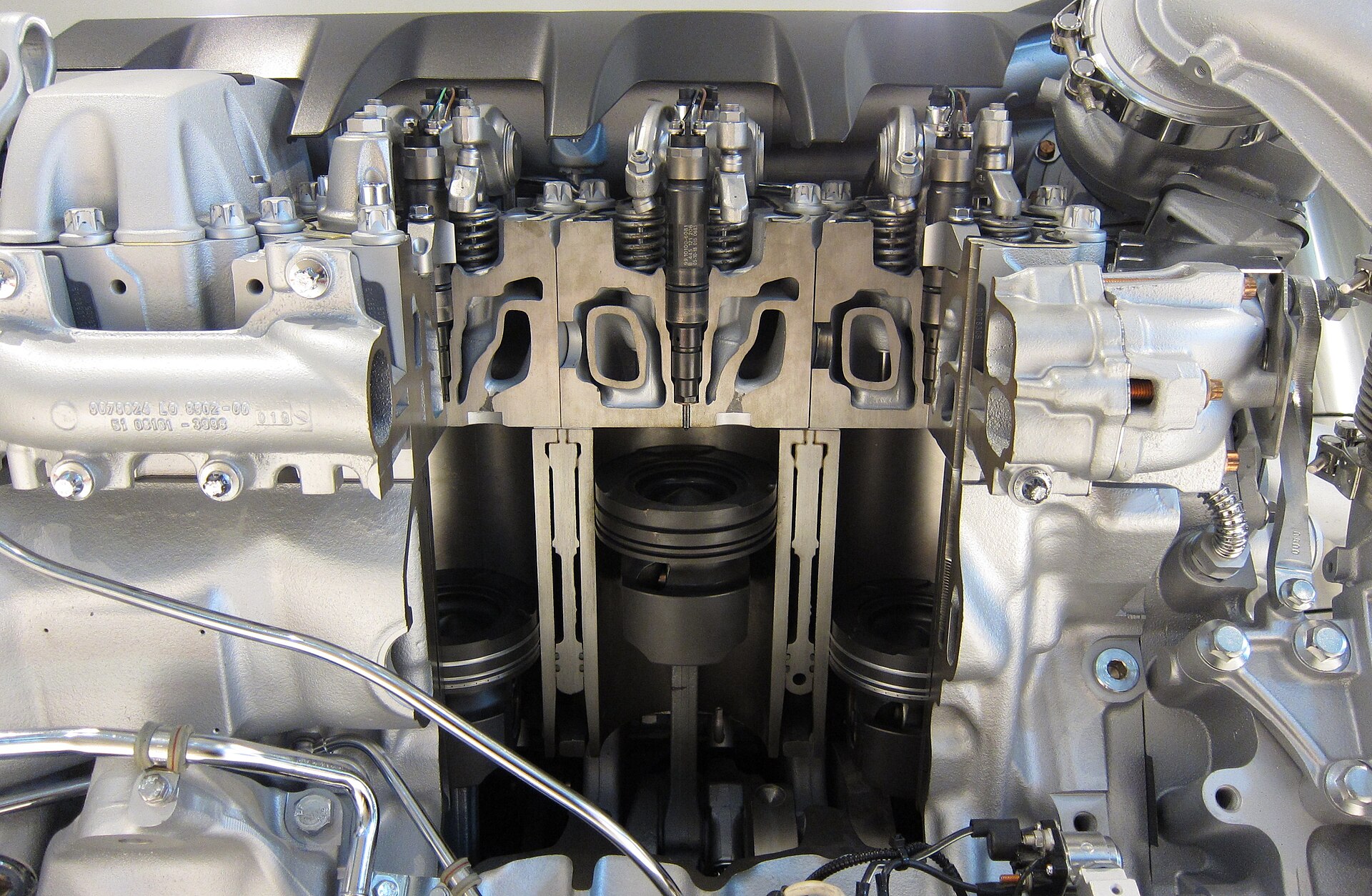
If you have heard a heavy truck slow on a downgrade with a rapid mechanical stutter, you have heard a Jake Brake. The name belongs to Jacobs Vehicle Systems, but it has become the generic term for a compression-release engine brake — one of the most important safety devices on a heavy diesel.
How it works
Normally a diesel compresses air on the way up, and that compressed air pushes the piston back down, returning most of the energy — so the engine barely slows the truck. A compression-release brake changes that: near the top of the compression stroke it opens the exhaust valve and dumps the compressed air out of the cylinder. The energy the engine spent compressing that air is thrown away instead of returned, so the engine absorbs power and slows the truck. The escaping bursts are what create the trademark sound.
Jake brake vs exhaust brake vs retarder
- Compression-release (Jake) brake: acts inside the engine via the valvetrain; strong braking, distinctive noise.
- Exhaust brake: a valve that restricts the exhaust to build back-pressure; simpler and quieter, less powerful.
- Transmission/driveline retarder: a separate hydraulic or electromagnetic unit; very strong, near-silent, but adds weight and cost.
Why it matters
Engine and driveline braking let a driver hold speed on a long descent without cooking the wheel brakes — the difference between arriving at the bottom in control and arriving with faded, overheated foundation brakes. Used well, it dramatically extends brake-lining life, which feeds straight into the running costs in our TCO guide, and keeps combinations stable, as our brake-matching guide explains.
The noise question
Because the sound carries, many towns post “no engine braking” signs in residential areas. That is a request to avoid the loud unmuffled setups near homes — not a reason to coast a loaded truck down a mountain on its service brakes. On the open grade, the engine brake is the safe choice.
Cover photo: Olivier Cleynen via Wikimedia Commons, CC BY-SA 3.0
