
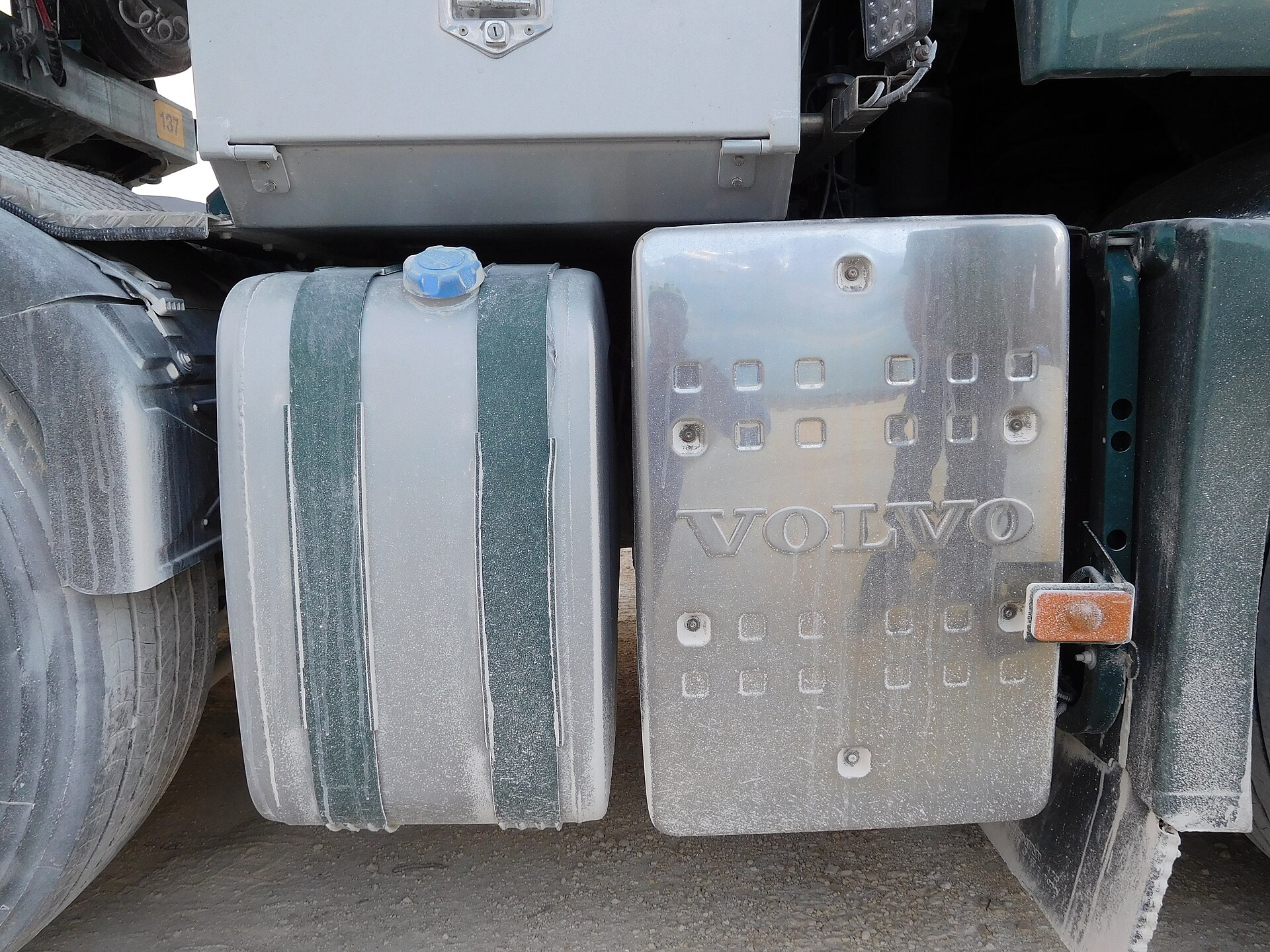
Diesel Exhaust Fluid (DEF) — sold in Europe under the AdBlue brand — is not a fuel additive and never touches the engine. It is a separate consumable that lets a modern diesel meet emissions law. Ignore it and the truck will, quite deliberately, refuse to keep working.
What DEF actually is
DEF is a precise mix of 32.5% high-purity urea and 67.5% deionised water, manufactured to the ISO 22241 standard. That purity matters: the wrong concentration, tap water or contamination will damage the dosing system and the catalyst downstream.
How SCR uses it
In the Selective Catalytic Reduction (SCR) system, DEF is injected into the hot exhaust, where it breaks down into ammonia and converts harmful nitrogen oxides (NOx) into harmless nitrogen and water vapour. It is one of the core technologies keeping diesel viable in the emissions era — the wider picture is in our diesel-versus-electric analysis.
How much you use — and what runs dry means
- Consumption: roughly 3–5% of diesel used, so a truck burning 30 litres/100 km uses around 1–1.5 litres of DEF over the same distance.
- Running out: the law requires the truck to warn, then derate (cut power) and finally limit speed to a crawl until refilled. This is by design, not a fault.
- Freezing: DEF freezes around −11 °C; tanks and lines are heated, so a cold start is fine — never dilute it to stop freezing.
Fluid discipline prevents most SCR faults
Buy DEF to ISO 22241 from sealed containers, keep it cool and clean, and never top up with anything else. Most expensive SCR failures — crystallised injectors, poisoned catalysts, NOx-sensor faults — trace back to contaminated or wrong fluid. Fold DEF checks into the routine in our maintenance schedule. And note: removing or “deleting” the SCR system is illegal for on-road vehicles and fails inspection.
General information for professionals. Follow manufacturer specifications and local emissions law.
Cover photo: Cjp24 via Wikimedia Commons, CC BY-SA 4.0
