What a CDL is: Class A, B and C, the endorsements and who needs one
The commercial driver's license under 49 CFR Part 383: the 26,001-pound line for Class A and B, when Class C applies, the endorsement codes, the learner's permit and training.
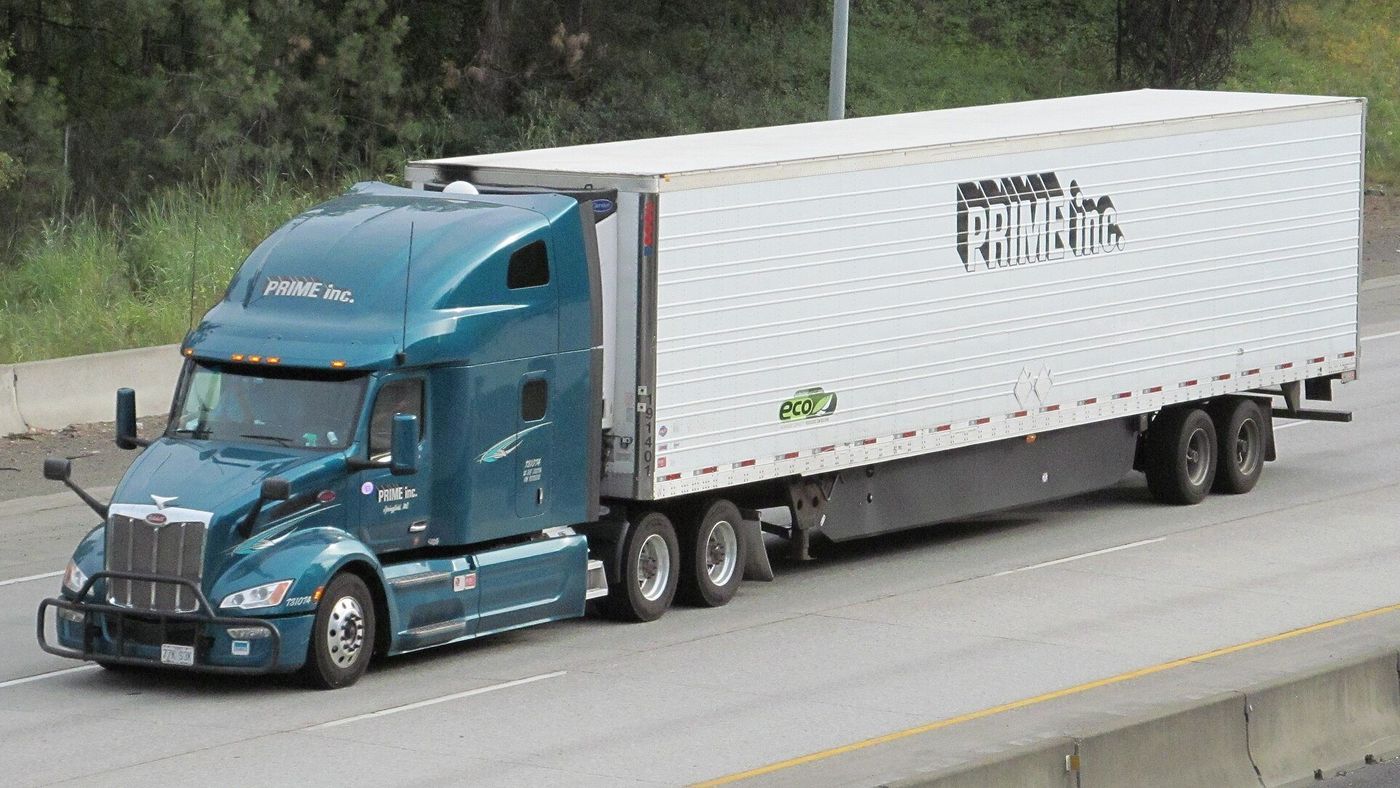
A CDL is a commercial driver’s license: the license a person needs to drive a commercial motor vehicle in the United States, issued by the State where the driver is domiciled under the federal standards of 49 CFR Part 383. It comes in three classes. Class A covers combinations of 26,001 pounds or more with a towed vehicle over 10,000 pounds, Class B covers single vehicles of 26,001 pounds or more, and Class C covers smaller vehicles built for 16 or more passengers including the driver or used to carry placarded hazardous materials. Endorsements add double/triple trailers, passengers, tank vehicles, hazardous materials and school buses.
Status: 30 September 2026. This page follows the Code of Federal Regulations as published in the eCFR with the issue date of September 28, 2026: Part 383 on commercial driver’s licenses, Subpart F of Part 380 on entry-level driver training, and sections 390.3T and 391.11; the eCFR shows section 390.3 as suspended and 390.3T as the version in effect. It gives the federal rules only. The States issue CDLs and run the tests, and their fees, forms and procedures are not described here.
Who needs a CDL
Part 383 applies to every person who operates a commercial motor vehicle, as defined in section 383.5, in interstate or intrastate commerce, and to their employers (section 390.3T(b)). Section 383.23 states the general rule: no person may legally operate a commercial motor vehicle (CMV) without a CDL issued by his or her State or jurisdiction of domicile, and no one may operate one without having passed knowledge and driving skills tests that meet the federal standards for that vehicle.
For Part 383, a CMV is a motor vehicle or combination used in commerce to transport passengers or property that falls into one of three groups. For the weight tests the regulation takes the rating or the actual weight, whichever is greater.
| Class | What it covers | May also drive |
|---|---|---|
| A — Combination Vehicle | Any combination with a gross combination weight rating (GCWR) of 26,001 pounds or more (11,794 kilograms), provided the vehicle or vehicles being towed have a gross vehicle weight rating (GVWR) of more than 10,000 pounds (4,536 kilograms) | Class B and Class C vehicles, with the required endorsements |
| B — Heavy Straight Vehicle | Any single vehicle with a GVWR of 26,001 pounds or more, or such a vehicle towing a vehicle of not more than 10,000 pounds GVWR | Class C vehicles, with the required endorsements |
| C — Small Vehicle | A vehicle or combination that meets neither the Class A nor the Class B definition but is designed to transport 16 or more passengers, including the driver, or is used to transport hazardous materials | – |
Hazardous materials here means material designated as hazardous under 49 U.S.C. 5103 that must be placarded under 49 CFR Part 172, subpart F, or any quantity of a listed select agent or toxin. A vehicle of any size carrying such a load falls under Class C if it is not already Class A or B.
How the weights are counted. GVWR is “the value specified by the manufacturer as the loaded weight of a single vehicle.” GCWR is the greater of the value the manufacturer of the power unit displays on the Federal Motor Vehicle Safety Standard certification label, or the sum of the GVWRs or gross vehicle weights of the power unit and the towed unit or units that produces the highest value. The GCWR of a power unit is not used to define a CMV when the power unit is not towing another vehicle. The difference between ratings and actual weights is explained in truck weights: GVW and GCW.
A driver who passed the tests for Class A may drive Class B and C vehicles, and a Class B driver may drive Class C vehicles, provided they hold the endorsements those vehicles need; moving to any other class means retaking and passing all related tests (section 383.91(c)).
The endorsements
Section 383.93 requires a State-issued endorsement to operate a commercial motor vehicle that is a double/triple trailer combination, a passenger vehicle, a tank vehicle, a vehicle transporting hazardous materials, or a school bus. The State issues an endorsement only to a driver who passes its test, and section 383.153 gives each one a code for the license.
| Code | Endorsement | Test |
|---|---|---|
| T | Double/triple trailers | Knowledge test |
| P | Passenger | Knowledge and skills test |
| N | Tank vehicle | Knowledge test |
| H | Hazardous materials | Knowledge test |
| X | Combination of tank vehicle and hazardous materials | – |
| S | School bus | Knowledge and skills test |
States may add their own codes for other groupings of endorsements, as long as each is fully explained on the front or back of the license.
- Tank vehicle. A commercial motor vehicle designed to transport liquid or gaseous materials in a tank or tanks with an individual rated capacity of more than 119 gallons and an aggregate rated capacity of 1,000 gallons or more, permanently or temporarily attached to the vehicle or chassis. An empty storage tank of 1,000 gallons or more that is not designed for transportation and is temporarily attached to a flatbed trailer does not make the vehicle a tank vehicle.
- Hazardous materials. Beyond the knowledge test, a State may not issue, renew, upgrade or transfer the endorsement unless the Transportation Security Administration has determined that the individual does not pose a security risk warranting denial, or the individual holds a valid TWIC. States must require the endorsement to be renewed every 5 years or less (section 383.141).
- School bus. A CMV used to transport pre-primary, primary or secondary school students between home and school or to and from school-sponsored events; the definition does not include operations of a for-hire motor carrier.
Restrictions on the license
A license can also carry restriction codes, mostly set by the vehicle used for the skills test (sections 383.95 and 383.153):
- L — no air brake equipped CMV, if the applicant fails the air brake part of the knowledge test or takes the skills test in a vehicle without air brakes;
- Z — no full air brake equipped CMV, if the skills test is taken in a vehicle with air over hydraulic brakes;
- E — no manual transmission equipped CMV, if the skills test is taken with an automatic transmission; for this purpose every transmission that is not a manual one, semi-automatic included, counts as automatic;
- O — no tractor-trailer CMV, if the Class A skills test is taken in a combination connected by a pintle hook or other non-fifth-wheel connection;
- M — no Class A passenger vehicle, and N — no Class A and B passenger vehicle, when the passenger skills test is taken in a Class B or a Class C vehicle respectively;
- K — intrastate only; V — medical variance.
The commercial learner’s permit
The commercial learner’s permit (CLP) comes first: issuing one is a precondition to the first CDL, and to an upgrade that requires a skills test (section 383.25). The permit holder:
- must be 18 years of age or older, hold a valid driver’s license from the same jurisdiction that issued the CLP, and have passed a general knowledge test;
- may drive on public roads for behind-the-wheel training only when accompanied at all times by a CDL holder with the proper class and endorsements, seated in the front seat next to the learner or, in a passenger vehicle, directly behind or in the first row behind the driver;
- may carry only the passenger (P), school bus (S) and tank vehicle (N) endorsements on the permit, and may not operate a CMV transporting hazardous materials;
- cannot take the CDL skills test in the first 14 days after the CLP is first issued.
A CLP is valid for no more than one year from the date it is first issued without retaking the general and endorsement knowledge tests.
Entry-level driver training
Since February 7, 2022, a first-time Class A or Class B applicant, and a driver upgrading to Class A or B, must complete driver training from a provider listed on FMCSA’s Training Provider Registry before the skills test. The same applies to anyone seeking a passenger, school bus or hazardous materials endorsement for the first time (section 380.609). The rule covers individuals who obtained their CLP on or after February 7, 2022. Except for those seeking the H endorsement, the theory part and the behind-the-wheel part, on a range and on public roads, must be completed within one year of completing the first part (section 380.603).
Age and the other qualifications for interstate driving
Part 383 itself sets 18 as the minimum age for the learner’s permit. The qualifications in Part 391 apply to drivers in interstate commerce (section 390.3T), and section 391.11 requires such a driver to be at least 21 years old. The same section also requires the driver to read and speak English sufficiently to converse with the general public, understand highway traffic signs and signals, respond to official inquiries and make entries on reports and records; to be physically qualified under Part 391, Subpart E; to hold a currently valid commercial motor vehicle operator’s license issued by only one State or jurisdiction; not to be disqualified; and to have passed a driver’s road test or presented an accepted equivalent.
How the European Union and other countries divide heavy vehicles into licence categories is described in truck driving licences explained and bus driving licences explained.
What this page does not cover
- State procedures, fees, forms and the rules for driving within a single State.
- Driving schools, training costs and pay.
- The non-domiciled CLP and CDL, and disqualifications.
- The exceptions for military, farm, firefighting and similar vehicles that section 383.3 lets States apply.
- The medical examination and certificate in detail.
Quick answers
- What does CDL stand for?
- Commercial driver's license. Federal rules define it as a license issued by a State or other jurisdiction of domicile, in accordance with the standards of 49 CFR Part 383, which authorizes the individual to operate a class of a commercial motor vehicle. The States issue the license; Part 383 sets the federal standards it must meet.
- What is the difference between a Class A and a Class B CDL?
- Class A (Group A in the regulation) covers combinations with a gross combination weight rating of 26,001 pounds or more where the towed vehicle is rated over 10,000 pounds — a tractor-semitrailer, for example. Class B covers single vehicles rated 26,001 pounds or more, or such a vehicle towing no more than 10,000 pounds. A Class A holder may also drive Class B and C vehicles, and a Class B holder Class C vehicles, provided they hold the endorsements needed.
- What is a Class C CDL?
- It covers vehicles that meet neither the Class A nor the Class B definition but either are designed to transport 16 or more passengers including the driver, or are used to transport hazardous materials of the kind that must be placarded, whatever their size.
- What are the CDL endorsements?
- The federal codes are T for double/triple trailers, P for passenger, N for tank vehicle, H for hazardous materials, X for the combination of tank vehicle and hazardous materials, and S for school bus. Each needs a knowledge test; passenger and school bus also need a skills test, and the hazardous materials endorsement also needs a Transportation Security Administration security threat assessment or a valid TWIC.
- How old do you have to be to get a CDL?
- The learner's permit that must come before a CDL requires the holder to be 18 or older. Driving a commercial motor vehicle in interstate commerce requires the driver to be at least 21 under 49 CFR 391.11. Rules for driving within one State only are set by that State and are not covered here.
- What do you need before taking the CDL skills test?
- A commercial learner's permit held for at least 14 days, since the permit holder is not eligible to take the skills test in the first 14 days after it is first issued. A first-time Class A or Class B applicant, or someone upgrading to Class A or B, must also complete entry-level driver training from a provider listed on FMCSA's Training Provider Registry.
Sources
- 49 CFR Part 383 — Commercial Driver's License Standards; Requirements and Penalties (eCFR, as of September 28, 2026) — Federal Motor Carrier Safety Administration (eCFR, Office of the Federal Register)
- 49 CFR Part 380, Subpart F — Entry-Level Driver Training Requirements (eCFR, as of September 28, 2026) — Federal Motor Carrier Safety Administration (eCFR, Office of the Federal Register)
- 49 CFR 391.11 — General qualifications of drivers (eCFR, as of September 28, 2026) — Federal Motor Carrier Safety Administration (eCFR, Office of the Federal Register)
- 49 CFR 390.3T — General applicability (eCFR, as of September 28, 2026) — Federal Motor Carrier Safety Administration (eCFR, Office of the Federal Register)