GVWR, GCWR and GAWR: what the weight ratings mean and what makes a Class 8 truck
GVWR is the maximum loaded weight a manufacturer specifies for a single vehicle. GVWR, GCWR and GAWR in US federal rules, the GVWR classes from Class 3 up, and why 10,001 and 26,001 pounds matter.
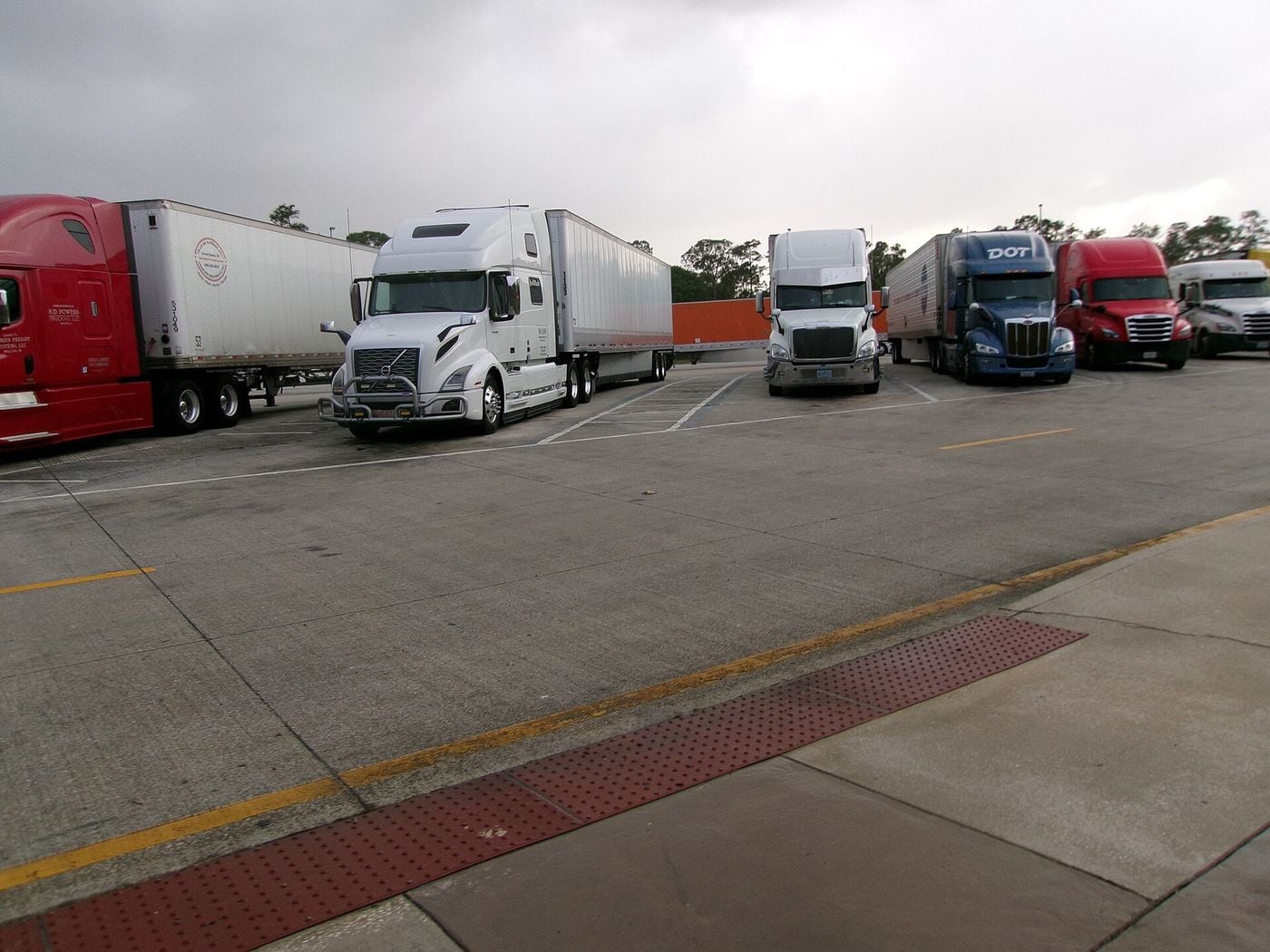
GVWR, GCWR and GAWR are weight ratings set by the manufacturer, not weights measured on a scale. The gross vehicle weight rating (GVWR) is the maximum loaded weight the manufacturer specifies for a single vehicle; the gross combination weight rating (GCWR) does the same for a vehicle with what it tows; and the gross axle weight rating (GAWR) is the load-carrying capacity of one axle system. They are printed on the certification label, and federal rules use them as thresholds: 10,001 pounds for a commercial motor vehicle under FMCSA’s safety rules and 26,001 pounds for the Class A and B commercial driver’s licenses.
Status: 30 September 2026. This page follows the Code of Federal Regulations in the eCFR with the issue date of September 28, 2026: FMCSA’s definitions in 49 CFR 390.5T (the eCFR shows section 390.5 as suspended and 390.5T as the version in effect) and 383.5, NHTSA’s definitions in 49 CFR 571.3, the certification label rules in Part 567 and the GVWR classes in section 565.15. It also cites 23 CFR 658.17 (issue date September 23, 2026) where a rating meets the Interstate weight limits.
The three ratings
| Rating | FMCSA, 49 CFR 390.5T | NHTSA, 49 CFR 571.3 |
|---|---|---|
| GVWR — gross vehicle weight rating | The value specified by the manufacturer as the maximum loaded weight of a single motor vehicle | The value specified by the manufacturer as the loaded weight of a single vehicle |
| GCWR — gross combination weight rating | The greater of the value specified by the manufacturer of the power unit, if displayed on the FMVSS certification label, or the sum of the GVWRs or gross vehicle weights of the power unit and the towed units, or any combination of them, that produces the highest value | The value specified by the manufacturer as the loaded weight of a combination vehicle |
| GAWR — gross axle weight rating | – | The value specified by the vehicle manufacturer as the load-carrying capacity of a single axle system, as measured at the tire-ground interfaces |
FMCSA’s GCWR definition adds an exception: the GCWR of the power unit is not used to define a commercial motor vehicle when the power unit is not towing another vehicle. Section 571.3 also defines unloaded vehicle weight: the weight of a vehicle with maximum capacity of all fluids necessary for operation, but without cargo, occupants or accessories that are ordinarily removed. How ratings relate to measured weights in European and other rules is explained in truck weights: GVW and GCW.
Where the ratings are printed
Section 567.4 requires each manufacturer to affix a certification label that cannot be removed without destroying or defacing it. On trucks and other vehicles except trailers and motorcycles, it goes on the hinge pillar, the door-latch post or the door edge that meets the door-latch post, next to the driver’s seating position; if none is practicable, on the left side of the instrument panel, and failing that on the inward-facing surface of the driver’s door. On a trailer the label goes on the forward half of the left side, easily readable from outside the vehicle.
The label lists, in English and in order: the name of the manufacturer; the month and year of manufacture; the GVWR, in pounds; the GAWR for each axle, in pounds, identified in order from front to rear; and a statement that the vehicle conforms to the applicable Federal motor vehicle safety standards. Consecutive axles with identical ratings on the same tire size may be given one combined value. One of the regulation’s own examples of combined ratings reads: front, 5,215 kg (11,500 lb) with 295/75R22.5(G) tires; first intermediate to rear, 9,070 kg (20,000 lb) with the same tires.
The GVWR may not be less than the sum of the unloaded vehicle weight, the rated cargo load and 150 pounds times the number of designated seating positions; for school buses the occupant allowance is 120 pounds per passenger and 150 pounds for the driver. For vehicles built in two or more stages, section 567.5 gives each stage its own label: the incomplete vehicle manufacturer and the final-stage manufacturer each state a GVWR and GAWRs in kilograms and pounds, and an intermediate manufacturer states them only if they differ from those the incomplete vehicle manufacturer identified.
Why 10,001 and 26,001 pounds matter
The ratings decide which federal rules a vehicle falls under.
- 10,001 pounds. Under 49 CFR 390.5T, a self-propelled or towed motor vehicle used on a highway in interstate commerce to transport passengers or property is a commercial motor vehicle if it has a GVWR or GCWR, or a gross vehicle weight or gross combination weight, of 10,001 pounds (4,536 kg) or more, whichever is greater. Vehicles designed or used to carry more than 8 passengers including the driver for compensation, more than 15 passengers not for compensation, or placarded hazardous materials are commercial motor vehicles too.
- 26,001 pounds. For the commercial driver’s license, 49 CFR 383.5 puts a combination with a GCWR or gross combination weight of 26,001 pounds or more, whichever is greater, towing a unit of more than 10,000 pounds in Group A, and a single vehicle with a GVWR or gross vehicle weight of 26,001 pounds or more in Group B. What each class covers is set out in what a CDL is.
The rating also meets the Interstate weight limits in one place: 23 CFR 658.17 says States may not limit steering axle weights to less than 20,000 pounds or the axle rating established by the manufacturer, whichever is lower. The limits on what a loaded truck may weigh are described in how much a semi-truck weighs.
The GVWR classes
Table II of 49 CFR 565.15 sorts vehicles by GVWR. The regulation says the designations are used when submitting GVWR information to NHTSA and that their use within the VIN itself is not required.
| Class | GVWR, pounds | GVWR, kilograms |
|---|---|---|
| Class 3 | 10,001–14,000 | Greater than 4536 to 6350 |
| Class 4 | 14,001–16,000 | Greater than 6350 to 7257 |
| Class 5 | 16,001–19,500 | Greater than 7257 to 8845 |
| Class 6 | 19,501–26,000 | Greater than 8845 to 11793 |
| Class 7 | 26,001–33,000 | Greater than 11793 to 14968 |
| Class 8 | 33,001 and over | Greater than 14968 |
Below Class 3, the table uses letters: Class A for not more than 3,000 pounds up to Class H for 9,001 to 10,000 pounds, each step 1,000 pounds wide.
The payload calculator takes the federal and state limits and subtracts the vehicle’s tare to give the load it may carry.
What this page does not cover
- Towing advice for pickups and recreational vehicles, and payload calculators.
- How a manufacturer sets or revises a rating, and whether a rating can be changed after sale.
- State registration fees and other State rules based on weight.
Quick answers
- What does GVWR mean?
- Gross vehicle weight rating. FMCSA's rules define it as the value specified by the manufacturer as the maximum loaded weight of a single motor vehicle; NHTSA's definition in 49 CFR 571.3 calls it the value specified by the manufacturer as the loaded weight of a single vehicle. It is a rating set by the manufacturer, not a measured weight.
- What is the difference between GVWR and GVW?
- GVWR is the manufacturer's rating; gross vehicle weight is what the vehicle actually weighs. Several federal thresholds use whichever is greater: a vehicle counts as a commercial motor vehicle under FMCSA's rules if its GVWR or GCWR, or its gross vehicle weight or gross combination weight, is 10,001 pounds or more, whichever is greater.
- What is GCWR?
- Gross combination weight rating, the rating for a vehicle with what it tows. For FMCSA it is the greater of the value the manufacturer of the power unit shows on the Federal Motor Vehicle Safety Standard certification label, or the sum of the GVWRs or gross vehicle weights of the power unit and the towed units that produces the highest value. The GCWR of a power unit is not used to define a commercial motor vehicle when it is not towing.
- What is GAWR?
- Gross axle weight rating, the value specified by the vehicle manufacturer as the load-carrying capacity of a single axle system, as measured at the tire-ground interfaces (49 CFR 571.3). The certification label gives one for each axle, from front to rear.
- Where is the GVWR shown on a truck?
- On the certification label that 49 CFR 567.4 requires the manufacturer to rivet or permanently affix to the vehicle. On trucks it goes on the hinge pillar, door-latch post or the door edge next to the driver's seat, or failing that on the left side of the instrument panel or the inside of the driver's door; on trailers, on the forward half of the left side. The label lists the GVWR and a GAWR for each axle in pounds.
- What GVWR makes a truck Class 8?
- In Table II of 49 CFR 565.15, Class 8 is a GVWR greater than 14,968 kilograms (33,001 pounds and over). Class 7 covers 26,001 to 33,000 pounds and Class 3, the first numbered class, starts at 10,001 pounds. The regulation uses these designations for reporting GVWR to NHTSA and says they are not required within the VIN itself.
Sources
- 49 CFR 390.5T — Definitions (eCFR, as of September 28, 2026) — Federal Motor Carrier Safety Administration (eCFR, Office of the Federal Register)
- 49 CFR 571.3 — Definitions (eCFR, as of September 28, 2026) — National Highway Traffic Safety Administration (eCFR, Office of the Federal Register)
- 49 CFR Part 567 — Certification (eCFR, as of September 28, 2026) — National Highway Traffic Safety Administration (eCFR, Office of the Federal Register)
- 49 CFR 565.15 — Content requirements, Table II: Gross Vehicle Weight Rating Classes (eCFR, as of September 28, 2026) — National Highway Traffic Safety Administration (eCFR, Office of the Federal Register)
- 49 CFR 383.5 — Definitions (eCFR, as of September 28, 2026) — Federal Motor Carrier Safety Administration (eCFR, Office of the Federal Register)
- 23 CFR 658.17 — Weight (eCFR, as of September 23, 2026) — Federal Highway Administration (eCFR, Office of the Federal Register)