London's Direct Vision Standard and HGV Safety Permit
What Transport for London's Direct Vision Standard measures, which HGVs over 12 tonnes need a safety permit in Greater London, and what changed on 28 October 2024.
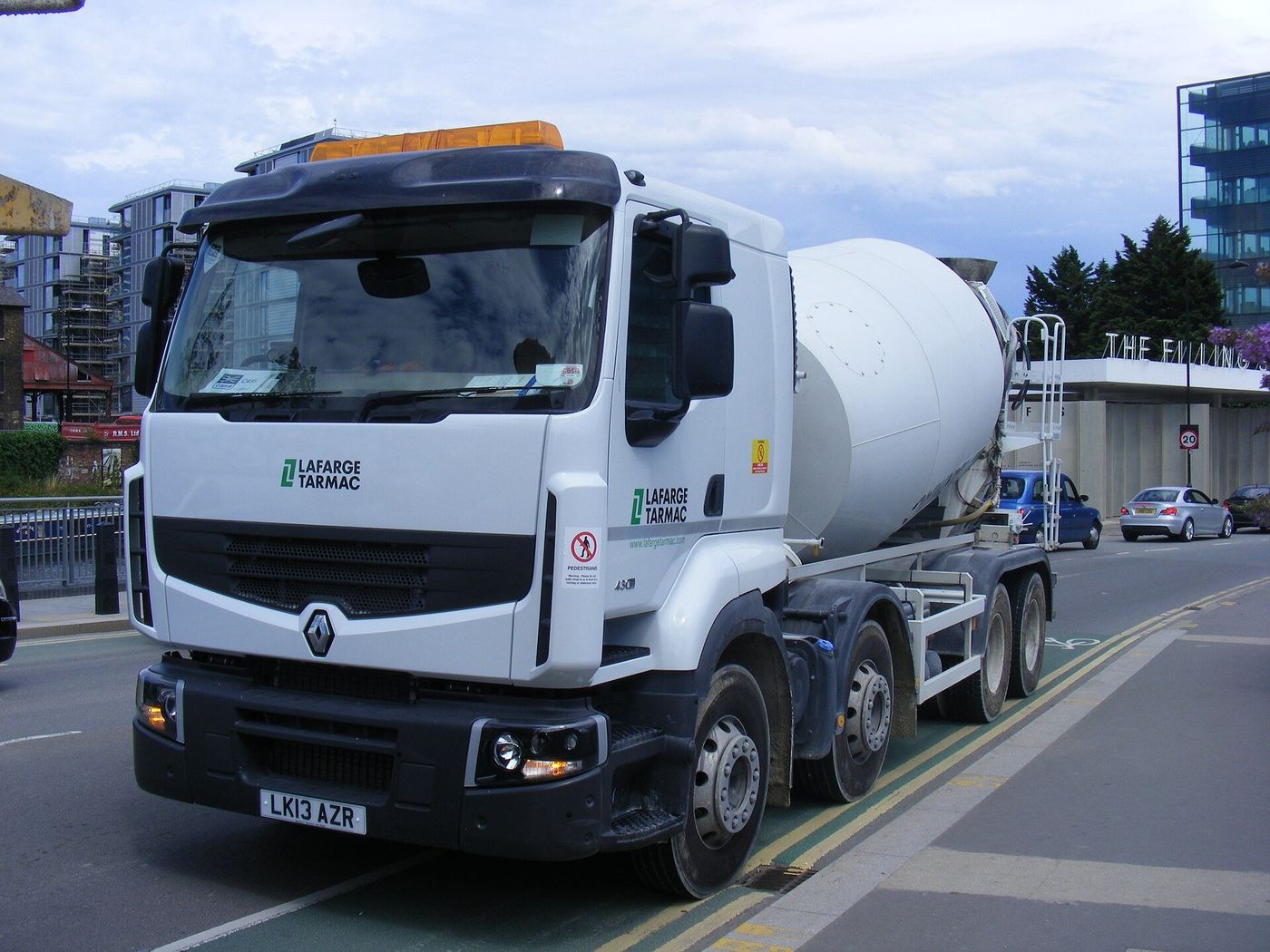
The Direct Vision Standard (DVS) is Transport for London’s measure of how much an HGV driver can see directly through the cab windows, expressed as a star rating from zero (limited) to five (good). All HGVs of more than 12 tonnes gross vehicle weight that enter or operate in Greater London must hold a valid HGV safety permit unless exempt, and since 28 October 2024 a vehicle rated below three stars, or not rated, must be fitted with TfL’s Progressive Safe System (PSS) before a permit can be granted.
Status: 28 September 2026. This page follows Transport for London’s own texts as read on that date: the scheme web pages, the permit conditions, the guidance for operators (the edition on the site is dated April 2025) and the two PSS technical specifications. It does not reproduce the technical protocol manufacturers apply to calculate a rating, TfL’s installation guidance, or the map of the area covered.
What the Direct Vision Standard measures
TfL’s scheme page puts the scale as zero (limited) to five (good). Its guidance for operators describes the DVS as an objective measure of a driver’s direct view through the windows of an HGV cab, which also defines the level of risk to road users near the vehicle. The star rating, TfL says, is fixed and depends on the vehicle design, because it indicates that level of risk to road users such as people walking and cycling. Cab designs built around a better view of nearby pedestrians and cyclists, such as low-entry cabs, are described in truck cabs explained.
TfL places the DVS and the permit scheme within the Mayor of London’s Vision Zero plan, whose aim is to eliminate all deaths and serious injuries on London’s transport network by 2041. It says it developed the DVS with expert researchers at Loughborough University and the DVS industry working group, and describes what it launched in October 2019 as “the world’s first DVS” — TfL’s own characterisation.
Who decides the rating. Ratings are generally given at the point of manufacture, and TfL states that an operator cannot change its vehicle’s star rating. The guidance says the rating is primarily determined by the manufacturer using the approved HGV DVS technical protocol. For existing vehicles, manufacturers consider ratings from the chassis number supplied by the operator; any rating advised reflects the specification at first-stage manufacture, multi-stage manufacture and later modifications are not reflected, and the rating of a model can differ between variants depending on the options chosen during manufacture. TfL’s Progressive Safe System page lists manufacturer contacts for DAF, Dennis Eagle, MAN, Renault, Scania, Volvo, Mercedes Benz Trucks and Iveco.
How the 2018 research report measured it. The report behind the standard, written by Loughborough Design School for TfL (final report for TfL review, version 1.1, December 2018), describes a method that projects the driver’s field of view through the cab windows and intersects that projection with an assessment volume; the size of the space seen gives a rating of direct vision performance. The final assessment volume is a single, unweighted zone around the cab, informed by the coverage of mirrors specified in UNECE Regulation 46. To place the boundary of one star, the report used its vulnerable-road-user simulation distances for a 5th percentile Italian female: a vehicle able to give direct vision of such road users at an average of less than 2 m to the front, less than 4.5 m to the passenger side and less than 0.6 m to the driver’s side reached one star or above, and all others were rated zero. Ratings from one to five stars were then subdivided equally. A figure note in TfL’s current guidance gives the passenger-side distance for a zero-star vehicle as greater than 4.5 metres. This paragraph describes the 2018 report, not the protocol in use today.
Which vehicles need an HGV safety permit
The guidance states that the scheme requires all HGVs of more than 12 tonnes gross vehicle weight that enter or operate in Greater London to hold a valid safety permit, unless they are exempt. TfL’s scheme page adds that this holds whether or not the operator considers the vehicle to meet the standards. The guidance also states that the scheme applies to HGVs above 12 tonne gross vehicle weight and that vehicles outside that category are not required to apply. What gross vehicle weight means is explained in truck weights: GVW and GCW.
TfL’s texts describe the area in different words, and this page passes them on separately:
- The permit conditions require a permit before an HGV in excess of 12 tonnes GVW is operated on any public road in Greater London, defined as any highway or length of highway maintainable at public expense in Greater London, called the “restricted roads” in the Traffic Order.
- TfL’s scheme page says the scheme covers most of Greater London and operates 24 hours a day, every day of the year.
- The guidance says nearly all of Greater London (the light blue area on its map) and the strategic road network (in orange) are covered, and that TfL’s online map can be searched to check whether a specific postcode or location is covered by the permit requirement.
The legal frame is named in the conditions: the Greater London (Restriction of Goods Vehicles) Traffic Order 1985, under which the London HGV Safety Permit Scheme operates. The permit conditions were approved on 21 March 2019 by the London Councils Transport & Environment Committee (TEC).
Vehicles from outside the UK. HGVs of more than 12 tonnes gross vehicle weight registered outside the UK that operate in Greater London also need a valid permit. They apply on the TfL website in the same way as UK operators, and where TfL asks for registration documents such as a V5C log book, it accepts non-UK equivalents.
Left-hand drive. Left-hand drive HGVs over 12 tonnes must still meet the requirements. Mirrors, cameras and sensors should be fitted to account for the blind spot on the right-hand side. The guidance says the audible manoeuvring warning must be fitted to warn people walking and cycling when a left-hand drive vehicle turns right; TfL’s scheme page words the same point as a warning that can be fitted. For the required blind-spot warning sign on the rear of a trailer, TfL accepts the stickers now legally required for HGVs operating in France (Angles morts).
Three stars, or the Progressive Safe System
When the DVS was launched in 2019 the minimum star rating for operating in London was one star, and zero-star or unrated vehicles had to fit additional measures known as the Safe System. From 00:00:01 hours on 28 October 2024 the minimum rating increased from one star to three stars. Where the rating is zero, one or two stars, or a vehicle has not been or cannot be rated, the vehicle must be fitted with the PSS before a permit can be granted. For three, four and five stars the guidance’s table lists the safety measures as “Recommended, not compulsory”.
The guidance describes the PSS as a set of vehicle safety measures, fitted after or at the point of manufacture, designed to reduce the risks HGVs present to vulnerable road users, aligned where possible with EU and UNECE regulations. TfL’s summary lists seven requirements, given here in its own order:
- A camera monitoring system on the nearside of the vehicle.
- Class V and VI mirrors, or a camera monitoring system that replaces the mirrors, or a combination of both, on the front and nearside, in compliance with UNECE Regulation 46.
- A blind spot information system on the nearside, to the PSS technical specifications; a vehicle that demonstrably complies with UNECE Regulation 151 meets this requirement.
- A moving off information system at the front, to the PSS technical specifications; a vehicle that demonstrably complies with UNECE Regulation 159 meets this requirement.
- Side under-run protection on both sides, except where demonstrably impractical, in compliance with UNECE Regulation 73.
- An audible vehicle manoeuvring warning for when the vehicle is turning left.
- External pictorial stickers and markings.
How the EU’s general safety rules use Regulations 151 and 159, and the EU’s own direct-vision requirement (UN Regulation No 167), are covered in mandatory driver assistance systems.
The guidance and scheme page add these details:
- Cameras. Monitors intended only to show blind spots related to low-speed manoeuvring, such as mirror-replacement cameras, may switch off at speeds above 20mph. An additional camera monitoring system does not need to be fitted where one already exists in the vehicle, such as to replace mirrors, and the same safety benefits are achieved. TfL’s scheme page adds that none is needed where the vehicle has a blind spot information system and a moving off information system fitted at the point of manufacture as part of approval under UNECE Regulations 151 and 159.
- Mirrors. Class V at the nearside and Class VI to the front.
- Articulated vehicles. Blind spot sensors must be positioned on the tractor unit to give sufficient coverage of the nearside of the combination without being activated by the trailer itself.
- Audible warning. The volume, measured at one metre from the sounder, should be between 65 and 88 decibels dB(A), and the device should have a manual on/off switch for use between 23:30 and 07:00.
- Signage. Warning signage must be displayed on the rear of the rigid vehicle and on any trailer unit in use, not on the front tractor unit. It must not be offensive or give instructional advice to people walking and cycling, and it should be at least A3 size.
- Legacy sensors. TfL recommends that sensor equipment fitted under the former 2019 Safe System is deactivated or removed when the PSS is fitted, and says that keeping it is not in itself necessary for compliance and risks contributing to cognitive overload for the driver.
- Products. TfL states that it does not mandate, endorse or accredit any specific product or brand of equipment or technology as part of the PSS.
The sensor specifications
TfL publishes two technical specifications for the sensor requirements. Each states that it is aimed at aftermarket systems intended to enable the legacy fleet to obtain an HGV safety permit. The blind spot specification (updated May 2024) deems vehicles approved to UNECE Regulation 151 to comply with all of its requirements; the moving off specification does the same for vehicles approved to UNECE Regulation 159.
| Requirement | Blind spot information system (nearside) | Moving off information system (front) |
|---|---|---|
| Approved vehicles | Approved to UNECE Regulation 151: deemed to comply | Approved to UNECE Regulation 159: deemed to comply |
| Active | At all vehicle speeds between 0 km/h and 30 km/h, in all ambient lighting conditions above 15 lux | Whether the vehicle is stationary or in motion; warning at vehicle speeds between 0km/h and 5km/h |
| Road users | Vulnerable road users including bicycles of all typical sizes and designs, at bicycle speeds between 5 km/h and 20 km/h | Vulnerable road users stationary or moving forward at speeds between 3 km/h and 5 km/h, coming from the nearside or offside perpendicular to the vehicle’s median longitudinal plane |
| Area covered | From the nearside vehicle edge to 2.2m lateral distance, from the front left corner of the vehicle to at least 9m rear of that point | Vehicles rated 0 to 2 star: at least 2000 mm ahead of the front plane; laterally the vehicle width plus a separation plane of 500mm on each side |
| Signal | Warning is multi-modal: at least two of visual, audible (tonal) or haptic signals simultaneously | Collision warning uses at least two modes of optical, acoustic or haptic signal |
The blind spot specification measures the nearside zone from the vehicle edge taken at the widest point, excluding mirrors, auxiliary equipment and superstructures above 2 m height from the ground plane. It also says the system shall inform the driver about approaching road users while the vehicle is stationary, before they reach the vehicle front, considering a driver reaction time of 1.4 seconds. In TfL’s words it removes the 900mm dead zone directly adjacent to the side of the vehicle in Regulation 151, thereby requiring detection up to the side of the vehicle. It also states that repeated audible alarms when a road user travels along a parallel path to the vehicle, or is simply located near it, are not acceptable.
Exemptions
The guidance separates vehicles fully exempt from the scheme, which need no permit, from vehicles partially exempt, which must still hold a valid permit but are exempt from the listed PSS equipment only.
Fully exempt (Table 1 of the guidance and of the permit conditions):
- Emergency service vehicles, including ambulances and fire engines with a taxation class of “ambulance” or “fire engine” on the date of travel (exempt for specified vehicles).
- Council-operated gritting and snow plough vehicles.
- Armed Forces vehicles, and Ministry of Defence vehicles or military vehicles (for specified vehicles).
- Breakdown organisations and recovery vehicles, for vehicles called out by the emergency services whose load is required for dealing with an actual or perceived emergency affecting the safety of persons or property.
- Historic vehicles: those with the “historic” vehicle tax class, which excludes any vehicle used commercially.
- Showman’s vehicles, which must be registered with TfL by a person following the business of a travelling showman, the vehicle having been modified or specially constructed for that purpose. TfL’s scheme page adds that vehicles with an active 100% Showman’s discount are exempt.
- A vehicle with no bodywork fitted, being driven or towed for a quality or safety check by its manufacturer, a dealer or a distributor; to a place where, by previous arrangement, bodywork is to be fitted or preparatory work carried out; or by previous arrangement to a dealer’s or distributor’s premises.
- Mobile cranes.
- A vehicle being driven or towed to a place where, by previous arrangement, PSS equipment is to be fitted.
Partially exempt (Table 2), by the equipment concerned:
- Side under-run protection: road sweepers; gully emptiers and suckers; tractors for articulated vehicles (all trailers used with the exempt tractor unit must fit side under-run protection, unless covered by an additional exemption); vehicles mounted with cranes or access working platforms, from the forward point of the stabiliser legs or where full compliance is not practicable; vehicles with fuel tanks and equipment boxes in the sideguard area, only where their shape gives equal protection and the spaces between them do not exceed 300mm; tank vehicles, where compliance would prevent (not merely hinder) the operation of hose or pipe connections; vehicle transporters, if the chassis rails are on the extremities of the vehicle; vehicles with roll-on/roll-off anchorage points, to the extent of gaps for fixings or lashings; and recovery vehicles whose sides by shape and characteristics already meet the requirements.
- Class VI mirror: bonneted vehicles such as Unimog. Vehicles fitted with any combination of direct view or indirect vision devices as an alternative to a Class V or VI mirror are exempt as permitted by UNECE Regulation 46.
- Warning signage: tractors for articulated vehicles (all trailers used with the tractor unit must fit warning signage).
- Camera monitoring system: vehicles with blind spot and moving off systems fitted at the point of manufacture as part of type approval with UNECE Regulations 151 and 159, not as part of an aftermarket system.
- Blind spot and/or moving off systems: specialist vehicles transporting abnormal indivisible loads whose permanent characteristics would prevent those systems operating effectively. TfL adds that such a vehicle must still obtain a permit and install the other PSS components.
Getting a permit
Applying is free of charge. TfL’s scheme page states that a permit can only be applied for under the Progressive Safe System conditions, regardless of the star rating; the previous Safe System conditions lapsed on 27 October 2024 at 23:59. Permits are not automatically issued, so operators apply when a new vehicle joins the fleet. For newly registered vehicles TfL says owners should start the application as early as possible, even if the registration mark is not yet known to it. TfL states that driver training is not a mandatory requirement for obtaining a permit.
When TfL does not know the star rating. The operator asks the manufacturer, supplying the chassis number (VIN) for an existing vehicle; the manufacturer calculates the rating under the approved protocol and sends a document or email, which the operator uploads through TfL’s contact form. TfL then updates its records and aims to respond within 28 days. Alternatively, an operator who knows the vehicle is rated zero, one or two stars can self-certify that rating without proof from the manufacturer, by a written statement in English giving the name, the registration mark, the make and/or model, confirmation that it is a self-certification, and the star rating declared.
Evidence for zero, one and two stars, and unrated vehicles. The application needs two photographs and a sensor functionality statement; TfL does not require third-party certification of the equipment.
- The first photograph shows the front and nearside of the HGV, the second the rear and nearside, with registration plates clearly readable. Files are JPG or PNG, no more than 10MB each.
- The statement, in no prescribed format, certifies that the blind spot and moving off information systems are fully functional, effective and installed in compliance with the PSS technical specifications. For vehicles type-approved to UNECE Regulations 151 and 159, TfL accepts certificates produced by manufacturers as part of type approval; for others the statement comes from the fitter or the manufacturer of the vehicle or products.
Fleets. A multi-vehicle application can cover 5 to 3,000 vehicles at one time. Where safety evidence is required, TfL identifies a percentage of the vehicles and asks for evidence for them, the exact number being based on the overall number of zero-, one- and two-star vehicles in the application; once those are approved it issues permits for all remaining zero-, one- and two-star vehicles in the application “on trust”. It reserves the right to withdraw permits if it has evidence that suggests abuse of the application process or that required PSS measures are not being maintained.
After the permit is issued.
- TfL aims to process applications within 10 working days. The permit is issued by email with a reference number; a physical permit is not normally provided and there is no requirement to produce or display one, because enforcement uses TfL’s database of vehicle registrations supported by automatic number plate recognition at the roadside.
- A permit is not transferable to another vehicle or registration mark, or to another operator, individual or sole trader. A new owner of a vehicle with a valid permit must apply for a new one, and when a personalised number plate is transferred TfL cancels the permit recorded against the original registration mark.
- The operator must tell TfL if it changes the configuration of any of its vehicles. The conditions require modifications and safety features to be maintained and kept in proper working order at all times.
- A vehicle for which an application has been made may not be operated on any public road in Greater London until the permit has been approved and issued.
Enforcement and penalty
The guidance states that it is unlawful to operate an HGV of more than 12 tonnes gross vehicle weight in Greater London without a permit, or to breach the conditions of a permit, including not adequately fitting or maintaining Safe System or PSS equipment where required. TfL’s scheme page says a driver of an HGV within most of Greater London without a valid permit may receive a penalty charge notice (PCN) of up to £550, reduced to £275 if paid within 14 days; the conditions say a PCN may be issued to operators or parties or persons liable. The guidance says enforcement is by automatic number plate recognition cameras and roadside checks.
Under the permit conditions, failure to comply may result in revocation or suspension of the permit, and suspension may be immediate if considered in the interests of public safety. Operating a vehicle in Greater London while its permit is suspended is a contravention of the Traffic Order. TfL lists the Congestion Charge, the Ultra Low Emission Zone, the Low Emission Zone and the Blackwall and Silvertown tunnels charge as other road user charges which may apply; they are separate from the permit scheme and are not described here.
Timeline: 2019 to 2030
| Date | Event |
|---|---|
| December 2018 | Loughborough Design School’s final report to TfL on the definition, production and validation of the DVS (version 1.1) |
| 21 March 2019 | Permit conditions approved by London Councils TEC |
| October 2019 | TfL says it launched the DVS |
| 26 October 2020 | Date from which the Safe System measures were to be fitted under the 2019 conditions, unless an exemption was indicated |
| 1 March 2021 | TfL’s press release says the scheme was operating 24 hours a day, seven days a week and enforced on all roads in London; TfL had delayed enforcement by more than four months to that date |
| 2022 | TfL reviews the Safe System |
| 14 February to 3 April 2023 | TfL consults operators, manufacturers, suppliers, road user safety groups, industry and other stakeholders on its PSS proposals |
| 8 June 2023 | PSS measures and exemptions approved by TEC |
| 24 June 2024 | Applications for permits under the PSS conditions open |
| 27 October 2024, 23:59 | Permits under the previous Safe System conditions lapse |
| 28 October 2024 | Minimum star rating rises from one star to three stars |
| 2028 | TfL says it will seek to review the PSS and consult on any potential changes; any further changes, if deemed necessary, would be introduced from October 2030 |
| 28 October 2030 | New permits expire at midnight |
For context, TfL’s release of 28 October 2024 reports, in its own figures, a 62 per cent reduction in 2023 in the number of fatal collisions involving an HGV compared with the 2017-19 baseline, and says six people were killed and 32 people were seriously injured in collisions involving HGVs in 2023.
Quick answers
- What is the Direct Vision Standard?
- It is Transport for London's measure of how much an HGV driver can see directly through the cab windows, expressed as a star rating from zero (limited) to five (good). The rating is fixed and depends on the vehicle design, because it indicates the level of risk to road users such as people walking and cycling. TfL says the DVS and the HGV Safety Permit Scheme are part of the Mayor of London's Vision Zero plan to eliminate all deaths and serious injuries on London's transport network by 2041.
- Which lorries need an HGV safety permit in London?
- All HGVs of more than 12 tonnes gross vehicle weight that enter or operate in Greater London, unless they are exempt. HGVs of that weight registered outside the UK need one too, and left-hand drive vehicles must meet the same requirements. The guidance states that vehicles outside the over-12-tonne category are not required to apply for a permit.
- How is a lorry's DVS star rating decided, and can it be changed?
- The rating is primarily determined by the vehicle's manufacturer, using the approved HGV DVS technical protocol, and is generally given at the point of manufacture. TfL states that an operator cannot change the star rating. For an existing vehicle the manufacturer works from the chassis number, and the rating reflects the vehicle at first-stage manufacture: multi-stage manufacture and later modifications are not reflected. If the operator knows the vehicle is rated zero, one or two stars, it can self-certify that rating without proof from the manufacturer.
- What does the Progressive Safe System require?
- Seven measures, in TfL's order: a nearside camera monitoring system; Class V and VI mirrors, or a camera monitoring system that replaces them, or both; a nearside blind spot information system; a front moving off information system; side under-run protection on both sides; an audible manoeuvring warning when turning left; and external pictorial stickers and markings. It applies where the rating is zero, one or two stars or the vehicle is not rated, and a vehicle that demonstrably complies with UNECE Regulation 151 meets the blind spot requirement while one that complies with Regulation 159 meets the moving off requirement.
- How long does a DVS safety permit last?
- A new permit is valid until midnight on 28 October 2030, whatever the star rating; since 28 October 2024 a new permit can only be applied for under the Progressive Safe System conditions. Existing permits for vehicles rated three stars or above remain valid for the duration stated in the confirmation email; in the guidance's table, under the column headed “Prior to 27 October 2024”, three-, four- and five-star permits are shown as valid for 10 years from issue. Permits for zero-, one- and two-star vehicles granted before 24 June 2024 are no longer valid.
- What is the penalty for driving without a DVS permit?
- A penalty charge notice of up to £550, reduced to £275 if paid within 14 days, according to TfL's scheme page. The guidance says it is unlawful to operate an HGV of more than 12 tonnes gross vehicle weight in Greater London without a permit or to breach the permit conditions, and the conditions add that failure to comply may lead to revocation or suspension of the permit, which may be immediate if considered in the interests of public safety.
Sources
- Direct Vision Standard and HGV Safety Permit Scheme — Transport for London
- Direct Vision Standard: Guidance for operators (April 2025) — Transport for London
- Direct Vision Standard and Safety Permit for HGVs — HGV safety permit conditions under the Greater London (Restriction of Goods Vehicles) Traffic Order 1985 — Transport for London
- Progressive Safe System — Transport for London
- Getting your HGV safety permit — Transport for London
- Progressive Safe System: Detailed Specifications — Blind Spot Information Systems (updated May 2024) — Transport for London
- Progressive Safe System: Technical Specifications — Moving Off Information Systems (MOIS) — Transport for London
- TfL's pioneering Direct Vision Standard comes into force (press release, 1 March 2021) — Transport for London
- World-leading Direct Vision Standard for HGVs strengthened in the capital, helping to reduce road danger and save lives (press release, 28 October 2024) — Transport for London
- The definition, production and validation of the direct vision standard (DVS) for HGVs — Final report for TfL review, version 1.1 (December 2018) — Loughborough Design School, for Transport for London