operating
Driver CPC explained: the hours behind a truck or bus driver
The initial qualification and periodic training a European truck or bus driver must hold under Directive (EU) 2022/2561, who is exempt, and what 2025/2205 changes.
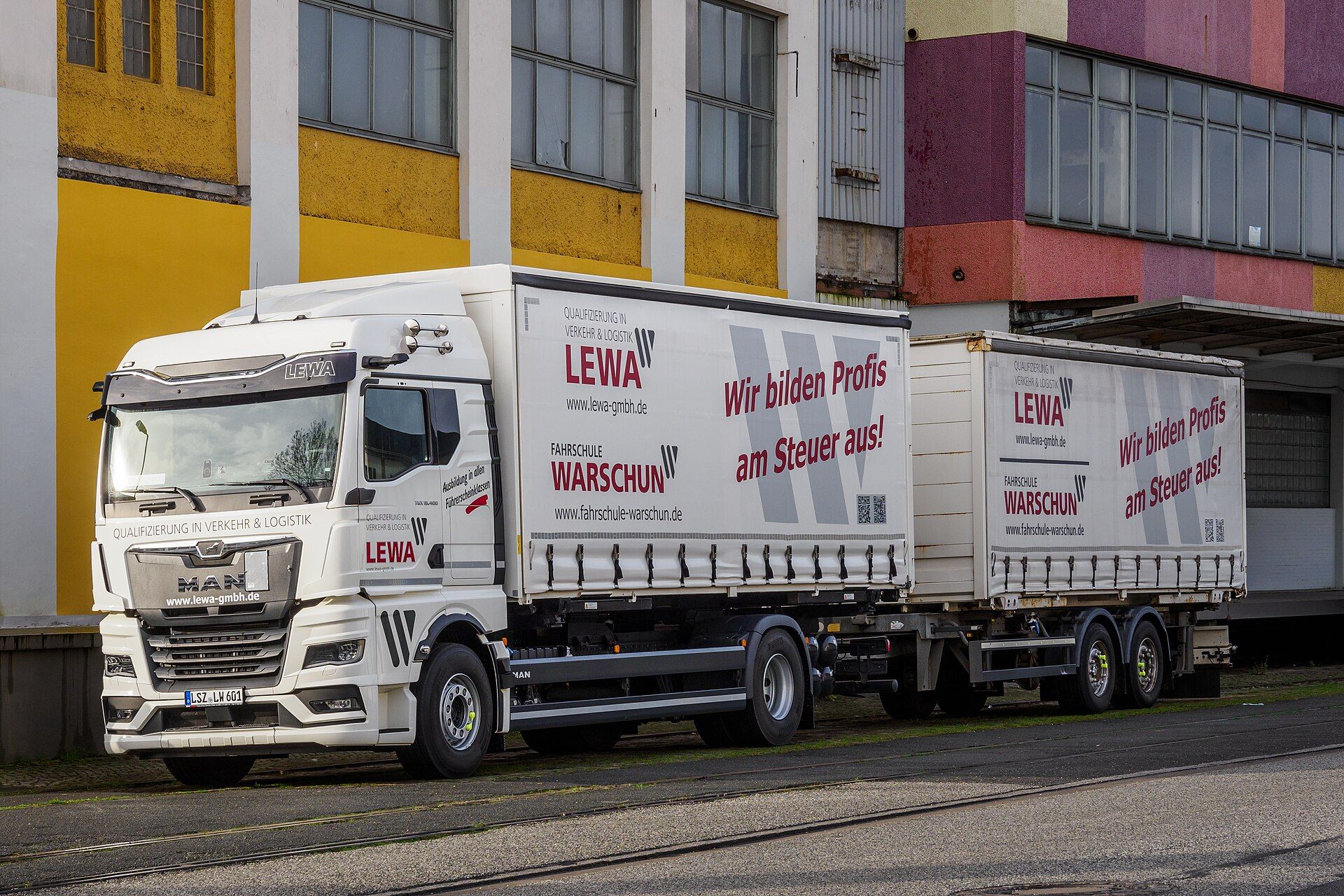
A truck or bus driver holds two documents, and only one is a driving licence. The licence says which vehicle the holder may move; the certificate of professional competence says the holder may be paid to do it. The second carries an hours bill, falls due on a five-year cycle whether the driver is busy or not, and is why a fleet loses working days to a classroom.
The instrument is Directive (EU) 2022/2561, in force, which took effect on 12 January 2023 — the twentieth day after publication, as Article 15 requires. It is a codification rather than a reform: Article 14 repealed Directive 2003/59/EC, which EUR-Lex records as no longer in force with a date of end of validity of 11 January 2023. The older directive belongs in the past tense.
Which drivers it follows, and which vehicles
Article 1 attaches the obligation to the activity of driving, not to the employer: nationals of a Member State, and nationals of third countries employed or used by an undertaking established in a Member State, engaged in road transport within the Union on roads open to the public, using vehicles requiring a licence of category C1, C1+E, C, C+E, D1, D1+E, D or D+E.
Those categories are defined in Directive 2006/126/EC, which is still in force. Under its Article 4(4), C1 covers motor vehicles other than those in D1 or D, designed and constructed for the carriage of no more than eight passengers in addition to the driver, with a maximum authorised mass over 3 500 kg but not over 7 500 kg, and C the same eight-passenger vehicle with no upper mass bound; D1 covers vehicles built for no more than 16 passengers in addition to the driver and a maximum length not exceeding 8 metres, and D vehicles built for more than eight passengers in addition to the driver. The passenger limb is not decoration: it is what keeps the goods family and the passenger family apart, since a vehicle built for more than eight passengers stays in D however far its mass climbs past 7 500 kg. Which of those a person may hold, and from what age, is set out in bus driving licences.
Article 2 then removes a closed list of uses rather than stating a principle: vehicles limited to 45 km/h; armed forces, civil defence, fire service, public-order forces and emergency ambulance services where the carriage follows from those tasks; road tests and vehicles not yet in service; D and D1 vehicles driven empty by maintenance personnel near the operator’s nearest maintenance base; emergencies and rescue missions; driving instruction for, and examination of, anyone seeking a licence or a CPC, provided the vehicle is not being used for the commercial carriage of goods and passengers; non-commercial carriage; and vehicles carrying material, equipment or machinery the drivers use in their work. The conditions attached to those entries are what is easily lost. Two of them bind only where driving is not the driver’s principal activity; the instruction entry falls away the moment the training vehicle earns freight; and a second subparagraph carries the instruction exemption over to a learner doing additional driving training during work-based learning, accompanied by a CPC holder or a driving instructor for that category of vehicle. Two further paragraphs lift the directive from rural own-account driving on three cumulative conditions, and from agricultural, horticultural, forestry, farming or fishery undertakings — any one of the five, not all of them — carrying goods as part of their own entrepreneurial activity, that last one except where driving is part of the driver’s principal activity or exceeds a distance set in national law.
Three routes in, and what each costs in hours
Article 3(1)(a) makes the Member State choose between two systems of initial qualification, and the choice decides how many hours a new driver sits. Article 3(2) lets it add a third, accelerated route on top. Article 3(3) then allows a Member State to exempt anyone already holding the certificate of professional competence under Regulation (EC) No 1071/2009 — the qualification behind an operator licence — from the tests in the subjects that certificate covers and, where appropriate, from attending the part of the course corresponding to them. The second limb is the one that moves the bill: an exemption from tests alone changes no course time, while an exemption from the corresponding part of the course cuts into the 280 or the 140.
| Route | Course hours | Individual driving | At seven hours a day |
|---|---|---|---|
| Course and test, Article 6(1)(a) — Section 2.1 | 280 | At least 20 hours, at most 8 of them on special terrain or a top-of-the-range simulator | 40 days |
| Tests only, Article 6(1)(b) — Section 2.2 | No course attendance required | Driving test of at least 90 minutes | — |
| Accelerated, Article 6(2) — Section 3 | 140 | At least 10 hours, at most 4 of them on special terrain or a top-of-the-range simulator | 20 days |
The tests-only option is not a shortcut but a different instrument. Section 2.2 prescribes no course, only examinations: a theoretical test of at least four hours in two parts, questions and case studies, plus a driving test of at least 90 minutes and a further practical test of at least 30. An optional third test on special terrain or a top-of-the-range simulator is deductible from the 90 minutes, but not by more than 30.
Annex I, Section 1 sets what the hours buy: rational driving based on safety regulations, application of regulations, and health, road and environmental safety, service and logistics, at a level comparable at least to level 2 of the European Qualifications Framework. Some subjects split by licence family — load securing for C, passenger comfort and safety for D. Subject 2.1 covers Regulations (EC) No 561/2006 and (EU) No 165/2014 for every category, which is why driving time and rest rules and the second-generation smart tachograph are training subjects and not only a roster and an installation.
The route also decides when the work can start. Under Article 5(2) a driver may take a C or C+E vehicle from 18 with the full CPC of Article 6(1), a C1 or C1+E vehicle from 18 with the accelerated CPC of Article 6(2), and a C or C+E vehicle from 21 with the accelerated one. Article 4 then grandfathered everyone already working when the regime came in: nobody holding a D-family licence issued no later than 9 September 2008, or a C-family licence issued no later than 9 September 2009, needs an initial qualification at all.
Periodic training, and what may be counted towards it
This is the recurring bill. Annex I, Section 4 fixes it at 35 hours every five years, in periods of at least seven hours, which may be split over two consecutive days. Five such periods exhaust the allowance; that division is ours, not the Directive’s. All 35 hours are organised by an approved training centre, one period at least must cover a road-safety subject, and the e-learning inside that total — for which the centre stays answerable — may not exceed 12 hours, leaving at least 23 hours, by our subtraction, that e-learning cannot cover.
Some of it can be work the driver was doing anyway. Member States may count specific training required under other Union legislation — the paragraph names animal transport under Regulation (EC) No 1/2005, and disability awareness under Regulation (EU) No 181/2011 for passenger work — towards up to one of the seven-hour periods, and may decide that dangerous-goods training under Directive 2008/68/EC counts as two, or 14 of the 35 hours by our arithmetic, provided it is the only other training counted. Article 7 adds one point worth knowing before a driver changes employer: periodic training already undergone must be taken into account when a driver moves to another undertaking. The hours belong to the driver, not to the fleet that paid for them.
The five-year cycle is not five years everywhere
Article 8(2) requires the first course within five years of the CPC being issued, then lets the Member State reduce or extend that period, “inter alia” so that it coincides with the expiry of the driving licence. The Latin is load-bearing: licence alignment is the illustration the Directive offers, not the boundary of the discretion, so a state may shift the date for reasons of its own. The floor and ceiling are hard: not shorter than three years, not longer than seven. After the first course, Article 8(3) puts the driver on a five-year cycle, completed before the certificate’s validity ends.
Article 8(4) closes the gap that catches returning drivers: anyone holding either CPC, or grandfathered under Article 4, who has ceased to exercise the occupation and no longer meets those requirements must complete periodic training before resuming it. A licence category does not lapse in a drawer; the qualification does.
Moving between goods and passengers
Two provisions govern this and they are not symmetrical, which is where planning goes wrong. For the initial qualification, Article 5(4) works inside a family and, in its own words, without prejudice to the age limits in Article 5(2) and (3): a CPC held for one goods category exempts the driver from obtaining one for the other goods categories, and the same applies among the passenger categories, but it does not lower the age at which the larger vehicle may be taken out. An 18-year-old with the accelerated CPC for C1 and C1+E needs no second certificate for C, and still may not drive C until 21. Crossing between the families is Article 5(5), which requires only the parts specific to the new qualification. Annex I prices that crossing at 70 hours including five hours of individual driving on the full course of Section 2.1, or 35 hours including two and a half on the accelerated Section 3, each ending as those sections always end, in a written or oral test with at least one question on every objective. Where the Member State has taken the tests-only option instead, it is Section 2.2 that bends: for the same driver the theoretical test is limited to the subjects relevant to the new vehicles, though the whole practical test is still taken. The three routes adapt in three different ways, and none of the three borrows another’s terms.
Periodic training crosses the families outright. Article 8(5) exempts a driver who has completed it for one of the categories in Article 5(2) and (3) from undergoing it again for any of the others in those paragraphs. One 35-hour course keeps both a truck and a bus entitlement alive, which matters to any operator running mixed work and to the driver-cost line in tractor unit running costs and in the obligations underneath a bus fleet.
Code 95, the qualification card, and drivers from outside the Union
Article 10 records the qualification as the harmonised Union code 95, marked alongside the corresponding licence categories either on the driving licence or on a driver qualification card built to the model in Annex II. Where the issuing authorities cannot mark the code on the licence itself they issue the card, and the card is mutually recognised between Member States.
For third-country drivers on goods work there is a third document. Article 10(2) allows the qualification to be proved by the driver attestation under Regulation (EC) No 1072/2009 provided it bears code 95; Article 10(3) accepts attestations issued before 23 May 2020 without the code until they expire. Article 5 of that Regulation issues the attestation to the haulier, for each driver who is neither a national of a Member State nor a long-term resident, with a maximum validity of five years — a document a cabotage check will look at.
What Directive (EU) 2025/2205 changes, and when
Directive (EU) 2025/2205 on driving licences entered into force on 25 November 2025 and does two things here. Article 30 repeals Directive 2006/126/EC with effect from 26 November 2029, except for its Article 6(4), point (c) — the national authorisation to drive an alternatively fuelled goods vehicle over 3 500 kg but not over 4 250 kg, without a trailer, on a category B licence issued at least two years before — which is repealed two years earlier, on 26 November 2027. The category definitions above therefore have an end date, and it is the 2029 one. Article 27 amends Article 5 of the CPC directive itself.
It adds a point (c) to Article 5(2): from the age of 17, a vehicle in category C1, C1E or C, provided the driver holds a full CPC for C or an accelerated one for C1 and C1E, and only under the conditions in Article 17(2) and (3) of the new directive. Those conditions are narrow. Article 17(2) is a derogation a Member State may use rather than must, it covers driving on that state’s own territory, and the licences it produces are mutually recognised only by the Member States that issue them. Article 17(3) then requires a driver under 18 to be accompanied, in the front passenger seat, by someone able to give guidance while driving and bound by the rules on driving under the influence of alcohol or drugs, who must also meet three cumulative conditions: a minimum age of 24; a licence of the relevant category, issued in the Union, held for more than five years; and no driving disqualification in the issuing Member State within the last five years. Article 17(4) lets a Member State add proportionate conditions of its own, and for C, C1 and C1E those may include a dedicated course of at least seven hours, which may be raised to 14, taken as part of the accompanying driver’s own periodic CPC training. The scheme therefore puts an hours bill on the escort as well as on the seventeen-year-old.
It also replaces Article 5(3), the passenger ages, and the replacement is not one number. Its first subparagraph sets 21 for D, D+E, D1 and D1+E on either CPC route, and adds an optional monitoring scheme for drivers under 23 holding the accelerated CPC: where a Member State makes those drivers attend periodic training on road-safety subjects before they turn 23, that attendance counts towards the 35 hours every five years rather than sitting on top of them. Two national derogations then survive underneath. A Member State may authorise D1 and D1+E from 18 within its own territory, and D and D+E from 20, in each case only where the driver holds the full CPC of Article 6(1); the 20 may be reduced to 18 to drive without passengers, or to carry passengers on regular services where the route does not exceed 50 kilometres. Twenty-one is the floor only in a state that declines the opt-downs, which is why a hiring age for bus drivers has to be read off national law rather than off the directive. Article 29 sets the calendar: the measures are adopted and published by 26 November 2028 and applied from 26 November 2029, the accompanied-driving scheme from 26 November 2028. A training budget built on a 17-year-old intake is built against a date years out, and against a derogation the Member State may never take up.
Quick answers
- How many hours is the Driver CPC initial qualification?
- 280 hours under Annex I, Section 2.1 of Directive (EU) 2022/2561, of which at least 20 must be individual driving and at most eight of those 20 may be on special terrain or a top-of-the-range simulator. The accelerated route in Section 3 is 140 hours with at least 10 hours of individual driving, at most four of those 10 on special terrain or a top-of-the-range simulator.
- How often does Driver CPC periodic training have to be done?
- 35 hours every five years, under Annex I, Section 4. Article 8(2) lets a Member State reduce or extend the period before the first course for any reason — lining it up with the driving licence expiry date is the example the Directive names, not the limit of the power — but the period may not be shorter than three years or longer than seven.
- Can Driver CPC periodic training be done online?
- Only in part. Annex I, Section 4 has an approved training centre organise all 35 hours, given in periods of at least seven hours, which may be split over two consecutive days. E-learning sits inside that: of the 35, no more than 12 may be delivered by it, and the approved centre remains answerable for their quality.
- Does a lorry driver need a separate CPC to drive a bus?
- Article 5(5) requires only the parts specific to the new qualification, and Annex I prices them at 70 hours including five hours of individual driving, or 35 hours including two and a half hours by the accelerated route. Periodic training does not have to be repeated at all: Article 8(5) makes one 35-hour course count for both families of category.
- What is Union code 95 on a driving licence?
- It is the harmonised code that records the CPC, marked alongside the corresponding licence categories under Article 10 of Directive (EU) 2022/2561. Where the authorities cannot mark it on the licence itself, they issue a driver qualification card instead, and that card is mutually recognised across the Union.
Sources
- Directive (EU) 2022/2561 on the initial qualification and periodic training of drivers of certain road vehicles for the carriage of goods or passengers — EUR-Lex, European Union
- Directive (EU) 2025/2205 on driving licences, amending Directive (EU) 2022/2561 and repealing Directive 2006/126/EC — EUR-Lex, European Union
- Directive 2006/126/EC on driving licences, consolidated text of 01/11/2020 — EUR-Lex, European Union
- Directive 2003/59/EC — document status and date of end of validity — EUR-Lex, European Union
- Regulation (EC) No 1072/2009 on common rules for access to the international road haulage market, consolidated text of 21/02/2022 — EUR-Lex, European Union