The EU Data Act and truck and bus data: access rights, dates and the design duty
The EU Data Act has applied since 12 September 2025. What it says on data from connected products, vehicles included: user access, third-party sharing and the design duty after 12 September 2026.
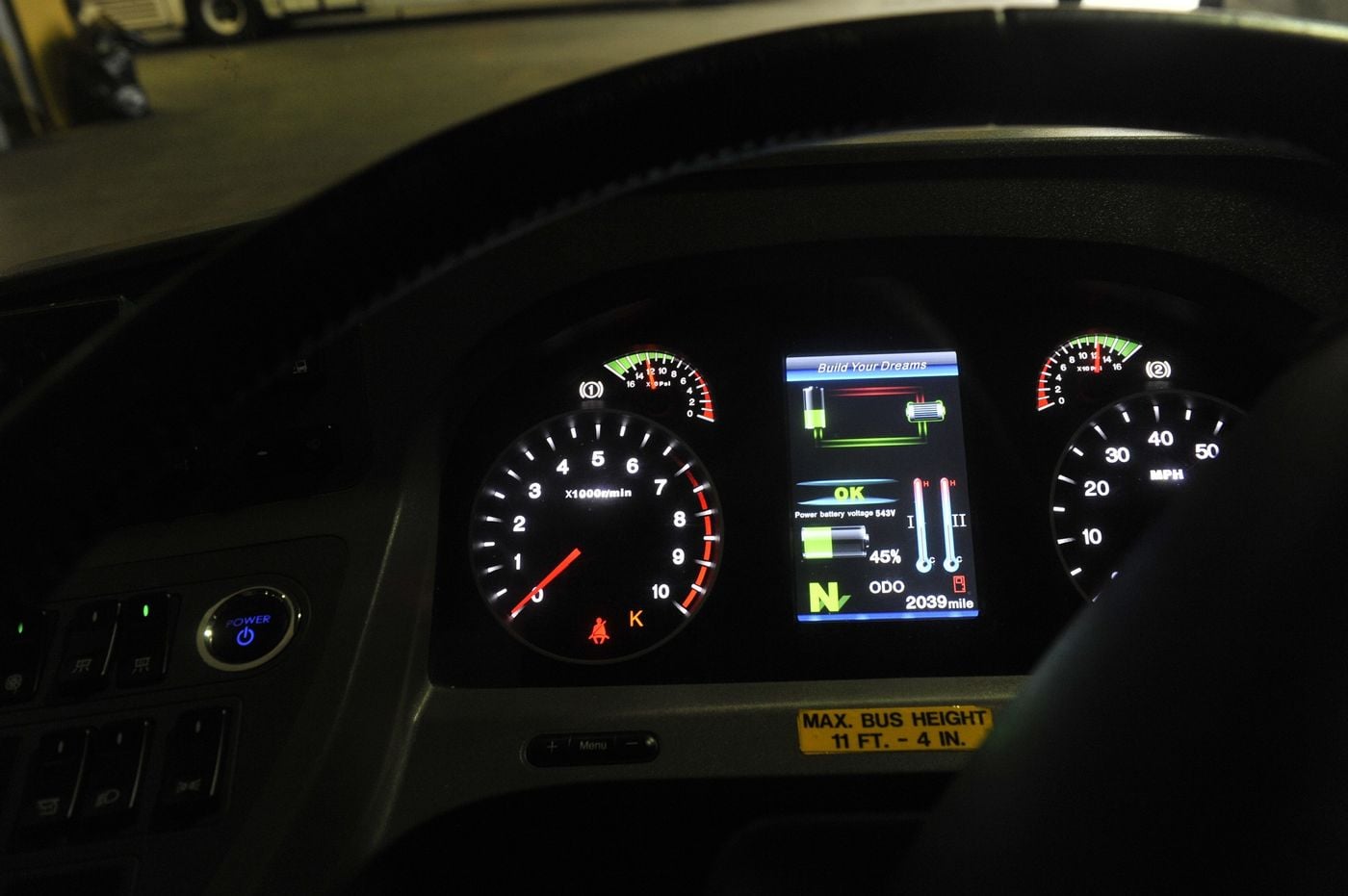
Regulation (EU) 2023/2854, the Data Act, gives the user of a connected product a right to the data that the product and its related services generate, and it has applied in every EU Member State since 12 September 2025. Its recital 14 names vehicles among the places where connected products are found. Where the user cannot reach the data directly, the data holder must make readily available data accessible on a simple request, free of charge (Article 4), and must make them available to a third party of the user’s choice (Article 5). A separate duty concerns design: connected products and related services placed on the market after 12 September 2026 must be designed and provided so that their data are accessible to the user by default and, where relevant and technically feasible, directly (Articles 3(1) and 50). In the words of recital 6, the Regulation “provides for horizontal rules”; its text does not name trucks, buses or any vehicle interface.
Status as of 13 November 2026. Read on that day: the Official Journal text of Regulation (EU) 2023/2854 from the EU Publications Office, in English and in the German, Spanish, Polish, Italian and French language versions; the European Commission’s publication page for its Guidance on vehicle data, dated 12 September 2025; and the start page of the FMS-Standard website. The guidance document itself was not read.
The Regulation and the terms it uses
The European Parliament and the Council adopted the Regulation on 13 December 2023, and it was published in the Official Journal on 22 December 2023. Its business-to-consumer and business-to-business rules are in Chapter II, which, under Article 1(2)(a), “applies to data, with the exception of content, concerning the performance, use and environment of connected products and related services”. The Regulation applies to “manufacturers of connected products placed on the market in the Union and providers of related services, irrespective of the place of establishment of those manufacturers and providers” (Article 1(3)(a)), and to users in the Union of those products and services (Article 1(3)(b)).
The definitions in Article 2 carry the rest:
- A connected product “means an item that obtains, generates or collects data concerning its use or environment and that is able to communicate product data via an electronic communications service, physical connection or on-device access, and whose primary function is not the storing, processing or transmission of data on behalf of any party other than the user” (point 5).
- A related service is a digital service, other than an electronic communications service, including software, which is connected with the product at the time of the purchase, rent or lease in such a way that its absence would prevent the product from performing one or more of its functions, or which is later connected to the product by the manufacturer or a third party “to add to, update or adapt the functions of the connected product” (point 6).
- Product data are data generated by the use of a connected product “that the manufacturer designed to be retrievable, via an electronic communications service, physical connection or on-device access, by a user, data holder or a third party, including, where relevant, the manufacturer” (point 15). Related service data represent the digitisation of user actions or of events related to the connected product during the provision of a related service (point 16).
- Readily available data are product data and related service data that a data holder lawfully obtains or can lawfully obtain “without disproportionate effort going beyond a simple operation” (point 17).
- The user is a natural or legal person that owns a connected product, or to whom temporary rights to use it have been contractually transferred, or that receives related services (point 12). The data holder is the person with the right or obligation to use and make available data (point 13), and a data recipient is a person acting for business purposes, other than the user, to whom the data holder makes data available (point 14).
- Placing on the market is “the first making available of a connected product on the Union market” (point 22).
The recitals say where the lines run. Recital 14 lists the settings in which connected products are found: “private, civil or commercial infrastructure, vehicles, health and lifestyle equipment, ships, aircraft, home equipment and consumer goods, medical and health devices or agricultural and industrial machinery”. It adds that the manufacturers’ design choices and, where relevant, Union or national law addressing sector-specific needs or decisions of competent authorities “should determine which data a connected product is capable of making available”.
Recital 15 covers data in raw form and data pre-processed to make them understandable, such as data from sensors measuring “temperature, pressure, flow rate, audio, pH value, liquid level, position, acceleration or speed”. It includes data recorded by embedded applications, “including applications indicating hardware status and malfunctions”, and data generated while the product is in stand-by mode or switched off, since the status of a product or its components, “for example its batteries”, can vary. Information inferred or derived from such data, in particular “by means of proprietary, complex algorithms”, falls outside the Regulation and outside the data holder’s obligation to make it available, unless the user and the data holder agree otherwise. Separate EU rules on the state-of-health data that the battery management system of an electric truck or bus must hold are set out in the EU Battery Regulation for trucks and buses.
Recital 17 excludes from related services those that do not affect the operation of the product and do not transmit data or commands to it, giving as examples “auxiliary consulting, analytics or financial services, or regular repair and maintenance”, and states: “Neither the power supply, nor the supply of the connectivity are to be interpreted as related services under this Regulation.” Recital 18 says: “An owner, renter or lessee should also be considered to be a user, including where several entities can be considered to be users”, and gives as one form of use “fleet management for a leasing enterprise”.
Dates in the Regulation
| Date | What applies | Provision |
|---|---|---|
| Twentieth day after publication (published 22 December 2023) | Entry into force | Article 50, first paragraph |
| 12 September 2025 | The Regulation applies | Article 50, second paragraph |
| 12 September 2025 | Deadline for Member States to notify the Commission of their rules on penalties | Article 40(2) |
| After 12 September 2025 | Chapter III applies to obligations to make data available under Union law or national legislation that enter into force after this date; Chapter IV applies to contracts concluded after this date | Article 50, fourth and fifth paragraphs |
| After 12 September 2026 | The obligation resulting from Article 3(1) applies to connected products and related services placed on the market after this date | Article 50, third paragraph |
| 12 September 2027 | Chapter IV applies to contracts concluded on or before 12 September 2025 that are of indefinite duration or due to expire at least 10 years from 11 January 2024 | Article 50, sixth paragraph |
| 12 September 2028 | Deadline for the Commission’s evaluation of the Regulation and its report to the European Parliament, the Council and the European Economic and Social Committee | Article 49(1) |
The third paragraph of Article 50 reads: “The obligation resulting from Article 3(1) shall apply to connected products and the services related to them placed on the market after 12 September 2026.” It is the only provision of Chapter II that Article 50 gives a date of its own.
Access by design: Article 3
Article 3(1) is the design duty: “Connected products shall be designed and manufactured, and related services shall be designed and provided, in such a manner that product data and related service data, including the relevant metadata necessary to interpret and use those data, are, by default, easily, securely, free of charge, in a comprehensive, structured, commonly used and machine-readable format, and, where relevant and technically feasible, directly accessible to the user.”
Article 3(2) is addressed to whoever sells, rents or leases the product. Before concluding a contract for the purchase, rent or lease of a connected product, “the seller, rentor or lessor, which may be the manufacturer”, must give the user at least the following information, in a clear and comprehensible manner:
- the type, format and estimated volume of product data which the connected product is capable of generating;
- whether it is capable of generating data continuously and in real-time;
- whether it is capable of storing data on-device or on a remote server, including, where applicable, the intended duration of retention;
- how the user may access, retrieve or, where relevant, erase the data, including the technical means to do so, as well as their terms of use and quality of service.
Article 3(3) sets a longer list for the provider of a related service, to be given before that contract is concluded. It includes the nature, estimated volume and collection frequency of product data that the prospective data holder expects to obtain; the nature and estimated volume of related service data; whether the data holder expects to use readily available data itself and for which purposes, and whether it intends to allow third parties to use the data; its identity and contact details; how the user can request that the data be shared with a third party; the user’s right to lodge a complaint with the competent authority; whether the data holder holds trade secrets in the data; and the duration of the contract and how to end it.
Access on request: Article 4
Article 4(1) opens with “Where data cannot be directly accessed by the user from the connected product or related service”. In that case data holders “shall make readily available data, as well as the relevant metadata necessary to interpret and use those data, accessible to the user without undue delay, of the same quality as is available to the data holder, easily, securely, free of charge, in a comprehensive, structured, commonly used and machine-readable format and, where relevant and technically feasible, continuously and in real-time”. This is done “on the basis of a simple request through electronic means where technically feasible”.
The same article sets the limits on both sides:
- Security. Users and data holders may contractually restrict or prohibit access, use or further sharing if such processing could undermine security requirements of the connected product laid down by Union or national law, “resulting in a serious adverse effect on the health, safety or security of natural persons” (Article 4(2)). A data holder that refuses on this ground notifies the competent authority.
- Trade secrets. Trade secrets are disclosed only where the data holder and the user take the necessary measures to preserve their confidentiality (Article 4(6)). Without agreement on those measures the data holder may withhold or suspend sharing of the data identified as trade secrets (Article 4(7)), and in exceptional circumstances a data holder that is a trade secret holder may refuse a request case by case if it can demonstrate that it is “highly likely to suffer serious economic damage” from the disclosure (Article 4(8)). Each of these decisions is given to the user in writing and notified to the competent authority (Article 4(7) and (8)), and the user may complain to that authority or agree to go to a dispute settlement body (Article 4(9)).
- No competing product. The user may not use the data to develop a connected product that competes with the one the data come from, nor share them with a third party with that intent (Article 4(10)).
- Personal data. Where the user is not the data subject, personal data are made available to the user only where there is a valid legal basis under Article 6 of Regulation (EU) 2016/679 (Article 4(12)).
- The data holder’s own use. A data holder may use readily available non-personal data only on the basis of a contract with the user (Article 4(13)), and may not make non-personal product data available to third parties for purposes other than the fulfilment of that contract (Article 4(14)).
Sharing with a third party: Articles 5, 6 and 9
Upon request by a user, or by a party acting on the user’s behalf, the data holder must make readily available data and the relevant metadata available to a third party “without undue delay, of the same quality as is available to the data holder, easily, securely, free of charge to the user”, in a machine-readable format and, where relevant and technically feasible, continuously and in real-time, and does so in accordance with Articles 8 and 9 (Article 5(1)). Undertakings designated as gatekeepers under Regulation (EU) 2022/1925 are not eligible third parties (Article 5(3)). The third party may process the data only for the purposes and under the conditions agreed with the user, and erases them when they are no longer necessary for that purpose, unless otherwise agreed with the user in relation to non-personal data (Article 6(1)).
Between the data holder and the data recipient, Article 9(1) allows them to agree compensation that “shall be non-discriminatory and reasonable and may include a margin”. The costs of making the data available and the investments in collecting and producing them are taken into account (Article 9(2)). Where the data recipient is an SME or a not-for-profit research organisation without partner or linked enterprises that do not qualify as SMEs, the compensation may not exceed those costs of making the data available (Article 9(4)).
Who is outside Chapter II: Article 7
The Chapter II obligations “shall not apply to data generated through the use of connected products manufactured or designed or related services provided by a microenterprise or a small enterprise”, provided it has no partner or linked enterprise that does not qualify as a micro or small enterprise, and is not subcontracted to manufacture or design a connected product or to provide a related service (Article 7(1)). The same applies to an enterprise that has qualified as medium-sized for less than one year, and to connected products for one year after a medium-sized enterprise placed them on the market. Any contractual term which, to the detriment of the user, excludes or varies the user’s rights under Chapter II “shall not be binding on the user” (Article 7(2)).
Authorities and penalties
Each Member State designates one or more competent authorities to apply and enforce the Regulation, and a data coordinator where there is more than one (Article 37(1) and (2)). The data protection supervisory authorities remain responsible insofar as the protection of personal data is concerned (Article 37(3)), and “for specific sectoral data access and use issues related to the application of this Regulation, the competence of sectoral authorities shall be respected” (Article 37(4)(a)). Member States lay down the penalties, which must be “effective, proportionate and dissuasive”, and the Commission keeps a public register of the measures notified to it (Article 40(1) and (2)).
The Commission’s guidance on vehicle data
On 12 September 2025, the day the Regulation started to apply, the European Commission published a “Guidance on vehicle data, accompanying the Data Act”. Its publication page describes it as providing “tailored advice to automotive stakeholders on how to implement Chapter II of the Data Act”. It explains the key obligations “as they relate to vehicle data as defined in paragraph 19 of this guidance”. The page names its audience as original equipment manufacturers (OEMs), suppliers, aftermarket service providers and insurance providers, and states: “This guidance only concerns the automotive sector.” The page does not reproduce the guidance’s definition of vehicle data.
FMS and rFMS
The text of Regulation (EU) 2023/2854 does not mention FMS, rFMS or any other vehicle data interface. The start page of the FMS-Standard website offers two standards, “for Trucks (incl. rFMS)” and “for Buses and Coaches”, and notes that each requires a separate registration to receive information about updates. Its data privacy text names one recipient of registration data, the “ACEA HDEI/BCEI group”. The start page does not list the data that the standards carry. The FMS interface and the CAN networks behind it are described on the page on CAN bus in trucks and buses.
Related rules
Recital 11 states that “Union law establishing physical design and data requirements for products to be placed on the Union market should not be affected unless specifically provided for by this Regulation”. For trucks and buses, the type-approval rules on repair and maintenance information include a duty on manufacturers to enable access to the in-vehicle data stream, among other routes through remote access facilities, under Point 2.9 of Annex X to Regulation (EU) 2018/858 as rewritten by Delegated Regulation (EU) 2026/699; those rules are set out in repair information access rights.
On personal data, Article 1(5) states that “In the event of a conflict between this Regulation and Union law on the protection of personal data or privacy, or national legislation adopted in accordance with such Union law, the relevant Union or national law on the protection of personal data or privacy shall prevail”.
The freight information that operators may make available to authorities electronically is governed by a different EU instrument, Regulation (EU) 2020/1056, described in eFTI and e-CMR explained.
Quick answers
- When did the EU Data Act start to apply?
- Regulation (EU) 2023/2854 has applied since 12 September 2025 (Article 50). The obligation in Article 3(1) to design connected products and related services so that their data are accessible to the user by default applies to connected products and related services placed on the market after 12 September 2026. Chapter IV on unfair contractual terms applies to contracts concluded after 12 September 2025, and from 12 September 2027 also to older contracts that are of indefinite duration or due to expire at least 10 years from 11 January 2024.
- Does the Data Act cover trucks and buses?
- The Regulation does not name trucks, buses or any vehicle type. Recital 14 lists vehicles among the places where connected products are found, and Article 2(5) defines a connected product as an item that obtains, generates or collects data concerning its use or environment and can communicate product data via an electronic communications service, physical connection or on-device access. The Regulation applies to manufacturers of connected products placed on the market in the Union irrespective of where they are established (Article 1(3)(a)). On 12 September 2025 the European Commission published a Guidance on vehicle data; its publication page states that it only concerns the automotive sector.
- Who is the user of a connected product under the Data Act?
- Article 2(12) defines the user as a natural or legal person that owns a connected product, or to whom temporary rights to use it have been contractually transferred, or that receives related services. Recital 18 says an owner, renter or lessee should also be considered a user, including where several entities can be considered users, and gives fleet management for a leasing enterprise as an example of one form of use.
- Is access to the data free of charge?
- For the user, yes. Where the user cannot access the data directly, the data holder must make readily available data accessible to the user free of charge (Article 4(1)), and must make them available to a third party chosen by the user free of charge to the user (Article 5(1)). Between the data holder and that third party, Article 9 allows compensation that is non-discriminatory and reasonable and may include a margin; where the data recipient is an SME or a not-for-profit research organisation without partner or linked enterprises that do not qualify as SMEs, it may not exceed the costs of making the data available.
- Which data does the Data Act not cover?
- Chapter II excludes content (Article 1(2)(a)). Recital 15 places outside the Regulation's scope information inferred or derived from the data by means of proprietary, complex algorithms, and outside the data holder's obligation to make data available unless the user and the data holder agree otherwise. Under Article 7 the Chapter II obligations do not apply to data from connected products manufactured or designed, or related services provided, by a microenterprise or a small enterprise that has no partner or linked enterprise outside those size classes, and a newly medium-sized enterprise has a one-year exemption.
Sources
- Regulation (EU) 2023/2854 of the European Parliament and of the Council of 13 December 2023 on harmonised rules on fair access to and use of data (Data Act), Official Journal L series of 22 December 2023 — recitals 6, 11, 14, 15, 17 and 18, Articles 1 to 7, 9, 37, 40, 49 and 50 — Publications Office of the European Union, 13 Dec 2023
- Guidance on vehicle data, accompanying the Data Act — publication page of 12 September 2025 (read on 13 November 2026; the guidance document itself not read) — European Commission, Directorate-General for Communications Networks, Content and Technology, 12 Sept 2025
- FMS-Standard start page and data privacy policy (read on 13 November 2026) — FMS-Standard website