The HGV levy in the UK: who pays, the 2026 rates and how foreign lorries pay
Which lorries pay the UK HGV Road User Levy (12,000 kg or more), the three weight bands, the rates in force from 1 April 2026, how UK and foreign vehicles pay, exemptions and the fine.
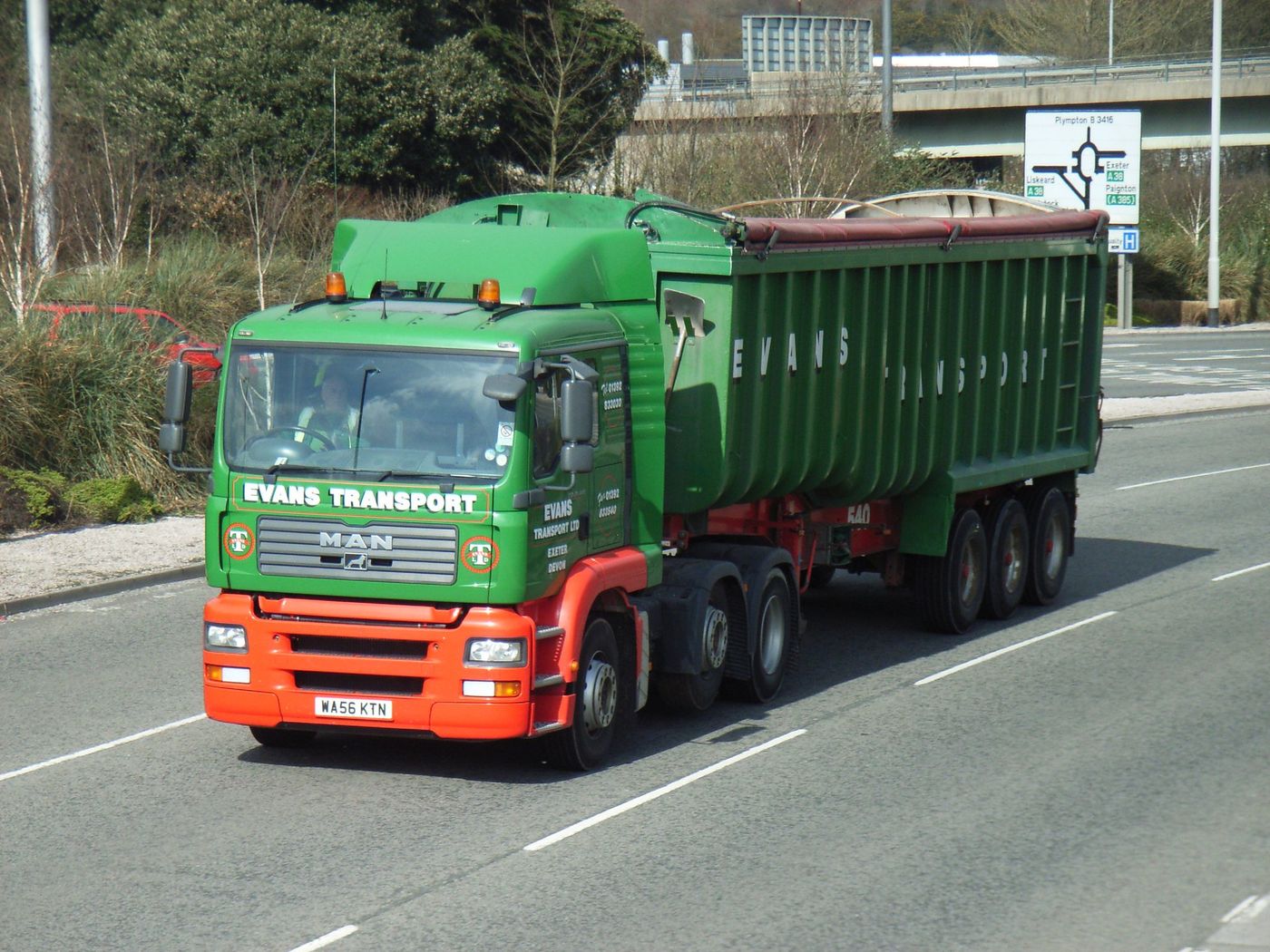
The HGV Road User Levy is a duty of excise created by the HGV Road User Levy Act 2013 and charged on heavy goods vehicles with a revenue weight of 12,000 kilograms or more; it took effect on 1 April 2014. UK-registered lorries pay it with their vehicle excise duty and non-UK-registered lorries pay it before they enter the UK, through the GOV.UK HGV levy service or by phone, and from 1 April 2026 the rate runs from £3.22 for a day (weight band A, Euro 6) to £804 for a year (band C, not Euro 6).
A duty of excise created by the 2013 Act
The levy has a statute of its own: the HGV Road User Levy Act 2013 (2013 c. 7), dated 28 February 2013 on legislation.gov.uk. Its long title describes it as an Act to make provision charging a levy in respect of the use or keeping of heavy goods vehicles on public roads in the United Kingdom. Section 1(1) says that a duty of excise, called HGV road user levy, is charged, and section 1(2) that it is to be levied by the Secretary of State. The revised text records section 1 as in force from 1 April 2014 under S.I. 2014/797. Under section 9(4) the levy is paid into the Consolidated Fund, and section 20 extends the Act to England and Wales, Scotland and Northern Ireland.
The government’s stated aim is set out in the HMRC tax information and impact note of 15 March 2023. Before the levy was introduced in 2014, it says, operators of UK-registered HGVs paid charges or tolls in most European countries for use of the road network there, while foreign-registered HGVs did not pay to use the UK’s road network; many regarded that imbalance as unfair to UK operators, and the government sought to address it. GOV.UK’s collection page says the levy aims to make sure these vehicles contribute when using the road network. For the way tolls are built in the EU, where a toll is based on the distance travelled, see EU road tolls and CO2 emission classes.
Which vehicles pay: 12,000 kg revenue weight
Section 2(1) defines a heavy goods vehicle as a mechanically propelled vehicle with a revenue weight of 12,000 kilograms or more, or a heavy motor car within the meaning of section 185 of the Road Traffic Act 1988, in respect of which vehicle excise duty is charged at the rate applicable under Part 6 (vehicles used for exceptional loads) or Part 8 (goods vehicles) of Schedule 1 to the Vehicle Excise and Registration Act 1994, or would be so charged but for an exemption granted on the basis that the vehicle is only temporarily in the United Kingdom. GOV.UK gives the same threshold: a vehicle that is not registered in the UK, weighs 12,000kg or more and is not exempt must pay before entering the UK, and its collection page says the levy applies to HGVs of 12,000kg or more.
Section 2(2) then splits the definition in two. A “UK heavy goods vehicle” is one charged to vehicle excise duty as described above; a “non-UK heavy goods vehicle” is one that would be charged but for the exemption for a vehicle only temporarily in the United Kingdom. GOV.UK adds that vehicles registered on the Isle of Man, the Channel Islands or UK overseas territories are not classed as UK-registered. Section 2(3) allows the Secretary of State to substitute a different number of kilograms for 12,000 by order.
Revenue weight
Section 19(1) gives “revenue weight” the meaning it has in section 60A of the 1994 Act, subject to paragraph 5(2) of Schedule 1. Under section 60A(1) a vehicle’s revenue weight is its confirmed maximum weight where it has one and, in any other case, the weight determined under the rest of the section; section 60A(2) makes that, subject to the following provisions, equal to its design weight. For a tractive unit, the design weight under section 60A(3)(a) is the weight which the design and any subsequent adaptations of the vehicle require not to be exceeded by an articulated vehicle consisting of the tractive unit and any semi-trailer capable of being drawn by it, in normal use and travelling on a road laden. The general terms are explained in Truck weights: gross vehicle, gross combination and axle loads.
For a rigid vehicle drawing a trailer, paragraph 5(2) of Schedule 1 to the Act says that the trailer’s weight is ignored if the trailer weighs less than 4,000 kilograms and is added to the vehicle’s revenue weight if it weighs 4,000 kilograms or more. GOV.UK words the boundary differently, saying rigid vehicles must include the weight of the trailer if it weighs more than 4,000kg; this page follows the Act.
GOV.UK says the rate to pay is the one for the maximum permitted weight of the vehicle, which it also calls the “maximum total revenue weight of the combination”, even if the vehicle will not be at that weight on the journey or is using a different trailer than usual. Its example: a vehicle with an actual weight of 28,000kg and a maximum permitted weight of 35,000kg pays the rate for a 35,000kg vehicle. The levy applies to the registration number of the rigid vehicle or tractor unit, not the number of the trailer, and a levy cannot be transferred between vehicles.
Which roads: all public roads for UK lorries, A and M roads for the rest
Section 3(1A) sets the roads to which the Act applies. For UK heavy goods vehicles it is all public roads in the United Kingdom. For non-UK heavy goods vehicles it is any road that has been assigned a number prefixed by A or M under the system for assigning identification numbers to roads administered by the Secretary of State, Northern Ireland Ministers, Scottish Ministers or Welsh Ministers.
The trigger differs too. Under section 1(1) the levy is charged in respect of a UK heavy goods vehicle that is used or kept on a road, and of a non-UK heavy goods vehicle that is used on a road. For a non-UK vehicle, section 6(2) requires the levy to be paid in respect of each day on which the vehicle is used on a road to which the Act applies under section 3(1A)(b).
GOV.UK describes the day-by-day rule for non-UK vehicles this way:
- The levy is payable for any day on which an HGV weighing 12,000kg or more is driven on a main road in the UK, including main roads in England, Northern Ireland, Scotland and Wales. A main road is one that starts with an “A” or an “M”, for example the A2 or the M20, and GOV.UK says almost all the roads from UK ports are main roads.
- It is not payable if, in a whole 24-hour period, the vehicle only drives on minor roads (a road that starts with a B or has no road number) or is parked up. It is payable if a main road is used at any point in the 24-hour period.
- For payment purposes a day runs from midnight (00:00:00) to 1 second before midnight (23:59:59), and if a vehicle stays in the UK longer than planned and its levy expires, the additional days must be paid for.
GOV.UK also says toll road charges, for example the M6 toll and the Dartford Crossing, and congestion charges, for example the London congestion charge, still have to be paid.
Whether the levy itself applies on a given road is a different matter. The revised Act on legislation.gov.uk still lists the HGV Road User Levy (Exemption of Specified Roads) Order 2014 (S.I. 2014/800) as excluding the Act from certain roads. The Order’s Schedule names, in England, the M6 Toll road and, in Northern Ireland, the A37 and the two sections of A3 to the west of Clones, and it came into force on 1 April 2014. The text of the Order used here is the version as made on legislation.gov.uk.
The rates from 1 April 2026
Paragraph 1 of Schedule 1 to the Act assigns two rate tables and a band table: Table 1 applies to a heavy goods vehicle that meets Euro 6 emissions standards, Table 1A to one that does not, and Table 1B sets out the bands, which depend on the vehicle’s revenue weight. Paragraph 5(1)(c) defines meeting Euro 6 as complying with the emission limits in Annex 1 of Regulation (EC) No. 595/2009 on type approval of motor vehicles and engines with respect to emissions from heavy duty vehicles (Euro VI); what Euro VI requires is covered in Euro 6 and Euro 7 explained. GOV.UK labels the two tables “Euro 6 vehicles” (Euro 6 class or later) and “Euro 5 or older vehicles” (Euro 5 class or older).
Table 1B reads: more than 11,999kgs but not more than 31,000kgs is band A, more than 31,000kgs but not more than 38,000kgs band B, and more than 38,000kgs band C; paragraph 5(1)(b) says a reference to more than 11,999 kilograms is to be read as 12,000 kilograms or more. GOV.UK writes the same bands as 12,000 to 31,000, 31,001 to 38,000 and 38,001 and over (kg).
Finance Act 2026, section 98, substituted Tables 1 and 1A and came into force on 1 April 2026. The figures below are those tables.
| Band | Revenue weight | Daily | Weekly | Monthly | Half-yearly | Yearly |
|---|---|---|---|---|---|---|
| A | 12,000 to 31,000 kg | £3.22 | £8.05 | £16.10 | £96.60 | £161 |
| B | 31,001 to 38,000 kg | £7.74 | £19.35 | £38.70 | £232.20 | £387 |
| C | 38,001 kg and over | £9.67 | £30.95 | £61.90 | £371.40 | £619 |
| Band | Revenue weight | Daily | Weekly | Monthly | Half-yearly | Yearly |
|---|---|---|---|---|---|---|
| A | 12,000 to 31,000 kg | £4.18 | £10.45 | £20.90 | £125.40 | £209 |
| B | 31,001 to 38,000 kg | £10.06 | £25.15 | £50.30 | £301.80 | £503 |
| C | 38,001 kg and over | £10.74 | £40.20 | £80.40 | £482.40 | £804 |
GOV.UK’s “How to use the HGV levy service” carries the same daily, weekly, monthly and yearly figures under “Levy rates from 1 April 2026”, without the half-yearly column. It says the rate depends on the Euro class of the vehicle, its weight and how long it will be in the UK; the collection page describes the amount as based on vehicle weight, as a broad approximation to CO2 emissions, on the vehicle’s air quality emissions standard, and on levy duration. GOV.UK’s change history records “Levy rates increased in line with UK inflation” on 1 April 2025 and again on 1 April 2026.
Read across the tables, the shorter periods are fixed fractions of the yearly rate. By our arithmetic, in all six rows the weekly rate is 5 % of the yearly rate, the monthly rate 10 % and the half-yearly rate 60 %; the daily rate is 2 % of the yearly rate in bands A and B only, since in band C 2 % of £619 would be £12.38 and 2 % of £804 £16.08, against the tabled £9.67 and £10.74. Also by our arithmetic, the yearly rate for a vehicle that does not meet Euro 6 is £48 higher in band A, £116 higher in band B and £185 higher in band C than the Euro 6 rate (£209 against £161, £503 against £387, £804 against £619), about 30 % higher in each band.
How UK-registered lorries pay
GOV.UK says the HGV levy service is not for HGVs registered in the UK: UK HGVs pay the levy with their vehicle excise duty, either every year or every 6 months, alongside the VED. Its collection page says payments are collected by the DVLA and that UK-registered vehicles pay levy costs at the same time and in the same transaction as VED, with the rate calculated automatically by the DVLA.
The Act ties the two together. Section 5(2) requires the levy to be paid for all periods for which the vehicle is charged to vehicle excise duty; where VED is paid for a year the levy must be paid for the same year, and where it is paid for 6 months, for the same 6 months (section 5(3) and (4)). Section 5(5) and (6) point to the “Yearly rate” column for a year and the “Half-yearly rate” column for 6 months, in Table 1 or Table 1A depending on which applies to the vehicle. Section 15(1) adds to section 7 of the Vehicle Excise and Registration Act 1994 a provision that the Secretary of State is not required to issue a vehicle licence for a heavy goods vehicle if not satisfied that the appropriate levy has been paid.
Section 4(1) makes liable each person in whose name the vehicle is registered under the 1994 Act and any other person by whom the vehicle is kept; under section 4(3), where two or more persons are liable for the same vehicle at the same time, their liability is joint and several.
Since 1 July 2026, GOV.UK’s DVLA guidance says, most HGVs qualify for a temporary reduced vehicle tax rate of £1 for 12 months, which applies to eligible vehicles taxed between 1 July 2026 and 30 June 2027. The same guidance says that a vehicle subject to the HGV levy continues to be charged at the current levy rate alongside the £1 rate of VED, applied automatically when the vehicle tax is renewed.
How foreign-registered lorries pay
GOV.UK says the levy must be paid before the vehicle enters the UK, and that using an HGV in the UK without the correct levy is a criminal offence. The route is the HGV levy service, which GOV.UK describes as a service for non-UK registered HGVs; it is reached from the official page Pay the heavy goods vehicle (HGV) levy. The service lets a user make a one-off payment or set up an account to manage payments.
- Who pays. GOV.UK says the levy can be paid by the driver, the operator or a booking agent, and that it is the driver’s responsibility to check that the vehicle has a valid levy every time it comes to the UK. In the Act, section 4(2) makes liable each person who is the holder of a Community licence in respect of the vehicle and any other person by whom the vehicle is kept.
- Periods. Section 6(3) allows payment for a period of one year, or any shorter period, chosen by the person paying. GOV.UK says the levy can be paid by the day, week, month or year, and that annual payments are only possible with a levy service account.
- Payment methods. GOV.UK lists credit or debit card, fuel card, prepayment through an account, bank transfer and PayPal, and says the levy can also be paid by phone (card payments only).
- Accounts. GOV.UK lists what an account allows: paying faster, changing the start date of a levy, getting a refund, paying for a levy of more than 1 month, seeing the payment history, registering and managing vehicles, and allowing someone else to manage the account.
- Proof. GOV.UK says no proof of purchase needs to be displayed in the vehicle window. Payments are recorded on the HGV levy payment database, to which UK police and enforcement officers have access, and when the levy is paid through the service, whoever pays receives a confirmation email or text message with a unique payment reference number. The GOV.UK page also lets a user check whether a levy has been paid, using the front licence plate number of the vehicle.
- Euro 6 evidence. GOV.UK says that whoever pays the Euro 6 levy amount needs documents to prove that the vehicle meets the Euro 6 standard.
Exemptions: zero-emission vehicles, trade plates and a short list
Zero emission. GOV.UK says HGVs that are zero emission at the tailpipe are currently exempt from paying the levy. In its section on registering a non-UK zero emission HGV it says this applies only to full battery electric vehicles and hydrogen fuel cell HGVs, and not to hybrid powertrains or hydrogen combustion HGVs, which must still pay the levy. This page reports the exemption as GOV.UK states it and gives no statutory basis for it.
GOV.UK also describes an optional zero-emission registration for non-UK vehicles. A vehicle registered this way is flagged as zero emission on the levy systems, which GOV.UK says will minimise the risk of being stopped for non-payment of the levy. The application is made by email and has to give the vehicle registration number, the country of registration, the name of the person making the legal declaration that the vehicle is zero emission (who will be held accountable for any false statement) and copies of documents demonstrating it: the vehicle registration certificate with field P3 saying electric or FC/hydrogen, and the certificate of conformity showing information from section 49. GOV.UK says UK zero emission HGVs are already registered as zero emission and should not use this register, that vehicles should carry documentation proving they are zero emission at the tailpipe, and that a false declaration may be considered criminal fraud and subject to police action.
Trade plates. Section 8(2) of the Act says the levy is not charged for a period during which the vehicle is licensed by a trade licence under section 11 of the 1994 Act. GOV.UK says an HGV temporarily displaying trade plates to travel to or from a garage for maintenance or repair does not have to pay, and that a vehicle not displaying trade plates must pay.
Others. GOV.UK lists vehicles being used for driver instruction, showman’s vehicles and island goods vehicles (used on small islands, not on mainland UK roads) as exempt. Section 8(1) of the Act excludes vehicles within paragraph 9(2) of Schedule 1 to the 1994 Act, described in the section itself as certain rigid goods vehicles charged to vehicle excise duty at the basic goods vehicle rate, and section 8(3) allows regulations to provide for no charge, or a reduced rate, for prescribed categories of heavy goods vehicle.
Rebates and refunds
Section 7 of the Act gives a rebate where the levy has been paid for a period of more than one month (the “levy period”) and a rebate entitlement arises more than one month before the end of that period; the person who paid claims it by application to the Secretary of State. In summary, the cases in section 7(2) are that the vehicle is stolen or destroyed, that the person who paid notifies the Secretary of State that the vehicle is not intended to be used for the rest of the levy period, and that the vehicle has been sold or disposed of. Section 7(2A) adds the case where the levy was paid at the rate for a vehicle that does not meet Euro 6 and the vehicle becomes one that does.
Where the levy was paid for a whole year, the rebate is A × (10 - B), where A is one-tenth of the amount paid and B is the number of months from the start of the levy period to the date of the application, rounded up to the next whole number if not exact (section 7(3)). In any other case it is C × D, where C is one-tenth of the yearly rate at the start of the levy period and D is the number of whole months from the day after the application to the end of the levy period (section 7(4)). GOV.UK states the yearly case as the annual rate minus (annual rate / 10) times the months used, counting a total or partial month.
By our arithmetic, a Euro 6 band C levy paid for a year at £619 and applied for in the fourth month gives A = 61.90 and B = 4, so the rebate is 61.90 × 6 = £371.40.
GOV.UK adds two points for payments made without an account: a levy for less than one month cannot be refunded, and a levy bought for the wrong vehicle through the contact centre can be checked and changed within 15 minutes. For an account holder, it says a refund can be applied for any unused whole months and that a sold vehicle should be removed from the account.
Enforcement and the £300 roadside fine
Section 11(1) makes it an offence to use or keep a UK heavy goods vehicle on a road, or to use a non-UK heavy goods vehicle on a road, on a day for which the levy charged has not been paid; each other person liable for the levy also commits an offence. Section 11(2) sets liability on summary conviction to a fine not exceeding level 5 on the standard scale. Section 13 adds the offence to Schedule 3 to the Road Traffic Offenders Act 1988, the schedule of fixed penalty offences.
Section 10 lets a stopping officer direct the driver of a mechanically propelled vehicle in Great Britain to stop if it appears that the vehicle might be a heavy goods vehicle; a stopping officer is an officer appointed under section 66B of the Road Traffic Act 1988. Section 16 amends section 95A of the Highways Act 1980, the power of a highway authority to install equipment for detecting traffic offences, to include offences under section 11 of the levy Act, with corresponding changes for Scotland and Northern Ireland.
GOV.UK describes what happens in practice. UK enforcement agencies will be alerted if a vehicle enters the UK road network without the correct levy; the vehicle will be stopped, and the driver has to pay a £300 roadside fine as well as the levy amount for the day. If the £300 cannot be paid, GOV.UK says, the vehicle will be immobilised and impounded until payment is made, with additional costs for storage. It says it is the responsibility of both the operator and the driver to make sure the correct levy has been paid. A fined driver receives a fixed penalty notice, and details of how to appeal are on the back of it.
How the levy has changed since 2014
2014 to 2019. The levy started on 1 April 2014. According to the HMRC note, until it was suspended in August 2020 the levy amount varied according to the levy duration and the vehicle’s weight, axle configuration and Euro emissions class.
1 February 2019. Finance Act 2019, section 60, applies to levy that becomes due on or after 1 February 2019 and is paid on or after that date; its Table 1 had eleven bands, A to G and B(T) to E(T). GOV.UK’s collection notes that from that date lorries meeting the latest Euro VI standards became eligible for a 10% reduction in the cost of the levy, while Euro V and older vehicles had to pay up to 20% more. The HMRC note says the 2019 change made the levy reflect air quality pollution, through varying it by Euro class, in addition to damage to the road.
2020 to 2023: suspension. Finance Act 2020, section 88(3), defines the “exempt period” as the period of 36 months beginning with 1 August 2020, and section 88(2) provides that section 6(2) of the 2013 Act does not apply in respect of any day in it. The HMRC note says the levy was suspended from 1 August 2020 to support the haulage sector and aid pandemic recovery efforts. GOV.UK’s collection records the end date being moved: suspended until 31 July 2021 (note of 28 August 2020), until 31 July 2022 (5 March 2021) and extended to 31 July 2023 (2 December 2021), then “HGV levy restarts 1 August 2023” (1 August 2023). By our arithmetic, 36 months from 1 August 2020 end on 31 July 2023, the same date.
1 August 2023: the reform. Schedule 22 to the Finance (No. 2) Act 2023 came into force on 1 August 2023 and, among other changes, omitted Tables 2 to 5. The HMRC note says the reformed levy varies with the vehicle’s weight in addition to Euro class, because data shows some correlation between weight and CO2 emissions, and that for non-UK registered HGVs it is payable only on major roads and when driving rather than when parked. The same note gives the government’s own assessment that the levy’s costs likely make up a small proportion of HGV operating costs, so any incentive effect from the change to the structure is likely to be small.
| Band | Euro 6, 2023 | Euro 6, from 1 April 2026 | Not Euro 6, 2023 | Not Euro 6, from 1 April 2026 |
|---|---|---|---|---|
| A | £150 | £161 | £195 | £209 |
| B | £360 | £387 | £468 | £503 |
| C | £576 | £619 | £749 | £804 |
Quick answers
- Which lorries have to pay the HGV levy?
- Heavy goods vehicles with a revenue weight of 12,000 kilograms or more. Section 2(1) of the HGV Road User Levy Act 2013 sets that threshold, and GOV.UK gives the same figure. For a rigid vehicle drawing a trailer, paragraph 5(2) of Schedule 1 ignores a trailer weighing less than 4,000 kilograms and adds the weight of one weighing 4,000 kilograms or more.
- How much is the HGV levy in 2026?
- From 1 April 2026 the yearly rate for a vehicle that meets Euro 6 is £161 in band A, £387 in band B and £619 in band C; for one that does not meet Euro 6 it is £209, £503 and £804. The daily rates run from £3.22 (band A, Euro 6) to £10.74 (band C, not Euro 6). The bands are 12,000 to 31,000 kg, 31,001 to 38,000 kg and 38,001 kg and over.
- Do foreign lorries pay the HGV levy on every road?
- No. For a non-UK vehicle the Act applies only to roads assigned a number prefixed by A or M (section 3(1A)(b)). GOV.UK says the levy is not payable for a whole 24-hour period in which the vehicle only drives on minor roads (a B road or a road with no number) or is parked, and is payable if a main road is used at any point in that period.
- How do UK-registered HGVs pay the levy?
- With their vehicle excise duty. GOV.UK says a UK vehicle pays the levy every year or every 6 months alongside VED, in the same transaction, and the DVLA calculates the rate automatically. During the temporary £1 rate of VED for most HGVs (vehicles taxed between 1 July 2026 and 30 June 2027), the levy is still charged at the current rate.
- Do electric or hydrogen lorries pay the HGV levy?
- GOV.UK says HGVs that are zero emission at the tailpipe are currently exempt. In its section on registering a non-UK zero emission HGV it says this applies only to full battery electric vehicles and hydrogen fuel cell HGVs, not to hybrid powertrains or hydrogen combustion HGVs, which must still pay the levy.
- What happens if the levy has not been paid?
- Using or keeping a vehicle on a day for which the levy has not been paid is an offence under section 11 of the Act, punishable on summary conviction by a fine not exceeding level 5 on the standard scale. GOV.UK describes a £300 roadside fine plus the levy for the day, and says a vehicle whose driver cannot pay the £300 will be immobilised and impounded until payment is made.
Sources
- HGV Road User Levy Act 2013 (c. 7), revised text as in force from 1 April 2026, including Schedule 1 (rates) and Schedule 2 — legislation.gov.uk (The National Archives)
- How to use the HGV levy service (updated 1 April 2026) — GOV.UK (Department for Transport)
- Pay the heavy goods vehicle (HGV) levy — GOV.UK (Department for Transport)
- HGV road user levy (collection) — GOV.UK (Department for Transport)
- Finance Act 2026 (c. 11), section 98: rates of HGV road user levy — legislation.gov.uk (The National Archives)
- Finance (No. 2) Act 2023 (c. 30), Schedule 22: reforms of HGV road user levy — legislation.gov.uk (The National Archives)
- Heavy Goods Vehicle (HGV) levy: introduction of new reformed levy (15 March 2023) — HM Revenue & Customs
- Finance Act 2020 (c. 14), section 88: HGV road user levy exempt period — legislation.gov.uk (The National Archives)
- Finance Act 2019 (c. 1), section 60: HGV road user levy — legislation.gov.uk (The National Archives)
- Vehicle Excise and Registration Act 1994, section 60A: meaning of revenue weight — legislation.gov.uk (The National Archives)
- Temporary £1 vehicle tax for most heavy goods vehicles (HGV) (updated 3 July 2026) — GOV.UK (Driver and Vehicle Licensing Agency)
- The HGV Road User Levy (Exemption of Specified Roads) Order 2014 (S.I. 2014/800) — legislation.gov.uk (The National Archives)