industry
New truck brands entering Europe: approval, duty and parts
One EU whole-vehicle type-approval is valid Union-wide; national small series is capped at 250 units of a type per country a year and stops at the border. Plus what the 2024 duty covers.
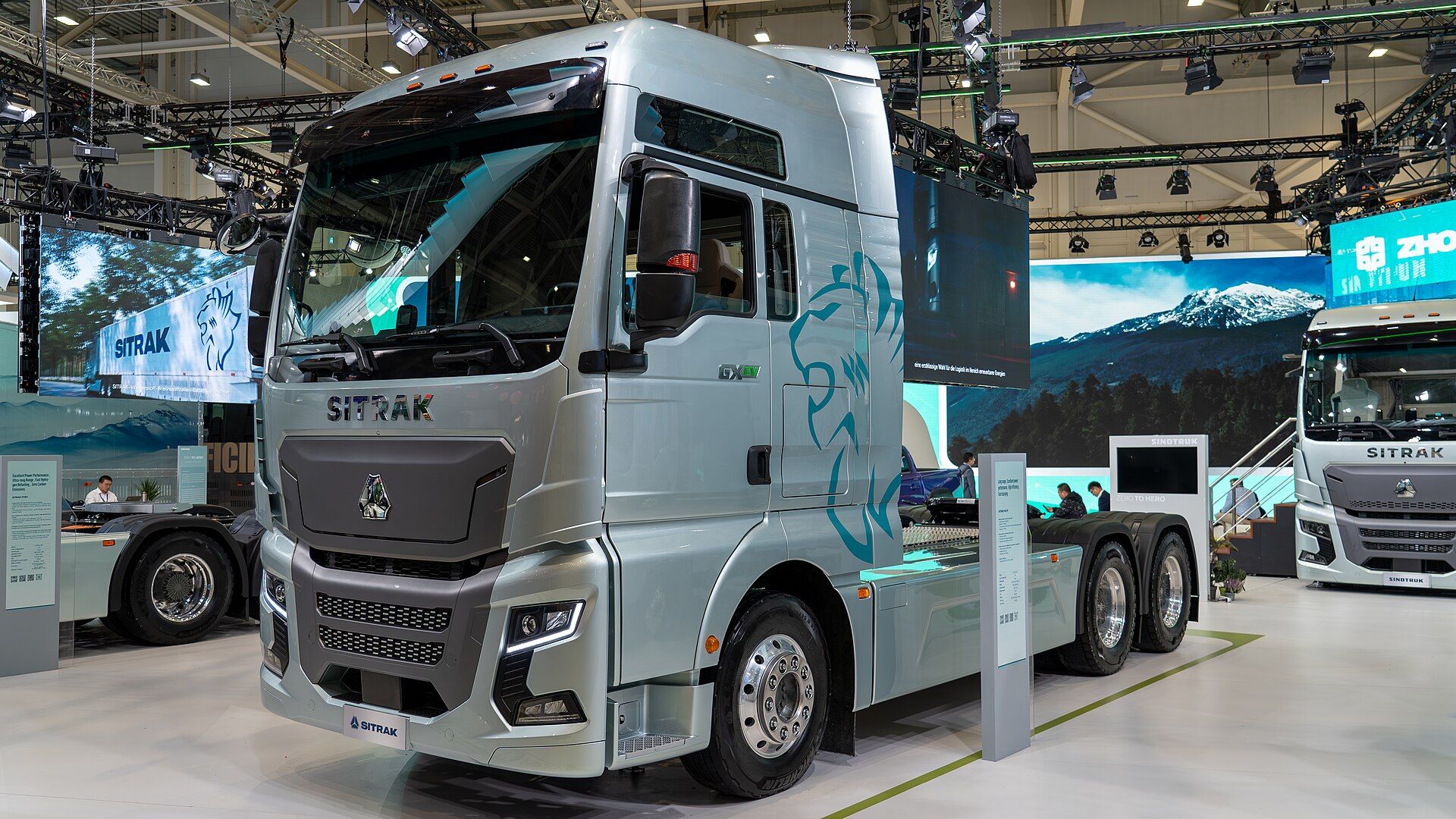
A manufacturer that has never sold a truck in the European Union has three things to settle before a customer can put one to work: an approval that is valid where the customer lives, a customs position that is known rather than assumed, and somewhere for the vehicle to be repaired. The first two are answered by dated public documents. The third is answered only by what the manufacturer has put in writing, which is narrower than the announcements around it.
One approval covers the Union, the other covers one country
Regulation (EU) 2018/858 is the framework, and it is still in force — the consolidated text current at the time of writing carries the date 2 August 2026. Approval is granted by a national approval authority, but the effect is Union-wide. Article 6(4) obliges member states to permit the placing on the market, the registration or the entry into service only of vehicles that comply with the Regulation, and Article 6(5) forbids them to “prohibit, restrict or impede” those that do, except in the cases provided for in Chapter XI. Article 48(1) supplies the paper: a vehicle for which whole-vehicle type-approval is mandatory may only be made available on the market, registered or entered into service if it is accompanied by a valid certificate of conformity issued in accordance with Articles 36 and 37. The Commission’s own account of the framework compresses this into a sentence — a manufacturer can certify a vehicle type in one EU country and market it EU-wide without further tests.
One derogation is written into Article 6(5) itself, and it is the one that touches heavy vehicles: a member state may still decide not to allow the circulation on the road, the placing on the market, the registration or the entry into service of vehicles type-approved under the Regulation that exceed the harmonised dimensions, weights and axle loads laid down in Annex I to Council Directive 96/53/EC. Approval is a construction question; gross and axle weights remain a separate one.
Chapter VIII then sets up two smaller routes, and they are not variants of each other. Article 41 grants an EU small series type-approval “within the quantitative annual limits for vehicle categories M, N and O set out in point 1 of Part A of Annex V”. For heavy vehicles that limit is zero, with one narrow exception. Point 1 as it now stands allows 1 500 units a year for M1 and for N1, and for M2, M3, N2 and N3 it reads “0 until the date of application of the delegated acts referred to in Article 41(5)”, with a separate line allowing 1 500 from 6 December 2022 for fully automated vehicles produced in small series. Every trailer category is zero. The categories themselves are defined in Article 4: N2 is a goods vehicle whose maximum mass exceeds 3,5 tonnes but not 12, and N3 is anything above 12 tonnes.
Article 42 is the national route. A manufacturer may apply for a national type-approval of vehicles produced in small series within the limits in point 2 of Part A of Annex V, and those limits “shall apply to the making available on the market, the registration or the entry into service of vehicles of the approved type in the market of each Member State in a given year”. Point 2 of Part A counts in that same unit: what a member state sets, and may not set above the table below, is “the number of units of one type of vehicle” registered, made available on the market or entered into service annually in that member state, against the figure the table gives “for the vehicle category in question”. Article 42(2) explains why the route exists: a member state may exempt such a type from one or more requirements of the Regulation, or of the regulatory acts listed in Annex II, provided it has laid down relevant alternative requirements.
| Category | EU small series, units of one type, Union-wide (Annex V A.1) | National small series, units of one type, per member state (Annex V A.2) |
|---|---|---|
| M1 | 1 500 | 250 |
| M2, M3 | 0, pending the delegated acts under Article 41(5) | 250 |
| N1 | 1 500 | 250 |
| N2, N3 | 0, pending the delegated acts under Article 41(5) | 250 |
| O1, O2 | 0 | 500 |
| O3, O4 | 0 | 250 |
Article 43 then draws the line that decides the strategy. Paragraph 1: the validity of a national type-approval of vehicles produced in small series “shall be restricted to the territory of the Member State of the approval authority that has granted that type-approval”. The rest of the article is a recognition procedure rather than a passport. On the manufacturer’s request the approving authority sends a copy of the certificate, with the relevant parts of the information package, to the authorities of member states the manufacturer chooses; those authorities “shall accept the national type-approval, unless they have reasonable grounds to believe that the national technical requirements in accordance with which the type of vehicle has been approved are not equivalent to their own”; and where no decision is communicated within two months of receipt, acceptance is deemed to have happened. Paragraph 5 repeats the same conditional acceptance for a single applicant who wants to register one vehicle in another member state.
For a brand intending to sell across Europe the comparison is not close. The national route is capped at 250 units of any one approved type per member state per year, has to be pursued country by country, and every country retains an equivalence objection. The unit there is the type and not the category: Annex V sets the ceiling on “the number of units of one type of vehicle” and uses the category only to pick the row of the table, so a second approved type in the same country carries its own 250 and stops at the same border. The EU whole-vehicle type-approval is one file with one authority.
What that looks like in a new entrant’s own words
Windrose Technology’s certification page states the position plainly under the heading “EU WVTA · Reg. 2018/858”: “A single EU Whole Vehicle Type Approval gives automatic access across all EU member states and EEA countries. No re-testing per country.” The same page counts more than 100 regulations and directives, more than 400 individual test procedures and 31 direct markets behind that approval.
The EU half of that sentence is what Articles 6(4), 6(5) and 48(1) actually provide, and set against Article 43 it is not marketing language: it is the difference between one homologation programme and one for every country the brand intends to sell in. The EEA half is carried by a different instrument, and not by the Regulation, which addresses Member States throughout. The route into Norway, Iceland and Liechtenstein runs through Decision of the EEA Joint Committee No 49/2022 of 18 March 2022, which inserted Regulation (EU) 2018/858 into Chapter I of Annex II to the EEA Agreement as point 51 and deleted the point that had carried Directive 2007/46/EC before it. That decision, and not Regulation (EU) 2018/858 on its own, is the authority for the words “and EEA countries”, and the certification page does not name it.
The duty everybody asks about does not reach a tractor unit
The question put to every Chinese heavy vehicle in Europe is whether the 2024 duty applies to it. The instrument is Commission Implementing Regulation (EU) 2024/2754 of 29 October 2024, a definitive countervailing duty on imports of new battery electric vehicles from China. It is in force and has been amended: the consolidated version current at the time of writing is dated 11 February 2026, following Commission Implementing Regulation (EU) 2026/330 of 9 February 2026.
Its scope is set by Article 1(1), and the wording is the answer. The duty falls on “new battery electric vehicles, principally designed for the transport of nine or less persons, including the driver, excluding L category vehicles according to Regulation (EU) No 168/2013 and motorcycles, propelled (regardless of the number of wheels set in motion) solely by one or more electric motors, including those with an internal combustion range extender (an auxiliary power unit), currently falling under CN code ex 8703 80 10 (TARIC code 8703 80 10 10)”. Recital 113 confirms that this definition, and that CN code, were the ones set out in the notice of initiation.
A 42-tonne electric tractor unit is not a vehicle principally designed to carry nine or fewer people. It is therefore outside the product covered by that regulation, and no rate in it attaches to one. The rates themselves are set company by company on the passenger vehicles that are covered, running from 7,8 % for Tesla (Shanghai) to 35,3 % for the SAIC group and for all other companies, with Article 2a exempting imports made, shipped and invoiced under an undertaking accepted by the Commission. That is the whole of what this instrument says, and it says nothing wider.
Parts and service, taken only from the makers’ own documents
A service commitment cannot be inferred from anything, only quoted.
SANY’s release of 12 September 2025 announces the European launch of the e263 4x2 electric semi-trailer tractor: a 636 kWh LFP battery on an 800 V platform, more than 500 km of range at 42 tonnes, an empty vehicle weight of 10,9 tonnes, 400 kW CCS charging with megawatt charging to follow, and an 800 V dual-motor eAxle rated at 420 kW continuous and 730 kW peak. On service the same document commits to the Alltrucks network of more than 700 workshops, a German-based spare parts storage centre managed by Putzmeister, 24/7 roadside assistance, over-the-air and telematic diagnosis, and full-service contracts running from six to ten years. Deliveries were stated to start in the first quarter of 2026.
The partnership announcement behind that describes the network more precisely: Alltrucks, founded in 2013 by Bosch, Knorr-Bremse and ZF, brings a pan-European network of over 700 workshops in 13 countries, and is to be responsible for the maintenance, diagnosis and repair of SANY’s eTruck models. Thirteen countries is a smaller frame than “all over Europe”, and the difference is the one that matters when a vehicle stops somewhere it was not sold.
Windrose publishes its own aftermarket network as a global network of 52 after-sales service locations and 33 spare parts distribution centres across 24 countries, and names the partners rather than counting them: TCK in Denmark with five locations, Raskone in Finland with sixteen, Team Verksted in Norway with nine, Alliance Automotive Group in France with three, Big Wheels in Australia with eighteen, Relais Group with ten parts locations across Norway, Sweden, Finland and Denmark, and single Swedish workshops at LIR Teknik and Team Verkstad. That network is global, not European: the same count includes Australian, US and Chilean locations. The warranty is stated as a maximum coverage distance of 1 000 000 km, eight years on the battery and five years on the drivetrain, with the warranty manual and maintenance schedule published in seventeen languages. The service manuals are offered free and open with no login required, which is a commercial choice rather than a legal minimum, and a visible one in a trade where the independent workshop question turns on access.
Assembly inside the Union is now a service that can be bought
Steyr Automotive announced on 3 March 2026 that it had begun producing Sinotruk vehicles under a contract manufacturing agreement, with the first vehicle completed on that same day. Diesel and fully electric models in various versions are being produced at Steyr, for the EMEA region. Assembly is initially SKD; as volumes rise the company plans to expand to CKD production, which would also bring cab manufacturing and painting to Steyr. The vehicles remain Sinotruk’s; the plant is a contract manufacturer, which is a different relationship from the in-house assembly networks that define the six European truck groups.
What is checkable before anything is signed
Three documents settle most of it. The approval decides whether the vehicle can be registered where the work is, and a national small series certificate is a different object from an EU whole-vehicle type-approval however similar the covers look. The tariff position follows a CN code and a product description, not the nationality of the badge. The service commitment is worth the number of workshops the manufacturer will name in a dated document, and no more.
Quick answers
- Is there an EU tariff on Chinese electric trucks?
- The countervailing duty in Commission Implementing Regulation (EU) 2024/2754 applies to new battery electric vehicles principally designed for the transport of nine or less persons, including the driver, under CN code ex 8703 80 10. A heavy tractor unit does not answer that description, so that instrument does not reach it.
- Does a truck approved in one EU country have to be tested again in another?
- No. Under Regulation (EU) 2018/858 a valid certificate of conformity is what a member state registers against, and Article 6(5) forbids member states to prohibit, restrict or impede vehicles that comply, except in the cases set out in Chapter XI of that Regulation.
- How many trucks can a maker sell under a national small series approval?
- At most 250 units of a type per year in that member state for categories N2 and N3, under point 2 of Part A of Annex V to Regulation (EU) 2018/858; the member state sets the actual figure and may not exceed the table. Article 43(1) restricts the approval to that country's territory.
- Who repairs a new-entrant electric truck in Europe?
- SANY states that its eTrucks are covered by the Alltrucks network of more than 700 workshops, described in the partnership announcement as spanning 13 European countries, with a German spare parts storage centre managed by Putzmeister. Windrose publishes a global network of 52 after-sales service locations and 33 spare parts distribution centres across 24 countries.
Sources
- Regulation (EU) 2018/858 on the approval and market surveillance of motor vehicles — consolidated text of 2 August 2026 — EUR-Lex (Publications Office of the European Union)
- Decision of the EEA Joint Committee No 49/2022 of 18 March 2022 amending Annex II (Technical regulations, standards, testing and certification) to the EEA Agreement — OJ L 182, 7.7.2022, p. 19 — EUR-Lex (Publications Office of the European Union)
- Technical harmonisation in the EU — vehicle type-approval — European Commission, DG Internal Market, Industry, Entrepreneurship and SMEs
- Commission Implementing Regulation (EU) 2024/2754 imposing a definitive countervailing duty on imports of new battery electric vehicles designed for the transport of persons originating in the People's Republic of China — consolidated text of 11 February 2026 — EUR-Lex (Publications Office of the European Union)
- Commission Implementing Regulation (EU) 2024/2754 of 29 October 2024 — act as published in the Official Journal, with the recitals — EUR-Lex (Publications Office of the European Union)
- SANY eTrucks supported by Putzmeister expands its European electric truck portfolio — SANY eTrucks Europe
- Alltrucks and SANY eTrucks supported by Putzmeister enter into partnership for the provision of truck services in Europe — Alltrucks GmbH & Co. KG / SANY eTrucks Europe
- Certification — homologation and certifications — Windrose Technology
- Service — aftermarket partners, warranty manual and service manuals — Windrose Technology
- Sinotruk production starts at Steyr Automotive — Steyr Automotive GmbH