
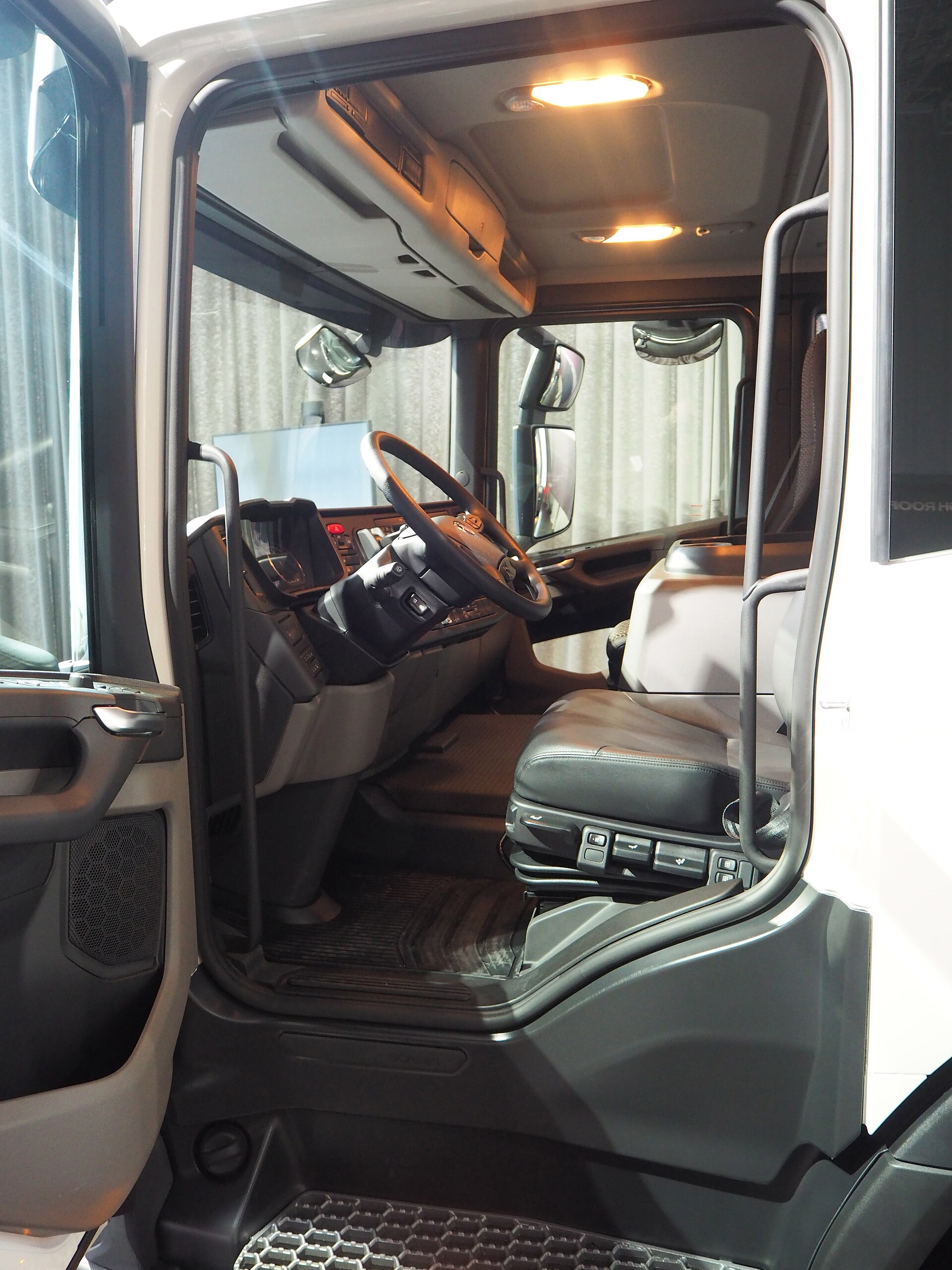
For a long-haul driver, the cab is not just a workplace — it is where they sleep, eat and live for days at a time. The sleeper cab is the difference between a truck built for the day and one built for the road, and in a tight labour market it has become a serious competitive battleground.
Day cab vs sleeper cab
A day cab has seats and controls but no bed — fine for local and regional work where the driver goes home each night. A sleeper cab adds a bunk and living space behind the seats for over-the-road work. Sizes range from compact mid-roof bunks to towering high-roof flagships where an adult can stand upright.
What’s inside a modern sleeper
- Bunk (or two): proper mattresses, increasingly with premium bedding and adjustable positions.
- Storage: wardrobes, drawers and overhead lockers for days of kit.
- Galley touches: a fridge, and space for a microwave or kettle.
- Climate and power: heating, air-conditioning and an inverter to run appliances and devices without the engine running.
The no-idle challenge
Drivers need heating, cooling and power overnight — but idling a big diesel to provide it wastes fuel, breaks anti-idling laws in many places and disturbs everyone parked nearby. The answer is hotel-load electrification: auxiliary power units (APUs), battery-based climate systems and shore-power hook-ups. On battery-electric trucks this comes naturally, one more thread in the wider shift away from diesel.
Comfort as a recruitment tool
With operators competing for every qualified driver, cab comfort is no longer a luxury — it is part of the pay-and-conditions package that our driver-pay guide describes. A quiet, well-equipped sleeper helps fleets attract and keep the people they have just spent months and money helping to qualify.
Cover photo: Herranderssvensson via Wikimedia Commons, CC BY-SA 3.0
