Clean Truck Check: California's heavy-duty emissions tests
Clean Truck Check covers non-gasoline vehicles over 14,000 lb GVWR in California: tests twice a year, four times a year for OBD vehicles from October 2027.
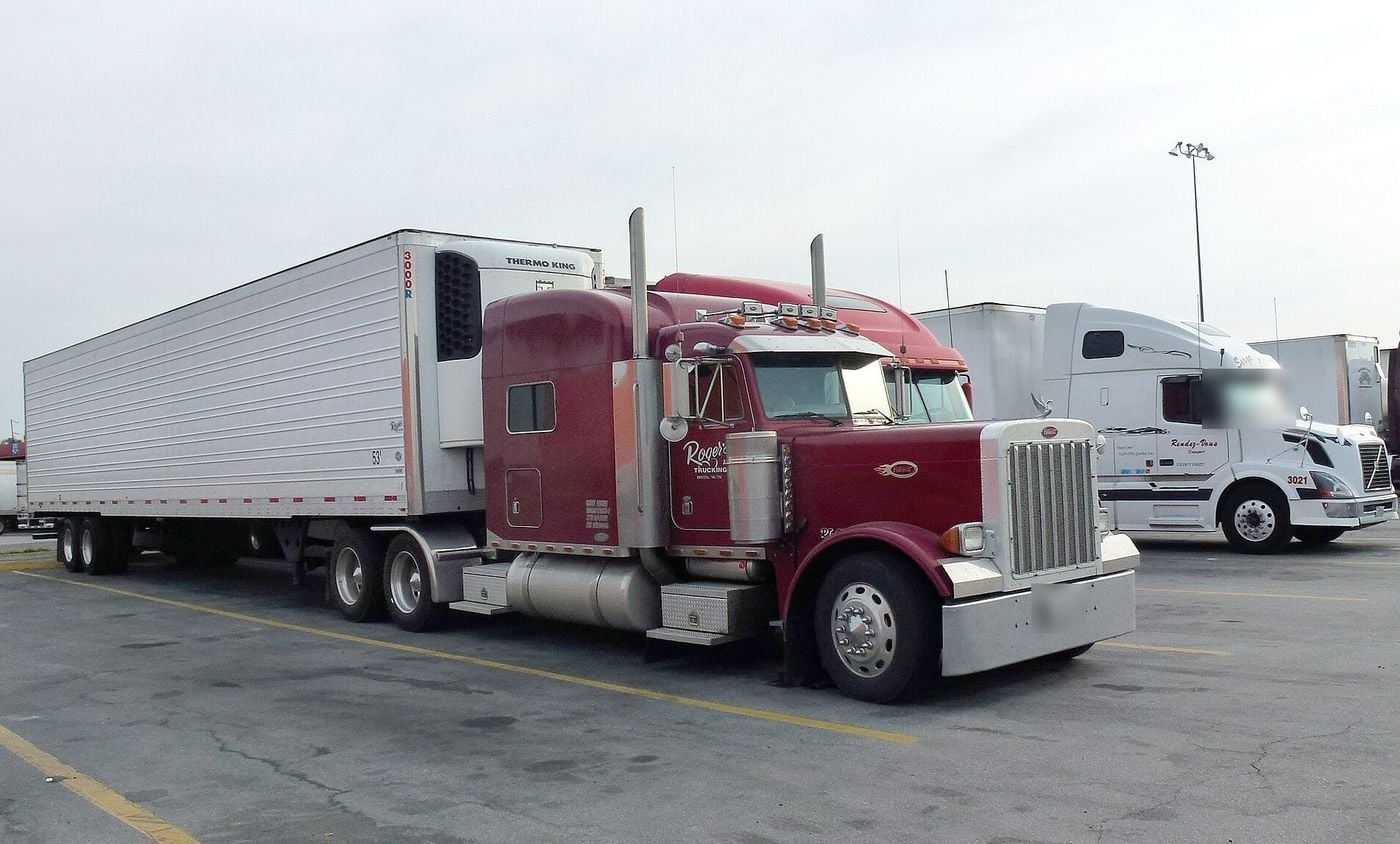
Clean Truck Check is California’s emissions inspection program for heavy-duty vehicles: nearly all diesel, alternative-fuel and hybrid trucks, buses and other vehicles with a GVWR over 14,000 pounds must be reported to the California Air Resources Board (CARB), pay a yearly fee and pass an emissions test by set deadlines. Almost all of them are tested twice a year; CARB states that vehicles with on-board diagnostics (OBD) will be tested four times a year beginning October 2027. The rules apply to vehicles registered outside California too when they operate in the state.
Status: 13 November 2026. This page follows CARB’s Final Regulation Order for the Heavy-Duty Vehicle Inspection and Maintenance Program (title 13, California Code of Regulations, sections 2195 to 2199.1), approved by the Office of Administrative Law on October 5, 2022 and effective January 1, 2023, and CARB’s Clean Truck Check pages read on November 13, 2026: the emissions compliance testing requirements, the requirements for vehicles subject to semi-annual compliance, the overview fact sheet, the agricultural vehicles requirements and the program page.
| Item | What the rule says |
|---|---|
| Official name | Heavy-Duty Vehicle Inspection and Maintenance (HD I/M) Program |
| Vehicles | All non-gasoline heavy-duty vehicles operating in California; heavy-duty means a manufacturer’s GVWR greater than 14,000 pounds |
| Regulation in effect | January 1, 2023 |
| Emissions testing in effect | October 1, 2024; every compliance deadline from January 1, 2025 needs a passing test |
| Frequency today | Semi-annual; annual for agricultural vehicles and California-registered motor homes |
| From October 2027 (CARB) | OBD-equipped vehicles four times per year |
| OBD scan | 2013 and newer diesel engines, 2018 and newer alternative-fuel engines |
| Smoke opacity test and visual inspection | 2012 and older diesel engines; off-road engines in on-road vehicles |
| Visual inspection only | 2017 and older alternative-fuel engines |
| Compliance fee in the regulation | $30.00 per vehicle per compliance year, adjusted annually by the California Consumer Price Index |
| Reporting system | Clean Truck Check-Vehicle Inspection System (CTC-VIS) |
What is the Clean Truck Check?
Clean Truck Check is the name CARB gives the Heavy-Duty Vehicle Inspection and Maintenance Program. The regulation adds Chapter 3.7, sections 2195 to 2199.1, to title 13 of the California Code of Regulations. CARB’s overview fact sheet describes it as “a regulation to test heavy-duty vehicles’ emissions control systems for proper operation.” CARB’s program page lists Senate Bill 210 (Leyva, Chapter 298, Statutes of 2019) among its resources.
The program replaced two older CARB programs. Section 2199.1 says the Heavy-Duty Vehicle Inspection Program, sections 2180 to 2189, is superseded “upon the effective date of this HD I/M Regulation, which is January 1, 2023”, and the Periodic Smoke Inspection Program, sections 2190 to 2194, only upon implementation of the periodic testing in section 2196.2 on or after January 1, 2024. CARB’s pages give October 1, 2024 as the date the emissions compliance testing requirements took effect.
Roadside screening came first. CARB states that “high-emitter vehicle screening began in January 2023 using roadside emissions monitoring devices.” On March 10, 2026, CARB posted on its program page that the requirements “are in effect for subject vehicles, including vehicles registered outside of California when operating in the state, to report, pay an annual vehicle compliance fee, and submit required passing emissions tests.”
Which vehicles need a Clean Truck Check?
Section 2195(a)(1) applies the regulation to “All non-gasoline heavy-duty vehicles operating in California and the owners and operators of such vehicles.” Section 2195.1 defines a heavy-duty vehicle as “any motor vehicle having a manufacturer’s GVWR greater than 14,000 pounds.” GVWR in US federal rules, and the weight classes built on it, are set out in GVWR, GCWR and GAWR explained.
CARB’s semi-annual compliance page puts it this way: “Nearly all diesel and alternative fuel heavy-duty trucks, buses, and other vehicles with a gross vehicle weight rating over 14,000 pounds that operate in California” are covered, and “Affected vehicles include hybrid trucks and buses, commercial vehicles, privately-owned vehicles, government vehicles, and vehicles registered outside of California.” The overview fact sheet adds motorcoaches; transit, shuttle and school buses; California-registered motor homes; and single-vehicle fleets.
The regulation defines “alternative fuel” as natural gas, propane, ethanol, methanol or other non-diesel or non-gasoline fuel, and says it “does not mean electricity, hydrogen, or other zero tailpipe emissions fuel or technology.” A hybrid vehicle is one with energy storage features, other than a conventional battery system or flywheel, in addition to an internal combustion engine using a consumable chemical fuel.
Section 2195 also reaches beyond vehicle owners: freight contractors and brokers doing business with owners of covered vehicles, applicable freight facilities, vendors of testing devices and the people who perform the tests. Under section 2197, a freight contractor “shall only contract with compliant vehicles or fleets”, and a broker shall only arrange transportation within California through motor carriers with compliant vehicles or fleets.
Vehicles the regulation does not apply to
Section 2195(b) lists:
- zero-emission heavy-duty vehicles;
- authorized emergency vehicles;
- tactical vehicles operated by the military, as described in title 13, section 1905;
- for four years from the effective date of the regulation, a vehicle with an engine CARB-certified to the most stringent optional reduced NOx standard in title 13, section 1956.8, purchased on or after the effective date (CARB’s fact sheet gives the standard as less than or equal to 0.01 g/bhp-hr and the period as 2023 to 2027);
- motor homes registered outside California and used for recreational purposes;
- vehicles operating under a CARB-issued experimental permit;
- vehicles with a permanent Historical Vehicle License Plate under Vehicle Code section 5004;
- vehicles operating under an Executive Order or Emergency Declaration as specified in section 2195(c), which exempts an out-of-state heavy-duty vehicle operating under such an order of the Governor of California for 30 calendar days from the first day of operation.
Which test applies to which engine?
The test depends on whether the engine is OBD-equipped. Section 2195.1 defines an OBD-equipped vehicle as a heavy-duty vehicle with an OBD system and model year 2013 and newer diesel or diesel hybrid engines, or model year 2018 and newer alternative-fuel or alternative-fuel hybrid engines. Every other vehicle is non-OBD-equipped. CARB’s testing page notes that most vehicles have an engine model year one year older than the vehicle model year, and points to the emissions control label (ECL) on the engine for the test that applies.
| Engine | Test |
|---|---|
| Diesel, 2013 and newer (OBD-equipped) | Scan of the engine’s OBD data using a CARB-certified OBD testing device |
| Alternative fuel, 2018 and newer (OBD-equipped) | Scan of the engine’s OBD data using a CARB-certified OBD testing device |
| Diesel, 2012 and older | Smoke opacity test and visual inspection of the emissions control equipment (Vehicle Emissions Control Equipment Inspection) |
| Alternative fuel, 2017 and older | Visual inspection only; no smoke opacity test |
| Off-road engine in a vehicle over 14,000 lb GVWR used on public roads | Opacity test and visual inspection, regardless of the engine model year |
Section 2196.3 allows the OBD test with a certified continuously connected remote OBD device, or with a certified non-continuously connected device registered and operated by an HD I/M tester. Among the conditions under which section 2196.3 says an OBD test does not pass are an OBD system reporting the malfunction indicator light as commanded on, and an active or permanent diagnostic trouble code. Section 2196.4 requires the smoke opacity test to follow the SAE J1667 snap acceleration procedure.
Section 2198 lists what the visual inspection covers: the presence and legibility of the emission control label, the configuration of emissions-related components against that label, the installation of aftermarket parts, the odometer mileage and the operational status of the malfunction indicator light bulb.
Smoke opacity standards
| Vehicle | Maximum opacity |
|---|---|
| 2007 or subsequent model-year diesel engine | 5% |
| Required to be equipped or retrofitted with a Level 3 VDECS, any diesel engine model year | 5% |
| Equipped or retrofitted with a Level 2 VDECS, any diesel engine model year | 20% |
| 1997 to 2006 model-year diesel engine | 20% |
| 1991 to 1996 model-year diesel engine | 30% |
| Pre-1991 model-year diesel engine | 40% |
For off-road engines, section 2196.6(b) sets 5% with a diesel particulate filter or a Level 3 VDECS retrofit, 10% for an off-road Tier 4 engine (interim or final) without either, 30% for Tier 2 or Tier 3 and 40% for Tier 1. VDECS stands for verified diesel emissions control strategy.
How often is the test required?
CARB’s testing page states: “Almost all vehicles are subject to semi-annual testing.” Agricultural vehicles and California-registered motor homes for recreational use or emergency occupancy are tested once per year. An agricultural vehicle, in the regulation’s definition, is owned or operated by a farming business and used exclusively in agricultural operations to transport agricultural products to the first point of processing.
On the change in 2027, CARB’s pages say: “Beginning October 2027, on-board diagnostics (OBD) equipped vehicles will be required to undergo testing four times per year. This does not apply to Non-Commercial Motorhomes or Agricultural vehicles as defined in the Heavy Duty Inspection and Maintenance regulation; they will remain on an annual testing schedule.”
The regulation ties that date to the start of periodic testing rather than to a calendar date. Section 2196.1(d) reads:
“Motor homes registered in California and agricultural vehicles shall be subject to an annual compliance deadline.”
“For the first three years of periodic vehicle emission testing requirements specified in section 2196.2, all vehicles other than those specified in (1) shall be subject to semi-annual compliance deadlines.”
“Three years following the effective date of periodic vehicle emission testing requirements specified in section 2196.2, an OBD-equipped vehicle other than those specified in (1) shall be subject to quarterly compliance deadlines.”
CARB gives October 1, 2024 as the date its emissions compliance testing requirements took effect; three years later is October 2027, the month CARB states.
Section 2195.1 places quarterly deadlines in months three, six, nine and twelve of a vehicle’s compliance year, and semi-annual deadlines in months six and twelve, the month-twelve deadline being the last day of the compliance year.
Compliance deadlines
For California-registered vehicles the compliance year follows the DMV registration expiration date, and CARB’s semi-annual page sets the deadlines at the registration expiration date “and every six months thereafter.” This also applies to vehicles historically registered with the California DMV that are now registered outside California.
Vehicles registered outside California, state and local government vehicles with DMV-exempt plates, and federal government vehicles have deadlines set by the last number of the VIN.
| Last number of VIN | Deadline months |
|---|---|
| 0 | October, April |
| 1 | November, May |
| 2 | December, June |
| 3 | January, July |
| 4 | February, August |
| 5 | March, September |
| 6 | April, October |
| 7 | May, November |
| 8 | June, December |
| 9 | July, January |
A passing test may be submitted up to 90 days before a compliance deadline. CARB’s example: “a vehicle with a compliance deadline of February 1, 2025 may submit a passing emissions test as early as November 3, 2024.” Under section 2196.1(e), a vehicle shown compliant within that 90-day window is deemed compliant up to the following deadline; one shown compliant earlier is deemed compliant only up to the deadline immediately ahead. CARB adds that the deadlines for each vehicle are shown in its CTC-VIS account.
When a vehicle changes owner or is registered in California, section 2196.1(a) requires compliance to have been demonstrated within the 90 calendar days before the transfer date. The buyer of a new motor vehicle has 30 calendar days from the purchase to demonstrate compliance, without the passing compliance test.
CTC-VIS, the fee and the credentialed tester
Section 2196.1(b) deems a vehicle compliant when five conditions are met: the compliance fee is paid; the owner and vehicle information is reported; a passing compliance test is submitted; there are no outstanding enforcement actions on the vehicle; and there are no outstanding emissions or OBD-related recalls on it. The overview fact sheet lists the owner’s part as reporting the vehicle to the Clean Truck Check-Vehicle Inspection System (CTC-VIS), paying the annual compliance fee, submitting passing tests and having no outstanding enforcement violations.
Section 2196.1(f) sets a compliance fee of $30.00 per registered vehicle, charged before the first demonstration of compliance in a compliance year, to be adjusted annually based on the California Consumer Price Index and published on CARB’s website by July 1 of each year. The overview fact sheet gives an example: “the compliance fee for 2025 will be $31.18.”
The test itself must be performed by a CARB credentialed tester. According to the overview fact sheet, a tester completes CARB’s free online Tester Training Course, scores at least 80 percent on the exam and renews the Certificate of Completion every two years. CARB’s testing page says the credentialed tester, not the owner, sends the results to CARB. A non-OBD vehicle receives “pass” or “fail”; an OBD-equipped vehicle may also receive results such as “Not Ready”, “Vehicle Not Applicable For OBD Testing” and “Invalid Test”, which CARB states “will not be considered compliant.”
DMV registration hold and enforcement
Section 2196.1(g) has CARB notify the DMV that a vehicle is compliant for registration purposes when the five conditions were met within 90 calendar days before the registration date. CARB’s semi-annual page states that “Non-compliance may result in DMV registration blocks and other enforcement action.” Its agricultural vehicles page states: “California Department of Motor Vehicles (CA DMV) automatically places registration holds on vehicles not compliant with Clean Truck Check.” The overview fact sheet states that payments made outside CTC-VIS do not comply and that “affected vehicles may be subject to registration holds.”
Between scheduled tests, roadside emissions monitoring devices screen vehicles. When a device records a PM or NOx measurement that meets one of the criteria in section 2196.5, CARB may issue a Notice to Submit to Testing; under section 2198.2(a) the owner then has 30 calendar days to submit the demonstration of compliance. Under section 2198.2(b), any violation may result in a citation and penalties; the recipient has “45 calendar days, or 75 calendar days for owners of agricultural vehicles” to submit proof of compliance and any penalties.
Vehicles from outside California
Out-of-state vehicles follow the same rules when they operate in California, with the VIN-based deadlines shown above. CARB’s semi-annual page states that covered vehicles “must be reported in CTC-VIS and compliant before they may operate on California public roads and highways.” Federal registration numbers and interstate registration under IRP are a separate matter, covered in USDOT number, MC number, UCR, IRP and IFTA.
Section 2196(d) provides a Five-Day Pass: with written approval from CARB, a vehicle may operate for up to five consecutive calendar days without being subject to section 2196(a)(1) and (a)(2), which cover maintaining compliance under section 2196.1 and keeping documentation of the hiring freight contractor or broker in the vehicle. An owner may apply once per calendar year per vehicle, at least seven business days before the planned travel, and CARB notifies the owner of its determination within five business days. The pass is kept in the vehicle.
Clean Truck Check is a periodic inspection of each vehicle wherever it drives in the state; it is not an access rule for particular zones of the kind European cities use, which are described in low-emission zones for trucks and buses in Europe.
What this page does not cover
- Gasoline vehicles and the light-duty Smog Check program.
- How a test is carried out step by step, repairs after a failed test, and the referee program.
- The reporting, recordkeeping and compliance verification duties of seaports, intermodal railyards and other freight facilities.
- Names, locations and prices of testers and testing devices.
- Fee amounts for 2026 and later, which CARB publishes on its website each year.
Quick answers
- What is the Clean Truck Check?
- Clean Truck Check is the name CARB uses for its Heavy-Duty Vehicle Inspection and Maintenance (HD I/M) Program, sections 2195 to 2199.1 of title 13 of the California Code of Regulations, effective January 1, 2023. CARB describes it as a regulation to test heavy-duty vehicles' emissions control systems for proper operation. Each vehicle is reported in the CTC-VIS reporting system, pays an annual compliance fee and submits passing emissions tests by its compliance deadlines.
- Which vehicles need a Clean Truck Check?
- Non-gasoline vehicles with a manufacturer's GVWR over 14,000 pounds that operate in California, mainly diesel and alternative-fuel trucks and buses. CARB lists hybrid vehicles, commercial and privately owned vehicles, federal, state and local government vehicles, and vehicles registered outside California. Zero-emission vehicles, authorized emergency vehicles, military tactical vehicles, historical-plate vehicles and out-of-state recreational motor homes are among those the regulation does not apply to.
- How often is a Clean Truck Check required?
- Twice a year for almost all vehicles; once a year for agricultural vehicles and California-registered motor homes. CARB states that from October 2027 OBD-equipped vehicles will be tested four times per year; the regulation sets this as quarterly deadlines three years after periodic testing took effect, and CARB gives October 1, 2024 as the date its emissions compliance testing requirements took effect. Agricultural vehicles and non-commercial motor homes stay on an annual schedule.
- What test does a vehicle need for the Clean Truck Check?
- It depends on the engine. 2013 and newer diesel engines and 2018 and newer alternative-fuel engines get a scan of the OBD data with a CARB-certified device. 2012 and older diesel engines get a smoke opacity test and a visual inspection of the emissions control equipment; 2017 and older alternative-fuel engines get only the visual inspection. Vehicles over 14,000 lb GVWR with off-road engines get the opacity test and visual inspection whatever the engine model year.
- Do trucks registered outside California need a Clean Truck Check?
- Yes, when they operate in California. CARB lists vehicles registered outside California among those affected, and sets their two deadlines a year by the last number of the VIN. Out-of-state motor homes used for recreation are exempt, and the regulation allows a Five-Day Pass once per calendar year per vehicle for up to five consecutive days of operation.
- What happens if a vehicle is not Clean Truck Check compliant?
- CARB states that non-compliance may result in DMV registration blocks and other enforcement action, and that the California DMV automatically places registration holds on vehicles not compliant with Clean Truck Check. Under the regulation, any violation may lead to a citation and penalties, with 45 calendar days, or 75 for owners of agricultural vehicles, to submit proof of compliance.
Sources
- Final Regulation Order — Heavy-Duty Vehicle Inspection and Maintenance Program, title 13, California Code of Regulations, sections 2195 to 2199.1 (approved by OAL October 5, 2022; effective January 1, 2023) — California Air Resources Board, 5 Oct 2022
- Heavy-Duty Inspection and Maintenance Regulation — rulemaking page (hearing December 9, 2021; last reviewed October 5, 2022) — California Air Resources Board
- Clean Truck Check — Emissions Compliance Testing Requirements (read November 13, 2026) — California Air Resources Board
- Clean Truck Check Requirements for Vehicles Subject to Semi-Annual Compliance (issued March 13, 2024; read November 13, 2026) — California Air Resources Board
- Clean Truck Check — Overview Fact Sheet (read November 13, 2026) — California Air Resources Board
- Clean Truck Check — Agricultural Vehicles Requirements (August 6, 2024) — California Air Resources Board, 6 Aug 2024
- Clean Truck Check (HD I/M) — program page, with the notice posted March 10, 2026 (read November 13, 2026) — California Air Resources Board