USDOT number, MC number, UCR, IRP and IFTA explained
Five US carrier registrations: a USDOT number updated every 24 months, operating authority (MC number), UCR from $46 a year, IRP plates and IFTA decals.
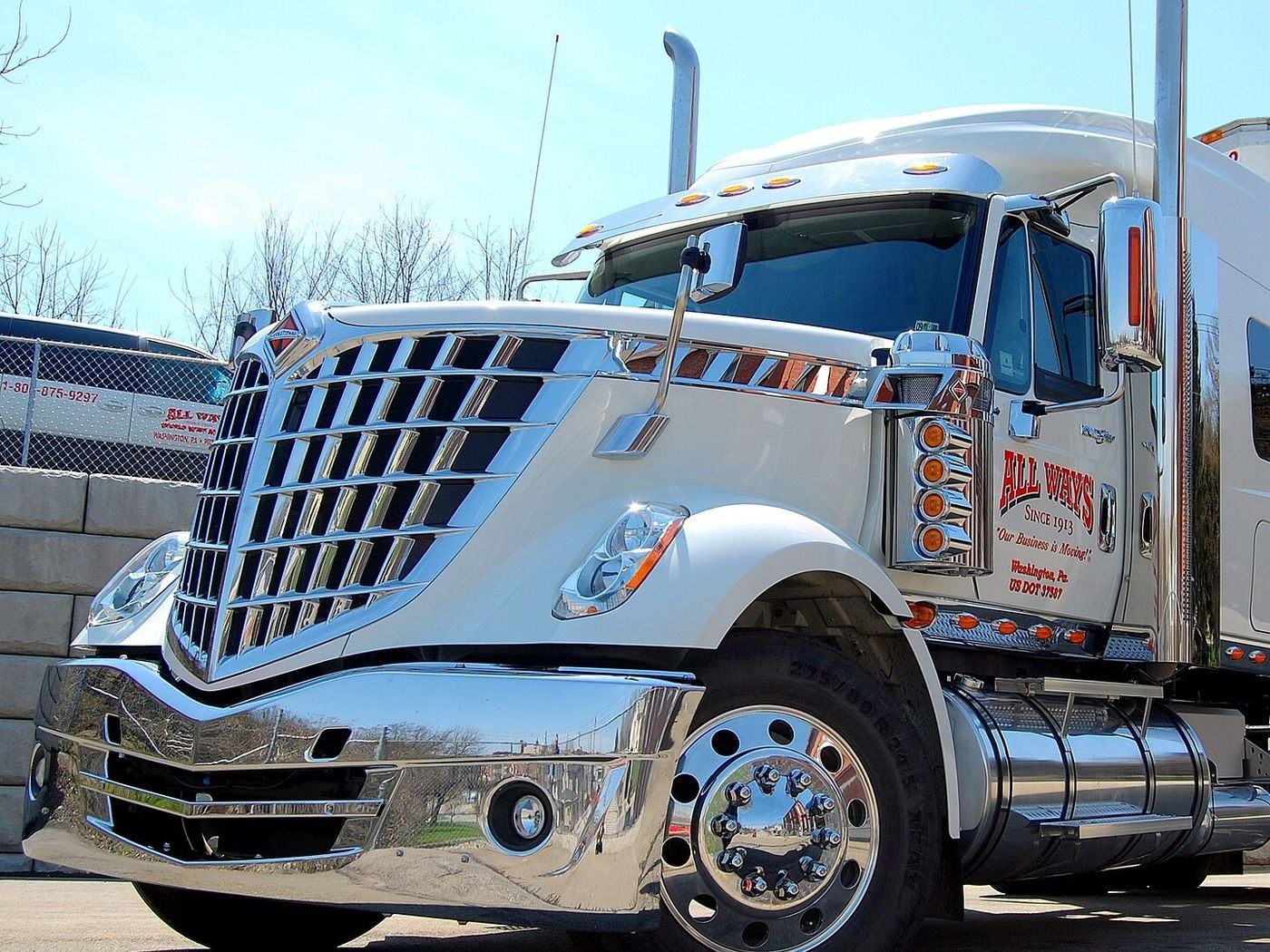
An interstate motor carrier in the United States can be on five registers at once. FMCSA’s USDOT number identifies the carrier for safety oversight and is updated every 24 months; operating authority, the registration with the MC docket number, is what a for-hire carrier of regulated commodities or of passengers needs and costs $300 per application; and the Unified Carrier Registration (UCR) is a yearly fee paid through the base State, from $46 in 2026 and from $55 in 2027. The other two belong to the States: International Registration Plan (IRP) apportioned plates for heavy vehicles used in two or more member jurisdictions, and the International Fuel Tax Agreement (IFTA) licence with its decals and quarterly fuel tax returns.
Status: 13 November 2026. Read on that day: 49 CFR Parts 360, 365, 367 and 390 in the annual Code of Federal Regulations edition revised as of October 1, 2025; the UCR fee rule of September 1, 2026; FMCSA’s Motus notice of April 29, 2026; 49 U.S.C. 14504a, 31101 and Chapter 317 (2024 edition); the Texas Department of Motor Vehicles’ IRP packet of December 2025 and the North Dakota Department of Transportation’s IFTA manual for 2026. The List of CFR Sections Affected for September 2026 and the Federal Register’s lists of parts affected up to November 12, 2026 show no change to the sections cited here other than the UCR fee rule and an amendment to section 390.5T (91 FR 45661).
| Registration | What it is | Who needs it | Legal basis | Renewal |
|---|---|---|---|---|
| USDOT number | FMCSA identification number, marked on the vehicle with the letters “USDOT” | Each motor carrier conducting operations in interstate commerce with commercial motor vehicles | 49 CFR 390.19T, 390.200T, 390.21T | Form MCS-150 update every 24 months, month set by the last digit |
| Operating authority (MC number) | Certificate, permit or license to operate as a for-hire motor carrier, freight forwarder or broker | For-hire carriers of regulated commodities and of passengers, freight forwarders, property brokers | 49 U.S.C. 13902 to 13904; 49 CFR Part 365 | No renewal cycle in Part 365; revoked or suspended if the insurance filing lapses |
| UCR | Annual fee under the Unified Carrier Registration Agreement, by fleet size | Motor carriers including exempt and private carriers, brokers, freight forwarders, leasing companies | 49 U.S.C. 14504a; 49 CFR 367.40 and 367.50 | Every registration year |
| IRP | Apportioned registration: one plate and cab card from the base jurisdiction, fees split by distance | Apportionable vehicles used in two or more member jurisdictions | 49 U.S.C. 31701 and 31704; the International Registration Plan | Twelve-month registration year (Texas) |
| IFTA | One fuel use tax licence; the base jurisdiction collects the tax and shares it | Qualified motor vehicles operated in two or more member jurisdictions | 49 U.S.C. 31701 and 31705; the IFTA Articles of Agreement | Licence and decals January 1 to December 31; quarterly returns (North Dakota) |
What is a USDOT number?
Section 390.19T of 49 CFR requires every “U.S.-, Canada-, Mexico-, or non-North America-domiciled motor carrier conducting operations in interstate commerce” to file a Motor Carrier Identification Report, Form MCS-150, before it begins operations. Paragraph (h)(1) then says: “Upon receipt and processing of the form described in paragraph (a) of this section, FMCSA will issue the motor carrier or intermodal equipment provider an identification number (USDOT Number).” A motor carrier operating in intrastate commerce that requires a hazardous materials safety permit files Form MCS-150B, and an intermodal equipment provider files Form MCS-150C.
The rules of this subchapter apply to “all employers, employees, and commercial motor vehicles that transport property or passengers in interstate commerce” (390.3T(a)(1)). Section 390.5T defines a commercial motor vehicle as one used on a highway in interstate commerce that:
- has a gross vehicle weight rating or gross combination weight rating, or gross vehicle weight or gross combination weight, of 4,536 kg (10,001 pounds) or more, whichever is greater;
- is designed or used to transport more than 8 passengers, including the driver, for compensation;
- is designed or used to transport more than 15 passengers, including the driver, not for compensation; or
- transports hazardous materials in a quantity requiring placarding.
What the weight ratings mean is on the page on GVWR, GCWR and GAWR.
First-time registrants use another form. Since January 14, 2017, a new applicant private motor carrier or exempt for-hire motor carrier files Form MCSA-1, “the URS online application” (390.200T), and a new applicant that also needs operating authority applies for both through the same form (365.106T). A “new applicant” is an entity that has never had an active registration or a USDOT, Motor Carrier (MC), Mexico owned or controlled (MX) or Freight Forwarder (FF) number. Section 390.201, which would have put every registrant on Form MCSA-1, carries the note “suspended indefinitely, effective Nov. 17, 2023”, as do sections 390.203 to 390.209. FMCSA’s notice of April 29, 2026 explains the history: the Unified Registration System rollout that took effect on December 12, 2015 reached “only first-time applicants”, and a final rule of January 17, 2017 “indefinitely suspended URS effectiveness dates for existing registrants”.
Marking the vehicle
Every self-propelled commercial motor vehicle must carry the legal name or a single trade name of the operating carrier and “The identification number issued by FMCSA to the motor carrier or intermodal equipment provider, preceded by the letters ‘USDOT.’” Under section 390.21T(c) the marking must appear on both sides of the vehicle, in letters that contrast sharply in colour with the background, and be “readily legible, during daylight hours, from a distance of 50 feet (15.24 meters) while the CMV is stationary.” It may be painted on or be a removable device that meets the same requirements.
The MCS-150 update every 24 months
Section 390.19T(b) requires the form “Before it begins operations” and then “Every 24 months”, by the last day of the month that the last digit of the USDOT number sets:
| USDOT number ending in | Must file by last day of |
|---|---|
| 1 | January |
| 2 | February |
| 3 | March |
| 4 | April |
| 5 | May |
| 6 | June |
| 7 | July |
| 8 | August |
| 9 | September |
| 0 | October |
The year comes from the next-to-last digit: “If the next-to-last digit of its USDOT Number is odd, the motor carrier or intermodal equipment provider shall file its update in every odd-numbered calendar year. If the next-to-last digit of the USDOT Number is even, the motor carrier or intermodal equipment provider shall file its update in every even-numbered calendar year.” A number ending in 45, for example, falls due by the last day of May in even-numbered years.
A person that fails to complete the biennial update “is subject to the penalties prescribed in 49 U.S.C. 521(b)(2)(B) or 49 U.S.C. 14901(a), as appropriate, and deactivation of its USDOT Number” (390.19T(b)(4)). A carrier that fails to file the form, or furnishes misleading information or makes false statements on it, is subject to the penalties of 49 U.S.C. 521(b)(2)(B) (390.19T(g)); the section gives no dollar figure. A carrier that registers its vehicles in a State taking part in the Performance and Registration Information Systems Management (PRISM) program is exempt from the section, “provided it files all the required information with the appropriate State office” (390.19T(i)). The Texas IRP packet shows the link from the other side: a USDOT number and tax identification number for the carrier responsible for safety are required for every Texas apportioned application.
Operating authority and the MC number
FMCSA’s April 2026 notice summarises the statute: the agency “registers for-hire motor carriers of regulated commodities and of passengers under 49 United States Code (U.S.C.) 13902(a); surface freight forwarders under 49 U.S.C. 13903; property brokers under 49 U.S.C. 13904”, and “These regulated entities may conduct transportation services in the United States only if they are registered with FMCSA.” Part 365 governs the applications: certificates and permits for motor common or contract carriers of property or passengers, permits for freight forwarders, licenses for brokers, temporary motor carrier authority, and the applications of Mexico-domiciled and non-North America-domiciled carriers (365.101T).
Existing registrants apply with the OP-1 series: Form OP-1 for a motor property carrier or a broker, OP-1(P) for a passenger carrier, OP-1(FF) for a freight forwarder, OP-1(MX) for a Mexico-domiciled carrier and OP-1(NNA) for a non-North America-domiciled carrier (365.105T). New applicants use Form MCSA-1 (365.106T). The filing fee for “An application for motor carrier operating authority, a certificate of registration for certain foreign carriers, property broker authority, or freight forwarder authority” is $300 (360.3T(f)(1)).
| Step | What the rule says | Section |
|---|---|---|
| Review | Materially incomplete applications are rejected; applicants with an “Unsatisfactory” safety fitness rating from DOT have their applications rejected | 365.109T(a) |
| Publication | A summary is published in the FMCSA Register as a preliminary grant of authority | 365.109T(b) |
| Financial responsibility | Filed within 20 days of publication: Form BMC-91 or 91X or BMC 82 for bodily injury and property damage; BMC-84 or BMC-85 for brokers; BMC 34 or BMC 83 for household goods cargo | 365.109T(a)(5) |
| Process agents | Form BOC-3 filed within 20 days of publication | 365.109T(a)(6) |
| Protests | Interested persons have 10 days from publication | 365.115(a), 365.203T |
| Grant | If no one opposes, the grant “will become effective by issuance of a certificate, permit, or license” | 365.115(b) |
| New entrants | Authority “does not become permanent until the applicant satisfactorily completes the New Entrant Safety Assurance Program” | 365.110 |
Part 365 sets no renewal period for operating authority. FMCSA’s notice states that each registration “remains in effect for such period as the Secretary of Transportation (Secretary) determines”, and that “If the registrant fails to maintain evidence of the required level of insurance coverage on file with FMCSA, its operating authority will be revoked or suspended involuntarily.” A change of legal name or business form goes through section 365.413T, with the carrier’s “docket number(s)” on the request.
Is the MC number going away?
The MC number is the docket number of the authority; Part 365 names it beside the USDOT, MX and FF numbers. FMCSA’s notice of April 29, 2026 introduced Motus, a new registration system that “will replace URS” and in which “FMCSA will continue to identify all regulated entities by a USDOT Number as the unique identifier”. New suffixes at the end of the USDOT number, one for each type of registration granted, “are only visible in the system for ease of use at this time”. On the MC number the notice says: “In response to stakeholder feedback, the Phase II release of Motus will not include the implementation of safety registration, the elimination of MC/FF numbers, or changes to the Form BOC-3 filing process.” Phase II was planned for the second quarter of 2026, and FMCSA anticipated a proposed rule in spring 2026 to require Motus for all registrants and to eliminate the forms it lists, from the OP-1 series and Form MCS-150 to Form BOC-3. The lists of CFR sections and parts affected up to November 12, 2026 show no final rule changing MC numbers.
Unified Carrier Registration (UCR)
In FMCSA’s words the UCR Plan was established by Congress “to replace the highly complex and fragmented Single State Registration System”. Under 49 U.S.C. 14504a(f)(1) the fees charged to a motor carrier, motor private carrier or freight forwarder “shall be based on the number of commercial motor vehicles owned or operated”, while the fee of a broker or leasing company “shall be equal to the smallest fee charged”. The statute’s “motor carrier” includes carriers that are otherwise exempt from this part of Title 49 under subchapter I of chapter 135 or through exemption actions of the former Interstate Commerce Commission, and its commercial motor vehicle is a self-propelled vehicle described in 49 U.S.C. 31101: a gross vehicle weight rating or gross vehicle weight of at least 10,001 pounds, a design for more than 10 passengers including the driver, or placarded hazardous materials. Fees are paid to the base-State, the participating State in which the registrant “maintains its principal place of business”.
The fleet count is “either on the number of commercial motor vehicles the motor carrier, motor private carrier, or freight forwarder has indicated it operates on its most recently filed MCS-150 or the total number of such vehicles it owned or operated for the 12-month period ending on June 30 of the year immediately prior to the registration year” (14504a(f)(3)). Vehicles used only in intrastate transportation of property, waste or recyclable material may be left out.
FMCSA’s final rule of September 1, 2026 describes the plan as run by a 15-member board, with 41 participating States. It raised the fees by an average of 20 percent, “effective for the 2027 registration year and subsequent years”, to meet a statutory revenue requirement of $118 million. The rule took effect on October 1, 2026.
| Bracket | Commercial motor vehicles owned or operated | Registration years 2025 and 2026 | Registration year 2027 and after |
|---|---|---|---|
| B1 | 0–2 | $46 | $55 |
| B2 | 3–5 | $138 | $167 |
| B3 | 6–20 | $276 | $333 |
| B4 | 21–100 | $963 | $1,163 |
| B5 | 101–1,000 | $4,592 | $5,548 |
| B6 | 1,001 and above | $44,836 | $54,165 |
| Broker or leasing company | — | $46 | $55 |
The rule notes that “Even after the 2025 and 2027 fee increases, the fee levels for the 2027 registration year will still be less than the fees that were in effect from 2019 to 2022.” The 2027 fees “will remain in effect for subsequent registration years after 2027 unless revised by a future rulemaking.”
International Registration Plan (IRP) and apportioned plates
Federal law defines the plan as “the interstate agreement on apportioning vehicle registration fees paid by motor carriers, developed by the American Association of Motor Vehicle Administrators” (49 U.S.C. 31701(4)). After September 30, 1996, a State outside the plan “may not establish, maintain, or enforce a commercial motor vehicle registration law, regulation, or agreement that limits the operation in that State of a commercial motor vehicle that is not registered under the laws of the State, if the vehicle is registered under the laws of a State participating in the Plan” (31704). For the plan, the statute’s commercial motor vehicle is the plan’s own “apportionable vehicle”.
The Texas Department of Motor Vehicles’ packet of December 2025 sets the plan out for its registrants. Fees are “based on the proportion of total distance operated in all jurisdictions by the vehicle (or fleet of vehicles)”, and “even though apportionable fees are paid to the various jurisdictions in which the vehicles are operated, the only plate and Cab Card issued for each vehicle are those issued by the Base Jurisdiction.” Vehicles with apportioned plates “shall be deemed fully registered in all jurisdictions that appear on the Cab Card and may be operated both interstate and intrastate.”
An apportionable vehicle is a commercial vehicle used or intended for use in two or more member jurisdictions, used for the transportation of persons for hire or designed, used or maintained primarily for the transportation of property, and is:
- a power unit having two axles and a gross vehicle weight or registered gross vehicle weight in excess of 26,000 pounds or 11,794 kilograms;
- a power unit having three or more axles, regardless of weight; or
- used in combination, when the weight of the combination exceeds 26,000 pounds or 11,794 kilograms gross vehicle weight.
Trucks, truck tractors and combinations of 26,000 pounds (11,794 kilograms) or less, recreational vehicles, vehicles with restricted plates, city pick-up and delivery vehicles, antique vehicles and government-owned vehicles do not require apportioned registration, and some may be apportioned at the registrant’s option. In Texas “The registration year is a twelve-month period”, and a new registration expires at the end of the month before the month in which it was purchased. The registrant keeps distance records for each vehicle, the Individual Vehicle Distance Record, which in Texas are retained for the current and three previous reporting periods.
International Fuel Tax Agreement (IFTA): licence, decals and quarterly returns
The statute defines IFTA as “the interstate agreement on collecting and distributing fuel use taxes paid by motor carriers, developed under the auspices of the National Governors’ Association” (49 U.S.C. 31701(3)). After September 30, 1996, a State may keep a fuel use tax reporting requirement “only if the requirement conforms with the International Fuel Tax Agreement”, and its payment rules must conform as the agreement “applies to collection of a fuel use tax by a single base State and proportional sharing of fuel use taxes charged among the States where a commercial motor vehicle is operated” (31705(a) and (b)). Neither section limits what a State may charge for registration or fuel use tax (31707).
North Dakota’s IFTA manual for 2026 states that “The 48 contiguous states and 10 Canadian provinces participate.” A person based in a member jurisdiction and operating a qualified motor vehicle in two or more member jurisdictions must be licensed unless it buys trip permits for each jurisdiction. A qualified motor vehicle is one used, designed or maintained for transportation of persons or property and:
- having two axles and a gross vehicle weight or registered gross vehicle weight exceeding 26,000 pounds;
- having three or more axles regardless of weight; or
- used in combination, when the weight of the combination exceeds 26,000 pounds gross vehicle or registered gross vehicle weight.
Recreational vehicles are not included. The manual adds: “Typically if you are required to license under IFTA, you must also participate in the International Registration Plan (IRP) and the Unified Carrier Registration (UCR).”
| Item | What the manual says |
|---|---|
| Licence | A single IFTA licence per account, with a copy kept in each qualified vehicle; valid January 1 to December 31 |
| Decals | “1 set of 2 IFTA decals for each vehicle”, placed on the exterior of the cab on both sides; valid January 1 to December 31 of the year shown |
| Quarterly returns | Filed with the base jurisdiction 4 times a year, even with no operations |
| Due dates | January–March by April 30; April–June by July 31; July–September by October 31; October–December by January 31 |
| Late returns | Penalty of a minimum of $50 or the yearly percentage determined by IFTA, Inc., whichever is greater, plus interest for each month or part of a month |
| Without a current licence copy or decals | The operator may have to buy a trip permit, receive a citation, or both |
The manual defines the base jurisdiction as the member jurisdiction where the vehicles are based for registration and where the operational control and records are kept or can be made available, and where the fleet accrues some travel.
What this page does not cover
- The minimum levels of financial responsibility in 49 CFR Part 387 and hazardous materials safety permits.
- Intrastate registration and State fuel taxes outside IFTA, fuel tax rates and IRP fees of individual jurisdictions.
- The federal Heavy Vehicle Use Tax: see Form 2290 and the Heavy Vehicle Use Tax.
- The rules for drivers: hours of service, CDL classes and endorsements, the DOT physical and the Drug and Alcohol Clearinghouse.
Quick answers
- What is the difference between a USDOT number and an MC number?
- The USDOT number is the identification number FMCSA issues to every motor carrier operating in interstate commerce, for safety oversight, and it must be marked on both sides of each self-propelled commercial motor vehicle (49 CFR 390.19T, 390.21T). The MC number is the Motor Carrier docket number of a carrier's operating authority, the registration that for-hire carriers of regulated commodities and of passengers need under 49 U.S.C. 13902(a) and obtain under 49 CFR Part 365.
- How often do you have to update a USDOT number?
- Every 24 months. Under 49 CFR 390.19T the Form MCS-150 update is due by the last day of the month set by the last digit of the USDOT number (1 is January, 0 is October), in odd-numbered years if the next-to-last digit is odd and in even-numbered years if it is even. A carrier that fails to update faces the penalties of 49 U.S.C. 521(b)(2)(B) or 14901(a) and deactivation of its USDOT number.
- How much is UCR registration for 2027?
- From $55 for 0 to 2 commercial motor vehicles to $54,165 for 1,001 and above; brokers and leasing companies pay $55. The fees were set by the final rule of September 1, 2026 (91 FR 56063, 49 CFR 367.50), effective October 1, 2026, an average increase of 20 percent over the 2025 and 2026 fees, which ran from $46 to $44,836.
- What is an IRP apportioned plate?
- It is the single plate, with a cab card, that the base jurisdiction issues for a vehicle registered under the International Registration Plan. Registration fees are divided among the member jurisdictions in proportion to the distance the vehicle or fleet travels in each, and the vehicle is treated as registered in every jurisdiction listed on the cab card. In the Texas Department of Motor Vehicles' packet, it applies to vehicles used in two or more member jurisdictions that carry persons for hire or are designed, used or maintained primarily for carrying property: power units with two axles over 26,000 pounds (11,794 kilograms), power units with three or more axles, or combinations over 26,000 pounds.
- Who needs an IFTA sticker?
- In North Dakota's 2026 manual, a person based in a member jurisdiction and operating a qualified motor vehicle in two or more member jurisdictions is licensed under IFTA unless it obtains fuel trip permits for each jurisdiction. A qualified motor vehicle has two axles and over 26,000 pounds, three or more axles regardless of weight, or is used in a combination over 26,000 pounds. Each such vehicle receives one set of two decals for the exterior of the cab on both sides, valid January 1 to December 31, and the licensee files a fuel tax return every quarter with its base jurisdiction.
- Are MC numbers being eliminated?
- The lists of CFR sections and parts affected up to November 12, 2026 show no final rule doing so. In its notice of April 29, 2026 on Motus, its new registration system, FMCSA said the Phase II release will not include the elimination of MC and FF numbers and that it will implement such changes in later releases. Part 365 of the CFR still refers to MC numbers.
Sources
- 49 CFR Part 390, sections 390.3T, 390.5T, 390.19T, 390.21T and Subpart E (390.200T-390.209), Code of Federal Regulations, annual edition revised as of October 1, 2025 — U.S. Government Publishing Office (govinfo)
- 49 CFR Part 365 — Rules Governing Applications for Operating Authority (Code of Federal Regulations, annual edition revised as of October 1, 2025) — U.S. Government Publishing Office (govinfo)
- 49 CFR Part 367 — Standards for Registration with States, sections 367.30 to 367.50 (Code of Federal Regulations, annual edition revised as of October 1, 2025) — U.S. Government Publishing Office (govinfo)
- 49 CFR 360.3T — Filing fees (Code of Federal Regulations, annual edition revised as of October 1, 2025) — U.S. Government Publishing Office (govinfo)
- Fees for the Unified Carrier Registration Plan and Agreement — final rule, 91 FR 56063 (September 1, 2026), effective October 1, 2026 — Federal Motor Carrier Safety Administration (Federal Register, govinfo), 1 Sept 2026
- Availability of Motus, FMCSA's New Registration System — notice of policy, 91 FR 23144 (April 29, 2026) — Federal Motor Carrier Safety Administration (Federal Register, govinfo), 29 Apr 2026
- 49 U.S.C. 14504a — Unified Carrier Registration System plan and agreement (United States Code, 2024 edition) — U.S. Government Publishing Office (govinfo)
- 49 U.S.C. 31101 — Definitions (United States Code, 2024 edition) — U.S. Government Publishing Office (govinfo)
- 49 U.S.C. Chapter 317 — Participation in International Registration Plan and International Fuel Tax Agreement (United States Code, 2024 edition) — U.S. Government Publishing Office (govinfo)
- Texas Apportioned Registration Information Packet (International Registration Plan), revised December 2025 — Texas Department of Motor Vehicles, 1 Dec 2025
- International Fuel Tax Agreement Instruction Manual 2026 (MV0725, July 2025) — North Dakota Department of Transportation, 1 Jul 2025
- List of CFR Sections Affected, September 2026 (Title 49: changes October 1, 2025 through September 30, 2026) — Office of the Federal Register (govinfo)
- Federal Register, Reader Aids: CFR parts affected during October 2026 (issue of October 30, 2026) — Office of the Federal Register (govinfo), 30 Oct 2026
- Federal Register, Reader Aids: CFR parts affected during November 2026 (issue of November 12, 2026) — Office of the Federal Register (govinfo), 12 Nov 2026