FMCSA Drug and Alcohol Clearinghouse: the rules in Part 382
The federal database of CDL drug and alcohol violations: yearly employer queries, records shown for at least 5 years, CDL privilege removed within 60 days.
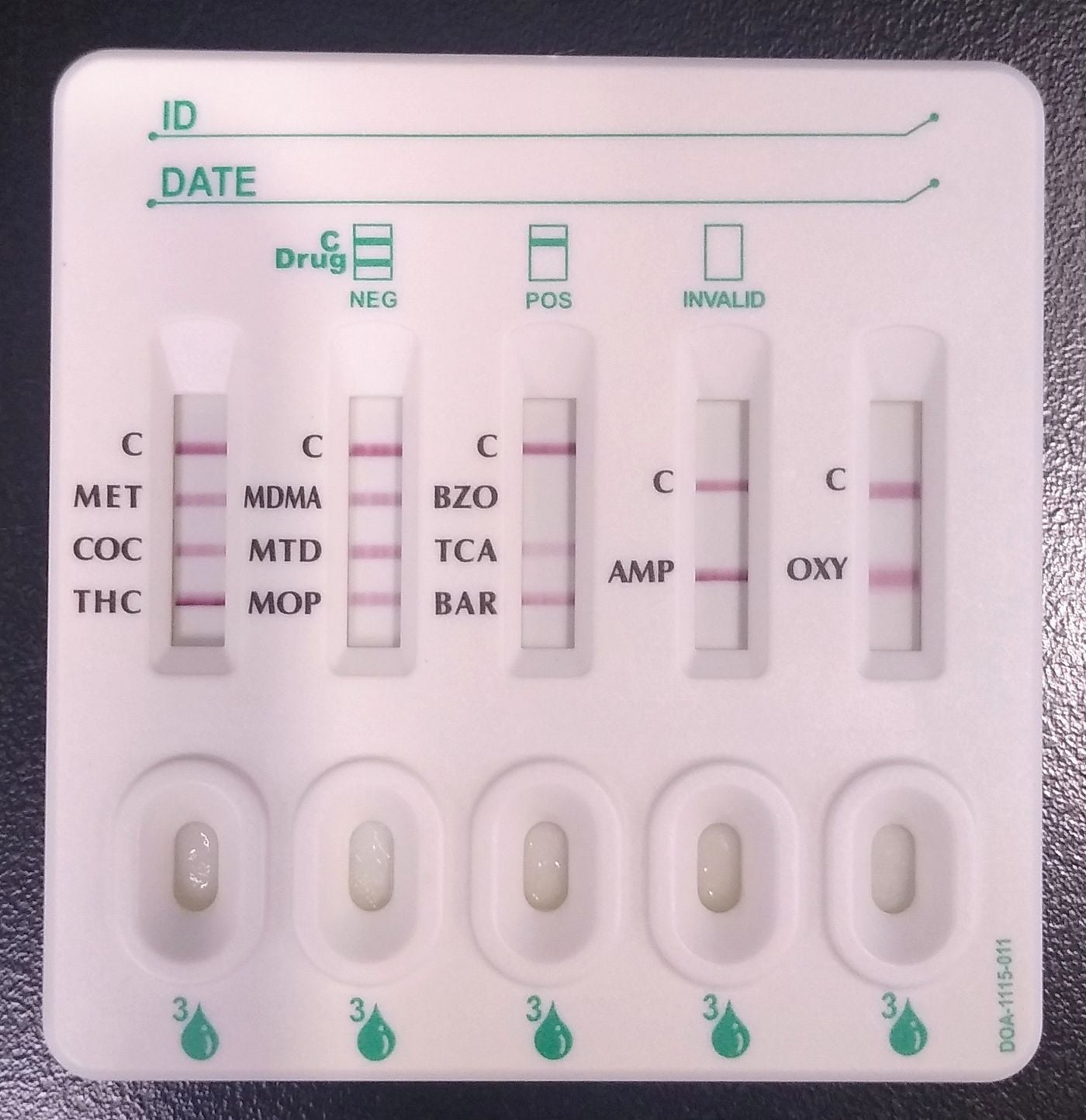
The FMCSA Drug and Alcohol Clearinghouse is the federal database in which drug and alcohol program violations of commercial drivers are recorded. Employers must run a full query before a driver starts and a query at least once a year for each driver they employ, while medical review officers, employers and substance abuse professionals report into it within one to three business days. A violation stays visible to employers until the driver has completed the return-to-duty process and all follow-up tests and five years have passed, and since November 18, 2024 a State must take the commercial privilege off a prohibited driver’s license within 60 days of being notified.
Status: 5 November 2026. Read on that day: 49 CFR Parts 382, 383, 384, 392 and 40 in the annual Code of Federal Regulations edition revised as of October 1, 2025, the Federal Register rules of December 5, 2016, December 13, 2019 and October 7, 2021, and the DOT notification of March 4, 2026. The List of CFR Sections Affected for September 2026 and the Federal Register’s lists of parts affected up to the issue of November 4, 2026 show no amendment since that edition to Part 382, to Part 40 Subpart O, to sections 384.235 and 392.15 or to the Clearinghouse paragraphs of section 383.73. The one rule amending Part 40 in that period (91 FR 25507, effective June 10, 2026) changes sections 40.65, 40.67, 40.69 and 40.145, none of them in Subpart O. These are the federal rules; State procedures are not described here. Status of the section on random testing: 14 November 2026. Read on that day: sections 382.305 and 382.403 in the same CFR edition and the FMCSA notice of December 27, 2019 (84 FR 71527). The Federal Register lists no document affecting Part 382 published from October 1, 2025 to the issue of November 13, 2026.
| Rule | Figure | Section |
|---|---|---|
| Pre-employment query | Full query, with the driver’s specific consent, before the driver performs a safety-sensitive function | 382.701(a) |
| Annual query | At least once per year for each employee subject to testing; a limited query is allowed | 382.701(b) |
| Full query after a limited query shows information | Within 24 hours | 382.701(b)(3) |
| Medical review officer’s report | Within 2 business days; a change within 1 business day | 382.705(a) |
| Employer’s report | By the close of the third business day | 382.705(b) |
| Substance abuse professional’s report | By the close of the following business day | 382.705(d) |
| Alcohol test reported | Concentration of 0.04 or higher | 382.705(b)(1)(i) |
| Query records and consent kept by the employer | 3 years | 382.701(e), 382.703(a) |
| Violation no longer shown to employers | Return-to-duty and follow-up reports entered, and 5 years since the violation determination | 382.719(a) |
| Follow-up tests | At least 6 unannounced tests in the first 12 months; the plan may run a further 48 months | 40.307(d) |
| State downgrade of a prohibited driver’s CLP or CDL | Completed and recorded within 60 days of notification, since November 18, 2024 | 383.73(q) |
What is the FMCSA Clearinghouse?
Section 382.107 defines it as “the FMCSA database that subpart G of this part requires employers and service agents to report information to and to query regarding drivers who are subject to the DOT controlled substance and alcohol testing regulations.” In its 2021 rule the Federal Motor Carrier Safety Administration (FMCSA) describes it as a repository for “driver-specific drug and alcohol program violation records, as well as RTD information” (RTD is return to duty), required by the Moving Ahead for Progress in the 21st Century Act and codified at 49 U.S.C. 31306a.
| Date | What applied from that date | Source |
|---|---|---|
| January 4, 2017 | The Clearinghouse final rule took effect | 81 FR 87686 |
| January 6, 2020 | Compliance date for the rule’s requirements, except the State query, which a 2019 rule put off | 81 FR 87686; 84 FR 68052 |
| November 8, 2021 | The non-issuance and downgrade rule took effect | 86 FR 55718 |
| January 6, 2023 | Employers use the Clearinghouse for the previous-employer check with FMCSA-regulated employers | 382.413(b) |
| November 18, 2024 | Compliance date for the non-issuance and downgrade rule; States must request Clearinghouse information before CDL transactions | 86 FR 55718; 382.725(a)(2) |
Who the Clearinghouse covers
Part 382 applies “to service agents and to every person and to all employers of such persons who operate a commercial motor vehicle in commerce in any State” and are subject to the CDL requirements of Part 383, the Licencia Federal de Conductor (Mexico) requirements, or the commercial driver’s license requirements of the Canadian National Safety Code (section 382.103(a)). The vehicle definition in section 382.107 uses the same weight and passenger lines as the CDL classes: a gross combination weight rating or weight of 26,001 pounds or more with a towed unit of more than 10,000 pounds, a gross vehicle weight rating or weight of 26,001 pounds or more, a design for 16 or more passengers including the driver, or a vehicle of any size carrying placarded hazardous materials.
A driver is “any person who operates a commercial motor vehicle”, including “Full time, regularly employed drivers; casual, intermittent or occasional drivers; leased drivers and independent owner-operator contractors.” FMCSA’s 2021 rule adds that commercial learner’s permit holders, because they may operate a commercial motor vehicle on a public road when accompanied by a CDL holder, “are subject to drug and alcohol testing under 49 CFR part 382”. An employer who employs himself or herself as a driver must comply with the requirements for employers and those for drivers (section 382.103(b)).
Section 382.103(c) states that the exceptions in section 390.3T(f) do not apply to Part 382, and that the employers and drivers named there must comply unless paragraph (d) provides otherwise. Paragraph (d) excepts employers and their drivers:
- required to comply only with the Federal Transit Administration testing regulations in Part 655;
- whom a State must waive from Part 383: active duty military personnel, members of the reserves, members of the national guard on active duty and active duty U.S. Coast Guard personnel;
- whom a State has, at its discretion, exempted from Part 383: operators of certain farm vehicles within 150 miles of the farm, and firefighters and others operating emergency vehicles with audible and visual signals;
- who operate “covered farm vehicles”, as defined in section 390.5.
What is reported, and by whom
The reports concern the conduct Subpart B of Part 382 prohibits: reporting for or remaining on duty with an alcohol concentration of 0.04 or greater (382.201); using alcohol on duty (382.205); performing safety-sensitive functions within four hours after using alcohol (382.207); using alcohol for eight hours after an accident that requires a test, or until the test (382.209); refusing a required test (382.211); using a controlled substance, other than a non-Schedule I substance prescribed by a licensed medical practitioner under the conditions of that section (382.213); and testing positive or adulterating or substituting a specimen (382.215). A safety-sensitive function covers “all time from the time a driver begins to work or is required to be in readiness to work until the time he/she is relieved from work and all responsibility for performing work”; section 382.107 lists waiting to be dispatched, inspecting, loading and attending a disabled vehicle alongside driving. The limits on duty hours are in the hours of service rules.
| Reporter | What is reported | Deadline |
|---|---|---|
| Medical review officer (MRO) | Verified positive, adulterated or substituted controlled substances test results; a refusal-to-test determination by the MRO under section 40.191 | Within 2 business days of the determination or verification; a changed result within 1 business day |
| Employer, or a consortium/third-party administrator (C/TPA) it designates | An alcohol confirmation test result of 0.04 or greater; a negative return-to-duty test result; a refusal to take an alcohol test (section 40.261); a refusal determination under section 40.191 that does not need the MRO; a report that the driver has completed all follow-up tests | By the close of the third business day following the date on which the information was obtained |
| Employer, on actual knowledge | On-duty alcohol use, pre-duty alcohol use, alcohol use following an accident, controlled substance use | By the close of the third business day following the date of actual knowledge |
| Substance abuse professional (SAP) | Identity of the SAP and the driver and the date of the initial assessment; the date the SAP determined successful compliance and eligibility for return-to-duty testing | By the close of the business day following the assessment, and following the determination |
An MRO is “a licensed physician” who is responsible for receiving and reviewing laboratory results from an employer’s drug testing program and evaluating medical explanations for certain results; a SAP is a person “who evaluates employees who have violated a DOT drug and alcohol regulation” (section 40.3). A designated C/TPA may do the employer’s reporting, but “the employer retains ultimate responsibility for compliance”. The exception is the self-employed driver, who must designate a C/TPA for reports on his or her own alcohol and controlled substances use (382.705(b)(6) and (c)). Every person with access “must report truthfully and accurately” (382.705(e)), and FMCSA must notify a driver when information about that driver is added, revised, removed or released to an employer (382.707).
Actual knowledge is defined in section 382.107 as knowledge by an employer that a driver has used alcohol or controlled substances, based on “the employer’s direct observation of the employee, information provided by the driver’s previous employer(s), a traffic citation for driving a CMV while under the influence of alcohol or controlled substances or an employee’s admission of alcohol or controlled substance use”. FMCSA’s 2021 rule states that a holder charged with driving under the influence in a commercial motor vehicle “has violated part 382, subpart B, regardless of whether the driver is ultimately convicted of the offense.”
The reporting figure for alcohol is 0.04. A test of “0.02 or greater but less than 0.04” falls under section 382.505 instead: the driver may not perform safety-sensitive functions until the start of the next regularly scheduled duty period, “but not less than 24 hours following administration of the test”. The figures that apply in Europe, Great Britain and Türkiye are on the page on alcohol limits for truck and bus drivers.
The employer queries: pre-employment and annual
Section 382.701 requires two queries. Before a driver subject to testing performs a safety-sensitive function, the employer must obtain information on whether the driver has a violation of the kinds listed above; this must be a full query. Afterwards, employers “must conduct a query of the Clearinghouse at least once per year for information for all employees subject to controlled substance and alcohol testing”.
| Point | Limited query | Full query |
|---|---|---|
| What it does | “will tell the employer whether there is information about the individual driver in the Clearinghouse, but will not release that information to the employer” | “releases information in the Clearinghouse to an employer” |
| Where the rule uses it | May satisfy the annual query | Pre-employment query; the annual query where no limited query is used; within 24 hours after a limited query shows information |
| Consent | The driver’s written or electronic consent; “The individual driver may give consent to conduct limited queries that is effective for more than one year” | Specific consent, submitted electronically through the Clearinghouse, for the records listed in section 382.703(b) |
If the full query does not follow within 24 hours, the employer “must not allow the driver to continue to perform any safety-sensitive function” until it has been run and shows no prohibition. A driver who refuses consent may not be permitted to perform a safety-sensitive function either (382.703(c)). The employer must retain each query record for 3 years, and “As of January 6, 2023, an employer who maintains a valid registration fulfills this requirement”; it must retain the consent “for 3 years from the date of the last query”.
Under section 382.701(d) no employer may allow a driver to perform a safety-sensitive function if a query shows a violation, with two exceptions. One is that the query shows the driver has completed the SAP process, achieved a negative return-to-duty test and completed the follow-up testing plan. The other is that the follow-up tests are not yet complete, the first two conditions are met, and “the employer assumes the responsibility for managing the follow-up testing process”.
Since January 6, 2023, employers must use the Clearinghouse for the previous-employer check of section 391.23(e) with FMCSA-regulated employers; a follow-up testing plan that is not yet complete is requested directly from the previous employer, and employers regulated by another DOT agency are asked directly (382.413). If a violation is entered during the 30-day period after a query, FMCSA notifies the employer (382.701(c)). An employer’s use of the information “is limited to determining whether a prohibition applies to a driver performing a safety-sensitive function with respect to a commercial motor vehicle” (382.723(b)).
How long a record stays, and when it is removed
Section 382.719(a) says a violation “will not be available to an employer conducting a query of the Clearinghouse after all of the following conditions relating to the violation are satisfied”:
- the SAP has reported the information section 382.705(d) requires;
- the employer has reported that the driver’s return-to-duty test results are negative;
- the driver’s current employer has reported that the driver has successfully completed all follow-up tests;
- “Five years have passed since the date of the violation determination.”
Until all four are met the information “will remain available to employers conducting a query” (382.719(b)). FMCSA’s 2021 rule describes the case of a citation for driving under the influence in the same way: the report stays “for 5 years, or until the driver has completed RTD, whichever is later, regardless of whether the driver is convicted of the DUI charge”. Removal under this section does not stop FMCSA “from using information removed under this section for research, auditing, or enforcement purposes” (382.719(d)).
Section 382.719(c) names the exceptions: removal under section 382.717 or under 49 CFR Part 10. A petition under section 382.717 may seek correction of administrative errors, “e.g., errors in data entry or a duplicate report of a positive test result”, but petitioners “may not contest the accuracy of test results, test refusals, or other violation information”. There are three further cases: a petitioner may ask FMCSA to add documentary evidence of non-conviction to a report based on a citation, and may ask for removal of an actual knowledge report, or of a report under section 40.261(a)(1) or 40.191(a)(1), if it does not comply with the reporting requirements in section 382.705(b). FMCSA gives its decision within 45 days of a complete petition, or within 14 days where it grants expedited treatment; an administrative review is completed within 30 days and is the final Agency action. Any employer that accessed the incorrect information is notified.
A driver may review his or her own information after registering, and “No driver may be required to pay a fee to access his or her own information in the Clearinghouse” (382.709, 382.721). Registration itself is valid for 5 years unless cancelled or revoked, and FMCSA cancels the registration of anyone who has not queried or reported for 2 years (382.713).
The return-to-duty process
Part 382 sends the whole process to Part 40: “The requirements for referral, evaluation, and treatment must be performed in accordance with 49 CFR part 40, Subpart O” (382.605), and sections 382.309 and 382.311 say the same of return-to-duty and follow-up testing. A driver who has engaged in conduct prohibited by Subpart B may not perform safety-sensitive functions, and an employer may not permit it, until the driver has met those requirements (382.503(a)). Section 40.285(a) states the rule and that “The first step in this process is a SAP evaluation.”
| Stage | What Part 40 says | Clearinghouse entry |
|---|---|---|
| Initial evaluation | A comprehensive assessment and clinical evaluation, face-to-face in person or remotely with real-time audio and visual interaction; the SAP must “Recommend a course of education and/or treatment” (40.291, 40.293) | SAP: date of the initial assessment |
| Education or treatment | The employee must demonstrate successful compliance before returning to duty; a SAP may not refer to a practice in which he or she has a financial interest, with four exceptions (40.293, 40.299) | None |
| Follow-up evaluation | The SAP re-evaluates the employee and sends a written report to the designated employer representative (40.301, 40.311) | SAP: date of the determination of successful compliance and eligibility for return-to-duty testing |
| Return-to-duty test | “a negative drug test result and/or an alcohol test with an alcohol concentration of less than 0.02” before resuming safety-sensitive duties (40.305(a)) | Employer: negative return-to-duty test result |
| Follow-up tests | At least “six unannounced follow-up tests in the first 12 months of safety-sensitive duty”; the SAP may require more, and may require tests during the following 48 months (40.307(d)) | Employer: completion of all follow-up tests |
Subpart O sets limits around these stages. An employee who has been evaluated “must not seek a second SAP’s evaluation in order to obtain another recommendation” (40.295(a)), and no one may change the SAP’s evaluation or recommendations, except the SAP who made them on new or additional information (40.297). An employer is not required to provide the evaluation or treatment, and payment “is left for employers and employees to decide” (40.289). Even after a negative test, an employer is “not required to return an employee to safety-sensitive duties”, which is “a personnel decision” (40.305(b)).
The plan’s requirements “‘follow the employee’ to subsequent employers or through breaks in service”; no employer or service agent may give the employee a copy of the schedule, and an employer cannot count tests from the random testing program toward it (40.307(e) and (g), 40.309(c)). A driver who has violated the rules without completing Subpart O must notify all current employers in writing, other than the one that administered the test or documented the violation, before the end of the business day after receiving notice or before performing a safety-sensitive function, whichever comes first (382.415).
On March 4, 2026 the DOT published a reminder to SAPs and employers on this process. It says “It is never appropriate to provide employees with an estimated RTD timeline before conducting an initial SAP evaluation and assessment”, and that it “is not a substitute for Part 40”.
What happens to the CDL: non-issuance and downgrade
The rule published on October 7, 2021 (86 FR 55718) sets what States do with Clearinghouse information. Its dates read: “Effective date: November 8, 2021. Compliance date: Compliance with the final rule is required November 18, 2024.” The prohibition it relies on is section 382.501(a): “Except as provided in subpart F of this part, no driver shall perform safety-sensitive functions, including driving a commercial motor vehicle, if the driver has engaged in conduct prohibited by subpart B of this part or an alcohol or controlled substances rule of another DOT agency.” Section 392.15 repeats the driving prohibition for the holder of a commercial learner’s permit or CDL, and the rule adds that section to the provisions that remain applicable to school bus operations.
FMCSA describes two routes for the information: the State driver licensing agency “pulls” it with a required query before a licensing transaction, and FMCSA “pushes” it whenever a violation is reported for a holder licensed in that State. Applying for a CDL or learner’s permit counts as consent to that release (382.725(b)), and the licensing official may use the information only to determine an individual’s qualifications to operate a commercial motor vehicle (382.725(c)).
| Transaction | State must not | Paragraph |
|---|---|---|
| Commercial learner’s permit (CLP) | Issue, renew or upgrade the CLP; a current CLP also goes to the downgrade procedure | 383.73(a)(8) |
| Initial CDL | Issue the CDL | 383.73(b)(10) |
| Transfer of a CDL from another State | Transfer the CDL | 383.73(c)(10) |
| Renewal | Renew the CDL or H endorsement; the downgrade procedure also applies | 383.73(d)(9) |
| Upgrade | Issue an upgrade of the CDL; the downgrade procedure also applies | 383.73(e)(8) |
| Non-domiciled CLP or CDL | Issue, renew, transfer or upgrade it; the downgrade procedure applies as applicable | 383.73(f)(4) |
Outside any transaction, section 383.73(q) requires the State, on notification that a holder is prohibited under section 382.501(a), to “initiate established State procedures for downgrading the CLP or CDL.” The paragraph continues: “The downgrade must be completed and recorded on the CDLIS driver record within 60 days of the State’s receipt of such notification.” Downgrade here means “the State’s removal of the CLP or CDL privilege from the driver’s license”, the fourth meaning in the section 383.5 definition of CDL downgrade. FMCSA proposed 30 days and adopted 60, noting that the window “aligns with current medical certification downgrade requirements in 49 CFR 383.73(o)(4)”, which are on the DOT physical page. The rule “does not establish specific downgrade or reinstatement procedures”, and FMCSA says that it is “entirely within the States’ discretion to determine whether CMV drivers may contest a downgrade or other pending license action.” Section 384.235, in the part on State compliance with the CDL program, lists both the Clearinghouse request and compliance with section 383.73(q) among what the State must do from November 18, 2024.
Paragraph (q) also covers the way back. If the State learns before it completes the downgrade that the holder is no longer prohibited under section 382.503(a), it must, “if permitted by State law”, stop the process without removing the privilege. If FMCSA notifies it after the downgrade, the State “must make the driver eligible for reinstatement of the CLP or CDL privilege to the driver’s license, if permitted by State law.” If FMCSA reports the driver was identified in error, the State must reinstate the privilege “as expeditiously as possible” and expunge the reference from the record. Until the State reinstates a removed privilege, section 382.503(b) says the driver may not drive a commercial motor vehicle. The rule’s executive summary says drivers may re-apply for a denied transaction after complying with the return-to-duty requirements once “a negative RTD test result has been reported to the Clearinghouse”. Section 382.719, which holds the five-year condition, speaks of information “available to an employer conducting a query of the Clearinghouse”.
FMCSA also states that section 392.15 “does not render the prohibited driver ‘disqualified’ for purposes of the CDLIS check required in 49 CFR 384.205”. Canadian and Mexican licensing authorities “are not authorized users of the Clearinghouse”; a foreign-licensed driver who is prohibited is, in FMCSA’s description, cited and placed out of service at the roadside.
Random testing: the minimum annual rates
Random testing is section 382.305, in Subpart C of Part 382, “Tests Required”. Under paragraph (a), “Every driver shall submit to random alcohol and controlled substance testing as required in this section.” Paragraph (b) sets the minimum annual percentage rates as a share of “the average number of driver positions”: 10 percent for random alcohol testing, except as paragraphs (c) to (e) provide, and 50 percent for random controlled substances testing, except as paragraphs (f) to (h) provide.
The FMCSA Administrator’s decision to increase or decrease a rate is based on figures for the entire industry: the reported violation rate for alcohol (382.305(c)) and the reported positive rate for controlled substances (382.305(f)). In both paragraphs “All information used for this determination” is drawn from the management information system (MIS) reports required by section 382.403; the Administrator considers the quality and completeness of the reported data, may obtain additional information or reports from employers and may make appropriate modifications in calculating the industry rate. “In the event of a change in the annual percentage rate”, the Administrator publishes the new minimum rate in the Federal Register, and the new rate “will be applicable starting January 1 of the calendar year following publication in the Federal Register.”
| Testing | Rate at the time | What the section provides | Paragraph |
|---|---|---|---|
| Alcohol | 25 percent or more | May be lowered to 10 percent if the data for two consecutive calendar years indicate a violation rate of less than 0.5 percent | 382.305(d)(1) |
| Alcohol | 50 percent | May be lowered to 25 percent if the data for two consecutive calendar years indicate a violation rate of less than 1.0 percent but equal to or greater than 0.5 percent | 382.305(d)(2) |
| Alcohol | 10 percent | Increased to 25 percent if the data for that calendar year indicate a violation rate equal to or greater than 0.5 percent, but less than 1.0 percent | 382.305(e)(1) |
| Alcohol | 25 percent or less | Increased to 50 percent if the data for that calendar year indicate a violation rate equal to or greater than 1.0 percent | 382.305(e)(2) |
| Controlled substances | 50 percent | May be lowered to 25 percent if the data for two consecutive calendar years indicate a positive rate of less than 1.0 percent | 382.305(g) |
| Controlled substances | 25 percent | Increased to 50 percent if the data for any calendar year indicate a reported positive rate equal to or greater than 1.0 percent | 382.305(h) |
Under paragraph (i), drivers are selected “by a scientifically valid method, such as a random number table or a computer-based random number generator” matched with Social Security numbers, payroll identification numbers or other comparable identifying numbers; each driver “shall have an equal chance of being tested each time selections are made”, and each driver selected for testing must be tested during the selection period. Paragraph (j) sets how the total number of covered drivers eligible for random testing throughout the year is calculated: the numbers of covered drivers eligible during each random testing period of the year, added up and divided by the number of random testing periods. “Covered employees, and only covered employees, are to be in an employer’s random testing pool, and all covered drivers must be in the random pool.” A service agent such as a C/TPA may perform the selections and the drivers may be part of a larger random testing pool, but the employer must ensure that the service agent is “testing at the appropriate percentage”. Paragraph (k) requires the tests to be unannounced and their dates to be “spread reasonably throughout the calendar year”.
The MIS reports are set out in section 382.403. An employer must prepare and maintain a summary of the results of its alcohol and controlled substances testing programs for the previous calendar year when the Secretary of Transportation, any DOT agency, or State or local officials with regulatory authority over the employer or its drivers request it (382.403(a)). An employer notified during the month of January of a request by FMCSA to report its annual calendar year summary must prepare and submit the report “by March 15 of that year” and must ensure that it is accurate and received by March 15 at the location FMCSA specifies; the employer must use the MIS form and instructions of Part 40 (section 40.26 and appendix J) (382.403(b)). A service agent, such as a C/TPA, may prepare the report, but a company official “must certify the accuracy and completeness of the MIS report, no matter who prepares it” (382.403(e)).
The most recent FMCSA notice of a change in a random testing rate that the Federal Register lists is FR Doc. 2019-28164, a notice of program change published on December 27, 2019 (84 FR 71527). It raised the minimum annual rate for random controlled substances testing from 25 percent to 50 percent of the average number of driver positions “Beginning January 1, 2020”, citing section 382.305(h): based on the 2018 FMCSA Drug and Alcohol Testing Survey, “the positive rate for controlled substances random testing increased to 1.0 percent”, after estimates of 0.7 percent for 2016 and 0.8 percent for 2017. The notice adds that the minimum rate for random alcohol testing “will remain at 10 percent”. The notice ties the survey to section 382.403: “each calendar year FMCSA requires motor carriers selected for the survey to submit their DOT drug and alcohol testing program results.” For the 2018 survey, forms were sent to 4,480 randomly selected motor carriers, and usable data for random controlled substance testing came from 1,552 carriers comprising 300,635 CDL drivers. The Federal Register lists no FMCSA notice changing either rate published after that notice, up to November 14, 2026.
Penalties
Section 382.507 subjects any employer or driver who violates Part 382 or Part 40 to “the civil and/or criminal penalty provisions of 49 U.S.C. 521(b)”, and section 382.727 applies the penalty provisions of 49 U.S.C. 521(b)(2)(C) to an employer, employee, MRO or service agent who violates Subpart G. Neither section gives a dollar figure.
What this page does not cover
- State downgrade and reinstatement procedures, hearings and license fees.
- How specimens are collected and tested under Part 40, and the types of tests in Subpart C of Part 382, apart from the rates, selection and timing of random testing in section 382.305.
- The qualifications of SAPs and other service agents, and Clearinghouse registration steps.
- Disqualifications under section 383.51 and the other CDL requirements.
- Testing rules of DOT agencies other than FMCSA.
Quick answers
- What is the FMCSA Clearinghouse?
- It is the Federal Motor Carrier Safety Administration's database of drug and alcohol program violations by drivers subject to DOT testing, with its requirements in 49 CFR Part 382, Subpart G. Medical review officers, employers and substance abuse professionals report to it, employers query it before a driver starts and at least once a year, and since November 18, 2024 States must check it before CDL transactions.
- How often do employers have to query the Drug and Alcohol Clearinghouse?
- At least once per year for every employee subject to testing, and in addition with a full query before a driver first performs a safety-sensitive function for them. The annual query may be a limited query; if that shows information exists, a full query must follow within 24 hours (49 CFR 382.701).
- What is the difference between a limited query and a full query?
- A limited query tells the employer whether there is information about the driver in the Clearinghouse but does not release it; a full query releases it. A full query needs the driver's specific consent, given electronically through the Clearinghouse. Consent to limited queries may be effective for more than one year.
- How long does a violation stay in the Clearinghouse?
- At least five years from the date of the violation determination, apart from the removals listed in section 382.719(c). Under 49 CFR 382.719 it stops being available to employers once the substance abuse professional's report, the negative return-to-duty test and the report that all follow-up tests are complete have been entered, and five years have passed. FMCSA may still use removed information for research, auditing or enforcement.
- Does a Clearinghouse violation take away a CDL?
- Yes, through the State: since November 18, 2024 a State that is notified that a driver is prohibited under 49 CFR 382.501(a) must start its downgrade procedures, and the removal of the CLP or CDL privilege from the driver's license must be completed and recorded within 60 days of the notification. If the State is notified before then that the driver is no longer prohibited, it must stop the process, if State law permits. The State also must not issue, renew, transfer or upgrade the credential. A driver whose privilege was removed may not drive a commercial motor vehicle until the State reinstates it.
- Does the Clearinghouse apply to owner-operators?
- Yes. Part 382 counts independent owner-operator contractors as drivers, and an employer who employs himself or herself as a driver must meet both the employer and the driver requirements. Such a driver must designate a consortium/third-party administrator to meet the employer reporting requirements for his or her own alcohol and controlled substances use (49 CFR 382.107, 382.103(b) and 382.705(b)(6)).
Sources
- 49 CFR Part 382 — Controlled Substances and Alcohol Use and Testing, including Subpart G on the Clearinghouse (Code of Federal Regulations, annual edition revised as of October 1, 2025) — U.S. Government Publishing Office (govinfo)
- 49 CFR Part 40, section 40.3 and Subpart O — Substance Abuse Professionals and the Return-to-Duty Process (Code of Federal Regulations, annual edition revised as of October 1, 2025) — U.S. Government Publishing Office (govinfo)
- 49 CFR Part 383, sections 383.5, 383.73 and 383.91 (Code of Federal Regulations, annual edition revised as of October 1, 2025) — U.S. Government Publishing Office (govinfo)
- 49 CFR 384.235 — Commercial driver's license Drug and Alcohol Clearinghouse (Code of Federal Regulations, annual edition revised as of October 1, 2025) — U.S. Government Publishing Office (govinfo)
- 49 CFR 392.15 — Prohibited driving status (Code of Federal Regulations, annual edition revised as of October 1, 2025) — U.S. Government Publishing Office (govinfo)
- Controlled Substances and Alcohol Testing: State Driver's Licensing Agency Non-Issuance/Downgrade of Commercial Driver's License — final rule, 86 FR 55718 (October 7, 2021) — Federal Motor Carrier Safety Administration (Federal Register, govinfo), 7 Oct 2021
- Commercial Driver's License Drug and Alcohol Clearinghouse — final rule, 81 FR 87686 (December 5, 2016) — Federal Motor Carrier Safety Administration (Federal Register, govinfo), 5 Dec 2016
- Extension of Compliance Date for States' Query of the Drug and Alcohol Clearinghouse — final rule, 84 FR 68052 (December 13, 2019) — Federal Motor Carrier Safety Administration (Federal Register, govinfo), 13 Dec 2019
- Procedures for Transportation Workplace Drug and Alcohol Testing Programs: Substance Abuse Professional and the Return-to-Duty Process — notification, 91 FR 10518 (March 4, 2026) — Office of the Secretary of Transportation (Federal Register, govinfo), 4 Mar 2026
- Procedures for Transportation Workplace Drug and Alcohol Testing Programs — final rule, 91 FR 25507 (May 11, 2026) — Office of the Secretary of Transportation (Federal Register, govinfo), 11 May 2026
- List of CFR Sections Affected, September 2026 (Title 49: changes October 1, 2025 through September 30, 2026) — Office of the Federal Register (govinfo)
- Federal Register, Reader Aids: CFR parts affected during October 2026 (issue of October 30, 2026) — Office of the Federal Register (govinfo), 30 Oct 2026
- Federal Register, Reader Aids: CFR parts affected during November 2026 (issue of November 4, 2026) — Office of the Federal Register (govinfo), 4 Nov 2026
- Annual Random Controlled Substances Testing Percentage Rate for Calendar Year 2020 — notice of program change, 84 FR 71527 (December 27, 2019) — Federal Motor Carrier Safety Administration (Federal Register, govinfo), 27 Dec 2019
- Federal Register documents: Federal Motor Carrier Safety Administration notices matching 'random', published on or after December 28, 2019 (read on November 14, 2026) — Office of the Federal Register (federalregister.gov API)
- Federal Register documents affecting 49 CFR Part 382, published on or after October 1, 2025 (read on November 14, 2026) — Office of the Federal Register (federalregister.gov API)
- Federal Register, Reader Aids: CFR parts affected during November 2026 (issue of November 13, 2026) — Office of the Federal Register (govinfo), 13 Nov 2026