Hours of service: the FMCSA rules for truck and bus drivers
Truck drivers may drive 11 hours within a 14-hour window after 10 hours off duty, bus drivers 10 hours after 8. The 60/70-hour limits, restart and ELDs.
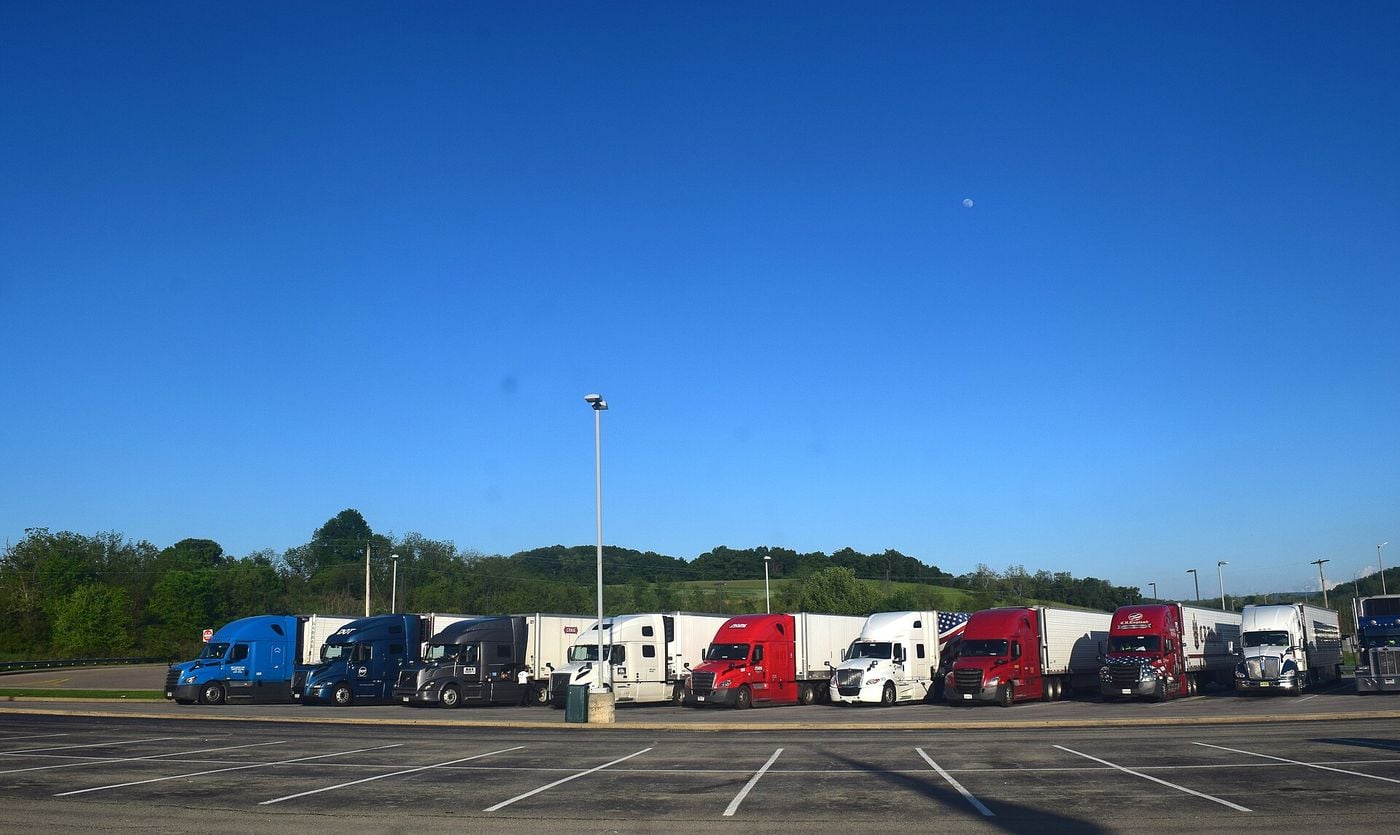
Hours of service are the federal limits, set out in 49 CFR Part 395, on driving time and on the hours on duty after which a driver of a commercial motor vehicle in interstate commerce may no longer drive. A driver of a property-carrying vehicle such as a truck needs 10 consecutive hours off duty before driving, may then drive 11 hours, may not drive after the 14th consecutive hour since coming on duty, and may not keep driving beyond 8 hours of driving time without a 30-minute interruption. A driver of a passenger-carrying vehicle such as a bus may drive 10 hours after 8 consecutive hours off duty and may not drive after being on duty 15 hours. Neither may drive after 60 hours on duty in any 7 consecutive days, or 70 hours in 8 if the carrier operates every day of the week, and the hours are recorded on an electronic logging device (ELD) unless an exception applies.
Status: 28 October 2026. The rules below are those of 49 CFR Part 395 in the annual Code of Federal Regulations edition revised as of October 1, 2025, with the two amendments published since: a final rule of June 22, 2026, effective July 22, 2026, that removed the ELD user’s manual from the information packet drivers must have on board (section 395.22(h)), and a technical rule of July 21, 2026 whose only Part 395 change was the heading of section 395.38. The List of CFR Sections Affected for changes through August 31, 2026, and the Federal Register’s lists of CFR parts affected in September 2026 and in October 2026 up to October 27, show no other Part 395 change. Section 390.23 is given as amended from October 5, 2026. Rules for driving within a single State are not covered.
| Limit | Property-carrying vehicle (truck) | Passenger-carrying vehicle (bus) |
|---|---|---|
| Off duty before driving | 10 consecutive hours (395.3(a)(1)) | 8 consecutive hours, from which the 10-hour and 15-hour limits are counted (395.5(a)) |
| Driving | 11 hours within the 14-hour period (395.3(a)(3)(i)) | 10 hours following 8 consecutive hours off duty (395.5(a)(1)) |
| No driving after | 14 consecutive hours after coming on duty (395.3(a)(2)) | 15 hours on duty (395.5(a)(2)) |
| Break | A consecutive 30-minute interruption before more than 8 hours of driving time have passed (395.3(a)(3)(ii)) | None in section 395.5 |
| On duty over several days | 60 hours in 7 consecutive days, or 70 hours in 8 consecutive days if the carrier operates every day (395.3(b)) | 60 hours in 7 consecutive days, or 70 hours in 8 consecutive days if the carrier operates every day (395.5(b)) |
| Restart | Off duty for 34 or more consecutive hours (395.3(c)) | None in section 395.5 |
| Adverse driving conditions | Up to 2 additional hours (395.1(b)(1)) | Up to 2 additional hours (395.1(b)(1)) |
| Sleeper berth split | At least 7 consecutive hours in the berth and another period of at least 2 hours, together at least 10 hours (395.1(g)(1)(ii)) | Two periods in the berth, neither shorter than two hours (395.1(g)(3)) |
Who has to follow the hours-of-service rules?
Section 395.1(a)(1) says the rules in Part 395 “apply to all motor carriers and drivers, except as provided in paragraphs (b) through (x) of this section.” The Federal Motor Carrier Safety Regulations as a whole “are applicable to all employers, employees, and commercial motor vehicles that transport property or passengers in interstate commerce” (section 390.3T(a)(1)). Interstate commerce, as section 390.5T defines it, covers transportation between a place in a State and a place outside it, between two places in a State through another State or a place outside the United States, and between two places in a State as part of transportation that begins or ends outside the State or the country.
For these rules a commercial motor vehicle is a self-propelled or towed motor vehicle used on a highway in interstate commerce to transport passengers or property when the vehicle (section 390.5T):
- has a gross vehicle weight rating or gross combination weight rating, or gross vehicle weight or gross combination weight, of 4,536 kg (10,001 pounds) or more, whichever is greater;
- is designed or used to transport more than 8 passengers (including the driver) for compensation;
- is designed or used to transport more than 15 passengers, including the driver, and is not used to transport passengers for compensation; or
- is used to transport hazardous materials in a quantity requiring placarding.
The weight ratings are explained in GVWR, GCWR and GAWR explained. Part 395 also applies where no commercial driver’s license is required: section 395.1(e)(2) has its own short-haul rule for drivers of property-carrying vehicles “for which a commercial driver’s license is not required under part 383”. The license classes are described in what a CDL is.
Unless otherwise specifically provided, section 390.3T(f) leaves out, among others, all school bus operations, defined in section 390.5T as “the use of a school bus to transport only school children and/or school personnel from home to school and from school to home”; transportation performed by the Federal government, a State or any political subdivision of a State; and fire trucks and rescue vehicles while involved in emergency and related operations.
The 11-hour, 14-hour and 30-minute rules for truck drivers
Section 395.3(a) sets the daily limits for a driver of a property-carrying commercial motor vehicle, “regardless of the number of motor carriers using the driver’s services”:
(1) Start of work shift. A driver may not drive without first taking 10 consecutive hours off duty;
(2) 14-hour period. A driver may not drive after a period of 14 consecutive hours after coming on-duty following 10 consecutive hours off-duty.
Paragraph (a)(3)(i) sets the driving time: “A driver may drive a total of 11 hours during the period specified in paragraph (a)(2) of this section.” The break follows in paragraph (a)(3)(ii): “Except for drivers who qualify for either of the short-haul exceptions in § 395.1(e)(1) or (2), driving is not permitted if more than 8 hours of driving time have passed without at least a consecutive 30-minute interruption in driving status.” The interruption “may be satisfied either by off-duty, sleeper berth or on-duty not driving time or by a combination of off-duty, sleeper berth and on-duty not driving time.”
Driving time “means all time spent at the driving controls of a commercial motor vehicle in operation” (section 395.2). On-duty time “means all time from the time a driver begins to work or is required to be in readiness to work until the time the driver is relieved from work and all responsibility for performing work”; the definition lists among other things waiting to be dispatched, loading and unloading, all driving time and any other work for a motor carrier, and leaves out time resting in or on a parked vehicle (except as provided in section 397.5), time resting in a sleeper berth, and up to 3 hours riding in the passenger seat of a property-carrying vehicle immediately before or after at least 7 consecutive hours in the sleeper berth.
Section 395.3 was last amended by FMCSA’s final rule of June 1, 2020, in force since September 29, 2020, which in its own summary “requires a 30-minute break after 8 hours of driving time (instead of on-duty time) and allows an on-duty/not driving period to qualify as the required break”.
The 60-hour and 70-hour limits and the 34-hour restart
Section 395.3(b) forbids driving a property-carrying commercial motor vehicle “for any period after— (1) Having been on duty 60 hours in any period of 7 consecutive days if the employing motor carrier does not operate commercial motor vehicles every day of the week; or (2) Having been on duty 70 hours in any period of 8 consecutive days if the employing motor carrier operates commercial motor vehicles every day of the week.” Seven consecutive days “means the period of 7 consecutive days beginning on any day at the time designated by the motor carrier for a 24-hour period”, and eight consecutive days are defined the same way (section 395.2).
The restart is section 395.3(c): “(1) Any period of 7 consecutive days may end with the beginning of an off-duty period of 34 or more consecutive hours. (2) Any period of 8 consecutive days may end with the beginning of an off-duty period of 34 or more consecutive hours.” Section 395.1(o)(3) describes a driver who has done so as having “begun a new 7- or 8-consecutive day period with the beginning of any off-duty period of 34 or more consecutive hours as allowed by § 395.3(c).”
Splitting the 10 hours off duty in a sleeper berth
A sleeper berth is “a berth conforming to the requirements of § 393.76” (section 395.2). Under section 395.1(g)(1)(i) a driver of a property-carrying vehicle who uses the berth for the 10 hours off duty may take them off duty, in the berth or as a combination of the two; may combine at least 7 consecutive hours in the berth with up to 3 hours riding in the passenger seat of the moving vehicle, immediately before or after, amounting to at least 10 consecutive hours; or may split them. The split, in section 395.1(g)(1)(ii), allows “not more than two periods of either sleeper berth time or a combination of off-duty time and sleeper berth time” if:
(A) Neither rest period is shorter than 2 consecutive hours;
(B) One rest period is at least 7 consecutive hours in the sleeper berth;
(C) The total of the two periods is at least 10 hours;
and if the driving time immediately before and after each rest period, added together, stays within the 11-hour limit and does not violate the 14-hour limit. “The driving time limit and the 14-hour duty-period limit must be re-calculated from the end of the first of the two periods used to comply with paragraph (g)(1)(i)(E) of this section”, and “The 14-hour driving window for purposes of § 395.3(a)(2) does not include qualifying rest periods under paragraph (g)(1)(ii) of this section” (section 395.1(g)(1)(iii)). The 7-hour minimum dates from the 2020 rule, which in its summary allows the 10 hours to be met “by spending at least 7, rather than at least 8 hours of that period in the berth”.
Adverse driving conditions and emergencies
Section 395.2 defines adverse driving conditions as “snow, ice, sleet, fog, or other adverse weather conditions or unusual road or traffic conditions that were not known, or could not reasonably be known, to a driver immediately prior to beginning the duty day or immediately before beginning driving after a qualifying rest break or sleeper berth period, or to a motor carrier immediately prior to dispatching the driver.” A driver who encounters them “and cannot, because of those conditions, safely complete the run within the maximum driving time or duty time during which driving is permitted under § 395.3(a) or § 395.5(a) may drive and be permitted or required to drive a commercial motor vehicle for not more than two additional hours beyond the maximum allowable hours permitted under § 395.3(a) or § 395.5(a) to complete that run or to reach a place offering safety for the occupants of the commercial motor vehicle and security for the commercial motor vehicle and its cargo” (section 395.1(b)(1)). In any emergency a driver may also complete the run without violating Part 395, “if such run reasonably could have been completed absent the emergency” (section 395.1(b)(2)).
Section 390.23 gives automatic relief in emergencies to a carrier or driver “providing direct assistance”:
- declared by the President under 42 U.S.C. 5191(b): Parts 390 through 399 do not apply during the emergency period or 30 days from the initial declaration, whichever is less;
- declared by the Governor of a State, their authorized representative, or FMCSA: sections 395.3 and 395.5 do not apply during the emergency period or 30 days from the initial declaration, whichever is less. The 30 days come from FMCSA’s final rule of October 5, 2026, in force that day, which replaced the 14 days of the earlier text with the period that applied before a final rule of October 2023;
- declared by a Federal, State or local official with authority to do so: sections 395.3 and 395.5 do not apply for the period of assistance or 5 days, whichever is less;
- a police request for tow trucks to move wrecked or disabled vehicles: section 395.3 does not apply for the length of the assistance or 24 hours, whichever is less.
When the assistance ends, the driver may return empty to the terminal or normal work reporting location, and a driver who tells the carrier he or she needs immediate rest must be permitted at least 10 consecutive hours off duty before being required to return (section 390.23(e)).
The short-haul exceptions and the 16-hour day
Under section 395.1(e)(1) a driver is exempt from section 395.8, which requires the record of duty status and the ELD, and from section 395.11 on supporting documents, if:
- the driver operates within a 150 air-mile radius (172.6 statute miles) of the normal work reporting location;
- the driver, except a driver-salesperson, returns to the work reporting location and is released from work within 14 consecutive hours;
- a property-carrying driver has at least 10 consecutive hours off duty separating each 14 hours on duty, and a passenger-carrying driver at least 8 consecutive hours; and
- the carrier keeps for 6 months accurate and true time records of when the driver reports for duty, the total hours on duty and when the driver is released, each day, and, for drivers used for the first time or intermittently, the total time for the preceding 7 days.
Drivers who qualify for this exception, or for the one in section 395.1(e)(2), are not subject to the 30-minute break. The 2020 rule extended the maximum duty period under the exception “from 12 hours to 14 hours” and its radius “from 100 to 150 air-miles”. Section 395.1(e)(2) is for drivers of property-carrying vehicles for which a commercial driver’s license is not required: within a 150 air-mile radius and returning to the normal work reporting location at the end of each duty tour, such a driver is exempt from the 14-hour limit and from sections 395.8 and 395.11, but may not use paragraphs (e)(1), (g) or (o), if he or she does not drive “(A) After the 14th hour after coming on duty on 5 days of any period of 7 consecutive days; and (B) After the 16th hour after coming on duty on 2 days of any period of 7 consecutive days” and the carrier keeps the same time records.
Section 395.1(o) exempts a property-carrying driver from the 14-hour limit of section 395.3(a)(2) if the driver has returned to the normal work reporting location and been released from duty there for the previous five duty tours; returns there and is released from duty within 16 hours after coming on duty following 10 consecutive hours off duty; and has not used this exemption within the previous 6 consecutive days, unless a new 7- or 8-consecutive-day period has begun with an off-duty period of 34 or more consecutive hours.
Bus and coach drivers: the 10-hour and 15-hour limits
Section 395.5 applies “Subject to the exceptions and exemptions in § 395.1”. No motor carrier may permit or require a driver of a passenger-carrying commercial motor vehicle to drive, nor may any such driver drive:
(1) More than 10 hours following 8 consecutive hours off duty; or
(2) For any period after having been on duty 15 hours following 8 consecutive hours off duty.
The limits over several days in section 395.5(b) match those for trucks: no driving after “(1) Having been on duty 60 hours in any 7 consecutive days if the employing motor carrier does not operate commercial motor vehicles every day of the week; or (2) Having been on duty 70 hours in any period of 8 consecutive days if the employing motor carrier operates commercial motor vehicles every day of the week.” Section 395.5 contains no 30-minute break and no 34-hour restart; both are written into section 395.3 for property-carrying vehicles.
A driver of a passenger-carrying vehicle equipped with a sleeper berth “may accumulate the equivalent of 8 consecutive hours of off-duty time by taking a combination of at least 8 consecutive hours off-duty and sleeper berth time; or by taking two periods of rest in the sleeper berth” (section 395.1(g)(3)). Neither period may be shorter than two hours, the driving time immediately before and after each rest period may not add up to more than 10 hours, and the on-duty time immediately before and after each rest period, added together, may not include any driving time after the 15th hour. Travel at the carrier’s direction, without driving, counts as on-duty time unless the driver has at least 8 consecutive hours off duty on arrival (section 395.1(j)(2)).
Other exceptions in section 395.1
- Driver-salesperson (paragraph (c)): the 60/70-hour limit of section 395.3(b) does not apply if total driving time does not exceed 40 hours in any period of 7 consecutive days.
- Oilfield operations (d): any period of 8 consecutive days may end with an off-duty period of 24 or more successive hours; for ground water well drilling (l) and construction materials and equipment (m) the same applies to any period of 7 or 8 consecutive days.
- Retail store deliveries (f): sections 395.3(a) and (b) do not apply from December 10 to December 25 to drivers making only local deliveries from retail stores and/or retail catalog businesses to the ultimate consumer within a 100-air mile radius.
- Alaska (h): sections 395.3(a) and (b) and 395.5 do not apply there. Drivers may not drive more than 15 hours following 10 consecutive hours off duty (8 for passenger-carrying vehicles) or after being on duty for 20 hours or more, nor after 70 hours on duty in 7 consecutive days or 80 hours in 8, depending on whether the carrier operates every day of the week.
- Hawaii (i): section 395.8 does not apply if the carrier keeps 6 months of records of each driver’s daily hours on duty and reporting and release times.
- Agricultural operations (k): Part 395 does not apply during planting and harvesting periods, as determined by each State, to the transport of agricultural commodities, farm supplies and livestock within the 150 air-mile radii that the paragraph sets out.
- Motion picture production sites (p): drivers carrying property or passengers to or from a theatrical or television motion picture production site within a 100 air-mile radius of the normal work-reporting location are exempt from section 395.3(a) but may not drive more than 10 hours following 8 consecutive hours off duty, or after having been on duty 15 hours following 8 consecutive hours off duty.
- The 30-minute break: drivers attending vehicles with Division 1.1, 1.2 or 1.3 explosives (q) and drivers of ready-mixed concrete delivery vehicles waiting at a job site or terminal (t) may count 30 minutes or more of that time as the break if they do no other work; the break does not apply to the transport of bees (u) or livestock (v) while they are on the vehicle.
- Part 395 does not apply to drivers of utility service vehicles (n) or covered farm vehicles (s), to railroad signal employees (r) under the conditions of that paragraph, or to drivers of pipeline welding trucks (x).
Recording the hours: records of duty status and the ELD
Except for a private motor carrier of passengers (nonbusiness), a motor carrier must require each driver to record the driver’s duty status for each 24-hour period (section 395.8(a)(1)) as “Off duty” or “OFF”, “Sleeper berth” or “SB”, “Driving” or “D”, or “On-duty not driving” or “ON” (section 395.8(b)). Section 395.8(a)(1)(i) sets the electronic requirement: “a motor carrier operating commercial motor vehicles must install and require each of its drivers to use an ELD to record the driver’s duty status in accordance with subpart B of this part no later than December 18, 2017.” FMCSA’s June 2026 rule gives the legal basis: section 32301(b) of the Commercial Motor Vehicle Safety Enhancement Act, enacted as part of the Moving Ahead for Progress in the 21st Century Act of July 6, 2012, “mandated that the Secretary adopt regulations requiring that CMVs involved in interstate commerce, operated by drivers who are required to keep a Record of Duty Status, be equipped with ELDs.”
Under section 395.8(a)(1)(ii) a carrier may instead require a driver to record the duty status manually, in duplicate on the graph grid of section 395.8(g), if the driver is operating a commercial motor vehicle:
- in a manner requiring completion of a record of duty status on not more than 8 days within any 30-day period;
- in a driveaway-towaway operation in which the vehicle being driven is part of the shipment being delivered;
- in a driveaway-towaway operation in which the vehicle being transported is a motor home or a recreation vehicle trailer; or
- that was manufactured before model year 2000, as reflected in the vehicle identification number as shown on the vehicle’s registration.
An ELD is “a device or technology that automatically records a driver’s driving time and facilitates the accurate recording of the driver’s hours of service, and that meets the requirements of subpart B of this part” (section 395.2). A carrier may use only an ELD on FMCSA’s registered ELDs list (section 395.22(a)), and may configure it to let a driver indicate authorized personal use of the vehicle or yard moves (section 395.28(a)). The driver submits each record of duty status to the carrier within 13 days of the 24-hour period it covers (section 395.8(a)(2)); the carrier keeps records of duty status and supporting documents for at least 6 months (section 395.8(k)(1)), and the driver keeps the records for the previous 7 consecutive days available for inspection while on duty (section 395.8(k)(2)). Tampering with an ELD so that it does not accurately record and retain the data is prohibited (section 395.8(e)).
Since July 22, 2026 the information packet a carrier must make sure its drivers have on board holds an instruction sheet on producing and transferring the hours-of-service records to an authorized safety official, an instruction sheet on malfunction reporting and recordkeeping, and blank graph-grids for at least 8 days (section 395.22(h)). FMCSA’s rule of June 22, 2026 removed the user’s manual from that list; it notes that the change “does not forbid motor carriers or drivers from continuing to carry a user’s manual for their ELD.” During an ELD malfunction the driver gives the carrier written notice within 24 hours, reconstructs the records for the current 24-hour period and the previous 7 consecutive days on graph-grid paper logs unless they are already available, and keeps paper records until the ELD “is serviced and brought back into compliance” (section 395.34(a)). Section 395.13 lets an FMCSA special agent order out of service a driver who has broken its criteria, the first of which is “No driver shall drive after being on duty in excess of the maximum periods permitted by this part.”
| Date | What applies from that date | Source |
|---|---|---|
| December 16, 2015 | FMCSA publishes the final rule Electronic Logging Devices and Hours of Service Supporting Documents, which adds subpart B; effective February 16, 2016 | 80 FR 78292 |
| December 18, 2017 | Compliance date: carriers must install and require ELDs; an ELD used after this date must meet subpart B; the supporting documents section takes effect | Sections 395.8(a)(1)(i), 395.20(b) and 395.11(a) |
| December 16, 2019 | Automatic on-board recording devices installed before December 18, 2017 may be used no later than this date | Section 395.15(a)(1), 2019 edition |
| July 22, 2026 | The ELD user’s manual is no longer part of the in-vehicle information packet | 91 FR 37050 |
Section 395.15 on automatic on-board recording devices has since been removed; in the 2025 edition sections 395.15 to 395.19 are reserved.
Related pages
The European Union’s driving and rest limits are described in driving time and rest rules, and its recording device in digital tachograph and driver card. Trip times under the US and the EU limits can be estimated with the driving-time calculator.
What this page does not cover
- Rules for driving within a single State.
- Civil penalties for violations.
- The technical specifications of ELDs in Appendix A to subpart B, and how devices are registered.
- Individual exemptions, waivers and pilot programs.
- Hours-of-service rules in Canada and Mexico.
Quick answers
- What is the 11-hour rule for truck drivers?
- A driver of a property-carrying commercial motor vehicle may drive a total of 11 hours during the 14-hour period that begins when the driver comes on duty after 10 consecutive hours off duty (49 CFR 395.3(a)(3)(i)). A driver who encounters adverse driving conditions and, because of them, cannot safely complete the run within the maximum driving time or duty time may drive up to 2 additional hours to complete the run or to reach a place offering safety for the occupants and security for the vehicle and its cargo (395.1(b)(1)).
- What is the 14-hour rule?
- A truck driver may not drive after a period of 14 consecutive hours after coming on duty following 10 consecutive hours off duty (49 CFR 395.3(a)(2)). Qualifying rest periods of the sleeper berth split in 395.1(g)(1)(ii) are not included in the 14 hours, and 395.1(o) exempts a driver from the 14-hour limit when, among its conditions, the carrier releases the driver from duty at the normal work reporting location within 16 hours after coming on duty.
- When is the 30-minute break required?
- A property-carrying driver may not drive once more than 8 hours of driving time have passed without at least a consecutive 30-minute interruption in driving status (49 CFR 395.3(a)(3)(ii)). Off-duty, sleeper berth or on-duty not driving time, or a combination of them, counts. Drivers who qualify for either short-haul exception in 395.1(e) are not covered by the rule.
- How does the 34-hour restart work?
- Under 49 CFR 395.3(c), any period of 7 or 8 consecutive days may end with the beginning of an off-duty period of 34 or more consecutive hours; section 395.1(o)(3) describes a driver who has taken such an off-duty period as having begun a new 7- or 8-consecutive day period. The 60-hour and 70-hour limits of section 395.3(b) are counted over periods of 7 and 8 consecutive days. The restart is written into section 395.3 for property-carrying vehicles; section 395.5 for passenger-carrying vehicles has none.
- How many hours can a bus driver drive?
- A driver of a passenger-carrying commercial motor vehicle may not drive more than 10 hours following 8 consecutive hours off duty, nor after having been on duty 15 hours following 8 consecutive hours off duty (49 CFR 395.5(a)). The driver also may not drive after 60 hours on duty in any 7 consecutive days, or 70 hours in 8 consecutive days if the carrier operates every day of the week.
- When did ELDs become mandatory?
- Section 395.8(a)(1)(i) requires motor carriers to install and require their drivers to use an electronic logging device no later than December 18, 2017. Automatic on-board recording devices installed before that date could be used until December 16, 2019. Paper records remain allowed for drivers who need a record of duty status on no more than 8 days in any 30-day period, for certain driveaway-towaway operations and for vehicles manufactured before model year 2000.
Sources
- 49 CFR Part 395 — Hours of Service of Drivers (Code of Federal Regulations, annual edition revised as of October 1, 2025) — U.S. Government Publishing Office (govinfo)
- 49 CFR Part 390, sections 390.3T, 390.5T and 390.23 (Code of Federal Regulations, annual edition revised as of October 1, 2025) — U.S. Government Publishing Office (govinfo)
- Rescinding the Requirement for Electronic Logging Device Operator's Manual Located in Commercial Motor Vehicles — final rule, 91 FR 37050 (June 22, 2026) — Federal Motor Carrier Safety Administration (Federal Register, govinfo), 22 Jun 2026
- General Technical, Organizational, Conforming, and Correcting Amendments to the Federal Motor Carrier Safety Regulations — final rule, 91 FR 45653 (July 21, 2026) — Federal Motor Carrier Safety Administration (Federal Register, govinfo), 21 Jul 2026
- Clarification to the Applicability of Emergency Exemptions; Response to Petitions for Reconsideration — final rule, 91 FR 63156 (October 5, 2026) — Federal Motor Carrier Safety Administration (Federal Register, govinfo), 5 Oct 2026
- Hours of Service of Drivers — final rule, 85 FR 33396 (June 1, 2020) — Federal Motor Carrier Safety Administration (Federal Register, govinfo), 1 Jun 2020
- Electronic Logging Devices and Hours of Service Supporting Documents — final rule, 80 FR 78292 (December 16, 2015) — Federal Motor Carrier Safety Administration (Federal Register, govinfo), 16 Dec 2015
- 49 CFR 395.15 — Automatic on-board recording devices (Code of Federal Regulations, annual edition revised as of October 1, 2019) — U.S. Government Publishing Office (govinfo)
- LSA — List of CFR Sections Affected, August 2026 (changes October 1, 2025 through August 31, 2026) — Office of the Federal Register (govinfo)
- Federal Register, Reader Aids: CFR Parts Affected During September (issue of September 30, 2026) — Office of the Federal Register (govinfo), 30 Sept 2026
- Federal Register, Reader Aids: CFR Parts Affected During October (issue of October 27, 2026) — Office of the Federal Register (govinfo), 27 Oct 2026