Alcohol limits for truck and bus drivers in Europe, country by country
Each country sets its own alcohol limit for truck and bus drivers. The figures for 30 European countries, Great Britain and Türkiye, the EU's 2001 recommendation and licence code 69.
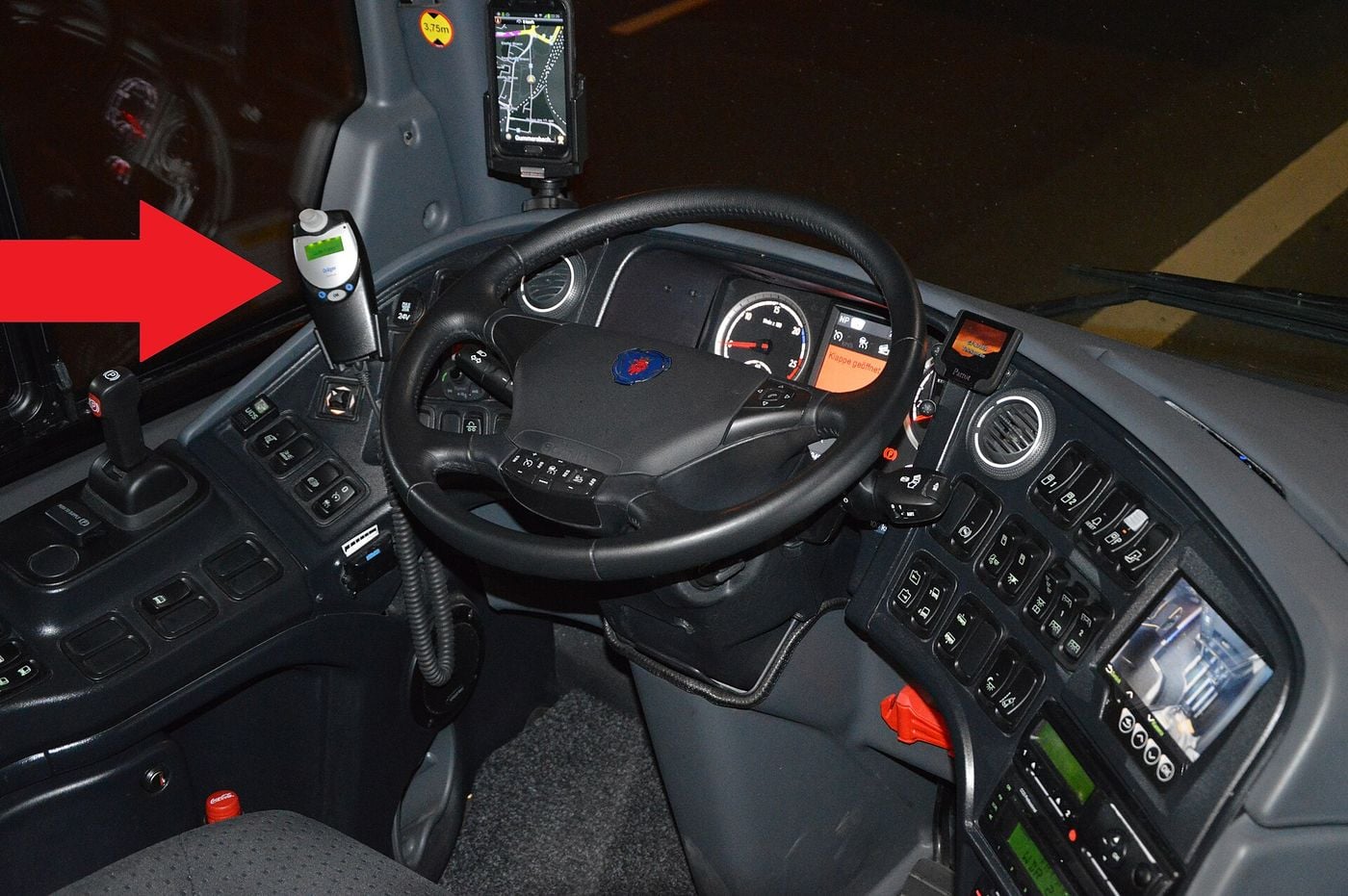
The alcohol limit that applies to truck and bus drivers is set by each country, and 14 of the 30 countries that give figures on the European Commission’s Your Europe pages set professional drivers a lower figure than other drivers. On those pages, where national authorities list their road rules, the figure for professional drivers is 0.0 mg/ml in ten countries, among them Germany, Italy and Czechia; between 0.1 and 0.3 mg/ml in eleven; 0.5 mg/ml in seven; and 0.8 g/l in Liechtenstein, while Poland’s is given as below 0.2 mg/ml. France sets 0.5 mg/ml for professional drivers in general and 0.2 mg/ml for bus and coach drivers. At EU level, a Commission recommendation of 17 January 2001 put the figure at 0.2 mg/ml or lower for, among others, drivers of heavy goods vehicles over 3.5 tonnes, of passenger vehicles with more than eight passenger seats and of vehicles carrying dangerous goods. Great Britain has one prescribed limit for all drivers, 80 mg of alcohol in 100 ml of blood in England and Wales and 50 mg in Scotland, and Türkiye applies 0.20 per mille to drivers of every vehicle other than a private car.
Status as at 27 October 2026. Read on that day: the Your Europe road rules pages for the 27 EU Member States, Iceland, Liechtenstein, Norway and Switzerland; Commission Recommendation 2001/115/EC; Directive (EU) 2025/2205 on driving licences; Regulation (EU) 2019/2144 and Delegated Regulation (EU) 2021/1243; sections 5 and 11 of the Road Traffic Act 1988 and the Scottish prescribed limit regulations of 2014 on legislation.gov.uk; and the Swiss Traffic Rules Ordinance in its version of 1 October 2026. The Turkish Highway Traffic Law and Highway Traffic Regulation are cited as published on mevzuat.gov.tr on 30 September 2026.
What the EU sets
Commission Recommendation 2001/115/EC of 17 January 2001 asked for two tiers. Point 2 reads: “All Member States should adopt a legal maximum blood alcohol content (BAC) limit of 0,5 mg/ml, or lower, for drivers and riders of all motorised vehicles.” Point 3 adds “a lower legal maximum blood alcohol content (BAC) of 0,2 mg/ml, or lower” for four groups: inexperienced drivers, riders of two-wheeled motor vehicles, drivers of large vehicles and drivers of vehicles carrying dangerous goods. Point 1(d) defines a large vehicle as “a heavy goods vehicle greater than 3,5 tonnes gross vehicle weight, and any passenger carrying vehicle with more than eight passenger seats”. Point 4 recommended random breath testing on a scale at which every driver has “a realistic statistical probability of being tested” at least once every three years.
Directive (EU) 2025/2205 on driving licences contains no blood alcohol figure. Article 18(2) requires Member States to lay down “rules or sanctions, or both, for driving under the influence of alcohol for novice drivers which are stricter than those for non-novice drivers”, and recital 53 says those stricter rules “should apply, without prejudice to Member States’ competences to regulate drivers’ behaviour”. Article 18(3) states that nothing in the Article “shall prevent Member States from introducing into their national law zero-tolerance provisions forbidding the consumption of alcohol or drugs for all drivers before driving”, and recital 54 says that Member States “are encouraged to keep and introduce such generally applied zero tolerance schemes in their national law”. How the probationary period applies to a driver adding a truck category is covered in truck driving licences.
Professional and standard drivers, country by country
The table gives the figures as each country’s Your Europe page states them. The content is supplied by the national authorities under Article 8(1) of Directive (EU) 2015/413, and the European Commission states that it “does not assume liability for this content or its accuracy”. Each page shows the date it was last checked: 18 September 2024 for 24 of the 30, and between 29 October 2024 and 1 October 2026 for Austria, Denmark, Germany, Greece, Lithuania and Spain.
| Country | Professional drivers | Standard drivers | What the page adds | Page last checked |
|---|---|---|---|---|
| Austria | 0.1 | < 0.5 | Standard drivers: “from 0.8 mg/ml, withdrawal of driving licence” | 29 Oct 2024 |
| Belgium | 0.2 | 0.5 | — | 18 Sep 2024 |
| Bulgaria | 0.5 | 0.5 | — | 18 Sep 2024 |
| Croatia | 0.0 | 0.5 | — | 18 Sep 2024 |
| Cyprus | 0.2 | 0.5 | Professional drivers: “vehicles weighing more than 3.5 tonnes or with more than 9 seats, taxi drivers, drivers of vehicles transporting dangerous goods” | 18 Sep 2024 |
| Czechia | 0.0 | 0.0 | — | 18 Sep 2024 |
| Denmark | 0.5 | 0.5 | — | 24 Apr 2025 |
| Estonia | 0.2 | 0.2 | — | 18 Sep 2024 |
| Finland | 0.5 | 0.5 | — | 18 Sep 2024 |
| France | 0.5; bus and coach drivers 0.2 | 0.5 | “For bus and coach drivers the limit is 0.2 mg/ml” | 18 Sep 2024 |
| Germany | 0.0 | 0.5 in the blood or 0.25 mg/l in the breath | The 0.0 row reads “Professional drivers (offenders can be sacked) and dangerous goods drivers (sanctioned with a fine)” | 1 Jul 2025 |
| Greece | 0.2 | 0.5 | 0.2 applies “for motorcycle and moped riders, novice and professional drivers” | 1 Oct 2026 |
| Hungary | 0.0 | 0.0 | — | 18 Sep 2024 |
| Ireland | 0.5 | 0.5 | — | 18 Sep 2024 |
| Italy | 0.0 | 0.5 | — | 18 Sep 2024 |
| Latvia | 0.5 | 0.5 | — | 18 Sep 2024 |
| Liechtenstein | 0.8 g/l | 0.8 g/l | Professional drivers: “Prohibited from drinking alcohol either during working hours or 6 hours before their work starts.” | 18 Sep 2024 |
| Lithuania | 0.0 | 0.4 | Professional drivers: “vehicles weighing more than 3.5 tonnes or with more than 9 seats, taxi drivers, drivers of vehicles transporting dangerous goods” | 24 Apr 2026 |
| Luxembourg | 0.2 | 0.5 | — | 18 Sep 2024 |
| Malta | 0 | 0.5 | — | 18 Sep 2024 |
| Netherlands | 0.5 | 0.5 | — | 18 Sep 2024 |
| Norway | 0.2 g/l | 0.2 g/l | “Alcohol consumption is forbidden during working hours and 8 hours before work for professional drivers.” | 18 Sep 2024 |
| Poland | < 0.2 | < 0.2 | — | 18 Sep 2024 |
| Portugal | 0.2 | 0.5 | — | 18 Sep 2024 |
| Romania | 0.0 | 0.0 | — | 18 Sep 2024 |
| Slovakia | 0.0 | 0.0 | — | 18 Sep 2024 |
| Slovenia | 0.0 g/kg; 0.0 mg/l | 0.5 g/kg of blood; 0.24 mg/l in the breath | — | 18 Sep 2024 |
| Spain | 0.3 | 0.5 | Professional drivers: “Professional, emergency service, dangerous goods or special transport drivers” | 1 Oct 2026 |
| Sweden | 0.2 | 0.2 | — | 18 Sep 2024 |
| Switzerland | 0.1 | 0.5 | Professional drivers: “trucks, buses, transport of dangerous goods” | 18 Sep 2024 |
Only some pages say who counts as a professional driver. Cyprus and Lithuania name drivers of vehicles over 3.5 tonnes or with more than nine seats, taxi drivers and drivers of dangerous goods vehicles; Switzerland names trucks, buses and dangerous goods; Spain’s row covers professional, emergency service, dangerous goods and special transport drivers. Germany’s 0.0 mg/ml row covers professional drivers and dangerous goods drivers, and Greece’s 0.2 mg/ml covers professional drivers together with novice drivers and motorcycle and moped riders. Norway and Liechtenstein add a time rule for professional drivers: no alcohol during working hours, and none in the 8 hours (Norway) or 6 hours (Liechtenstein) before work starts.
The units differ from page to page. Most give mg/ml; Liechtenstein and Norway write g/l, which is the same concentration. Slovenia gives grams per kilogram of blood with a breath figure in mg/l, and Germany pairs 0.5 mg/ml in the blood with 0.25 mg/l in the breath for all drivers of motor vehicles. Poland’s figure is given as below 0.2 mg/ml for professional, standard and novice drivers alike, and Austria’s standard figure as below 0.5 mg/ml. The Your Europe page for Iceland has no rules table.
How fines for traffic offences committed in another Member State reach the holder of a vehicle registered elsewhere is covered in EU cross-border traffic fines.
Great Britain, Switzerland and Türkiye in their national texts
For Great Britain and Türkiye the limits below come from the national legal texts; for Switzerland the national text stands beside the Your Europe figure.
| Country | Legal text | Truck and bus drivers | Other drivers |
|---|---|---|---|
| Great Britain: England and Wales | Road Traffic Act 1988, sections 5 and 11(2) | 35 microgrammes per 100 ml of breath; 80 mg per 100 ml of blood (0.8 mg/ml); 107 mg per 100 ml of urine | The same prescribed limit |
| Great Britain: Scotland | Section 11(2) as modified by SSI 2014/328, from 5 December 2014 | 22 microgrammes per 100 ml of breath; 50 mg per 100 ml of blood (0.5 mg/ml); 67 mg per 100 ml of urine | The same prescribed limit |
| Switzerland | Verkehrsregelnverordnung (VRV, SR 741.11), Article 2a | Driving under the influence of alcohol prohibited from 0.05 mg/l in the breath or 0.10 per mille in the blood: lorries, tractor units and tractors over 3.5 t; licensed, cross-border and professional passenger transport; dangerous goods | 0.5 mg/ml on the Your Europe page |
| Türkiye | Highway Traffic Regulation, Article 97(1); Highway Traffic Law No 2918, Article 48 | Driving prohibited above 0.20 per mille in the blood (all vehicles other than private cars) | Above 0.50 per mille (private cars) |
Great Britain. Section 5 of the Road Traffic Act 1988 makes it an offence to drive or attempt to drive a motor vehicle on a road or other public place, or to be in charge of one, “after consuming so much alcohol that the proportion of it in his breath, blood or urine exceeds the prescribed limit”. Section 11(2) defines the prescribed limit once, with no separate figure for drivers of goods vehicles or buses, and allows “such other proportion as may be prescribed by regulations”; section 11(2ZA) gives that power to the Secretary of State for England and Wales and to the Scottish Ministers for Scotland. The Scottish Ministers used it in the Road Traffic Act 1988 (Prescribed Limit) (Scotland) Regulations 2014, in force since 5 December 2014.
Switzerland. Article 2a of the Traffic Rules Ordinance (Verkehrsregelnverordnung), in its version of 1 October 2026, prohibits “Fahren unter Alkoholeinfluss”, driving under the influence of alcohol, on licensed or cross-border passenger services by road, in professional passenger transport, with lorries, heavy tractor units and tractors with a total weight over 3.5 t, and in the transport of dangerous goods in transport units that must be marked. The same ban covers driving instructors at work, learner drivers and their accompanying persons, and holders of a probationary licence except with vehicles of the special categories F, G and M. Paragraph 1bis lifts the lorry rule for some urgent call-outs of fire, police, customs, civil protection and ambulance personnel, for vehicles with a design speed of no more than 45 km/h and for vehicles that Article 13(2) of the ordinance on technical requirements (VTS) treats as Arbeitsmotorwagen. Under paragraph 2, a driver is under the influence of alcohol from a breath alcohol concentration of 0.05 mg/l or a blood alcohol concentration of 0.10 per mille.
Türkiye. Article 97(1) of the Highway Traffic Regulation prohibits driving on the road by drivers who have taken narcotic or stimulant substances, by drivers of private cars (“hususi otomobil”) with more than 0.50 per mille of alcohol in the blood, and by drivers of other vehicles with more than 0.20 per mille. Article 48 of Highway Traffic Law No 2918 sets the sanctions. Its fifth paragraph provides an administrative fine and six months’ withdrawal of the driving licence above 0.50 per mille, and for drivers of vehicles other than private cars applies it from 0.21 per mille (“promil alt sınırı 0.21 olarak uygulanır”); under its seventh paragraph the relevant provisions of the Turkish Penal Code also apply when a driver above 0.50 per mille in a private car, or above 0.20 per mille in another vehicle, causes a traffic accident.
Codes 68 and 69 on the driving licence
Article 8(1) of Directive (EU) 2025/2205 requires a Member State that issues a driving licence subject to conditions to “indicate those conditions on the driving licence, by means of the relevant Union codes, set out in Annex I, Part E”. On the licence, field 12 carries them “in code form, facing the category affected”. Two of the limited use codes in Part E concern alcohol:
- 68: “No alcohol”.
- 69: “Restricted to driving vehicles equipped with an alcohol interlock in accordance with EN 50436. Indication of an expiry date is optional (for example ‘69’ or ‘69(01.01.2016)’)”.
The minimum standards of fitness for driving in Annex III refer to the interlock too. Under Title 11, Alcohol, point (2) for Group 1 drivers allows a licence to be issued to or renewed for applicants or drivers “who are dependent on alcohol or unable to refrain from drinking and driving provided that technologies enabling to offset the dependency, for example, the mandatory use of an alcohol interlock, are used”, with the driver subject to periodic review of further treatment. Group 2 consists of the drivers of categories C, CE, C1, C1E, D, DE, D1 and D1E. For them, the competent medical authority “shall give due consideration to the additional risks and dangers involved in the driving of vehicles covered by the definition of this group” (point (3)) and “may establish temporary requirements and, where appropriate, restrictions on driving” (point (4)).
Article 29 has Member States apply the directive from 26 November 2029, with earlier dates, 26 November 2027 and 26 November 2028, for some of its provisions, and Article 30(1) repeals Directive 2006/126/EC with effect from 26 November 2029, except for its Article 6(4), point (c), which is repealed from 26 November 2027. The truck and bus licence categories are covered in truck driving licences and bus driving licences, and the qualification for driving them for a living in Driver CPC explained.
Interlock facilitation in new vehicles
Article 6(1)(b) of Regulation (EU) 2019/2144 lists “alcohol interlock installation facilitation” among the advanced vehicle systems with which motor vehicles shall be equipped, and Delegated Regulation (EU) 2021/1243 opens by stating that Article 6 “requires motor vehicles of categories M and N” to carry such systems; what those categories cover is set out in vehicle categories M, N and O. What the facilitation consists of, and the dates from which it applies to buses and trucks, are described in mandatory driver assistance systems.
Quick answers
- What is the alcohol limit for truck and bus drivers in Europe?
- Each country sets its own. On the European Commission's Your Europe pages the limit for professional drivers is 0.0 mg/ml in Croatia, Czechia, Germany, Hungary, Italy, Lithuania, Malta, Romania and Slovakia, and 0.0 g/kg in Slovenia; 0.1 mg/ml in Austria and Switzerland; 0.2 mg/ml in Belgium, Cyprus, Estonia, Greece, Luxembourg, Portugal and Sweden, and 0.2 g/l in Norway; below 0.2 mg/ml in Poland; 0.3 mg/ml in Spain; 0.5 mg/ml in Bulgaria, Denmark, Finland, France, Ireland, Latvia and the Netherlands, with 0.2 mg/ml for bus and coach drivers in France; and 0.8 g/l in Liechtenstein.
- Is there an EU-wide drink-driving limit for professional drivers?
- Commission Recommendation 2001/115/EC of 17 January 2001 recommended 0.5 mg/ml or lower for drivers and riders of all motorised vehicles, and 0.2 mg/ml or lower for inexperienced drivers, riders of two-wheeled motor vehicles, drivers of large vehicles (heavy goods vehicles over 3.5 tonnes and passenger vehicles with more than eight passenger seats) and drivers of vehicles carrying dangerous goods. Directive (EU) 2025/2205 on driving licences sets no blood alcohol figure; it requires stricter rules or sanctions for novice drivers and leaves room for national zero-tolerance provisions for all drivers.
- What is the drink-drive limit for lorry and bus drivers in Great Britain?
- The same as for other drivers: the Road Traffic Act 1988 sets one prescribed limit. In England and Wales it is 35 microgrammes of alcohol in 100 millilitres of breath, 80 milligrammes in 100 millilitres of blood or 107 milligrammes in 100 millilitres of urine (section 11(2)). In Scotland it has been 22 microgrammes in breath, 50 milligrammes in blood and 67 milligrammes in urine, each per 100 millilitres, since 5 December 2014 (SSI 2014/328).
- What does code 69 on a driving licence mean?
- It is a Union code. Directive (EU) 2025/2205 on driving licences lists it in Annex I, Part E, as 'Restricted to driving vehicles equipped with an alcohol interlock in accordance with EN 50436', with an optional expiry date, for example 69(01.01.2016). The code before it, 68, reads 'No alcohol'. Under Article 8(1), Member States indicate conditions on a licence by means of these Union codes, entered in field 12 next to the category concerned.
- What is the alcohol limit for truck and bus drivers in Türkiye?
- 0.20 per mille in the blood. Article 97 of the Highway Traffic Regulation prohibits driving on the road by private car drivers with more than 0.50 per mille of alcohol in the blood and by drivers of other vehicles with more than 0.20 per mille. Article 48 of Highway Traffic Law No 2918 applies its administrative sanction to drivers of vehicles other than private cars from 0.21 per mille.
Sources
- Commission Recommendation 2001/115/EC of 17 January 2001 on the maximum permitted blood alcohol content (BAC) for drivers of motorised vehicles — points 1 to 4 — EUR-Lex, European Union, 17 Jan 2001
- Directive (EU) 2025/2205 of the European Parliament and of the Council of 22 October 2025 on driving licences — recitals 53 and 54, Articles 8, 18, 29 and 30, Annex I (field 12 and Part E) and Annex III (definitions and Title 11) — EUR-Lex, European Union, 22 Oct 2025
- Regulation (EU) 2019/2144 of the European Parliament and of the Council of 27 November 2019 on type-approval requirements for motor vehicles as regards their general safety — Article 6(1) — EUR-Lex, European Union, 27 Nov 2019
- Commission Delegated Regulation (EU) 2021/1243 of 19 April 2021 laying down detailed rules concerning the alcohol interlock installation facilitation in motor vehicles — recital 1 — EUR-Lex, European Union, 19 Apr 2021
- Road rules and safety - Austria (page last checked 29 October 2024) — Your Europe, European Commission
- Road rules and safety - Belgium (page last checked 18 September 2024) — Your Europe, European Commission
- Road rules and safety - Bulgaria (page last checked 18 September 2024) — Your Europe, European Commission
- Road rules and safety - Croatia (page last checked 18 September 2024) — Your Europe, European Commission
- Road rules and safety - Cyprus (page last checked 18 September 2024) — Your Europe, European Commission
- Road rules and safety - Czechia (page last checked 18 September 2024) — Your Europe, European Commission
- Road rules and safety - Denmark (page last checked 24 April 2025) — Your Europe, European Commission
- Road rules and safety - Estonia (page last checked 18 September 2024) — Your Europe, European Commission
- Road rules and safety - Finland (page last checked 18 September 2024) — Your Europe, European Commission
- Road rules and safety - France (page last checked 18 September 2024) — Your Europe, European Commission
- Road rules and safety - Germany (page last checked 1 July 2025) — Your Europe, European Commission
- Road rules and safety - Greece (page last checked 1 October 2026) — Your Europe, European Commission
- Road rules and safety - Hungary (page last checked 18 September 2024) — Your Europe, European Commission
- Road rules and safety - Iceland (page last checked 18 September 2024) — Your Europe, European Commission
- Road rules and safety - Ireland (page last checked 18 September 2024) — Your Europe, European Commission
- Road rules and safety - Italy (page last checked 18 September 2024) — Your Europe, European Commission
- Road rules and safety - Latvia (page last checked 18 September 2024) — Your Europe, European Commission
- Road rules and safety - Liechtenstein (page last checked 18 September 2024) — Your Europe, European Commission
- Road rules and safety - Lithuania (page last checked 24 April 2026) — Your Europe, European Commission
- Road rules and safety - Luxembourg (page last checked 18 September 2024) — Your Europe, European Commission
- Road rules and safety - Malta (page last checked 18 September 2024) — Your Europe, European Commission
- Road rules and safety - Netherlands (page last checked 18 September 2024) — Your Europe, European Commission
- Road rules and safety - Norway (page last checked 18 September 2024) — Your Europe, European Commission
- Road rules and safety - Poland (page last checked 18 September 2024) — Your Europe, European Commission
- Road rules and safety - Portugal (page last checked 18 September 2024) — Your Europe, European Commission
- Road rules and safety - Romania (page last checked 18 September 2024) — Your Europe, European Commission
- Road rules and safety - Slovakia (page last checked 18 September 2024) — Your Europe, European Commission
- Road rules and safety - Slovenia (page last checked 18 September 2024) — Your Europe, European Commission
- Road rules and safety - Spain (page last checked 1 October 2026) — Your Europe, European Commission
- Road rules and safety - Sweden (page last checked 18 September 2024) — Your Europe, European Commission
- Road rules and safety - Switzerland (page last checked 18 September 2024) — Your Europe, European Commission
- Road Traffic Act 1988, section 5 — latest available revised version, up to date with changes in force on or before 27 October 2026 — legislation.gov.uk, The National Archives
- Road Traffic Act 1988, section 11 — latest available revised version, up to date with changes in force on or before 27 October 2026 — legislation.gov.uk, The National Archives
- The Road Traffic Act 1988 (Prescribed Limit) (Scotland) Regulations 2014 (SSI 2014/328), as made — legislation.gov.uk, The National Archives
- Verkehrsregelnverordnung (VRV, SR 741.11), Art. 2a Verbot des Fahrens unter Alkoholeinfluss (Stand am 1. Oktober 2026) — Fedlex, Swiss Confederation
- Karayolları Trafik Kanunu (Highway Traffic Law) No 2918, Resmî Gazete 18/10/1983 No 18195 — Article 48, as published on 30 September 2026 — Mevzuat Bilgi Sistemi, Republic of Türkiye
- Karayolları Trafik Yönetmeliği (Highway Traffic Regulation) — Article 97, as published on 30 September 2026 — Mevzuat Bilgi Sistemi, Republic of Türkiye