Cross-border traffic fines in the EU: what Directive 2024/3237 changes for truck and bus drivers
Directive (EU) 2024/3237 extends the EU cross-border traffic offence rules to 18 offences, overloading included, and lets unpaid fines above EUR 70 be enforced at home. Deadline: 20 July 2027.
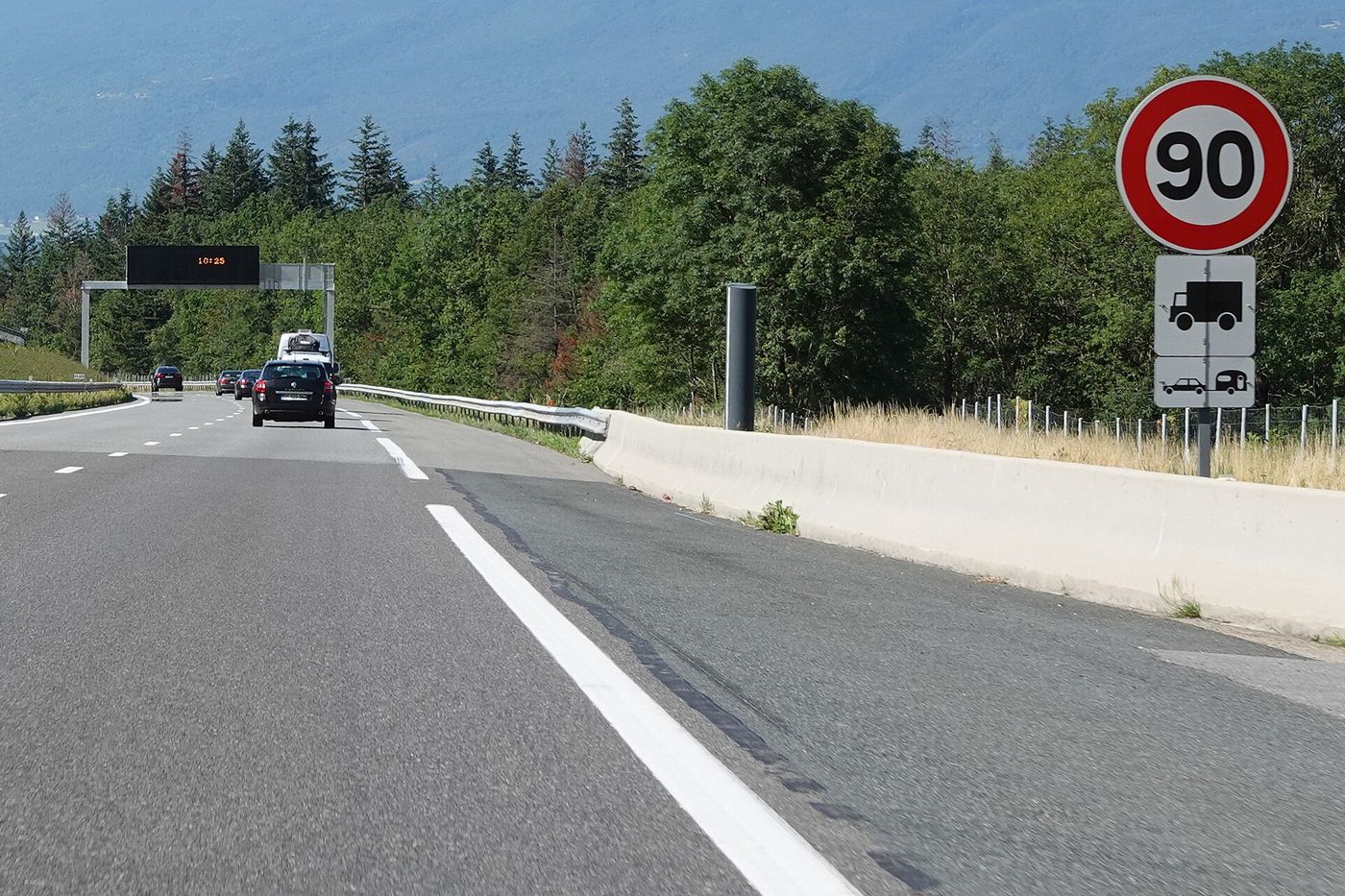
Directive (EU) 2015/413 lets the EU Member State where a road-safety-related traffic offence is committed with a vehicle registered in another Member State look up who the vehicle is registered to and pursue the offence. Directive (EU) 2024/3237 of 19 December 2024 amended it. The list of offences grows from 8 to 18, among them using an overloaded vehicle, failing to keep a safe distance and failing to respect the rules at a railway level-crossing; the notice sent abroad must carry minimum content and be issued in the language of the vehicle’s registration document; and a Member State can ask the state of registration or residence to enforce an unpaid administrative road traffic fine higher than EUR 70. Trucks, buses, vehicle combinations and trailers are covered. Both acts are directives addressed to the Member States, so they reach drivers and operators through national law; the deadline for the national measures needed for the 2024 changes is 20 July 2027.
Status as at 25 October 2026. Read on that day, from the EU Publications Office: Directive (EU) 2024/3237 in its Official Journal text of 30 December 2024, and Directive (EU) 2015/413 in its consolidated text of 19 January 2025, which incorporates the 2024 amendments. The consolidated text says of itself that it “is meant purely as a documentation tool and has no legal effect”.
A directive, applied through national law
Directive 2015/413 was adopted on 11 March 2015. Since the 2024 amendment its title reads “facilitating cross-border exchange of information and mutual assistance on road-safety-related traffic offences”; the words “and mutual assistance” are new. Article 1 states the aim: “to ensure a high level of protection for all road users in the Union by facilitating the cross-border exchange of information on road-safety-related traffic offences and by facilitating the enforcement of sanctions, where those offences are committed with a vehicle registered in a Member State other than the Member State in which the offence took place.”
Directive 2024/3237 was published in the Official Journal on 30 December 2024 and entered into force “on the twentieth day following that of its publication” (Article 3). It “is addressed to the Member States” (Article 4). Article 2(1) sets the deadline: “Member States shall bring into force the laws, regulations and administrative provisions necessary to comply with this Directive by 20 July 2027.” The original Directive had a transposition deadline of 6 May 2015, which Denmark, Ireland and the United Kingdom could postpone until 6 May 2017 (Article 12 of Directive 2015/413).
The offences are defined by reference to national law, most of them with the closing words “as defined in the law of the Member State of the offence”, and recital 6 of the 2024 Directive records that these offences “are classified either as administrative or criminal offences under national law”. The one sum of money in the text, EUR 70, is a threshold for cross-border enforcement (Article 5f(3)(d)). Recital 5 explains the choice of the new offences: they “should demonstrate a direct link to road safety by addressing dangerous and reckless behaviour, which poses a serious risk to road users”.
Trucks, buses, combinations and trailers
The 2024 amendment replaced the definition of a vehicle. It now reads “any means of transport subject to registration according to the law of the Member State of registration or Member State of the offence which is normally used for carrying persons or goods by road, including vehicle combinations or trailers” (Article 3(a)).
The registration data that the Member State of the offence can search include mass and axle data. Section 2 of the Annex lists the EU category code, the maximum permissible laden mass of the vehicle and of the whole vehicle in service, the number of axles, the wheelbase, the technically permissible maximum towable mass of the trailer, braked and unbraked, and, for vehicles with a total mass exceeding 3,500 kg, the distribution of the technically permissible maximum laden mass among up to five axles. The holder and the owner can be a natural or a legal person, with a field for “Surname or business name”.
The 2024 amendment adds a third role. An “end user” is “any person who is not the holder or the owner of the vehicle, but another person indicated in the vehicle register of the Member State of registration, who is allowed to use that vehicle or be responsible for its day-to-day operation, in particular under a long-term lease or rental contract or as part of a vehicle fleet available to employees” (Article 3(y)). Member States must keep the data on previous holders, owners and end users in the register “for at least 12 months after any modification of the holder, owner or end user of the vehicle” (Article 4a(2)). Legal entities that are holders, owners or end users “shall have the right to obtain information on the processing of their data” (Article 7).
The exchange covers vehicles registered in a Member State. For vehicles registered in a third country, the Directive provides for reporting: each Member State’s report must indicate “the number and type of road-safety-related traffic offences listed in Article 2(1) committed by drivers with a vehicle registered in a third country” (Article 6(3)). Recital 29 says that how to address such offences “could be considered”.
The 18 offences
| Point | Offence | Annex code | In the list since |
|---|---|---|---|
| (a) | Speeding | 1 | 2015 |
| (b) | Failing to use a seat-belt | 3 | 2015 |
| (c) | Failing to stop at a red traffic light | 4 | 2015 |
| (d) | Drink-driving | 2 | 2015 |
| (e) | Driving while under the influence of drugs | 10 | 2015 |
| (f) | Failing to wear a safety helmet | 11 | 2015 |
| (g) | Use of a forbidden lane (definition replaced in 2024) | 5 | 2015 |
| (h) | Illegally using a mobile telephone or any other communication devices while driving | 12 | 2015 |
| (i) | Failing to keep a safe distance from the vehicle in front | 14 | 2024 |
| (j) | Dangerous overtaking | 15 | 2024 |
| (k) | Dangerous parking or stopping | 16 | 2024 |
| (l) | Crossing one or more solid lines | 17 | 2024 |
| (m) | Wrong-way driving | 18 | 2024 |
| (n) | Failing to respect the rules on the creation and use of emergency corridors or on giving way to emergency service vehicles | 19 | 2024 |
| (o) | Using an overloaded vehicle | 20 | 2024 |
| (p) | Failing to respect the rules on vehicle-access restrictions | 33 | 2024 |
| (q) | Hit-and-run | 34 | 2024 |
| (r) | Failing to respect the rules at a railway level-crossing | 35 | 2024 |
Article 3 defines several of the offences:
- Speeding means “exceeding speed limits in force in the Member State of offence for the road or type of vehicle concerned” (Article 3(d)).
- Using an overloaded vehicle means “using a vehicle that does not comply with the requirements set for its maximum authorised weight or maximum authorised axle weight, as laid down in the national laws, regulations or administrative provisions transposing Council Directive 96/53/EC”, or in the law of the Member State of the offence for vehicles or operations for which that Directive sets no such requirements (Article 3(u)). The EU weight and axle limits of Directive 96/53/EC are set out in gross combination weight, GVW and axle loads.
- Failing to keep a safe distance means “not maintaining sufficient distance from the vehicle in front”, as defined in national law (Article 3(o)).
- Dangerous parking or stopping follows the national rules on parking or stopping in a dangerous way; “failure to pay parking fees and other similar offences is not considered to be dangerous parking or stopping” (Article 3(q)).
- Emergency corridors covers “not complying with the applicable rules to enable emergency service vehicles, such as police vehicles, rescue vehicles or fire trucks, to pass through and arrive to the site of emergency” (Article 3(t)).
- Railway level-crossings covers “failing to stop at a railway level-crossing or acting in a dangerous way at a railway level-crossing” (Article 3(ac)).
Vehicle-access restrictions are “clearly and visibly demarcated access regulations set for all or certain vehicle categories for the purposes of road safety, such as pedestrian and school zones, and cycling lanes” (Article 3(aa)). Article 2(1) excludes two cases from this offence: where the information on the boundaries, access status and conditions of the restricted zones was not created and made accessible via the national access point under Delegated Regulation (EU) 2022/670, and where “the driver fails to respect the rules related to charges and other fees that are to be paid before entering an area subject to vehicle-access restrictions”. The list in Article 2(1) does not name weekend, holiday or night driving bans; those bans for heavy trucks are set out country by country in truck driving bans in Europe.
The ITS Directive 2010/40/EU, as amended by Directive (EU) 2023/2661, sets when that kind of data has to be available. Its Annex III lists the boundaries of restrictions with zonal validity, current access status and conditions for circulation in regulated traffic zones as a data type that Member States make available without delay via the national access points when created or updated on or after 31 December 2026, on the core and comprehensive trans-European road network, other motorways and sections of primary roads with an annual average daily traffic of more than 8,500 vehicles, and all roads in the cities at the centre of urban nodes; a Member State may limit the city coverage to streets with more than 7,000 vehicles a day if it notifies the Commission by 31 December 2026. For the same data created before that date Annex III sets no date yet; it leaves that to delegated acts.
How an offence reaches the registered holder
For an offence detected on its territory, the Member State of the offence gets access to the other state’s national vehicle registration data “with the power to conduct automated searches thereon”: data on the vehicle, and on its holder and, where available, its owner and end user (Article 4(1)). The search uses the full registration number, and each request names the authority, the username of the person handling it and the case number (Article 4(2)).
The search can run in two steps. To establish whether an offence has been committed with a vehicle, the authority may first request only the technical vehicle data in Section 2, Parts I and II, of the Annex, which include the masses and axle data listed above. “Where it is established that a road-safety-related traffic offence has been committed with a vehicle”, it may subsequently request the personal data (Article 4(3)). Member States use a software application of the European Vehicle and Driving Licence Information System (EUCARIS) to exchange the information and process mutual assistance, and the information is “transmitted in encrypted form” (Article 5g(1) and (2)). The national contact point of the state of registration must ensure that a specific message is returned if, for example, the vehicle or its registration plate was recorded as stolen at the time of the offence (Article 4(5)).
The traffic offence notice
If the authority decides to pursue the offence, it issues a traffic offence notice to the “person concerned”. That can be the person identified as personally liable, or the holder, owner, end user or driver of the vehicle, “even if not identified as personally liable in accordance with the national law of the Member State of the offence” (Article 3(x)).
The notice to the holder, owner or end user must be issued “no later than 11 months after the road-safety-related traffic offence” where the automated search was successful and the identity and address were established; otherwise no later than 5 months after the authority has established them (Article 5a(2)). It is sent “by post, registered delivery, registered mail or electronic means of equal value” (Article 5a(1)). Beyond informing the person of the offence, the notice may ask for the identity and address of the person liable, ask whether the person admits or denies the offence, or request payment (Article 5(1)).
Article 5(2) sets the minimum content. The notice must contain:
- an indication that it is issued for the purposes of the Directive, and the authority’s name, postal address, telephone number and email address;
- the vehicle registration number, the place, date and time and the nature of the offence, the legal provisions infringed and, where appropriate, data on the device that detected it;
- the legal classification, the sanctions and other legal consequences, including driving disqualifications, penalty points or other restrictions on the right to drive;
- where, when and how to exercise rights of defence or to appeal, the admissibility requirements, the time limit and whether in absentia procedures apply;
- where applicable, the measures taken to identify the person concerned and “the consequences of non-cooperation”;
- where applicable, the name, address and IBAN of the authority where a fine can be settled, the payment deadline and alternative payment methods accessible to residents and non-residents;
- the applicable data protection rules and the data subjects’ rights;
- where applicable, whether and how the sanction can be mitigated, “including by early payment of a financial penalty”;
- a link and, if possible, a QR code to the CBE Portal.
For non-residents, the start of the time limits for appealing or for mitigating the sanction must correspond to “the date of postal or electronic dispatch or receipt of the traffic offence notice or the official decision on the liability of the person concerned” (Article 5(6)). On request, the person concerned is granted access to all information the authority holds on the investigation (Article 5(5)), and Member States “are encouraged to permit persons concerned to connect remotely to court proceedings by video link” (Article 5a(3)). The old template letter in Annex II of the 2015 Directive is deleted (Article 1(19) of Directive 2024/3237).
Language of the notice
The traffic offence notice and any essential follow-up documents are issued “in the language of the registration document of the vehicle” (Article 5b(1)); that language is one of the data elements returned by the registration search (Annex, Section 2, Part I). At the request of the person concerned, the authority must allow that person “to receive the follow-up documents in one additional official language of the institutions of the Union that is not the language of the registration document of the vehicle” (Article 5b(4)). Parts of essential documents that are not relevant to understanding the case need not be translated (Article 5b(3)). On request, the authority must review a notice or follow-up document “effectively and rapidly” on the grounds that it does not comply with the rules on content, service or language (Article 5b(6)).
Checked at the roadside
A non-resident driver checked on the spot in a roadside check receives a traffic offence notice with the content set out in Article 5(2) when the authority has not enforced the sanction on the spot (Article 5(3)). If the authority enforced the sanction on the spot, the driver must receive at least “a receipt for the financial transaction or a financial penalty charge notice to be paid within a specific period of time”, the authority’s contact information, information on the offences committed and, if possible, a link or QR code to the CBE Portal (Article 5(4)). These are provided in one of the official languages of the Member State of the offence or another official EU language the authority considers appropriate. Technical roadside inspections of trucks and buses are described in roadworthiness tests and roadside checks.
Naming the driver: mutual assistance
When the authority of the Member State of the offence, “after having exhausted all other means available to them”, still cannot identify the person concerned with the certainty its national law requires, it can ask the Member State of registration or residence for help (Article 5c(1)). That state may be asked to establish the person’s identity and address, using registers such as driving licence or population registers, or to ask the holder, owner or end user of the vehicle for the identity, address and other contact details of the person liable, under national procedures applied “as if the investigative measure concerned were ordered by that Member State’s own authorities” (Article 5c(5)). The request includes, if available, “the visual recording of the driver retrieved from detection equipment, in particular speed cameras” (Article 5c(6)(b)). The reply is due no later than 2 months after the requested state has gathered the information (Article 5c(7)). The requested state may refuse only on the grounds listed in Article 5c(8): an immunity or privilege, the principle of ne bis in idem, an ongoing criminal investigation, national security, fundamental rights, or the safety of an individual or a protected person’s identity.
Member States can also use their own national measures to identify the liable person, “such as measures related to the obligation of the holder, owner or end user of a vehicle to cooperate in the identification of the liable person, provided that fundamental and procedural rights under Union and national law are respected” (Article 5d(1)). Their authorities may serve documents asking persons concerned to confirm their liability and apply obligations, “including related sanctions”, relevant to the identification of the liable person “to the furthest possible extent” (Article 5d(2)). Recital 20 adds that these measures should have the same legal effects on the persons concerned as in domestic cases, with the same standards of fundamental and procedural rights.
Unpaid fines: enforcement in the state of registration or residence
Article 5f is new. Member States “shall provide enforcement assistance to each other in the case of non-payment of a road traffic fine imposed for the commission of a road-safety-related traffic offence listed in Article 2(1)”. After the notice has been served and the fine has not been paid, the Member State of the offence may ask the Member State of registration or residence to assist in enforcing it, but only if all four conditions of Article 5f(3) are met:
- the decision is “of an administrative nature, final and enforceable” under the law of the Member State of the offence;
- that state holds proof that the request for payment was served on the person concerned;
- the person was informed of, and had an opportunity to exercise, the legal remedies against the decision;
- “the road traffic fine is higher than EUR 70”.
The receiving state recognises the decision “without any further formality being required” and takes the measures to enforce it (Article 5f(6)); the enforcement follows its own laws (Article 5f(7)). It may refuse only on grounds listed in Article 5f(8): ne bis in idem, immunity, enforcement barred by lapse of time under its law, a decision that is not final, a decision not translated as Article 5b requires, an incomplete request, or the infringement of fundamental rights. If the person concerned shows that the fine has been paid, the receiving state notifies the Member State of the offence (Article 5f(5)). The money obtained goes to the Member State of registration or residence “unless otherwise agreed” (Article 5f(9)). The article does not preclude the use of Framework Decision 2005/214/JHA on the mutual recognition of financial penalties (Article 5f(10)), which, in the words of recital 24, “is not tailored to mass processing of road-safety-related traffic offences, for which small pecuniary sanctions are often qualified as administrative”.
Private legal entities: 20 July 2029
Article 5h(1): “By 20 July 2029, Member States shall ensure that their competent authorities do not empower privately owned or privately managed legal entities with distinct legal personality to conduct any activities related to the application of this Directive.” Recital 27 links the rule to “the abusive practices which emerged during the implementation of Directive (EU) 2015/413” and leaves room for technical support, “such as postal services, building or maintenance of the radars and the analysis of drug or alcohol use by the private laboratories”. Until that date, Article 5h(2) requires that only competent authorities are allowed to initiate and conduct the procedures, and a notice sent by an empowered private entity must say so and give “a clean delineation between the amounts of monies claimed, based on their legal ground” (Article 5(2)(j)).
The CBE Portal
The Commission must establish and maintain an online portal, the CBE Portal, “available in all official languages of the institutions of the Union”, with the rules in force in the Member States, legal remedies, the rights of persons concerned including language options, data protection rules, the applicable sanctions including non-financial repercussions, and the ways of paying fines (Article 8(1)). Recital 37 names the non-financial repercussions: penalty points systems, or a driving disqualification “by means of a temporary or permanent withdrawal of the driving licence”. Member States must link to the portal from the websites of their competent authorities (Article 8(3)).
Dates
| Date | Step | Provision |
|---|---|---|
| 11 March 2015 | Directive 2015/413 adopted | Title |
| 6 May 2015 | Transposition deadline of the original Directive; Denmark, Ireland and the United Kingdom could postpone it until 6 May 2017 | Article 12 of Directive 2015/413 |
| 19 December 2024 | Directive 2024/3237 adopted | Title |
| 30 December 2024 | Directive 2024/3237 published in the Official Journal; in force on the twentieth day after publication | Article 3 of Directive 2024/3237 |
| 20 January 2026 | Deadline for the Commission’s implementing acts on the procedures and technical specifications of the exchange; until they apply, automated searches follow Council Decision 2008/616/JHA | Article 5g(3) and (5) |
| 6 May 2026 | Member States’ comprehensive transitional report to the Commission | Article 10c |
| 20 July 2027 | Transposition deadline for the 2024 amendments | Article 2 of Directive 2024/3237 |
| 20 January 2029 | First Member State report on the application of the Directive, then every four years | Article 6(1) |
| 20 July 2029 | Competent authorities no longer empower private entities | Article 5h(1) |
| 20 July 2030 | Commission report to the European Parliament and the Council, if appropriate with a proposal to add other offences | Article 11 |
What this page does not cover
- The national laws transposing the Directive, the traffic rules of each Member State and the amount of any fine.
- The Union rules on judicial cooperation in criminal matters that the Directive leaves unaffected (Article 2(2)), among them Framework Decision 2005/214/JHA on the mutual recognition of financial penalties and Directive 2014/41/EU on the European Investigation Order.
- Border registration of non-EU drivers, covered in EES and ETIAS for truck and coach drivers.
Quick answers
- Can a traffic fine from another EU country be enforced in my home country?
- Under Article 5f of Directive (EU) 2015/413, as amended by Directive (EU) 2024/3237, the Member State of the offence can ask the Member State of registration or residence to assist in enforcing an unpaid road traffic fine for one of the 18 listed offences if the decision is administrative, final and enforceable, it holds proof that the payment request was served, the person was informed of and could use the legal remedies, and the fine is higher than EUR 70. The other state recognises the decision without further formality and enforces it under its own law, unless a listed refusal ground applies. Member States must transpose these rules by 20 July 2027.
- Which traffic offences are covered by the EU cross-border enforcement directive?
- Eighteen, listed in Article 2(1): speeding, failing to use a seat-belt, failing to stop at a red traffic light, drink-driving, driving under the influence of drugs, failing to wear a safety helmet, use of a forbidden lane and illegally using a mobile telephone or other communication device while driving, in the list since 2015; and, added by Directive (EU) 2024/3237, failing to keep a safe distance, dangerous overtaking, dangerous parking or stopping, crossing solid lines, wrong-way driving, emergency corridor rules, using an overloaded vehicle, vehicle-access restrictions, hit-and-run and railway level-crossing rules.
- Does the directive apply to trucks, buses and trailers?
- Yes. Since the 2024 amendment, a vehicle is any means of transport subject to registration that is normally used for carrying persons or goods by road, including vehicle combinations or trailers (Article 3(a)). Using an overloaded vehicle is one of the listed offences: a vehicle that does not comply with its maximum authorised weight or axle weight under the national rules transposing Directive 96/53/EC, or under national law where that Directive sets no requirement.
- In which language must a traffic offence notice from another EU country be written?
- In the language of the registration document of the vehicle, for the traffic offence notice and any essential follow-up documents (Article 5b(1)). On request, the authority must let the person concerned receive the follow-up documents in one additional official EU language. A non-resident driver checked at the roadside whose sanction was enforced on the spot receives a receipt or a penalty charge notice and basic information in an official language of the Member State of the offence or another EU official language the authority considers appropriate.
- When do the new EU rules on cross-border traffic fines apply?
- Directive (EU) 2024/3237 was published in the Official Journal on 30 December 2024 and entered into force on the twentieth day after publication. As a directive it applies through national law: Member States must bring the necessary laws into force by 20 July 2027. By 20 July 2029 their authorities may no longer empower privately owned or managed entities to carry out any activity under the Directive.
Sources
- Directive (EU) 2024/3237 of the European Parliament and of the Council of 19 December 2024 amending Directive (EU) 2015/413 facilitating cross-border exchange of information on road-safety-related traffic offences — Official Journal, L series, 30 December 2024: recitals, Articles 1 to 4 and Annex — EUR-Lex, European Union, 19 Dec 2024
- Directive (EU) 2015/413 of the European Parliament and of the Council of 11 March 2015 facilitating cross-border exchange of information and mutual assistance on road-safety-related traffic offences — consolidated text of 19 January 2025, Articles 1 to 14 and Annex — EUR-Lex, European Union
- Directive (EU) 2023/2661 amending Directive 2010/40/EU on the framework for the deployment of Intelligent Transport Systems in the field of road transport and for interfaces with other modes of transport — Annex III, list of data types and dates — EUR-Lex, European Union