EES and ETIAS: what changes for truck drivers, coach drivers and coach operators
The EES has registered non-EU drivers at Schengen external borders since 12 October 2025; ETIAS has no start date yet. What each requires of truck and coach drivers and coach operators.
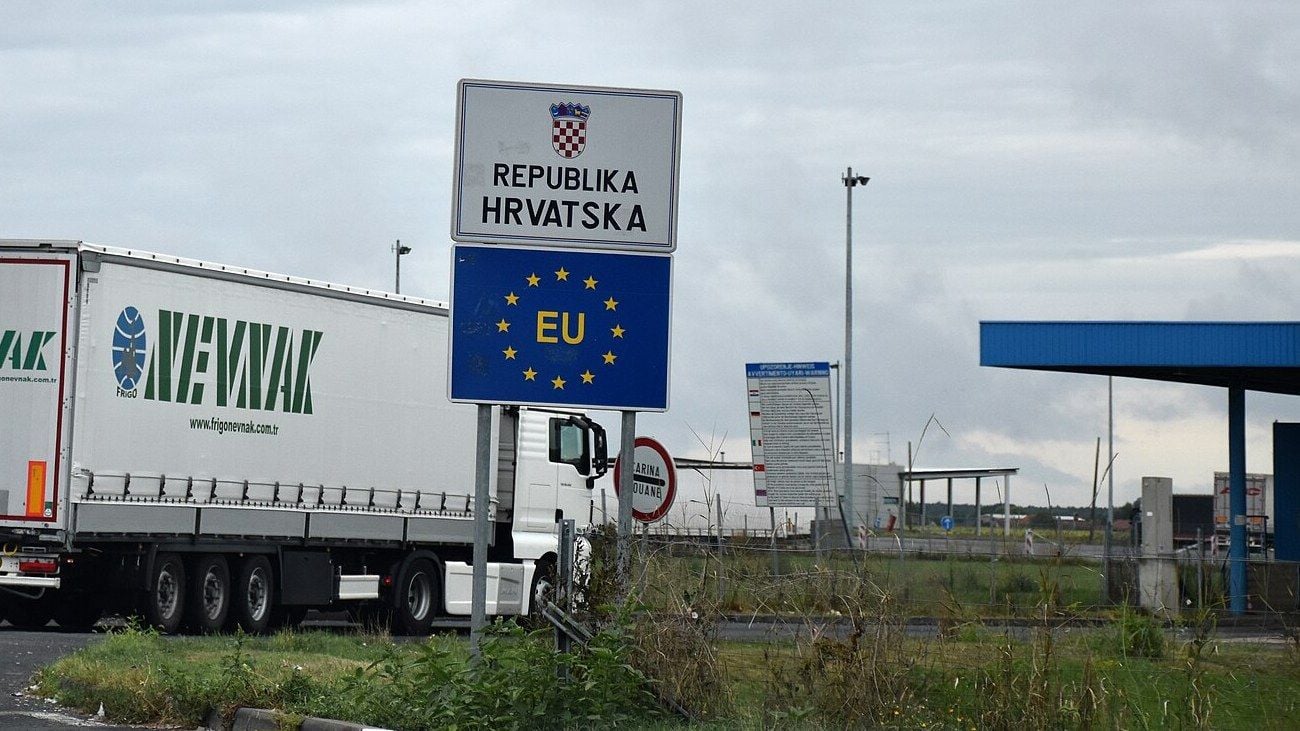
The Entry/Exit System (EES) electronically registers non-EU nationals who come for a short stay each time they cross the external borders of 29 European countries, and it treats a truck or coach driver as it treats any other traveller. It started operating on 12 October 2025, the date set by Commission Implementing Decision (EU) 2025/1544, was rolled out progressively until 9 April 2026 and has been fully operational at all external border crossing points since 10 April 2026, when it replaced the stamping of passports. ETIAS, the European Travel Information and Authorisation System, is a separate online travel authorisation that visa-exempt non-EU nationals will need for short stays in 30 European countries. Its Regulation, (EU) 2018/1240, has been in force since 9 October 2018, but on 6 October 2026 the official ETIAS website stated that the system was not in operation and gave no start date.
Status as of 6 October 2026. Read that day: the EES and ETIAS pages of the official Travel to Europe website and of the European Commission, Regulations (EU) 2017/2226 and 2018/1240 as consolidated on 12 June 2026, Regulation (EU) 2025/1534, the Schengen Borders Code as consolidated on 12 October 2025, the Frontex questions and answers for carriers of March 2026 and GOV.UK’s EES guidance of 10 April 2026. This page gives no visa, residence or work-permit advice; once ETIAS starts, applications are submitted through the official website, travel-europe.europa.eu/etias, or the official ETIAS mobile app.
EES and ETIAS side by side
The two systems are often mentioned together, but they do different jobs. The EES records crossings at the border; ETIAS is a permission to travel that visa-exempt travellers will apply for before the journey. Customs transit under a TIR carnet concerns the goods; the EES and ETIAS concern the people on board.
| EES | ETIAS | |
|---|---|---|
| What it is | Electronic record of entries, exits and refusals of entry; replaces passport stamps | Travel authorisation applied for online before the trip; not a visa |
| Who | Non-EU nationals on a short stay, with or without a visa requirement | Non-EU nationals exempt from the visa requirement |
| Countries | 29: the EU countries except Cyprus and Ireland, plus Iceland, Liechtenstein, Norway and Switzerland | 30: the same 29 plus Cyprus |
| Data | Travel document data, date and place of each entry and exit, facial image, four fingerprints (visa holders: facial image only) | Personal and travel document data, education and occupation, questions on convictions, conflict zones and return decisions; no biometrics |
| Cost | None for the traveller | EUR 20 per application; waived under 18 and over 70 |
| How long it lasts | Each record kept three years; individual file three years and one day after the last exit; five years after the authorised stay ends if no exit is recorded | Three years, or until the passport used expires if sooner |
| Status | Fully operational since 10 April 2026 | Adopted, not in operation, no start date |
Who the EES covers, and where
Article 2(1) of Regulation (EU) 2017/2226 applies the EES to third-country nationals admitted for a short stay who are subject to border checks under the Schengen Borders Code when crossing a border at which the system is operated. A short stay means no more than 90 days in any 180-day period (Article 3(1)(8)). For the EES, the official website says, a non-EU national is anyone without the nationality of an EU country, Iceland, Liechtenstein, Norway or Switzerland, with or without a visa requirement. A Turkish driver, whose country is listed in Annex I of Regulation (EU) 2018/1806 (visa required), is registered in the same way as a British, Serbian or North Macedonian driver, whose countries are listed in Annex II (visa exempt); only the biometric data taken differ.
The EES is operated at the external borders of Austria, Belgium, Bulgaria, Croatia, Czechia, Denmark, Estonia, Finland, France, Germany, Greece, Hungary, Iceland, Italy, Latvia, Liechtenstein, Lithuania, Luxembourg, Malta, the Netherlands, Norway, Poland, Portugal, Romania, Slovakia, Slovenia, Spain, Sweden and Switzerland. The official website notes that in Cyprus and Ireland, although they are EU countries, passports are still stamped manually.
Article 2(3) lists who is outside the system. It includes holders of residence permits and of long-stay visas; family members of EU citizens who hold a residence card; nationals of Andorra, Monaco and San Marino and holders of a Vatican passport; and persons exempt from border checks or covered by specific rules under Article 6a(3) of the Schengen Borders Code. That article names, among others, aircraft crews, seamen, cross-border workers under point 5 of Annex VII and “members of the crew of passenger and goods trains on international connections” (Article 6a(3)(j)). It names no equivalent category for drivers of lorries or coaches.
What happens at the border
On a first crossing since the EES started, the official website says, passport control officers take a photo of the face and/or scan the fingerprints, record the data in a digital file and no longer stamp the passport. For visa-exempt travellers, Article 17(1) of Regulation (EU) 2017/2226 requires a facial image and fingerprint data, which Article 3(1)(16) defines as the four fingerprints of the index, middle, ring and little finger of the right hand, or of the left hand where the right is not present. For travellers who need a visa, Article 16(1) requires the facial image; the official website explains that their fingerprints are already stored in the Visa Information System from their visa application. Children under 12 give no fingerprints (Article 17(3)). Providing biometric data is an entry condition under Article 6(1)(f) of the Schengen Borders Code, and the official website states that a traveller who refuses to provide them will be denied entry.
On later crossings the officers only verify the stored face and fingerprints. Self-service systems, where a crossing point has them, need a biometric passport; the official FAQ states that valid non-biometric passports are still accepted at the border. The Travel to Europe mobile app lets travellers subject to the EES pre-register within 72 hours before a crossing; the official page lists Sweden (passport data, facial image and entry questionnaire) and Portugal (entry questionnaire only).
For road traffic, point 1.1.3 of Annex VI to the Schengen Borders Code keeps the general rule that “persons travelling in vehicles may remain inside them during checks”, but allows them to be asked to alight “if circumstances so require”. The EES pages of the official website describe registration with an officer, at a self-service system or through the app; they describe no separate procedure for passengers travelling as a coach group.
For travellers entering the Schengen area through the Port of Dover, Eurotunnel Le Shuttle at Folkestone or Eurostar at St Pancras International, GOV.UK states that EES checks are completed at the border before leaving the UK. The Port of Dover has built a processing area for EES checks at its Western Docks, and Eurotunnel Le Shuttle at Folkestone has a pre-registration area with self-service kiosks.
How the 90/180-day count works
The EES does not change the length of a short stay. Article 6(1) of the Schengen Borders Code allows stays of no more than 90 days in any 180-day period, “which entails considering the 180-day period preceding each day of stay”. Under Article 6(2) the day of entry is the first day of stay and the day of exit the last, and periods covered by a residence permit or long-stay visa are not counted. Article 6(1a) makes the 90 days a single period for all the countries operating the EES; for Cyprus, which does not operate it, the ETIAS FAQ states that stays are calculated separately. Article 6 counts days of stay on the territory; on our reading, it makes no distinction between working days and rest days, so a weekly rest taken inside the area under the driving time and rest rules counts like any other day.
The official EES FAQ answers the question for drivers directly: “The implementation of the EES changes nothing to the rules on short stays”. What changes is the record. The automated calculator (Article 11 of Regulation (EU) 2017/2226) gives border guards the maximum authorised stay on entry and any overstay on exit, and the travellers’ web service (Article 13(1)), published as the Check how long you can stay tool, returns an OK or NOT OK answer with the remaining days. Its notes state that the result does not reflect time spent in the Schengen area that began before 10 April 2026, and that an OK answer is not a decision on entry.
Stamps mattered during a transition. During the progressive start, from 12 October 2025 to 9 April 2026, border authorities systematically stamped passports and disregarded the calculator’s results (Article 5(2) and (6) of Regulation (EU) 2025/1534). From 10 April 2026 stamping ended and the calculator and the list of overstayers started to function, the official FAQ says. For 180 days after that, Article 22(1) of Regulation (EU) 2017/2226, applied from the day after the end of the progressive start by Article 5(13) of Regulation (EU) 2025/1534, required border authorities to check the stamps in the travel document in addition to the EES data. Counted from 10 April 2026, those 180 days ran until 6 October 2026 inclusive; since 7 October 2026 that additional stamp check no longer applies.
A traveller who stays longer than allowed is identified as an overstayer and added to a list that border, immigration and visa staff can see; the official website lists removal, administrative fines, detention and being prevented from re-entering in future among the consequences that national law may attach. The official FAQ adds that a person who has already spent 90 days of the last 180 in the area is refused entry at the border.
One older exception survives. Article 20(2) of the Convention implementing the Schengen Agreement, as replaced by Article 60 of Regulation (EU) 2017/2226, lets a country extend a stay beyond 90 days under a bilateral agreement concluded before the Convention entered into force and notified to the Commission. The extension is entered in the EES, and it authorises a stay only in that country and exit only at its external borders.
Is there a rule for professional drivers?
Regulations (EU) 2017/2226, 2018/1240 and 2025/1534 contain no provision on drivers of lorries or coaches. The official EES FAQ, in its answer on professional drivers, names two situations in which a driver is not registered:
- the driver holds a national long-stay visa (D visa) or a residence permit of a Member State, which, the FAQ says, allows long-term stay there and free movement in the Schengen area for 90 days within any 180 days;
- border guards recognise the driver as a cross-border worker under point 5 of Annex VII to the Schengen Borders Code; there would then be only random checks and no EES registration, and the FAQ states that the 90/180-day maximum still applies.
Point 5.2 of Annex VII covers cross-border workers “well known to the border guards owing to their frequent crossing of the border at the same border crossing point”, and point 5.3 allows it to be extended “to other categories of regular cross-border commuters”. The FAQ presents its use for drivers as a possibility: Member States’ border guards “could give facilitations” to professional drivers they recognise as cross-border workers. The voluntary national facilitation programmes for frequent travellers under Article 8d of the Code lighten the thorough checks on entry (the official FAQ lists the point of departure and destination, the purpose of the stay and the means of subsistence as points officers may not need to verify), but their participants are not among the categories that Article 2(3) of the EES Regulation leaves out.
The Commission’s visa policy strategy of 29 January 2026 names “truck drivers servicing EU businesses” among professionals who may need more than 90 days in 180 without long stay or residence, and lists among its next steps: “Explore new rules for extended short stays for selected categories of third-country professionals”. The same passage says the Commission will review the impact of the bilateral agreements that allow extended stays “with a view to gradually phasing them out”. The strategy is a communication, not a legislative proposal, and changes no rule.
Two further rules sit outside the EES and ETIAS. Article 6(3) of Regulation (EU) 2018/1806 allows a Member State to require a visa from otherwise visa-exempt nationals “carrying out a paid activity during their stay”; the Commission publishes the national choices in a table based on information communicated by 13 August 2026. And under Articles 3 and 5 of Regulation (EC) No 1072/2009, international haulage with a third-country driver who is not a long-term resident needs a driver attestation issued to the haulier in addition to the Community licence; that document belongs to transport law, alongside the rules in cabotage and posted drivers, and is not among the cases the EES FAQ gives for not being registered. Why non-EU drivers matter to European hauliers is set out in European truck driver supply.
What coach operators must check
Under Article 26 of the Convention implementing the Schengen Agreement, the Schengen states undertake to oblige carriers to take back passengers who are refused entry and to make sure that passengers hold the travel documents required, and to penalise carriers that transport passengers without them; paragraph 3 extends the document check and the penalties to “international carriers transporting groups overland by coach, with the exception of border traffic”. Recital 18 of Regulation (EU) 2025/1534 confirms that the progressive start does not affect the obligations of coach carriers under Article 26(1).
Under the EES, Article 13(3) of Regulation (EU) 2017/2226 requires carriers to use a web service to verify whether passengers holding a short-stay visa issued for one or two entries have already used the entries it allows. The carrier enters the passport data and receives an OK or NOT OK answer, which the Regulation states is not a decision to authorise or refuse entry. According to the Frontex questions and answers for carriers of March 2026, coach carriers bringing groups from a third country register for this carrier interface and query it between 48 hours before the scheduled departure and the departure for the passengers in its scope, and should also query it for the bus driver and other crew members who fall within that scope. Where border checks take place before boarding, as at Dover where French officers check travellers before they board, carriers are relieved of the query. For 180 days after the end of the progressive start, that is until 6 October 2026, carriers also had to keep checking passport stamps in addition to using the web service (Article 6(2) of Regulation (EU) 2025/1534); under Article 8(2)(b) of that Regulation, the rule ceased to apply on 7 October 2026.
Under ETIAS, once it operates, Article 45(1) of Regulation (EU) 2018/1240 requires air carriers, sea carriers and “international carriers transporting groups overland by coach” to check that passengers who need a travel authorisation hold a valid one. Article 45(9) makes the check optional for coach carriers, and lifts the penalties, “for the first three years following the ETIAS entry into operations”. The obligation to take back a passenger who is refused entry continues to apply (Article 45(8)). The official ETIAS website illustrates the effect with a Montenegrin passenger on a bus from Podgorica to Split: the bus company may not check her ETIAS before boarding, but Croatian border guards will at the border.
For truck drivers travelling by ferry, the same Frontex document states that “Drivers of commercial vehicles shall be treated as regular travellers”: the ferry carrier queries the carrier interface for those drivers who fall within its scope, that is holders of a short-stay visa for one or two entries and, once ETIAS operates, holders of an ETIAS travel authorisation.
ETIAS: what it will require
Article 2(1) of Regulation (EU) 2018/1240 applies ETIAS to nationals of the countries listed in Annex II of Regulation (EU) 2018/1806, which the official website counts as 59 countries and territories. They include the United Kingdom, Serbia, North Macedonia, Montenegro, Albania, Bosnia and Herzegovina, Moldova and Ukraine; for several of these the visa exemption is limited to biometric passports. The authorisation will be needed for short stays in the 29 EES countries and Cyprus. Ireland applies neither system.
- Fee. Article 18(1) sets a fee of EUR 20 per application, as amended by Delegated Regulation (EU) 2025/1411, in force since 18 November 2025; Article 18(2) waives it for applicants under 18 or over 70. The ETIAS FAQ adds that family members of EU nationals who qualify for that status pay no fee.
- Validity. Three years, or until the travel document registered in the application expires, whichever comes first; a new passport needs a new authorisation. It “shall not confer an automatic right of entry or stay” (Article 36(5) and (6)).
- Application. Online through the official website or app. The official website says most applications are processed within minutes, a decision may take up to four days, and this period can be extended by up to 14 days if more information is requested, or up to 30 days if the applicant is invited to an interview. Group applications are not possible; another person or a commercial intermediary may apply on a traveller’s behalf if both sign a declaration of representation.
- Exempt. Under Article 2(2), among others: holders of residence permits, of uniform visas and of national long-stay visas, and nationals of Andorra, Monaco and San Marino. The official list of crew who may be exempt depending on the country covers air and sea crew, rescue missions and crew on international inland waterways; it does not mention road drivers.
Drivers who need a Schengen visa, such as Turkish nationals, are outside ETIAS: the official website states that nationals who need a visa do not need an ETIAS travel authorisation.
When ETIAS will start
Article 88 of Regulation (EU) 2018/1240 leaves the start date to a Commission decision, taken once listed technical and legal conditions are met and published in the Official Journal. On 6 October 2026 the official ETIAS website stated: “ETIAS is currently not in operation and no applications for travel authorisations are collected at this point”, and that the EU would announce the date several months before launch.
Other official pages still online that day give a timing. A news item of April 2025 on the same website, and the French foreign ministry’s page updated in April 2026, give the last quarter of 2026; the Commission’s visa strategy of January 2026 lists the launch of ETIAS “in 2026” as a next step; GOV.UK’s page of 10 April 2026 says the EU is expected to start ETIAS from autumn 2026. None of them is a decision under Article 88.
Whenever it starts, Article 83 provides for a transitional period of six months in which ETIAS is optional, which the Commission may extend by up to six months, renewable once. A grace period of six months follows, extendable by up to six months, in which the authorisation is required but a traveller crossing for the first time since the transitional period ended may still be admitted if all other entry conditions are met. During the transitional period the carrier interface answers OK for every passenger (Article 83(5)).
Quick answers
- Do truck drivers have to register in the EES?
- Yes, if they are non-EU nationals entering for a short stay. The EES registers non-EU nationals each time they cross the external borders of 29 European countries, whether or not they need a visa, and it has been fully operational at all external border crossing points since 10 April 2026. Visa-exempt drivers give a facial image and four fingerprints at first registration; drivers with a short-stay visa give a facial image, because their fingerprints are already in the Visa Information System. The official EES FAQ names only two ways out of registration for a professional driver: a national long-stay visa or residence permit, or facilitation as a cross-border worker under point 5 of Annex VII to the Schengen Borders Code.
- Does the 90/180-day rule apply to professional drivers?
- Yes. The official EES FAQ says the implementation of the EES changes nothing to the rules on short stays, which allow 90 days in any 180-day period, counted as a single period for all 29 countries operating the EES. Article 6 of the Schengen Borders Code counts the day of entry and the day of exit as days of stay. Neither Regulation (EU) 2017/2226 nor Regulation (EU) 2018/1240 contains a rule for road drivers; the Commission's visa strategy of 29 January 2026 only announces that it will explore extended short stays for groups such as truck drivers.
- Do truck drivers need ETIAS?
- Not yet: on 6 October 2026 ETIAS was not in operation and the official ETIAS website gave no start date. Once it operates, nationals of visa-exempt countries listed in Annex II of Regulation (EU) 2018/1806, such as the United Kingdom, Serbia or North Macedonia, will need a valid ETIAS travel authorisation for short stays in 30 European countries. Drivers who need a Schengen visa, such as Turkish nationals, do not need ETIAS. ETIAS contains no exemption for road drivers.
- How much does ETIAS cost and how long is it valid?
- EUR 20 per application under Article 18(1) of Regulation (EU) 2018/1240, as amended by Delegated Regulation (EU) 2025/1411, in force since 18 November 2025. The fee is waived for applicants under 18 or over 70 years of age. A travel authorisation is valid for three years or until the travel document used in the application expires, whichever comes first, and it does not confer an automatic right of entry.
- Do coach companies have to check passengers' ETIAS?
- Article 45 of Regulation (EU) 2018/1240 requires international carriers transporting groups overland by coach to check through the carrier interface that passengers who need ETIAS hold a valid authorisation, but for the first three years after ETIAS starts operating this check is optional for coach carriers and the penalties for carrying passengers without a valid authorisation do not apply to them. Under the EES, coach carriers already have to use the carrier interface to check whether passengers holding a short-stay visa for one or two entries have used up those entries.
- When does ETIAS start?
- No date had been fixed by 6 October 2026. Under Article 88 of Regulation (EU) 2018/1240 the Commission sets the date by a decision published in the Official Journal. On 6 October 2026 the official ETIAS website stated that ETIAS was not in operation and that the EU would announce the start date several months before launch. A transitional period of at least six months, in which ETIAS is optional, and a grace period of at least six months will follow the start.
Sources
- Regulation (EU) 2017/2226 establishing an Entry/Exit System (EES) — consolidated text of 12 June 2026 — EUR-Lex, European Union
- Regulation (EU) 2025/1534 on temporary derogations as regards the progressive start of operations of the Entry/Exit System, 18 July 2025 — EUR-Lex, European Union
- Commission Implementing Decision (EU) 2025/1544 of 30 July 2025 determining the date from which the Entry/Exit System is to start operations — EUR-Lex, European Union
- Regulation (EU) 2018/1240 establishing a European Travel Information and Authorisation System (ETIAS) — consolidated text of 12 June 2026 — EUR-Lex, European Union
- Commission Delegated Regulation (EU) 2025/1411 of 16 July 2025 on the amount of the ETIAS travel authorisation fee (OJ L, 29 October 2025) — EUR-Lex, European Union
- Regulation (EU) 2016/399 (Schengen Borders Code) — consolidated text of 12 October 2025, Articles 6, 6a and 8d and Annexes VI and VII — EUR-Lex, European Union
- Convention implementing the Schengen Agreement of 14 June 1985, Article 26 (OJ L 239, 22 September 2000) — EUR-Lex, European Union
- Regulation (EU) 2018/1806 listing the third countries whose nationals need a visa — consolidated text of 30 December 2025, Article 6 and Annexes I and II — EUR-Lex, European Union
- Regulation (EC) No 1072/2009 on access to the international road haulage market — consolidated text of 21 February 2022, Articles 3 and 5 — EUR-Lex, European Union
- FAQs about EES, including the answer on professional drivers (page updated 29 September 2026), read 6 October 2026 — Travel to Europe, official EU website on EES and ETIAS
- Check how long you can stay — EES online tool and notes, read 6 October 2026 — Travel to Europe, official EU website on EES and ETIAS
- What is the EES?, read 6 October 2026 — Travel to Europe, official EU website on EES and ETIAS
- How does the EES work?, read 6 October 2026 — Travel to Europe, official EU website on EES and ETIAS
- Data held by the EES, read 6 October 2026 — Travel to Europe, official EU website on EES and ETIAS
- Travel to Europe mobile app (page updated 10 June 2026), read 6 October 2026 — Travel to Europe, official EU website on EES and ETIAS
- ETIAS: homepage, What is ETIAS, Who should apply and Frequently asked questions, read 6 October 2026 — Travel to Europe, official EU website on EES and ETIAS
- Key differences ETIAS and the EES (news item, 9 January 2025) — Travel to Europe, official EU website on EES and ETIAS
- Revised timeline for the EES and ETIAS (news item, 14 April 2025) — Travel to Europe, official EU website on EES and ETIAS
- Travelling to Europe with ETIAS by land (news item, 18 December 2025) — Travel to Europe, official EU website on EES and ETIAS
- Frequently Asked Questions in support of all carriers (FPI-25.0359), March 2026 — Frontex, ETIAS Central Unit
- Entry/Exit System (EES) — policy page, read 6 October 2026 — European Commission, Directorate-General for Migration and Home Affairs
- European Travel Information and Authorisation System (ETIAS) — policy page, read 6 October 2026 — European Commission, Directorate-General for Migration and Home Affairs
- Communication on EU visa policy strategy, COM(2026) 43 final, 29 January 2026 — European Commission
- Information on national derogations from the visa requirement under Regulation (EU) 2018/1806 (information communicated by 13 August 2026) — European Commission, Directorate-General for Migration and Home Affairs
- EU Entry/Exit System — guidance last updated 10 April 2026 — GOV.UK, Foreign, Commonwealth & Development Office and Cabinet Office
- EES: The new European border Entry/Exit System goes live on 10 April 2026 — EES and ETIAS page updated April 2026, read 6 October 2026 — France Diplomatie, French foreign ministry