The TIR carnet explained
What the TIR Convention of 1975 and the TIR carnet are: the procedure, the carnet, approved vehicles, the guarantee chain, who may use it, and eTIR.
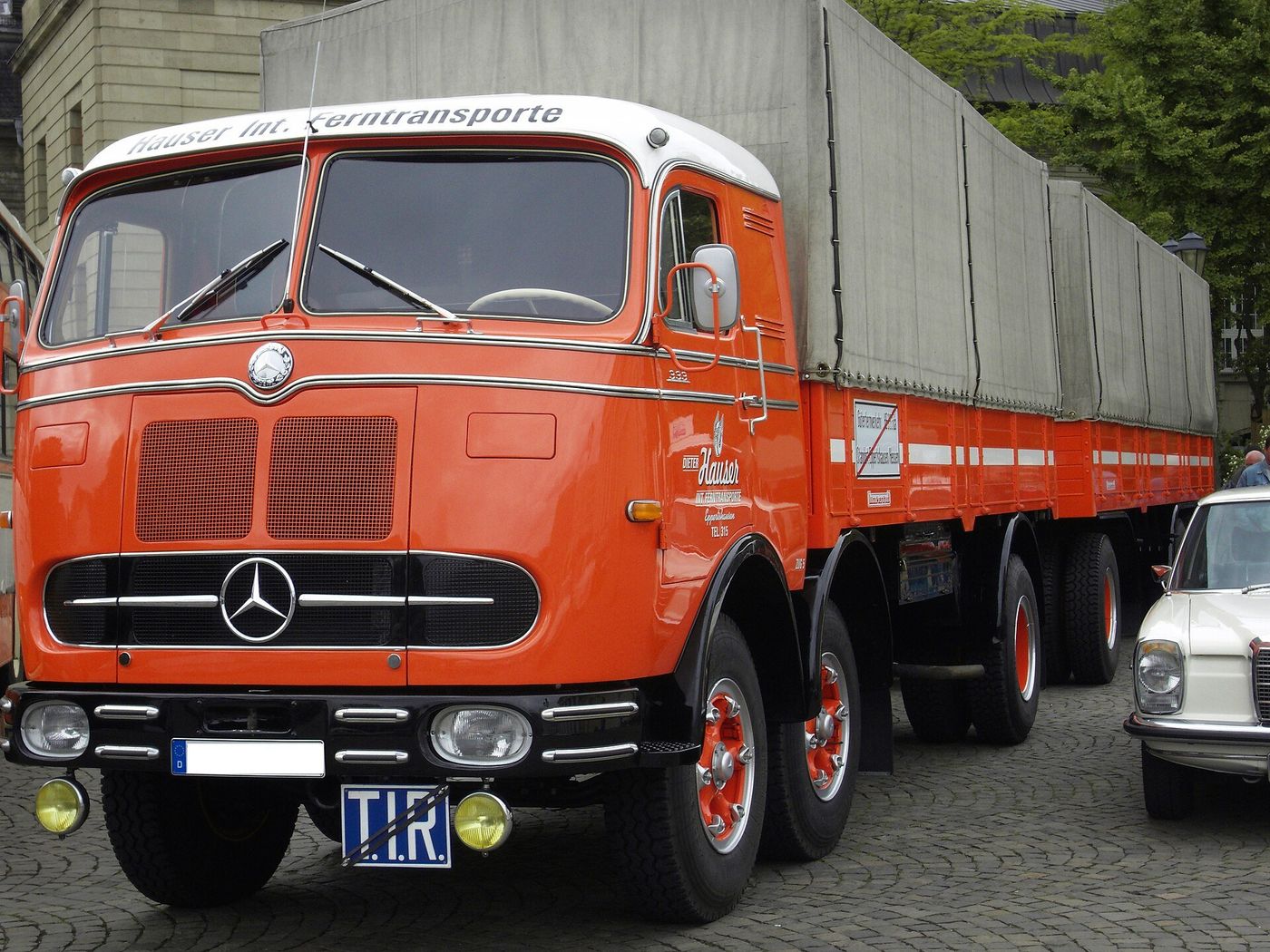
A TIR carnet is the customs transit document under which goods are carried under the TIR procedure of the TIR Convention of 14 November 1975; the transport must be guaranteed by associations authorised under the Convention (Article 3(b)). Goods carried under the procedure are not subjected to the payment or deposit of import or export duties and taxes at customs offices en route (Article 4), and sealed goods are as a general rule not examined there (Article 5).
Treaty status figures on this page are those of the UN Treaty Collection (UNTC) as at 28 September 2026. Article numbers are those of the Convention in the European Union’s consolidated text of 25 June 2022, with the amendment in force since 1 June 2025 noted where it applies.
What the TIR Convention is
The Customs Convention on the International Transport of Goods under Cover of TIR Carnets (TIR Convention) was concluded at Geneva on 14 November 1975 and entered into force on 20 March 1978, in accordance with its Article 53(1). TIR stands for Transports Internationaux Routiers. The Convention was adopted by a revising conference convened under Article 46 of the TIR Convention of 15 January 1959, and Article 56(1) provides that on its entry into force it terminates and replaces the 1959 Convention in relations between the Contracting Parties to the 1975 Convention. The European Commission traces the system further back: the TIR Agreement was concluded in 1949, and its success led to the first TIR Convention in 1959.
As at 28 September 2026 UNTC lists 79 parties and 16 signatories. Under Article 52(1), any State that is a member of the United Nations or of a specialised agency, a member of the International Atomic Energy Agency or a party to the Statute of the International Court of Justice, and any other State invited by the General Assembly, may become a Contracting Party. Article 52(3) lets customs or economic unions become parties too, together with all their member States or after all of them have become parties, without a right to vote. For a party that joins later the Convention enters into force six months after the deposit of its instrument (Article 53(2)). The European Commission states that each EU country, including the EU itself, is a party, and that the Convention entered into force in the European Community on 20 June 1983, after approval by Council Regulation (EEC) No 2112/78 of 25 July 1978.
| Party | UNTC entry |
|---|---|
| Germany | signed 30 Dec 1976, ratified 20 Dec 1982 |
| Spain | acceded 11 Aug 1982 |
| Türkiye | acceded 12 Nov 1984 |
| Russian Federation | accession (a) listed with 8 Jun 1982 |
| United Kingdom of Great Britain and Northern Ireland | signed 22 Dec 1976, ratified 8 Oct 1982 |
| European Union | signed 30 Dec 1976, approved (AA) 20 Dec 1982 |
How the TIR procedure works
Article 1 defines a TIR transport as the transport of goods from a customs office of departure to a customs office of destination under the TIR procedure laid down in the Convention. A TIR operation is the part of a TIR transport carried out in one Contracting Party, from a customs office of departure or entry (en route) to a customs office of destination or exit (en route).
Article 2 applies the Convention to the transport of goods without intermediate reloading, in road vehicles, combinations of vehicles or containers, across one or more frontiers between a customs office of departure of one Contracting Party and a customs office of destination of another or of the same Contracting Party, provided that some portion of the journey between the beginning and the end of the TIR transport is made by road. The explanatory notes add that the Convention does not specify what part of the journey has to be made by road; it is sufficient that this occurs at some point between the beginning and the end of the TIR transport. Under Article 1(g) and (h) a road vehicle is not only a power-driven road vehicle but also any trailer or semi-trailer designed to be coupled to it, and a combination of vehicles is coupled vehicles travelling on the road as a unit.
What the procedure changes at the customs offices along the way is set out in these articles:
- Duties and taxes. Article 4: goods carried under the TIR procedure are not subjected to the payment or deposit of import or export duties and taxes at customs offices en route.
- Examination. Article 5: goods in sealed road vehicles, combinations of vehicles or containers are as a general rule not examined at customs offices en route, but to prevent abuses customs authorities may in exceptional cases, particularly when irregularity is suspected, examine the goods there.
- Departure. Article 19: the goods and the vehicle, combination or container are produced with the carnet at the customs office of departure. The customs authorities of the country of departure take the measures necessary to satisfy themselves as to the accuracy of the goods manifest, and either affix customs seals or check seals affixed under their responsibility by duly authorised persons.
- Seals. Article 22(1): the customs offices en route of each Contracting Party accept the customs seals of other Contracting Parties, provided that they are intact; if control requirements make it necessary, they may add their own seals.
- Escort and examination en route. Article 23: customs authorities shall not require road vehicles, combinations of vehicles or containers to be escorted at the carriers’ expense on the territory of their country, nor require examination en route of vehicles, combinations or containers and their loads, except in special cases.
- The vehicle itself. Article 15(1): no special customs documents are required for the temporary importation of a road vehicle, combination of vehicles or container carrying goods under cover of the TIR procedure, and no guarantee is required for the vehicle or container.
- Non-Contracting States. Article 26(1): when transport under cover of a TIR carnet takes place in part in the territory of a State that is not a Contracting Party, the TIR transport is suspended during that part of the journey.
The European Commission describes the TIR transit system as based on five principles, which it calls pillars: the use of secure vehicles or containers, the international guarantee chain, the TIR carnet, the mutual recognition of customs controls, and controlled access to use of the system.
The carnet itself
Article 3(b) requires the transport operations to be guaranteed by associations authorised under Article 6 and to be performed under cover of a TIR carnet conforming to the model reproduced in Annex 1, or to be carried out by the eTIR procedure. The holder of the carnet is the person to whom it has been issued; Article 1(o) makes the holder responsible for presenting the road vehicle, combination of vehicles or container together with the load and the carnet at the customs office of departure, at the customs offices en route and at the customs office of destination, and for due observance of the other relevant provisions of the Convention.
Article 17(1) provides for a single carnet for each road vehicle or container. A single carnet may also be made out for a combination of vehicles, or for several containers loaded on to a single road vehicle or combination of vehicles. Under Article 17(2) the carnet is valid for one journey only and contains at least the number of detachable vouchers necessary for the TIR transport in question.
The period of validity is fixed by the guaranteeing association, which specifies a final date of validity after which the carnet may not be presented for acceptance at the customs office of departure (Article 9(1)). If the customs office of departure accepted it on or before that date, the carnet remains valid until the termination of the TIR operation at the customs office of destination (Article 9(2)).
Article 18 allows a TIR transport to involve several customs offices of departure and destination, provided that their total number does not exceed eight; since 25 June 2022 the text allows up to eight (C.N.91.2022). The carnet may be presented to customs offices of destination only if all customs offices of departure have accepted it. Customs authorities may limit the maximum number of customs offices of departure (or destination) on their territory to less than seven but not less than three.
Annex 1 contains the model. Under its paragraph 1 the carnet is printed in French, except that page 1 of the cover is also printed in English; the rules regarding its use, given in French on page 2 of the cover, are also printed in English on page 3 of the cover. Paragraph 2 lets carnets used for TIR operations within a regional guarantee chain be printed in any other official language of the United Nations. In its version 2, Annex 1 provides that customs authorities shall request TIR carnets to be clearly marked TOBACCO/ALCOHOL and TABAC/ALCOOL on the cover and on all vouchers.
Which vehicles and containers qualify
Article 3(a) names three ways in which TIR transport may be carried out: by road vehicles, combinations of vehicles or containers previously approved under the conditions of Chapter III (a); by other road vehicles, combinations or containers under the conditions of Chapter III (c); or by road vehicles or special vehicles such as buses, cranes, sweepers and concrete-laying machines that are exported and are therefore themselves considered as goods travelling by their own means from a customs office of departure to a customs office of destination, under the conditions of Chapter III (c). The explanatory notes state that this third way does not cover passenger cars (HS code 8703) travelling by their own means; passenger cars may however be carried under the TIR procedure if transported by means of the vehicles referred to in Article 3(a)(i) and (ii).
Road vehicles. Article 12 says that a road vehicle must, as regards its construction and equipment, fulfil the conditions set out in Annex 2 and must have been approved according to the procedure laid down in Annex 3; the certificate of approval conforms to the specimen in Annex 4. Annex 2, Article 1 allows approval for the international transport of goods under customs seal only for vehicles whose load compartments are constructed and equipped so that:
- no goods can be removed from or introduced into the sealed part of the vehicle without leaving obvious traces of tampering or without breaking the customs seal;
- customs seals can be simply and effectively affixed to them;
- they contain no concealed spaces where goods may be hidden;
- all spaces capable of holding goods are readily accessible for customs inspection.
Annex 2, Article 3(1) applies the provisions of its Articles 1 and 2, where applicable, to sheeted vehicles, which must in addition conform to that Article; under Article 3(2) the sheet is to be of strong canvas or of plastic-covered or rubberised cloth, of sufficient strength and unstretchable. The body types of trailers are described in trailer types explained.
Annex 3, paragraph 1 lets road vehicles be approved individually or by design type (series of road vehicles). An approval certificate conforming to the standard form of Annex 4 is issued, printed in the language of the country of issue and in French or English, and kept on the road vehicle (Annex 3, paragraphs 2 and 3). Paragraph 4 has vehicles produced, for inspection and where appropriate renewal of approval, to the competent authorities of the country in which the vehicle is registered or, for unregistered vehicles, of the country in which the owner or user is resident. The consolidated EU text of 25 June 2022 reads every two years there. The amendment published in OJ L 2025/836 substitutes three years for two years and came into force for all Contracting Parties on 1 June 2025 (C.N.115.2025). Since 1 June 2025 the Convention therefore requires vehicles to be presented every three years (previously two).
The same amendments added a paragraph 6 to page 4 of the model certificate of approval in Annex 4: provided that a TIR transport has begun before or on the final date of validity of the certificate of approval, the certificate remains valid until the end of the TIR transport at the customs office of final destination. If the essential characteristics of a road vehicle are changed, it ceases to be covered by the approval and is re-approved by the competent authority before it can be used for transport under cover of TIR carnets (Annex 3, paragraph 6); Article 14(2) likewise has a vehicle or container that no longer meets the conditions justifying its approval either restored to its original state or presented for re-approval before further use. Where vehicles are manufactured by type series, the manufacturer may apply to the competent authority of the country of manufacture for approval by design type (paragraph 9), and a vehicle approved by design type and exported to another Contracting Party needs no further approval procedure there on account of its importation (paragraph 18).
Containers. Article 1(j) defines a container as an article of transport equipment (lift-van, movable tank or other similar structure) that is fully or partially enclosed to constitute a compartment intended for containing goods, of a permanent character and strong enough for repeated use, specially designed to facilitate the transport of goods by one or more modes of transport without intermediate reloading, designed for ready handling, designed to be easy to fill and to empty, and having an internal volume of one cubic metre or more. Demountable bodies are to be treated as containers. The explanatory notes define a demountable body as a load compartment which has no means of locomotion, and add that it also covers a swap-body, a load compartment designed especially for combined road and rail transport.
Under Article 13(1), containers must be constructed in conformity with Part I of Annex 7 and approved according to the procedure in Part II of that Annex. Article 13(2) treats containers approved for transport under customs seal under the Customs Convention on Containers of 1956, the agreements concluded under it under the auspices of the United Nations, or the Customs Convention on Containers of 1972 as complying, to be accepted for TIR transport without further approval.
Heavy or bulky goods. Article 1(p) defines heavy or bulky goods as any heavy or bulky object which, because of its weight, size or nature, is not normally carried in a closed vehicle or closed container. Article 29(2) allows them, if the authorities at the customs office of departure so decide, to be carried in non-sealed vehicles or containers, and Article 32 requires the cover and all vouchers of the carnet to bear the endorsement ‘heavy or bulky goods’ in bold letters in English or in French.
The TIR plate. Article 16 requires one rectangular plate bearing the inscription TIR and conforming to Annex 5 to be affixed to the front, and another to the rear, of the road vehicle or combination of vehicles, placed so as to be clearly visible. The plates must be removable, or fitted or designed so that they can be reversed, covered, folded or otherwise show that a TIR transport is not carried out. Annex 5 sets their dimensions at 250 mm by 400 mm, with the letters TIR in capital Latin characters 200 mm high and strokes at least 20 mm wide, white on a blue ground.
The guarantee chain
A guaranteeing association is an association authorised by the customs authorities or other competent authorities of a Contracting Party to act as guarantor for persons using the TIR procedure (Article 1(q)). Under Article 6(1) those authorities may authorise associations to issue TIR carnets, directly or through corresponding associations, and to act as guarantors, as long as the minimum conditions and requirements of Annex 9, Part I are complied with. Article 6(2) adds that an association is not to be authorised in any country unless its guarantee also covers the liabilities incurred there in connection with operations under carnets issued by foreign associations affiliated to the same international organisation as itself.
An international organisation is one authorised by the Administrative Committee to take on responsibility for the effective organisation and functioning of an international guarantee system, as long as it fulfils the conditions of Annex 9, Part III (Article 1(r) and Article 6(2 bis)). The European Commission states that the guarantee system is managed by an international organisation, which is currently the International Road Transport Union (IRU). Under the explanatory note in force since 1 June 2025, the relationship between an international organisation and its member associations is defined in written agreements on the functioning of the international guarantee system, which either party can terminate with a prior notice of at least six months, except in case of an earlier revocation of either of the authorisations under Article 6(1) and 6(2 bis). Annex 9, Part I requires of an association, among other conditions, proven existence for at least one year as an association established in the Contracting Party where the authorisation is issued (paragraph 1(a)) and cover for its liabilities, to the satisfaction of the competent authorities of the Contracting Party in which it is established, with an insurance company, pool of insurers or financial institution (paragraph 3(v)).
Article 8(1) has the association undertake to pay, up to the maximum of the guaranteed amount, the import and export duties and taxes together with any default interest due under the customs laws of the Contracting Party in which an irregularity leading to a claim against the association has been established in connection with a TIR operation. It is liable jointly and severally with the persons from whom those sums are due. Its liability begins, in the country of the customs office of departure, when that office accepts the carnet, and in each succeeding country when the goods enter it (Article 8(4)); it covers the goods enumerated in the carnet and also any goods not enumerated that are contained in the sealed section of the road vehicle or in the sealed container, but no other goods (Article 8(5)).
Article 8(3) leaves the amount to each Contracting Party: each determines the maximum sum per carnet that may be claimed from the guaranteeing association. An explanatory note in Annex 6 (note 0.8.3) recommends limiting the maximum amount to a sum equal to 100 000 Euros per carnet, and, for alcohol and tobacco above the threshold levels the note lists, increasing it to a sum equal to 400 000 euros. The note names the goods by HS code: 22.07.10, 22.08, 24.02.10, 24.02.20, 24.03.11 and 24.03.19. These are recommendations, not fixed amounts. For the European Union the Commission states that the guarantee amount per TIR carnet is €100 000.
| Step | Article | What the text states |
|---|---|---|
| Notification of the association | 11(1) | The competent authorities notify the guaranteeing association within a maximum period of one year from the date they accepted the carnet, or two years when the certificate of termination of the TIR operation was falsified or obtained in an improper or fraudulent manner. |
| Persons liable first | 11(2) | So far as possible, the competent authorities require payment from the person or persons liable before making a claim against the guaranteeing association. |
| The claim | 11(3) | Made against the guaranteeing association at the earliest one month after the date on which the association was notified, and not more than two years after that date. |
| Payment by the association | 11(4) | Within a period of three months from the date when the claim for payment is made. |
| Discharge of the operation | 10(2) | Once the customs authorities of a Contracting Party have discharged a TIR operation, they can no longer claim payment from the association, unless the certificate of termination was obtained in an improper or fraudulent manner or no termination has taken place. |
Article 58 bis establishes an Administrative Committee composed of all the Contracting Parties. Under Annex 8, Article 9 the TIR Executive Board is composed of nine members, each from a different Contracting Party, each serving a two-year term; among its functions in Article 10(h) is to monitor the price of TIR carnets.
Who may use TIR carnets
Access to the procedure is controlled. Under Article 6(3) an association issues TIR carnets only to persons whose access to the TIR procedure has not been refused by the competent authorities of the Contracting Parties in which the person is resident or established. Under Article 6(4) authorisation for access is granted only to persons who fulfil the minimum conditions and requirements of Annex 9, Part II. Paragraph 1 of that Part lists them:
- proven experience or, at least, capability to engage in regular international transport (holder of a licence for carrying out international transport, etc.);
- sound financial standing;
- proven knowledge in the application of the TIR Convention;
- absence of serious or repeated offences against customs or tax legislation;
- an undertaking, in a written declaration of commitment to the association, to comply with all customs formalities required under the Convention at the customs offices of departure, en route and of destination, to pay the sums due under Article 8(1) and (2) if the competent authorities request it, and, as far as national legislation permits, to allow associations to verify information on these conditions.
The first condition gives, as an example in brackets, the holder of a licence for carrying out international transport, followed by etc.; the EU licence is explained separately in road transport operator licence. The competent authorities of Contracting Parties and the associations themselves may introduce additional and more restrictive conditions unless the competent authorities decide otherwise (paragraph 2), and authorisation for access does not in itself constitute a right to obtain TIR carnets from the associations (paragraph 6).
Article 38(1) gives each Contracting Party the right to exclude temporarily or permanently from the operation of the Convention any person guilty of a serious or repeated offence against the customs laws or regulations applicable to the international transport of goods.
eTIR: the electronic TIR procedure
Article 1(s) defines the eTIR procedure as the TIR procedure implemented by electronic exchange of data, providing the functional equivalent to the TIR carnet; the Convention’s provisions apply, and the specifics are defined in Annex 11. Annex 11 came into force with respect to all Contracting Parties on 25 May 2021, with the exception of Switzerland, which notified the Secretary-General of its non-acceptance within the stipulated three-month period (C.N.157.2021). UNTC records that on 22 March 2021 the Government of Switzerland notified that it does not accept at this time Annex 11.
Coming into force is not the same as every Contracting Party using the procedure. Under Article 3(2) of Annex 11 each Contracting Party is free to establish the date by which it connects its customs systems to the eTIR international system, and it communicates that date to all other Contracting Parties bound by Annex 11 at least six months before the effective date of connection. Article 1(2) of Annex 11 adds that the eTIR procedure cannot be used for transports taking place in part in the territory of a Contracting Party that is not bound by Annex 11 and is a member State of a customs or economic union with a single customs territory.
The rules of Annex 11 that fix what the procedure does in place of the paper carnet:
- Legal equivalent. Article 2(f): from the moment the competent authorities accept the declaration, based on the advance TIR data or the advance amendment data, and the declaration data are transferred to the eTIR international system, the declaration constitutes the legal equivalent of an accepted TIR carnet.
- Accompanying document. Article 2(g): the printed document electronically generated by the customs system after acceptance of the declaration. It can be used to record incidents en route, and it replaces the certified report under Article 25 of the Convention and serves for the fallback procedure.
- Fallback. Article 10(1): where the eTIR procedure cannot be started for technical reasons at the customs office of departure, the holder may revert to the TIR procedure.
- The system. Article 11(1): the eTIR international system is hosted and administered under the auspices of the United Nations Economic Commission for Europe (ECE). Article 12(1): ECE makes the appropriate arrangements for the storage and archiving of the data in the system for a minimum period of 10 years.
Article 58 quater established a Technical Implementation Body, whose composition, functions and rules of procedure are set out in Annex 11. The European Commission states that in 2022 the first version of the eTIR International System specifications was adopted by the new Technical Implementation Body and the TIR Administrative Committee.
TIR inside the European Union
The European Commission states that, although each EU country is a party to the TIR Convention, the EU is considered to be a single territory under the TIR procedure, so TIR can only be used in the EU for international movements: where the movement either starts or ends in a non-EU country, or where the goods move between two or more EU countries through a non-EU country. It adds that the EU’s electronic transit system (NCTS) is to be used for the electronic exchange of data between the customs administrations of EU countries, and that TIR carnet data for operations within the EU need to be sent electronically to customs authorities. Article 48 of the Convention lets Contracting Parties that form a customs or economic union enact special provisions for transport operations commencing or terminating in, or passing through, their territories, provided that these do not attenuate the facilities the Convention provides. For the separate EU market-access rules, see cabotage and posted drivers.
Quick answers
- What is a TIR carnet?
- It is the document under which goods are carried under the TIR procedure of the 1975 Convention, valid for one journey only (Article 17(2)). Under Article 3(b) the transport must be guaranteed by associations authorised under Article 6 and performed under cover of a TIR carnet conforming to the model in Annex 1, or be carried out by the eTIR procedure. The European Commission calls it an internationally accepted customs transit document, and Article 4 provides that goods carried under the TIR procedure are not subjected to the payment or deposit of import or export duties and taxes at customs offices en route.
- Which vehicles can carry goods under a TIR carnet?
- Since 1 June 2025 road vehicles are produced for inspection and, where appropriate, renewal of approval every three years under Annex 3, previously every two. Article 12 requires a road vehicle to fulfil the construction and equipment conditions of Annex 2 and to have been approved under Annex 3, with a certificate of approval kept on the vehicle. Containers must be built to Part I of Annex 7 and approved under Part II, or approved under the 1956 or 1972 Customs Convention on Containers (Article 13). Article 16 and Annex 5 add a TIR plate of 250 mm by 400 mm on the front and rear of the vehicle or combination.
- How much does the TIR guarantee cover?
- Each Contracting Party determines the maximum sum per carnet that may be claimed from the guaranteeing association (Article 8(3)). An explanatory note in Annex 6 recommends limiting it to a sum equal to 100 000 Euros per carnet, and increasing it to 400 000 euros for alcohol and tobacco above the threshold levels the note lists. A recommendation is not a fixed amount. For the European Union the Commission states a guarantee amount per TIR carnet of €100 000.
- Can a TIR carnet be used between two EU countries?
- Only for international movements. The European Commission states that the EU is considered a single territory under the TIR procedure, so TIR can be used in the EU only where the movement starts or ends in a non-EU country, or where the goods move between two or more EU countries through a non-EU country.
- What is eTIR?
- Article 1(s) defines the eTIR procedure as the TIR procedure implemented by electronic exchange of data, providing the functional equivalent to the TIR carnet, with its specifics set out in Annex 11. Annex 11 came into force on 25 May 2021 for all Contracting Parties except Switzerland, which notified its non-acceptance. Under Article 3(2) of Annex 11 each Contracting Party is free to establish the date by which it connects its customs systems to the eTIR international system.
- How many countries are party to the TIR Convention?
- As at 28 September 2026 the UN Treaty Collection lists 79 parties and 16 signatories. The European Union is among the parties; the Convention allows customs or economic unions to become parties together with all their member States or after all have become parties, without a right to vote (Article 52(3)).
Sources
- Customs Convention on the International Transport of Goods under Cover of TIR Carnets (TIR Convention), Geneva, 14 November 1975 — status of treaty XI.A.16, as at 28 September 2026 — United Nations Treaty Collection
- Council Decision 2009/477/EC publishing in consolidated form the text of the TIR Convention of 14 November 1975 as amended — consolidated text of 25 June 2022 — EUR-Lex, European Union
- Amendments to the Customs Convention on the International Transport of Goods under Cover of TIR Carnets (TIR Convention 1975), in force 1 June 2025 — OJ L 2025/836, 7 May 2025 — EUR-Lex, European Union
- Depositary notification C.N.157.2021.TREATIES-XI.A.16 — TIR Convention: entry into force of Annex 11 — United Nations, Secretary-General (depositary)
- Depositary notification C.N.91.2022.TREATIES-XI.A.16 — TIR Convention: entry into force of amendments to Article 18 and to Annexes 1 and 6 — United Nations, Secretary-General (depositary)
- Depositary notification C.N.115.2025.TREATIES-XI.A.16 — TIR Convention: entry into force of amendments to Annexes 3, 4 and 6 — United Nations, Secretary-General (depositary)
- Customs transit — section TIR (Transports Internationaux Routiers, International Road Transport) — European Commission, Directorate-General for Taxation and Customs Union