segments
Trailer types explained: what each semi-trailer body carries
Curtainsider, box, reefer, tipper, silo, skeletal and low loader — what each semi-trailer body is for, and what the choice costs in tare weight and payload.
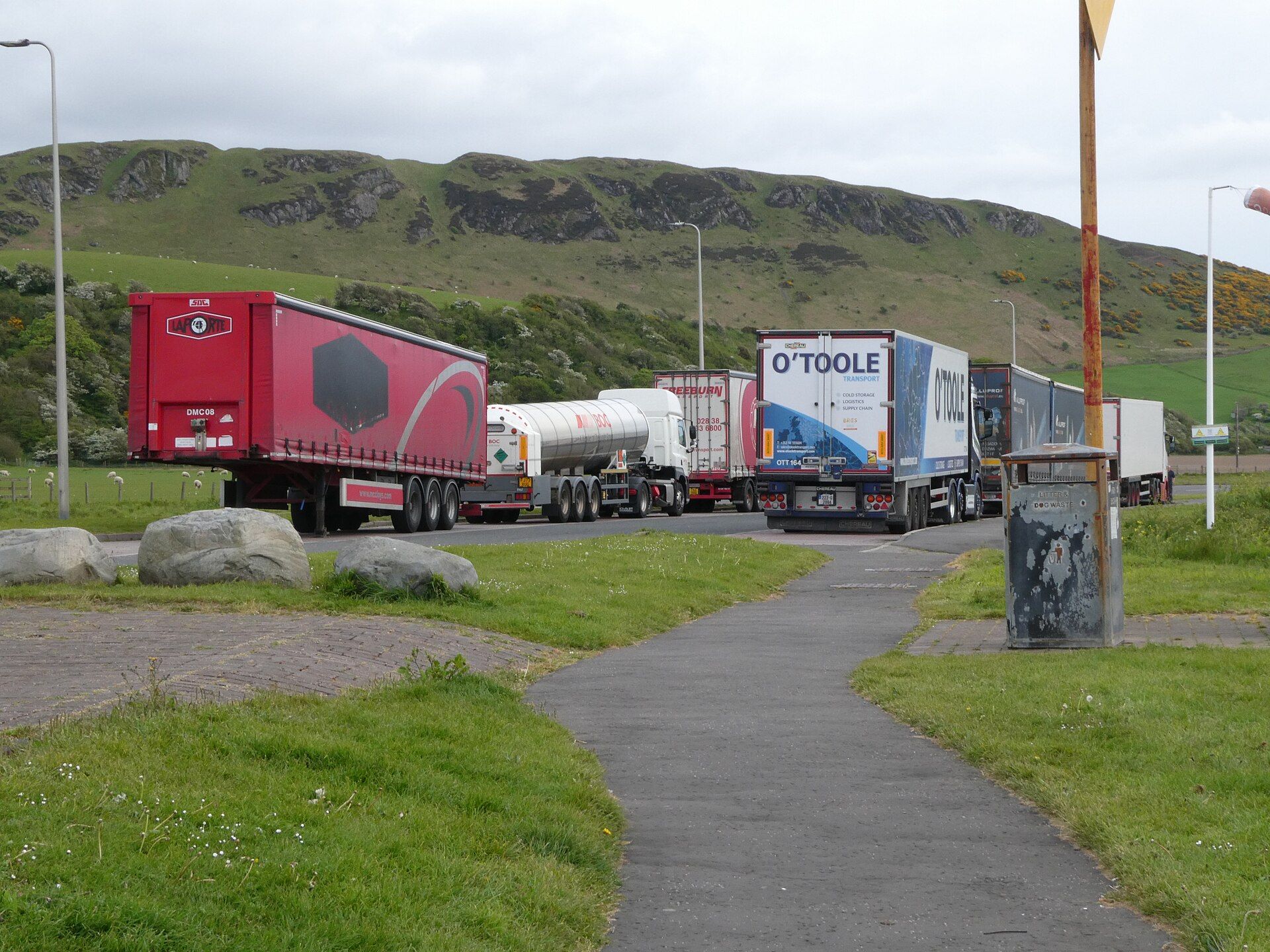
A tractor unit is half a vehicle. It carries the driveline, the cab, the fuel and the driver, and none of the freight. Everything the operation is paid to move sits behind the fifth wheel in a body that is chosen once and is not changed afterwards, and that choice decides the payload, the loads that can be handled at all, and — in most fleets — more unladen weight than any option on the tractor.
The figures below are manufacturer-published and attached to a named model; where a difference between two of them is worked out here, the sentence says the arithmetic is ours. Where a maker publishes no weight, none is given here.
Curtainsider: the default, and the reason it is the default
A curtainsider is a flat deck with a fixed front bulkhead, a rear door frame, a roof carried on posts, and sliding tarpaulins down both sides. It is the default European semi-trailer because it can be loaded three ways — forklift through the side, forklift or pallet truck through the rear, crane through the roof — while still enclosing the load.
Krone’s Profi Liner in the SDP 27 eLB50-CS specification is quoted at a 13,620 mm load compartment length, 2,480 mm width, a clear side height of 2,600–2,700 mm at the lower edge of the external beam, a dead weight of 5,940 kg, a 27,000 kg axle load, a 12,000 kg fifth-wheel load and a 39,000 kg permissible total weight, from which the technically possible payload is given as approximately 33,060 kg; the full record for that variant, including the registration weights Krone publishes separately and lower, is the Krone Profi Liner page.
Schmitz Cargobull’s S.CS UNIVERSAL is quoted differently but lands in the same place: an internal body length of 13.62 m, internal width 2,480 mm, internal height up to 3,050 mm — the maker footnotes the height as depending on the saddle height and the legal framework conditions — and 34, 37 or 40 Euro pallets, or 26 ISO pallets. Body strength is certified to DIN EN 12642 Code XL, which is a statement about the structure of the body itself and belongs to the separate subject of load securing. Kögel lands in the same place from a third factory — 13,620 mm of clear loading length, a 27,000 kg axle-unit load, a 12,000 kg fifth-wheel load and a 39,000 kg permissible total weight, at a tare of 5,920 kg in basic configuration, that qualifier being Kögel’s own — and its ten published variants are set out on the Kögel Cargo page.
That the two makers land on the same deck is not a coincidence, and it is not a design decision either: the body has to fit inside an envelope drawn by Council Directive 96/53/EC Annex I, and the Directive draws it at the kingpin rather than at either end of the trailer. The same Schmitz data block also lists a 15 m body, which is not simply a longer version of the standard trailer — a deck of that length is a question about national rules rather than about Annex I. Both belong to semi-trailer dimensions, which is a subject in its own right rather than a specification line.
The volume variant is worth pricing rather than assuming. Krone’s Mega Liner SDP 27 eLG50-CS shares the 13,620 mm length, the 2,480 mm width and the 39,000 kg rating, but sits at a lower coupling height of 960–1,160 mm and reaches a clear side height of 2,595–2,845 mm, or 3,000 mm on mesh box width. Its dead weight is 6,350 kg. Volume therefore costs 410 kg against the standard Profi Liner — our subtraction from Krone’s two figures, not a Krone figure — and it costs it on every kilometre, loaded or empty, which is where it meets tractor running costs.
Box: what a hard wall costs
A box trailer replaces curtains and posts with rigid panels. It is chosen for security, weather-tightness and stackable interior loads, and for anything that must not be opened at the roadside.
Krone’s Dry Liner SDK 27 eLB41-STG is published at the same 13,620 mm internal length and 2,480 mm internal width as the Profi Liner, at 2,715 mm internal height, with a dead weight of approximately 7,890 kg against the same 39,000 kg rating and a technically possible payload of 31,110 kg. The wall therefore costs about 1,950 kg of payload — again our subtraction from two published Krone figures, and approximate because the first of them is. On a fleet running near the legal ceiling, that is close to two tonnes of freight per load given away for a locked door.
Reefer: insulation is charged twice
A refrigerated trailer is an insulated box with a cooling unit on the front bulkhead.
Krone quotes the Cool Liner SDR 27 eL4-S at a tare weight of 7,630 kg without cooling unit — the qualifier is theirs — with a 12,000 kg king pin load, 27,000 kg axle load and 39,000 kg permissible total weight. No payload figure is published for it. Insulation also takes internal space: 13,310 mm internal length, 2,460 mm internal width and 2,630 mm internal height, against 13,620 mm and 2,480 mm on the curtainsider.
So a reefer costs 1,690 kg over a curtainsider before the fridge exists, and 310 mm of deck length that the pallet plan has to absorb. Both differences are our arithmetic on Krone’s published figures. Anyone specifying temperature-controlled work should establish the weight of the specific cooling unit separately, because the trailer maker has deliberately not included it. Schmitz Cargobull states the same field the other way round, as an empty weight complete and with a percentage tolerance attached, so the S.KO COOL SMART record and the table below cannot be set against each other until what each tare includes has been read.
Tipper: the body decides the cargo
A tipper is a body that unloads itself by raising the front and letting gravity do the rest. Schmitz Cargobull publishes tare weights by body material, and they are the clearest illustration on this page of what material choice is worth.
The S.KI SOLID with a rounded steel body is given with an empty weight from 5.5 t and construction bodies with volumes from 21 to 36 m³. The S.KI LIGHT with an aluminium box body is given from 4.8 t. Both figures carry the maker’s footnote depending on configuration and equipment, and both come from a 2019 brochure: the current-generation datasheet behind the S.KI SOLID model page carries no unladen weight row at all. Steel buys wear resistance for abrasive materials — sand, gravel, additives, asphalt — and aluminium buys payload; Schmitz Cargobull’s own parameters for the S.KI LIGHT are an aluminium box body of 24 to 59 m³ on a steel chassis, two or three axles, and a body depth of 1,350 to 2,300 mm.
For the road-construction work the maker names, thermal insulation appears as a published line of its own: an unladen weight from 5,790 kg for the rounded steel body with thermal insulation, and from 5,170 kg for the fully insulated aluminium box body on the LIGHT chassis, with the insulating elements themselves quoted from 310 kg and from 380 kg respectively.
Silo and tank: capacity is quoted in volume, not weight
Silo trailers carry powders and free-flowing granular goods and discharge them under air pressure; tankers carry liquids. The specification a buyer works from is volume rather than deck area. Feldbinder publishes its non-tipping EUT silo semi-trailers in a range of 31 to 60 m³, with flexible chamber partitioning, and its KIP tipping silo semi-trailers in a range of 38 to 66 m³. The partitioning is published against the EUT range only, so it is not carried across to the KIP range here. Feldbinder separates its tank semi-trailers by duty — neutral liquids, hazardous goods to ADR, and foodstuffs. What that third duty demands of the trailer and of its paperwork is set out in ADR dangerous goods vehicles.
Feldbinder publishes no tare weight against those ranges, so none is given here. Two things follow for a buyer: the density of the product decides whether volume or weight fills the vehicle first, and hazardous-goods work brings a vehicle approval regime of its own.
Skeletal: the lightest thing you can put behind a tractor
A skeletal, or container chassis, has no body at all — only a frame with twistlocks that hold a container by its corner castings. Everything a body would have done is done by the container.
The saving is large. Krone’s two-axle Box Liner SZC 18 eL20, built for 20 ft containers only, is published at an approximate dead weight of 2,800 kg, an 18,000 kg axle load, a 12,000 kg fifth-wheel load, a 30,000 kg permissible total weight and an approximate payload of 27,200 kg. The extendable Box Liner SDC 27 eLTU6 for 45 ft work is published at approximately 5,700 kg dead weight, with a 14,000 kg fifth-wheel load, a 27,000 kg axle load, a 41,000 kg permissible total weight and approximately 35,300 kg payload. Krone prints no axle count against that model, so none is given here; what is published is the 27,000 kg axle load against the eL20’s 18,000 kg.
Note what changed in that second figure. The permissible total weight rose to 41,000 kg because the fifth-wheel load rose to 14,000 kg while the axle load stayed at 27,000 — our arithmetic on Krone’s numbers. Which tractor can accept that imposed load is a question about axle configuration, not about the trailer.
Low loader: height is the specification
Where the cargo is a machine rather than a pallet, the constraint is height, and the deck drops to buy it. Nooteboom’s OSDS-48-03V(EBW) is a three-axle extendible semi low loader with a self-tracking axle, a 4,750 mm extendable loading floor and deep wheel wells, published at a deadweight of only 8,700 kg and a payload of up to 39 tonnes at 80 km/h — the speed qualifier is the maker’s and it matters. Nooteboom draws the comparison itself: the deep wheel wells now let larger wheel loaders and articulated dump trucks up to 39 tonnes travel on this semi low loader, where previously that was only possible with a low loader.
Read that payload against the road rather than against the trailer. Deadweight plus payload is 47.7 tonnes on the trailer alone — our addition of Nooteboom’s two figures — before a tractor unit is coupled to it, which is above the weight Council Directive 96/53/EC allows an articulated vehicle in international traffic. Article 4(2) of the Directive leaves the weight points of Annex I to member states for national transport, so whether a movement of that order may be made at all, and on what authorisation, is answered nationally rather than by the trailer’s rating. That is the ground of gross vehicle and gross combination weight, and it is a different question from the one the payload column below answers.
A semi low loader is a road trailer with a lowered deck; a low loader is the heavier vehicle bought when the semi runs out of clearance. Where the OSDS uses self-tracking axles, the same programme is sold with hydraulic steering as the Nooteboom MCOS, which is the one Nooteboom publishes a full weight table against.
The table, and how to read a payload figure
| Body | Named model | Tare as published | Permissible total weight | Payload as published |
|---|---|---|---|---|
| Curtainsider | Krone Profi Liner SDP 27 eLB50-CS | 5,940 kg | 39,000 kg | approx. 33,060 kg |
| Curtainsider, high volume | Krone Mega Liner SDP 27 eLG50-CS | 6,350 kg | 39,000 kg | 32,650 kg |
| Box | Krone Dry Liner SDK 27 eLB41-STG | approx. 7,890 kg | 39,000 kg | 31,110 kg |
| Reefer | Krone Cool Liner SDR 27 eL4-S | 7,630 kg, without cooling unit | 39,000 kg | not published |
| Container chassis, 45 ft | Krone Box Liner SDC 27 eLTU6 | approx. 5,700 kg | 41,000 kg | approx. 35,300 kg |
| Container chassis, 20 ft, two axles | Krone Box Liner SZC 18 eL20 | approx. 2,800 kg | 30,000 kg | approx. 27,200 kg |
| Semi low loader | Nooteboom OSDS-48-03V(EBW) | 8,700 kg | not published | up to 39 t at 80 km/h |
| Curtainsider | Schmitz Cargobull S.CS UNIVERSAL | from 5,990 kg | not published on the page | not published on the page |
| Curtainsider, lightweight | Schmitz Cargobull S.CS UNIVERSAL X-LIGHT | from 4,975 kg, depending on equipment | not published | not published |
| Curtainsider, paper | Schmitz Cargobull S.CS PAPER X-LIGHT | from 6,190 kg, without additional fittings | not published | not published |
| Tipper, steel body | Schmitz Cargobull S.KI SOLID | from 5.5 t | not published | not published |
| Tipper, aluminium body | Schmitz Cargobull S.KI LIGHT | from 4.8 t | not published | not published |
The payload column needs one warning. The approximately 33,060 kg for the Profi Liner is Krone’s own figure and not a subtraction of ours, and Krone states it against the trailer’s own 39,000 kg permissible total weight — which is in turn the 27,000 kg axle load plus the 12,000 kg fifth-wheel load, that addition ours rather than a Krone line. Either way the figure is a statement about what the trailer’s structure and running gear can take. It is not what may be run on the road, because the road limit applies to the whole combination and that combination also contains a tractor unit. The difference between a trailer rating and a legal combination limit is the substance of gross vehicle and gross combination weight, and confusing the two is the most expensive misreading on a trailer specification sheet.
Two further layers sit behind every figure here and are not settled by the body type. The kingpin and fifth-wheel interface has to match between tractor and trailer. And a trailer’s braking system carries its own approval. Neither is a detail the body choice decides for you.
For a used buyer
Read the body against the work being described, not the advert. A curtainsider sold as a general-haulage trailer that turns out to be a paper specification carries the extra structure and the extra tare that job needed. A reefer’s tare tells you little until you know what cooling unit is on the bulkhead, because the published figure excludes it, and its insulation category and ATP paperwork are a separate check again, set out in refrigerated transport and temperature records. A skeletal is worth exactly the container sizes its extension positions and twistlocks support. And a tipper’s body material — steel or aluminium — is the single fact that decides both what it can carry without wearing out and how much of it. The same discipline that applies to buying a used tractor applies here: establish the specification and the paperwork before the mechanical inspection, because no workshop can change what the body already is.
Quick answers
- How much does a curtainsider semi-trailer weigh empty?
- Krone publishes a dead weight of 5,940 kg for the Profi Liner SDP 27 eLB50-CS, and Schmitz Cargobull states that the new-generation S.CS UNIVERSAL starts from an unladen weight of 5,990 kg. Lightweight variants go lower: the same brochure gives the X-LIGHT range from 4,975 kg, a figure it footnotes as applying to the S.CS UNIVERSAL X-LIGHT depending on the equipment.
- What is the difference between a curtainsider and a box trailer?
- In Krone's own range it is about 1,950 kg of tare weight — our subtraction from their two published figures, approximately 7,890 kg for the Dry Liner SDK 27 eLB41-STG against 5,940 kg for the Profi Liner SDP 27 eLB50-CS. Both are quoted with the same 13,620 mm load compartment length and 2,480 mm width, so the box buys a hard, lockable, weather-tight wall and pays for it in payload.
- How much payload does a refrigerated trailer lose to insulation?
- Krone publishes 7,630 kg tare for the Cool Liner SDR 27 eL4-S explicitly without the cooling unit, against 5,940 kg for the Profi Liner curtainsider — a gap of 1,690 kg before a fridge is fitted, which is our subtraction rather than a Krone figure. The insulation also takes internal space: 13,310 mm internal length and 2,460 mm width against 13,620 mm and 2,480 mm on the curtainsider.
- Why is a skeletal container chassis so much lighter than a trailer with a body?
- Because it has no body at all: Krone publishes an approximate dead weight of 2,800 kg for the two-axle Box Liner SZC 18 eL20, a chassis built only to hold 20 ft containers at their corner castings. Its published permissible total weight is 30,000 kg and its approximate payload 27,200 kg.
- Is the manufacturer's payload figure the payload I will actually carry?
- No. Krone publishes the Profi Liner's technically possible payload as approximately 33,060 kg, and it is stated against the trailer's own 39,000 kg permissible total weight — which is itself the 27,000 kg axle load plus the 12,000 kg fifth-wheel load, an addition of ours rather than a Krone line. The weight you may run on the road is a combination limit that also has to carry a tractor unit.
Sources
- Profi Liner — technical data (SDP 27 eLB50-CS) — Fahrzeugwerk Bernard Krone GmbH & Co. KG
- Mega Liner — technical data (SDP 27 eLG50-CS) — Fahrzeugwerk Bernard Krone GmbH & Co. KG
- Dry Liner — technical data (SDK 27 eLB41-STG) — Fahrzeugwerk Bernard Krone GmbH & Co. KG
- Cool Liner — technical data (SDR 27 eL4-S) — Fahrzeugwerk Bernard Krone GmbH & Co. KG
- Box Liner eL20 — technical data (SZC 18 eL20) — Fahrzeugwerk Bernard Krone GmbH & Co. KG
- Box Liner eLTU6 Universal 45 — technical data (SDC 27 eLTU6) — Fahrzeugwerk Bernard Krone GmbH & Co. KG
- S.CS UNIVERSAL curtainsider semi-trailer — technical data — Schmitz Cargobull AG
- S.CS Curtainsider Semi-trailers — product brochure — Schmitz Cargobull AG
- S.KI Tipper Semi-Trailer — product brochure — Schmitz Cargobull AG
- S.KI LIGHT tipper semi-trailer — product parameters — Schmitz Cargobull AG
- Silo vehicles and tankers for the road — EUT and KIP product ranges — Feldbinder Spezialfahrzeugwerke GmbH
- Nooteboom introduces new extendible lightweight semi low loader with wheel wells — Nooteboom Trailers B.V.
- Council Directive 96/53/EC, consolidated text of 14 August 2019 — Annex I and Articles — EUR-Lex, European Union
- Council Directive 96/53/EC — Annex I: maximum weights and dimensions — legislation.gov.uk (The National Archives)
- KÖGEL CARGO — product detail, vehicle variants — Kögel Trailer GmbH