industry
European truck driver supply: the shortage and the rules that gate it
IRU counts around 502,000 unfilled truck driver positions in Europe, 13 per cent of the workforce. What that figure measures, and which licence and qualification rules decide who may fill it.
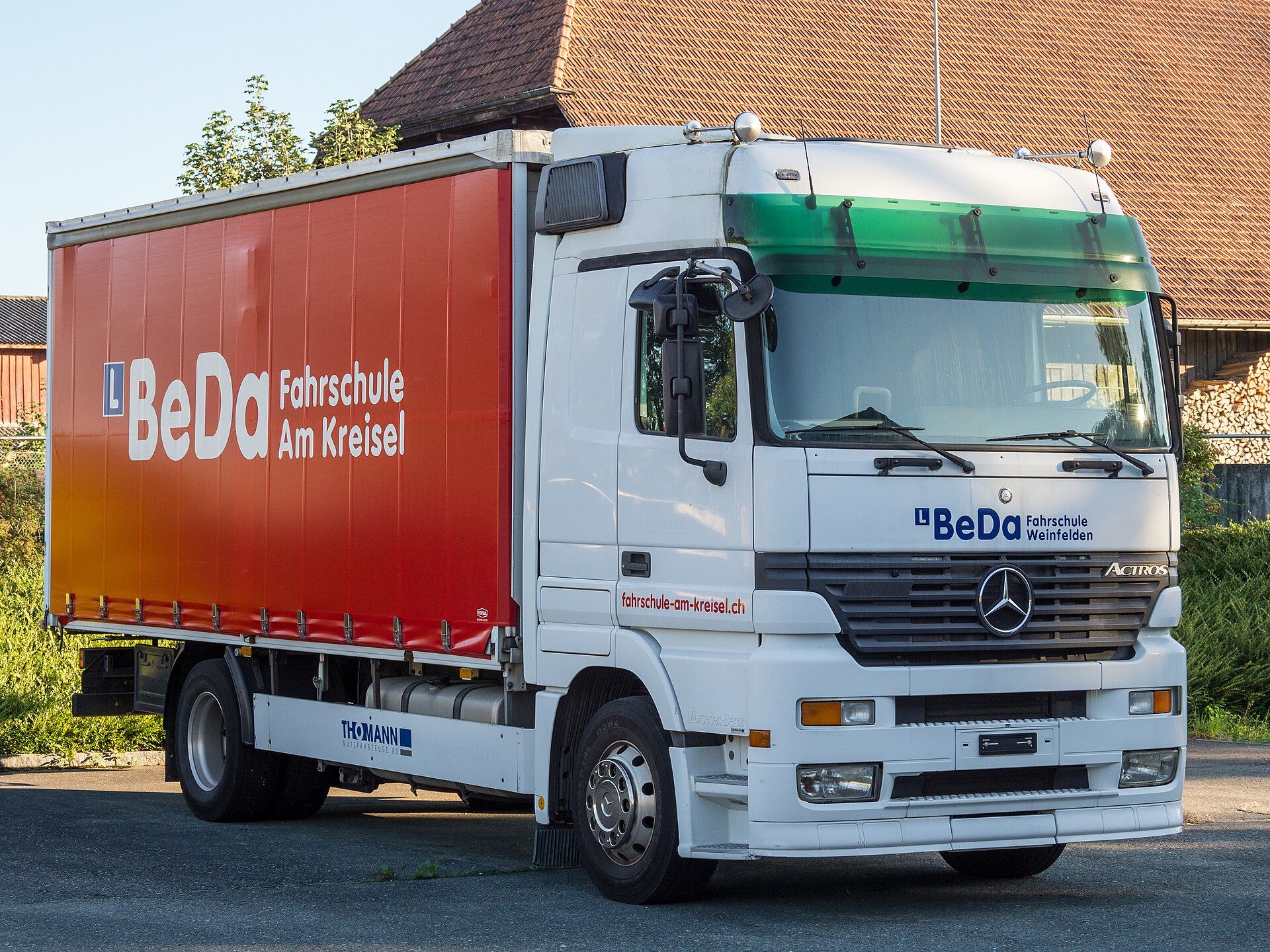
Two questions sit behind any European recruitment plan for drivers, and they are answered at different desks. The first is how large the gap is. The second is who is legally permitted to close it — because a professional driver is not simply a person holding a licence. The licence says which vehicle may be moved; a separate certificate says the holder may be paid to move it; and where the driver comes from outside the Union, a third document may be required, and it is held by the employer rather than the driver.
What the shortage figure counts
IRU’s 2025 driver shortage survey found that around 2.9 million truck driver positions, equivalent to 11 per cent of the workforce, remain unfilled across 18 markets. Europe has one of the highest shortage rates in that set, at 13 per cent, representing around 502,000 unfilled truck driver positions.
Read the scope before the number. The report covers 18 markets across Europe, Australia, Brazil, China, Mexico and Uzbekistan, including the bus and coach sectors in Germany and Spain, and combines an operator survey with interviews. What it counts is positions employers say they cannot fill, not a series produced by a statistical office. IRU’s own reading is that the shortage has come loose from the freight cycle: in almost every market surveyed the 2025 rate was higher than the 2021 baseline, with ageing workforces, barriers to entry and changing expectations about work now the dominant factors.
The demographic half of the problem
Vacancies are the smaller number. IRU reports that around 20 per cent of Europe’s current truck driver workforce is expected to retire over the next five years, and that around 660,500 drivers in Europe are expected to retire by 2030. The intake is thin: IRU puts the average age of a European truck driver at 48, reports that only 5 per cent are aged 24 or under, and that women account for only around 4 per cent.
Set IRU’s two European figures against each other — this arithmetic is ours, and appears in neither the release nor the topic page — and the retirements expected by 2030 are about a third larger than the vacancy count reported today. The two are not quite like for like: IRU reports the 660,500 as drivers, and the 502,000 as truck driver positions, and the survey behind both takes in the bus and coach sectors in Germany and Spain. Even so, recruitment at the current rate does not hold the workforce level; it has to beat the exit rate before it touches the 502,000. Which is why every year of minimum age, and every licence that stops at a border, matters.
The licence directive in force, and the one that replaces it
Directive 2006/126/EC on driving licences is in force and is the instrument a licensing authority applies today. Its Article 4(4) sets the minimum ages by category: 18 for C1 and C1E under point (e), 21 for C and CE under point (g), 21 for D1 and D1E under point (i), and 24 for D and DE under point (k).
Article 4(6) lets a Member State lower the age for category C to 18 and for category D to 21, but only for two named cases: vehicles used by the fire service and for maintaining public order, and vehicles undergoing road tests for repair or maintenance. A licence issued that way is valid only on the territory of the issuing Member State until the holder reaches the general age. It is not a route into international haulage.
Directive (EU) 2025/2205 on driving licences, adopted on 22 October 2025 and in force, replaces it. Article 30(1) repeals Directive 2006/126/EC with effect from 26 November 2029, except for its Article 6(4)(c), repealed from 26 November 2027. What takes that point’s place is named in the correlation table in Annex VII, and it is a single provision: Article 9(2), point (j), the equivalence that lets a category B licence, two years after it was first issued, cover vehicles powered wholly or in part by alternative fuels with a maximum authorised mass above 3,500 kg but not above 4,250 kg. The next row of the table carries point (k) — the same equivalence for a category BE licence, where a vehicle in that mass band is the tractor unit in a combination with a trailer or semi-trailer of mass category O1 or O2 — but with an empty left-hand column: it answers to nothing in the old directive and is new law rather than a successor to anything. Article 29(1) requires Member States to adopt and publish the transposing measures by 26 November 2028 and to apply them from 26 November 2029, but it opens “without prejudice to paragraph 2”, and Article 29(2) brings both points forward together: adopted and published by 26 November 2027, and applied from that same date. Apart from that 2027 step, and the 26 November 2028 date Article 29(3) sets for the measures implementing Article 17, the older directive is the law until 26 November 2029.
The certificate, not the licence, sets the professional age
The age that actually governs entry to the job is not in the licence directive at all. Article 4(7) of Directive 2006/126/EC hands the question over: for categories C and CE, D1 and D1E, and D and DE, the minimum age is the one prescribed for holders of a CPC in the professional qualification directive. That article still names Directive 2003/59/EC, which has been repealed and codified; Article 14 of Directive (EU) 2022/2561 provides that references to the repealed directive are construed as references to the codified one.
Article 5(2) of Directive (EU) 2022/2561 then sets the operative ages for goods drivers. From 18 a driver may take categories C and C+E provided they hold a CPC as referred to in Article 6(1), the full initial qualification — 280 hours under Annex I, Section 2.1 where the Member State uses the course-and-test route — or C1 and C1E with a CPC under Article 6(2), the accelerated route of 140 hours under Section 3. From 21 they may take C and C+E with that accelerated CPC. What the routes contain, and the 35 hours of periodic training due every five years, are set out in Driver CPC explained.
| Category | Licence directive in force | With a CPC | From 26 November 2029 |
|---|---|---|---|
| C1, C1E | 18 | 18 with an Article 6(2) CPC | 18 |
| C, CE | 21 | 18 with an Article 6(1) CPC; 21 with an Article 6(2) CPC | 21, or 18 with an Article 6(1) CPC |
Directive (EU) 2025/2205 does not so much lower the professional age for goods drivers as move it into the licence directive where a reader can find it. Article 7(1)(d) sets 21 for categories C, CE, D1 and D1E; point (e) sets 18 for C and CE where the driver holds a CPC as referred to in Article 6(1) of Directive (EU) 2022/2561. The 18-year-old lorry driver is not new. What is new is that the licence directive will say so.
Seventeen, from 2028, and only where a Member State opens it
The genuinely new step is younger. Article 27 of Directive (EU) 2025/2205 adds a point to Article 5(2) of the CPC directive allowing a driver, from the age of 17, to drive in category C1, C1E or C with an Article 6(1) CPC for category C or an Article 6(2) CPC for C1 and C1E — and only under the conditions in Article 17(2) and (3) of the new directive.
Those conditions are worth reading exactly, because the scheme is narrower than the headline. Article 17(2) says Member States may, for driving on their respective territories, issue such licences to applicants who have reached 17, marked with Union code 98.02; licences issued that way are mutually recognised only by the Member States that issue them. Article 17(3) requires a holder under 18 to drive only when accompanied by a person in the front passenger seat able to provide guidance, who must be at least 24, hold a licence of the relevant category issued in the Union more than five years previously, and not have been disqualified from driving in the issuing Member State within the last five years. Article 17(4) lets a Member State add conditions for that accompanying person; where the licence is category C, C1E or C1, those conditions may in particular require the accompanying person either to hold the relevant qualification and training under Directive (EU) 2022/2561, or to have taken a dedicated course of at least seven hours, extendable to 14, as part of their own periodic CPC training.
The timetable for this part runs a year ahead of the rest: Article 29(3) requires Member States to adopt and publish the measures needed to comply with Article 17 by 26 November 2028 and to apply them from that date. An operator planning a school-leaver intake is planning against a national decision most Member States have not taken, and against a second seat an experienced employee has to occupy for every accompanied kilometre.
The driver who is already working in Europe but is not from it
Recruitment inside Europe is not the whole picture, and the paperwork for the rest is not the driver’s. Article 5 of Regulation (EC) No 1072/2009, in force, requires the Member State of establishment to issue a driver attestation to a haulier that holds a Community licence and lawfully employs, or lawfully uses, a driver who is neither a national of a Member State nor a long-term resident within the meaning of Directive 2003/109/EC. Under Article 5(6) it belongs to the haulier, who puts it at the driver’s disposal when that driver runs on the haulier’s Community licence, with a certified copy kept at the premises and the original presented to any authorised inspecting officer. Article 5(7) caps validity at five years. Where that document sits in the wider licensing file is set out in the road transport operator licence.
The scale is not marginal: IRU reports that nearly one in three truck drivers reported by surveyed EU operators are of foreign origin and that, among those whose origin was identified, 37 per cent are from outside the EU. On IRU’s account the difficulty is documentary at least as much as it is a question of skill: driving licences may not be recognised, professional qualifications are often not equivalent and need extensive training to align with EU requirements, and visa and work permit procedures can be complex and lengthy. The STEER2EU study, which IRU led at the request of the European Commission, examined the practical challenges involved in employing non-EU truck and bus drivers and covered 20 non-EU countries; IRU reports that it identified gaps in professional qualifications and mapped the legal and administrative barriers faced by both drivers and EU operators.
What the shortage does to the operator
The commercial effect shows up before the recruitment budget does. IRU reports that around two-thirds of European operators say they turn down new contracts because they cannot find enough drivers, and that 65 per cent of them rank the driver shortage as their most pressing concern — four times the rate of any other issue. IRU also reports the burden as uneven by size: operators with fewer than 50 employees reported shortage rates six percentage points higher than large companies, and small operators with fewer than ten employees, which it says account for 98 per cent of EU road freight enterprises and 79 per cent of the workforce, often have fewer resources to invest in recruitment, training and international hiring.
Pay alone no longer clears it. IRU records operators describing a “wage wall”, with cab and trailer conditions, secure parking, time at home and predictable schedules increasingly decisive. That is the argument that decides cab specification, where the driver is already the largest or joint-largest line in tractor unit running costs. It is also part of the case for the automated manual transmission, which removes gear-changing skill from the list of things a new entrant has to acquire before becoming productive. On the passenger side the same qualification directive governs the workforce, and what it obliges a fleet to carry is set out in bus fleet operating costs.
None of that changes the arithmetic at the front of this page. On IRU’s figures a workforce averaging 48 years old, with around 660,500 drivers in Europe expected to retire by 2030, has to be replaced from a pool whose entry ages, qualification hours and cross-border recognition are fixed by law — and the law that lowers the youngest of those ages applies nowhere before 26 November 2028, and then only where a Member State opens it.
Quick answers
- How many truck drivers is Europe short of?
- Around 502,000 unfilled truck driver positions, equivalent to a shortage rate of 13 per cent, according to IRU's 2025 driver shortage survey. The same survey counted around 2.9 million unfilled positions across the 18 markets it covers, equivalent to 11 per cent of the workforce there.
- How old do you have to be to drive a lorry in the EU?
- Eighteen, if the driver holds the full certificate of professional competence. Article 5(2)(a)(i) of Directive (EU) 2022/2561 lets a driver of categories C and C+E start at 18 with a CPC awarded under Article 6(1); the driving licence directive in force, 2006/126/EC, sets 21 for those categories in Article 4(4)(g) and 18 for C1 and C1E.
- Can a 17-year-old drive a truck in Europe?
- Not today. From 26 November 2028, Article 17(2) of Directive (EU) 2025/2205 allows — but does not require — a Member State to issue category C1, C1E or C licences to 17-year-olds who hold the corresponding CPC, for driving on its own territory. Under 18 the holder must be accompanied by a person in the front passenger seat who is at least 24 and has held the relevant category for more than five years.
- What percentage of European truck drivers are women?
- Around 4 per cent, on IRU's figures. IRU also reports the average age of a European truck driver as 48, with only 5 per cent aged 24 or under.
- Can a non-EU driver work for an EU haulier?
- Yes, but the driver attestation is not a work permit. Where the driver runs on the haulier's Community licence — international carriage of goods for hire or reward within the Union, and cabotage under Chapter III — Article 5 of Regulation (EC) No 1072/2009 requires the Member State of establishment, at the Community licence holder's request, to issue an attestation for each driver who is neither a national of a Member State nor a long-term resident under Directive 2003/109/EC. It certifies only that the driver is lawfully employed, or lawfully used, under that Member State's conditions of employment and vocational training; the right to work itself comes from national immigration and labour rules. The attestation belongs to the haulier, not the driver, and is valid for a maximum of five years.
Sources
- Operators deeply concerned by worsening driver shortage: new IRU report (30 June 2026) — IRU — World Road Transport Organisation
- Driver shortage — IRU — World Road Transport Organisation
- Why the world needs legal driver mobility pathways (2 September 2026) — IRU — World Road Transport Organisation
- Directive 2006/126/EC on driving licences (Recast), consolidated text of 1 November 2020 — Article 4 — EUR-Lex, European Union
- Directive (EU) 2022/2561 on the initial qualification and periodic training of drivers of certain road vehicles for the carriage of goods or passengers — Articles 5, 6 and 14, Annex I — EUR-Lex, European Union
- Directive (EU) 2025/2205 on driving licences — Articles 7, 9, 17, 27, 29 and 30, and Annex VII — EUR-Lex, European Union
- Regulation (EC) No 1072/2009 on common rules for access to the international road haulage market, consolidated text of 21 February 2022 — Article 5 — EUR-Lex, European Union