Vehicle categories M, N and O: what makes a truck, a bus or a trailer in law
Category N is a goods vehicle, M a passenger vehicle and O a trailer. The M1 to O4 limits in EU and UN texts, and how Turkish, Spanish, US and British law define trucks and buses.
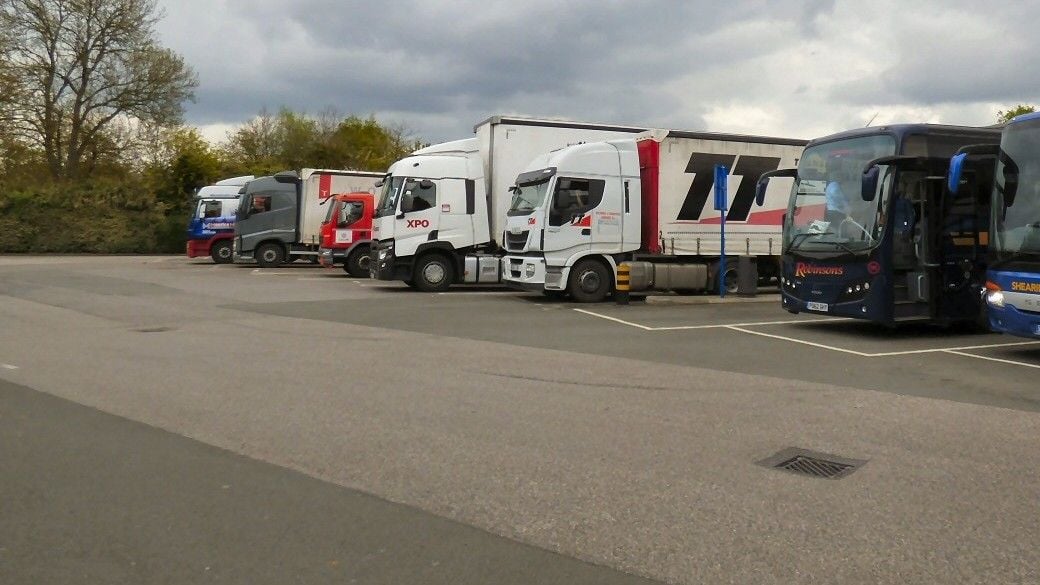
In Regulation (EU) 2018/858, the European Union’s regulation on the approval and market surveillance of motor vehicles and their trailers, a vehicle of category N is a motor vehicle “designed and constructed primarily for the carriage of goods”, a vehicle of category M is a motor vehicle designed and constructed “primarily for the carriage of passengers and their luggage”, and category O “consists of trailers” (Article 4(1), consolidated text of 2 August 2026). Each category is divided by maximum mass, and M also by seating positions: N3, for example, covers motor vehicles “with a maximum mass exceeding 12 tonnes”. The UN Consolidated Resolution on the Construction of Vehicles (R.E.3), a resolution of the UNECE World Forum WP.29, sets the same categories with the same limits, in kilograms. Lorry, truck, Lkw, kamyon, camión and грузовик are the everyday words for a goods vehicle; where a national text defines one of them, it uses its own terms and limits, compared below.
These are vehicle categories. Driving-licence categories such as C1, C, D1 and D are a separate set of letters, explained in truck driving licences and bus driving licences.
Status as of 8 October 2026. Every text was read on that day, in the version named in the source list: Regulation (EU) 2018/858 consolidated on 2 August 2026 (English, German and Spanish), R.E.3 Revision 7 (English and Russian), the current Turkish texts, Spain’s Reglamento General de Vehículos as last updated on 26 June 2026, the British texts as revised on legislation.gov.uk, and the US Code of Federal Regulations in its edition revised as of 1 October 2025; our search of the Federal Register found no later rule amending the two US sections used. The EU consolidated text “is meant purely as a documentation tool and has no legal effect”, and the Spanish one is “de carácter informativo” (for information only). Turkish and Spanish quotations keep the original words, with our translation in brackets.
Categories M, N and O and their limits
Regulation (EU) 2018/858 uses the categories for EU and national type-approval and for individual vehicle approval (Annex I, Part A, point 1); R.E.3 sets them out in its paragraph 2. The table gives both wordings.
| Category | For | Regulation (EU) 2018/858 | UN R.E.3 |
|---|---|---|---|
| M1 | Passengers | Not more than eight seating positions in addition to the driver’s; no space for standing passengers | Not more than eight seats in addition to the driver’s seat |
| M2 | Passengers | More than eight seating positions in addition to the driver’s; maximum mass not exceeding 5 tonnes | More than eight seats in addition to the driver’s seat; maximum mass not exceeding 5,000 kg |
| M3 | Passengers | More than eight seating positions in addition to the driver’s; maximum mass exceeding 5 tonnes | More than eight seats in addition to the driver’s seat; maximum mass exceeding 5,000 kg |
| N1 | Goods | Maximum mass not exceeding 3.5 tonnes | Maximum mass not exceeding 3,500 kg |
| N2 | Goods | Maximum mass exceeding 3.5 tonnes but not exceeding 12 tonnes | Maximum mass exceeding 3,500 kg but not exceeding 12,000 kg |
| N3 | Goods | Maximum mass exceeding 12 tonnes | Maximum mass exceeding 12,000 kg |
| O1 | Trailers | Maximum mass not exceeding 0.75 tonnes | Maximum mass not exceeding 750 kg |
| O2 | Trailers | Maximum mass exceeding 0.75 tonnes but not exceeding 3.5 tonnes | Maximum mass exceeding 750 kg but not exceeding 3,500 kg |
| O3 | Trailers | Maximum mass exceeding 3.5 tonnes but not exceeding 10 tonnes | Maximum mass exceeding 3,500 kg but not exceeding 10,000 kg |
| O4 | Trailers | Maximum mass exceeding 10 tonnes | Maximum mass exceeding 10,000 kg |
Categories M and N are for vehicles with at least four wheels: R.E.3 says so in the headings of paragraphs 2.2 and 2.3 (“Power-driven vehicles having at least four wheels”), and Regulation (EU) 2018/858 in its definition of a motor vehicle, which also requires “a maximum design speed exceeding 25 km/h” (Article 3(16)). The Regulation’s M2 and M3 apply “regardless of whether those motor vehicles have space for standing passengers”; its M1 is “without space for standing passengers”.
Maximum mass. In Annex I to the Regulation, “‘Maximum mass’ means the ‘technically permissible maximum laden mass’” (introductory part, point 1.4), and “The manufacturer is responsible for the categorisation of a type of vehicle into a specific category” (introductory part, point 3.1). How much a vehicle may weigh on the road is set by other rules, for the EU in Directive 96/53/EC on maximum authorised dimensions and weights; see truck weights.
Towing vehicles and trailers. For a tractor unit for semi-trailer, “the maximum mass to be considered for classifying the vehicle shall include the maximum mass of the semi-trailer borne by the fifth wheel coupling” (Annex I, introductory part, point 2.2.1). For a motor vehicle that can tow a centre-axle trailer or a rigid drawbar trailer, it includes “the maximum mass transferred to the towing vehicle by the coupling” (point 2.2.2). For a semi-trailer, a centre-axle trailer and a rigid drawbar trailer, the mass that counts is “the maximum mass transmitted to the ground by the wheels of an axle or group of axles when coupled to the towing vehicle” (point 2.2.3).
Special equipment. “Vehicles fitted primarily with fixed equipment such as machinery or apparatus shall be regarded as N or O category” (Annex I, introductory part, point 2.3.1). In R.E.3 the equipment and installations carried on certain special purpose vehicles, such as crane, workshop and publicity vehicles, “are regarded as being equivalent to goods” (2.3.4.2).
Goods or passengers: where N1 ends and M1 begins
Whether a van or a pick-up is N1 or M1 is decided by the criteria in Annex I, Part A, point 3 of Regulation (EU) 2018/858; the requirements of points 3.2 to 3.6 “shall be met for all variants and versions within the type of vehicle” (point 3.7):
- Separation. “As a matter of principle, the compartment(s) where all the seating positions are located, shall be completely separated from the loading area” (3.2). Persons and goods may share a compartment if the loading area has securing devices that protect the persons “against the displacement of the load during driving, including severe braking and cornering” (3.3).
- Seats. Excluding the driver’s seating position, at most 6 in an N1 vehicle and 8 in an N2 or N3 vehicle (3.5).
- Payload. “Vehicles shall show a goods-carrying capacity equal or higher than the person-carrying capacity expressed in kg” (3.6). Point 3.6.1 sets equations in which P is the technically permissible maximum laden mass, M the mass in running order and N the number of seating positions excluding the driver’s: P – M ≥ 100 kg when N is 0; P – (M + N × 68) ≥ 150 kg when N is more than 0 and not more than 2; P – (M + N × 68) ≥ N × 68 when N is more than 2.
- Vans. For bodywork BB, where the driver’s compartment and the load are in a single unit, point 3.8.2 adds that loading of the goods must be possible by a rear door, a tailgate or a side door; that with a rear door or a tailgate the loading aperture is at least 600 mm high with one row of seats or only the driver’s seat, or at least 800 mm high with a surface of at least 12,800 cm² with two or more rows; and that the cargo area is generally flat and at least 40 % of the wheelbase long with one row of seats or one seat, or 30 % with two or more rows.
“A vehicle shall be categorised as N1 when all the applicable criteria are met. When one or more of the criteria are not met, the vehicle shall be categorised as M1” (point 3.8.1).
Bus classes and bodywork codes
R.E.3 divides vehicles of categories M2 and M3 by capacity: for more than 22 passengers in addition to the driver there are Classes I, II and III, and for not more than 22 there are Classes A and B (2.2.4). What each class requires is explained in bus classes. R.E.3 also sorts trailers of categories O2, O3 and O4 into three types: the semi-trailer, the full trailer and the centre-axle trailer (2.4.5).
Annex I, Part C of Regulation (EU) 2018/858 adds a two-letter bodywork code, applied “primarily to complete and completed vehicles” (point 1.1).
| Category | Codes and names |
|---|---|
| M2 or M3 | CA single-deck vehicle, CB double-deck vehicle, CC single-deck articulated vehicle, CD double-deck articulated vehicle, CE low-floor single-deck vehicle, CF low-floor double-deck vehicle, CG articulated low-floor single-deck vehicle, CH articulated low-floor double-deck vehicle, CI open top single deck vehicle, CJ open top double deck vehicle, CX bus chassis |
| N1, N2 or N3 | BA lorry, BB van, BC tractor unit for semi-trailer, BD road tractor, BE pick-up truck, BX chassis-cab or chassis-cowl |
| O | DA semi-trailer, DB drawbar trailer, DC centre-axle trailer, DE rigid drawbar trailer, DF link semi-trailer, DG link drawbar trailer |
The lorry, code BA, is “A vehicle that is designed and constructed exclusively or principally for conveying goods. It may also tow a trailer.” The van, BB, is “A lorry with the compartment where the driver is located and cargo area within a single unit”, and the pick-up truck, BE, has “a maximum mass not exceeding 3 500 kg”. The bodies built on semi-trailers, from curtainsiders to low loaders, are described in trailer types, and the brakes of O3 and O4 trailers in trailer brakes and EBS.
The Glossary for transport statistics of Eurostat, the UNECE and the International Transport Forum ties its statistical terms to the R.E.3 categories: a light goods road vehicle has “a gross vehicle weight of not more than 3 500 kg” and includes category N1; a heavy goods road vehicle is above 3 500 kg and “Refers to categories N2 and N3”; and the lorry/truck is a “Rigid road motor vehicle designed, exclusively or primarily, to carry goods”.
Everyday words and the terms in the texts
| Language | Everyday word | Terms in the texts read |
|---|---|---|
| English, Great Britain | lorry | lorry, bodywork code BA (Regulation (EU) 2018/858); lorry/truck (Glossary for transport statistics); medium-sized goods vehicle and large goods vehicle (Road Traffic Act 1988) |
| English, United States | truck | truck (49 CFR 571.3); gross vehicle weight rating classes (49 CFR 565.15) |
| German | Lkw | Lastkraftwagen, bodywork code BA (German version of Regulation (EU) 2018/858) |
| Turkish | kamyon | kamyon and kamyonet (Law No. 2918, Article 3; Road Transport Regulation, Article 4(1)); N1 sınıfı taşıt (Regulation, Article 4(1)(bbbb)) |
| Spanish | camión | camión and furgón (Reglamento General de Vehículos, Annex II); Camión, bodywork code BA (Spanish version of Regulation (EU) 2018/858) |
| Russian | грузовик | транспортные средства, используемые для перевозки грузов, category N (Russian version of R.E.3, 2.3) |
How national law defines trucks and buses
National texts define vehicles for their own purposes and draw their own lines. The table gives the definitions in the texts read; it compares wording and does not say which vehicle belongs to which category under another text.
| Text | Goods vehicles | Passenger vehicles |
|---|---|---|
| Türkiye, Law No. 2918 (Road Traffic Law), Article 3, current text | Kamyonet: built to carry goods, “Azami yüklü ağırlığı 3.500 kilogramı geçmeyen” (maximum laden weight not exceeding 3,500 kilograms). Kamyon: built to carry goods, permissible maximum laden weight over 3,500 kg | Otomobil: at most nine seating positions including the driver, built to carry people. Otobüs: more than nine seating positions including the driver; “Sürücüsü dahil oturma yeri on yediyi aşmayan otobüslere minibüs denir” (an otobüs with not more than seventeen seats including the driver is called a minibüs) |
| Türkiye, Road Transport Regulation, Article 4(1), amendments up to 16 May 2026 | Kamyon (aa): permissible maximum laden weight over 3500 kilograms. Kamyonet (bb): not over 3500 kilograms. N1 sınıfı taşıt (bbbb): a motor vehicle used to carry goods whose maximum weight does not exceed 3.5 tonnes | Otobüs (nn): built to carry people, suitable for more than 9 persons including the driver. Küçük otobüs (minibüs) (gg): an otobüs with 10 to 17 seating positions including the driver |
| Spain, Reglamento General de Vehículos, Annex II, part A (definitions) | Camión: four or more wheels, built to carry goods, cab not integrated with the rest of the body, at most 9 places including the driver. Furgón/furgoneta: the same with the cab integrated | Autobús o autocar: more than 9 places including the driver, built to carry people and their luggage |
| Spain, Reglamento General de Vehículos, Annex II, part B (construction codes) | Camión 20 (maximum authorised mass up to 3,500 kg), 21 (over 3,500 kg, up to 12,000 kg in the text), 22 (over 12,000 kg); furgón 24, 25 and 26 on the same lines; remolque y semirremolque 40 (up to 750 kg), 41, 42 and 43 (over 10,000 kg) | Autobús o autocar 11 (maximum authorised mass up to 3,500 kg) and 12 (over 3,500 kg) |
| United States, 49 CFR 571.3 and 565.15, edition revised as of 1 October 2025 | Truck: “designed primarily for the transportation of property or special purpose equipment”. Table II classes by gross vehicle weight rating, ending with Class 8, “Greater than 14968 kg. (33,001 lbs. and over)” | Bus: “designed for carrying more than 10 persons”. Passenger car and multipurpose passenger vehicle: 10 persons or less |
| Great Britain, Road Traffic Act 1988, sections 108 and 121; Construction and Use Regulations 1986, regulation 3 | Medium-sized goods vehicle: permissible maximum weight exceeding 3.5 but not 7.5 tonnes, not adapted to carry more than nine persons including the driver (s.108). Large goods vehicle: permissible maximum weight exceeding 7.5 tonnes (s.121) | Bus: more than eight seated passengers in addition to the driver; minibus: more than 8 but not more than 16; large bus: more than 16 (reg. 3). Passenger-carrying vehicle: large, more than 16 passengers; small, more than 8 but not more than 16, used for hire or reward (s.121) |
Türkiye. Besides defining the N1 sınıfı taşıt (Article 4(1)(bbbb)), the Road Transport Regulation leaves out of its scope carriage in which the goods carried are not commercial, in vehicles “N1 ve N1G araç sınıfında yer alan kamyonet cinsi olarak tescil edilen” (registered as kamyonet in vehicle class N1 or N1G) (Article 2(3)(f)). In the same Regulation, M1, M2, N1 and N2 are also the names of types of authorisation certificate (yetki belgesi) for cargo and nakliyat ambarı operators (Article 6(10) and (11)), a different use of the same letters. Neither Law No. 2918 nor the Regulation contains the word midibüs (our search of both current texts on 8 October 2026).
Spain. Part B divides the construction codes for the camión, the furgón, the autobús and the remolque by masa máxima autorizada (maximum authorised mass). The heading of code 21 ends “MMA ≤ 12.500 kg.” while its text reads “igual o inferior a 12.000 kg” (equal to or less than 12,000 kg); code 22 is “superior a 12.000 kg” (over 12,000 kg). Both figures for code 21 are given here as printed.
United States. The designations of Table II are used “In submitting the required information to NHTSA relating gross vehicle weight rating”, and “The use of these designations within the VIN itself is not required” (49 CFR 565.15). Below Class 3 the table uses letters, Class A to Class H, the last “Greater than 4082 kg. to 4536 kg. (9,001-10,000 lbs.)”; Class 3 is “Greater than 4536 kg. to 6350 kg. (10,001-14,000 lbs.)”. The ratings and the classes are explained in GVWR, GCWR and GAWR.
Great Britain. Section 121 of the Road Traffic Act 1988 defines its terms “In this Part of this Act”, Part IV, on the licensing of drivers of large goods vehicles and passenger-carrying vehicles; the British licence categories are covered in HGV licences in Great Britain. Regulation 3 of the Construction and Use Regulations defines the heavy motor car and the motor car by unladen weight, and the coach as “a large bus with a maximum gross weight of more than 7.5 tonnes and with a maximum speed exceeding 60 mph”. Our search of regulation 3 found no entry for categories M, N or O.
Quick answers
- What is a category N vehicle?
- In Article 4(1) of Regulation (EU) 2018/858, category N consists of motor vehicles 'designed and constructed primarily for the carriage of goods'. N1 has a maximum mass not exceeding 3.5 tonnes, N2 a maximum mass exceeding 3.5 tonnes but not exceeding 12 tonnes, and N3 a maximum mass exceeding 12 tonnes. UN R.E.3 sets the same limits as 3,500 kg and 12,000 kg. In Annex I to the Regulation, maximum mass means the technically permissible maximum laden mass.
- What is the difference between M1, M2 and M3?
- Category M consists of motor vehicles designed and constructed primarily for the carriage of passengers and their luggage. In Regulation (EU) 2018/858, M1 has not more than eight seating positions in addition to the driver's and no space for standing passengers; M2 and M3 have more than eight, M2 with a maximum mass not exceeding 5 tonnes and M3 with a maximum mass exceeding 5 tonnes, regardless of whether they have space for standing passengers. R.E.3 divides M2 and M3 vehicles into Classes I, II and III above 22 passengers in addition to the driver, and Classes A and B up to 22.
- What do trailer categories O1, O2, O3 and O4 mean?
- Category O consists of trailers, divided by maximum mass: O1 not exceeding 0.75 tonnes, O2 exceeding 0.75 tonnes but not exceeding 3.5 tonnes, O3 exceeding 3.5 tonnes but not exceeding 10 tonnes, and O4 exceeding 10 tonnes (Regulation (EU) 2018/858, Article 4(1)); R.E.3 gives 750 kg, 3,500 kg and 10,000 kg. For a semi-trailer, a centre-axle trailer and a rigid drawbar trailer, the mass that counts is the maximum mass transmitted to the ground by the wheels of an axle or group of axles when coupled to the towing vehicle (Annex I, point 2.2.3).
- When is a van N1 and when is it M1?
- Annex I, Part A, point 3 of Regulation (EU) 2018/858 sets the criteria. In principle the seating positions are in a compartment completely separated from the loading area; an N1 vehicle may have at most 6 seating positions besides the driver's; and its goods-carrying capacity must be equal to or higher than its person-carrying capacity in kg, as checked by the equations of point 3.6.1. A van whose driver's compartment and load are in a single unit (bodywork BB) must also meet rules on the loading aperture and the length of the cargo area. When one or more of the criteria are not met, the vehicle is categorised as M1 (point 3.8.1).
- How do Turkish, Spanish, US and British law define a truck?
- Türkiye's Road Traffic Law No. 2918 defines a kamyon as a motor vehicle built to carry goods whose permissible maximum laden weight is over 3,500 kg, and a kamyonet as one not exceeding 3,500 kg. Spain's Reglamento General de Vehículos defines the camión as a goods vehicle whose cab is not integrated with the rest of the body, with at most 9 places including the driver, and codes it 20, 21 or 22 by maximum authorised mass. In the United States, 49 CFR 571.3 defines a truck as a motor vehicle 'designed primarily for the transportation of property or special purpose equipment', and Table II of 49 CFR 565.15 ends with Class 8, 'Greater than 14968 kg. (33,001 lbs. and over)'. Section 121 of the British Road Traffic Act 1988 defines, for Part IV of the Act, a large goods vehicle as a goods vehicle whose permissible maximum weight exceeds 7.5 tonnes.
Sources
- Regulation (EU) 2018/858 on the approval and market surveillance of motor vehicles and their trailers — consolidated text of 2 August 2026, Articles 3 and 4 and Annex I (introductory part, Part A points 1 to 3, Part C), English, German and Spanish versions — EUR-Lex, European Union
- Consolidated Resolution on the Construction of Vehicles (R.E.3), Revision 7, ECE/TRANS/WP.29/78/Rev.7, 15 May 2023 — paragraph 2 (vehicle categories), English and Russian versions — United Nations Economic Commission for Europe, World Forum for Harmonization of Vehicle Regulations (WP.29), 15 May 2023
- Glossary for transport statistics, 5th edition (2019) — road transport chapter — Eurostat, United Nations Economic Commission for Europe and International Transport Forum
- Council Directive 96/53/EC laying down the maximum authorised dimensions and weights for certain road vehicles — consolidated text of 14 August 2019 — EUR-Lex, European Union
- Law No. 2918, Karayolları Trafik Kanunu (Road Traffic Law) — current text, Article 3 — Mevzuat Bilgi Sistemi, Presidency of the Republic of Türkiye
- Karayolu Taşıma Yönetmeliği (Road Transport Regulation, Resmî Gazete of 8 January 2018, No. 30295) — consolidated text with amendments up to the Resmî Gazete of 16 May 2026, No. 33255, Articles 2, 4 and 6 — Mevzuat Bilgi Sistemi, Presidency of the Republic of Türkiye
- Real Decreto 2822/1998, Reglamento General de Vehículos — consolidated text, last update published on 26 June 2026, Annex II, parts A and B — Agencia Estatal Boletín Oficial del Estado, Spain
- 49 CFR 571.3 Definitions — Code of Federal Regulations, annual edition revised as of 1 October 2025 — U.S. Government Publishing Office (govinfo), United States
- 49 CFR 565.15, Table II — Gross Vehicle Weight Rating Classes — Code of Federal Regulations, annual edition revised as of 1 October 2025 — U.S. Government Publishing Office (govinfo), United States
- Federal Register — final rules affecting 49 CFR parts 565 and 571 published on or after 1 October 2025 (our search of 8 October 2026) — Office of the Federal Register, United States
- Road Traffic Act 1988, section 108 (interpretation of Part III) — latest available revised text — legislation.gov.uk, The National Archives, United Kingdom
- Road Traffic Act 1988, section 121 (interpretation of Part IV) — latest available revised text — legislation.gov.uk, The National Archives, United Kingdom
- The Road Vehicles (Construction and Use) Regulations 1986 (SI 1986/1078), regulation 3 — latest available revised text — legislation.gov.uk, The National Archives, United Kingdom