HGV licences in Great Britain: categories C1, C1E, C and CE, ages, the medical and the tests
The four GB lorry licence categories C1, C1E, C and CE, their minimum ages, the D4 medical, the theory and driving tests, and renewal, as DVLA and DVSA set them.
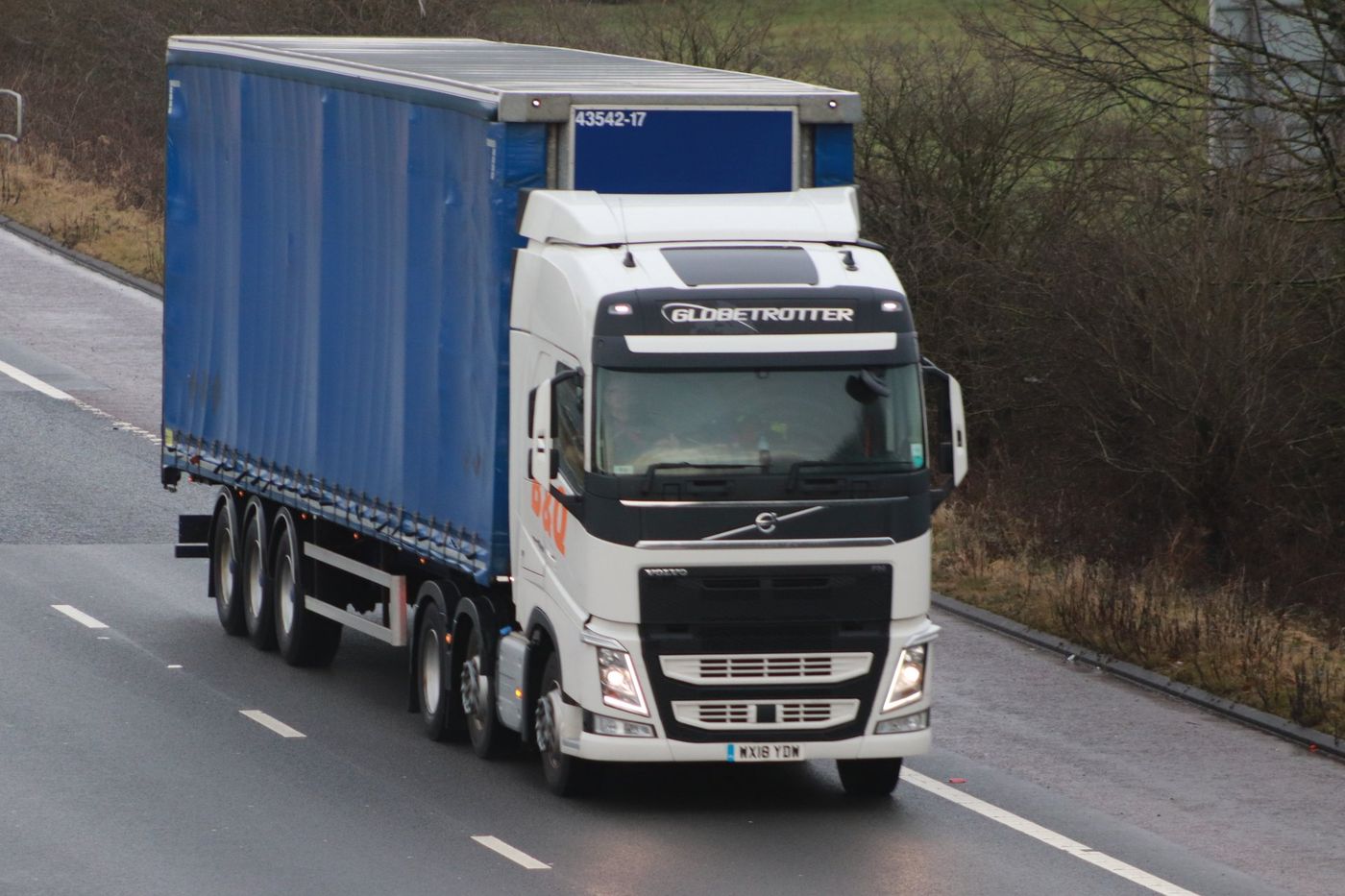
In Great Britain an HGV licence is one of four goods-vehicle categories, C1, C1E, C and CE, and GOV.UK’s route to one starts from a full car licence, continues with provisional entitlement applied for on forms D2 and D4, and runs through the Driver CPC part 1 theory test and the part 3a off-road and part 3b on-road driving tests; a driver whose main job is driving an HGV, bus or coach also needs the full Driver CPC, which adds the part 2 and part 4 tests. The minimum age is 18 for C1 and 21 for C, and DVLA lists conditions under which a C vehicle may be driven from 18, or from 17 in the armed forces.
This page follows the rules that DVLA and DVSA publish for Great Britain, as read on 28 September 2026; Northern Ireland is not covered. The European directive framework for the same four category names is set out in truck driving licences and is not the Great Britain rule. The licence that authorises an operator to run goods vehicles is a separate matter, covered in Goods vehicle operator licences in Great Britain.
The four lorry categories
GOV.UK’s page on driving licence categories defines the four by maximum authorised mass (MAM). INF52, the DVLA leaflet on large vehicles that can be driven on a car, bus or lorry licence, names C1 “Medium sized vehicles” and C “Large goods vehicles”; GOV.UK’s guide for drivers uses the term heavy goods vehicle (HGV).
| Category | What it covers |
|---|---|
| C1 | Vehicles between 3,500 and 7,500 kg maximum authorised mass (MAM), with a trailer up to 750 kg |
| C1E | C1 category vehicles with a trailer over 750 kg; the combined MAM of both cannot exceed 12,000 kg |
| C | Vehicles over 3,500 kg with a trailer up to 750 kg MAM |
| CE | Category C vehicles with a trailer over 750 kg |
INF52 adds a passenger limit to C1 and C: the vehicle is one designed and constructed for the carriage of no more than 8 passengers in addition to the driver. Vehicles designed for more passengers fall under the bus categories D1 and D, which are set out in bus driving licences. INF52 explains that all the weights it quotes are MAM, the total weight of the vehicle when laden (loaded); truck weight terms in general are set out in truck weights.
A car licence also carries a zero emission allowance. GOV.UK lists, for category B, 4,250 kg for electric or hydrogen vehicles, zero emission vehicles only. INF52 says a driver may drive a zero emission vehicle up to 4,250 kg MAM, that the allowance applies to vehicle types usually driven on a category B licence, cars, SUVs, vans and small trucks among them, and that a trailer may be towed providing the MAM of the vehicle and trailer combined does not exceed 7,000 kg; the MAM of the trailer must never exceed 3,500 kg.
Three other entitlements appear in INF52:
- A driver who passed the category B or B automatic test before 1 January 1997 already has C1, C1E (8.25 tonnes), D1 and D1E (not for hire or reward) shown on the licence, according to its Note 5.
- Since 1 January 1999 a category C1 licence is needed to drive a mobile crane that weighs between 3.5 tonnes and 7.5 tonnes, and a category C licence if the crane weighs more than 7.5 tonnes.
- Its list of “exempted” goods vehicles that a full car (category B) licence covers includes goods vehicles built before 1 January 1960, as long as they are not loaded and are not towing a loaded trailer, and industrial tractors with a weight of no more than 7,370 kg when loaded and designed to travel no faster than 20 mph.
Minimum ages
There is no single age for an HGV licence. GOV.UK’s guide lists being over 18 among the conditions for becoming an HGV, bus or coach driver and adds that there are some exceptions. INF52 gives the ages in a table, and regulation 9 of the Motor Vehicles (Driving Licences) Regulations 1999 (SI 1999/2864), which substitutes its own classes of vehicle and ages for those in the table in section 101(1) of the Road Traffic Act 1988, gives the conditions. legislation.gov.uk records no known outstanding effects on regulation 9.
| Category | INF52 minimum age | Other ages stated |
|---|---|---|
| C1 | 18 | — |
| C1E | no row | 18 for a C1+E combination whose MAM does not exceed 12 tonnes (regulation 9) |
| C | 21 | 18 in the four cases below (Note 2); 17 in the armed forces (Note 2, regulation 9) |
| CE | no row | 18 in the cases regulation 9 words as “category C or C+E” |
INF52 Note 2, attached to category C, says a driver can drive at 17 as a member of the armed forces, and at 18 if one of the following applies:
- the driver passed the driving test and the Driver CPC initial qualification;
- the driver is learning to drive or taking a driving test for this category or the Driver CPC initial qualification;
- the driver is taking a national vocational training course to get a Driver CPC initial qualification;
- the driver had the driving licence before 10 September 2009, in which case the Driver CPC periodic training must be taken within 5 years of that date.
Regulation 9 substitutes 18 for 21 for a motor vehicle of a class included in category C or C+E where the person driving has an initial qualification authorising them to drive vehicles of that class, or where one of three further conditions applies, each of which refers to the Vehicle Drivers (Certificates of Professional Competence) Regulations 2007. It also substitutes 18 for 21 for category C or C+E where the vehicle is being used by the fire service or for maintaining public order or is undergoing road tests for repair or maintenance purposes, and, as stated in the table, for a C1+E combination whose MAM does not exceed 12 tonnes. Its armed forces rule substitutes 17 for the ages of 18 and 21 for motor vehicles owned or operated by the Secretary of State for Defence and for motor vehicles driven by persons subject to the orders of a member of the armed forces of the Crown when used for naval, military or air force purposes. The regulation writes the combination categories as C+E and C1+E; the two are the same as CE and C1E on this page.
Getting provisional entitlement
Applying takes two forms: a D2 application form and a D4 medical examination report, which must be filled in by a doctor. The D4 can be completed by the driver’s GP, though an optician might need to fill in the section about eyesight, or by a private firm specialising in drivers’ medical exams. GOV.UK adds that the doctor, optician or private firm can charge. The category chosen on the D2 decides which provisional entitlements are granted:
| Category chosen on form D2 | Provisional entitlements granted |
|---|---|
| C1 | C1 |
| C or C1+E | C1, C1+E, C and C+E |
Both forms and the photocard driving licence go to DVLA, and GOV.UK says there is no application fee. It says the licence should arrive within 3 weeks of DVLA getting the application, and that it can take longer if health or personal details need to be checked. It also says an HGV or bus licence is lost automatically if the car licence is lost.
SI 2021/1251 was made on 10 November 2021 and came into force on 15 November 2021; its Explanatory Note says it amends the 1999 Regulations to remove some of the existing requirements for “staging” in the process of achieving an articulated heavy goods vehicle licence (category C+E), and that a person need only first hold a full licence authorising the driving of a class in category B before applying for provisional entitlement for C1+E, C+E, D1+E or D+E.
The medical and the Group 2 standards
INF4D, the DVLA notes to form D4, says the medical standards for drivers of Group 2 vehicles, meaning lorries, buses and minibuses, are higher than those for Group 1, car and motorcycle drivers. A D4 is needed when:
- it is the first application for a Group 2 lorry or bus licence;
- the driver applies to renew Group 2 entitlement at 45;
- the driver is 45 or over, when a D4 will be needed every 5 years until 65 and annually after that;
- the driver applies for a new Group 2 provisional entitlement and a D4 has not been submitted in the last 12 months;
- the driver is 70 and still needs C1 and D1 entitlement, when a D4 will be needed every 3 years.
INF4D lists other occasions too. The D4 is valid for a period of 4 months from the date the doctor and optician or optometrist signs and dates it. A driver of any licence type who develops a condition that could affect the ability to drive safely must tell DVLA immediately, according to the same notes.
INF4D sets the standards under headings that include vision assessment, neurological disorders, diabetes mellitus, cardiac, psychiatric illness, substance misuse, sleep disorders and other medical conditions. Three of them are given here as INF4D states them:
- Vision. All drivers must be able to read a car number plate from 20 metres and have visual acuity of 6/12 (decimal Snellen equivalent 0.5) or better. Applicants for Group 2 entitlements must also have, on the 6 metre Snellen chart, a visual acuity of at least 6/7.5 (decimal Snellen equivalent 0.8) in the better eye and at least 6/60 (decimal Snellen equivalent 0.1) in the worse eye, with or without glasses or contact lenses. If glasses are worn for driving, the prescription of either lens must not be of a corrective power greater than plus 8 (+8) dioptres in any meridian.
- Visual field. The horizontal visual field should be at least 160 degrees; the extension should be at least 70 degrees left and right and 30 degrees up and down; and no defect should be present within a radius of the central 30 degrees.
- Epilepsy. A driver diagnosed with epilepsy will need to remain free of seizures without taking anti-seizure medication for 10 years.
For insulin-treated diabetes, INF4D says a Group 2 licence may be applied for by a driver who can meet the strict criteria for controlling and monitoring diabetes, and that the driver will be required to undertake an annual assessment by a hospital consultant specialising in the treatment of diabetes.
The tests for the licence: theory, off-road and on-road
GOV.UK’s guide names five tests that make up the full Driver CPC: part 1 theory, part 2 case studies, part 3a off-road exercises, part 3b on-road driving and part 4 practical demonstration. For a driver who does not need the full Driver CPC, its page on that case says to pass the part 1 (theory), part 3a (off-road exercises) and part 3b (on-road driving) tests. Those three are described here, and parts 2 and 4 in the next section.
Part 1: theory
The theory test has a multiple-choice part and a hazard perception part.
- Multiple choice. 1 hour and 55 minutes to answer 100 multiple-choice questions; the pass mark is 85 out of 100 questions. The questions are based on The Highway Code, Know your traffic signs, and The Official DVSA Guide to Driving Goods Vehicles or The Official DVSA Guide to Driving Buses and Coaches.
- Hazard perception. 19 video clips, each containing at least one developing hazard, though one of the clips features 2. Up to 5 points can be scored for each developing hazard, and the pass mark is 67 out of 100.
Both parts must be passed within 2 years of each other to get the theory test certificate, which is valid for 2 years from when the first part was passed. A driver who fails cannot take a new theory test for another 3 clear working days. The part 3a and part 3b driving tests must be passed within 2 years, otherwise the part 1 theory test has to be passed again.
Part 3a: off-road exercises
The part 1 theory test must be passed before the part 3a test can be booked. The test lasts up to 30 minutes and includes an “S” shaped reverse into a bay, and, for a test with a trailer, showing the uncoupling and recoupling procedure. GOV.UK says the test can be booked with either an approved private test provider or the Driver and Vehicle Standards Agency (DVSA). The part 3b test must be passed within 6 months of getting the part 3a certificate.
Part 3b: on-road driving
The part 3a test must be passed before the part 3b test can be taken. It has 1 hour of practical road driving; there will also be 10 minutes of independent driving, designed to test the ability to drive safely while making independent decisions. A candidate passes with 12 or fewer driving faults and no serious or dangerous faults.
The test vehicle
DVSA sets minimum specifications for the lorry used in each test. The page was last updated on 2 September 2026.
| Category | Minimum test vehicle |
|---|---|
| C1 | MAM of at least 4 tonnes; at least 5 metres long; a closed box cargo compartment at least as wide and as high as the cab |
| C1E | A drawbar combination of a category C1 vehicle towing a trailer of at least 2 tonnes MAM with a combined length of at least 8 metres; or a medium-sized articulated lorry with a MAM of at least 6 tonnes with a combined length of at least 8 metres |
| C | MAM of at least 12 tonnes; at least 8 metres long; at least 2.4 metres wide |
| CE | A drawbar combination of a category C vehicle and trailer with a MAM of at least 20 tonnes and a length of at least 7.5 metres from coupling eye to extreme rear and a combined length of at least 14 metres; or an articulated lorry with a MAM of at least 20 tonnes, a minimum length of 14 metres and maximum length of 16.5 metres |
Adding a heavier trailer
GOV.UK’s guide describes an upgrade route for a licence in the same category, for example going from a C to a C+E: the driver books and passes the part 3a and part 3b tests. It says there is no need to apply for a new provisional licence or to take the part 1 test again before those two tests, and that adding a different category means going through the usual qualification process for that category.
Where the Driver CPC comes in
GOV.UK says the full Driver CPC is required of a driver who drives an HGV, bus or coach as the main part of the job, and that a qualified driver takes 35 hours of Driver CPC training every 5 years to stay qualified. The part 2 test is 7 case studies worked through on a computer, lasting 1 hour and 15 minutes, with a pass mark of 40 out of 50; in the part 4 test a candidate has to score at least 15 out of 20 in each topic area and at least 80 out of 100 overall. After qualifying, a driver is sent a Driver Certificate of Professional Competence (CPC) card. A driver taking an approved National Vocational Training (NVT) course can drive professionally for up to 12 months without taking the part 2 and part 4 tests. The full Driver CPC is not needed if the vehicle is limited to 28 mph or is being used by services like the armed forces or the police. The European directive on the certificate is set out in Driver CPC explained.
Renewal: every five years, then every year from 65
GOV.UK says a bus or HGV licence must be renewed every 5 years, and every year when the driver reaches 65. Its renewal page names form D47PU and a D2 pack from a Post Office for a driver under 45, and, from 45, form D47P and a medical examination report, form D4. INF4D’s list of the occasions on which a D4 is needed names renewal at 45; the 5-year and annual pattern and the 3-year pattern at 70 are set out in the medical section above. GOV.UK says it is free to renew or change a lorry or bus licence, and that a driver can keep driving while the licence is being renewed if all of a set of conditions are met; those conditions are listed on the renewal page and are not repeated here.
Quick answers
- How do you get an HGV licence in Great Britain?
- Start from a full car licence, then apply to DVLA for provisional entitlement with a D2 application form and a D4 medical examination report, which must be filled in by a doctor, and pass the tests. GOV.UK tells a driver who does not need the full Driver CPC to pass the part 1 (theory), part 3a (off-road exercises) and part 3b (on-road driving) tests; a driver who drives an HGV, bus or coach as the main part of the job must have the full Driver CPC, which is five tests and adds part 2 (case studies) and part 4 (practical demonstration).
- What is the minimum age for an HGV licence?
- 18 for C1 and 21 for C in DVLA's INF52 table, and there is no single age for the whole group. INF52 Note 2 lets a C vehicle be driven from 18 in four listed cases, including having passed the driving test and the Driver CPC initial qualification, and from 17 for a member of the armed forces. Regulation 9 of SI 1999/2864 gives 18 for category C or C+E in named cases, 18 for a C1+E combination whose maximum authorised mass does not exceed 12 tonnes, and 17 for certain armed forces vehicles.
- What is the difference between C1, C and CE?
- The weight of the vehicle and of the trailer. C1 covers vehicles between 3,500 and 7,500 kg maximum authorised mass with a trailer up to 750 kg; C covers vehicles over 3,500 kg with a trailer up to 750 kg; CE covers category C vehicles with a trailer over 750 kg; C1E covers C1 vehicles with a trailer over 750 kg, the combined maximum authorised mass of both not exceeding 12,000 kg. INF52 adds that the C1 and C vehicles are designed and constructed for the carriage of no more than 8 passengers in addition to the driver.
- Can you go straight to a CE (class 1) licence?
- A full category B licence is the only licence a person must first hold to apply for provisional entitlement for category C+E, since SI 2021/1251 came into force on 15 November 2021. On form D2, choosing C or C1+E gives provisional entitlements C1, C1+E, C and C+E. That concerns the provisional entitlement; the tests for the full licence are set out on this page.
- Do you need a medical for an HGV licence, and how often?
- Yes: the application for provisional entitlement takes a D4 medical examination report filled in by a doctor. INF4D says a D4 is needed at a first application for a Group 2 lorry or bus licence; from 45 a D4 will be needed every 5 years until 65, when one will be needed annually; and at 70, for a driver who still needs C1 and D1 entitlement, every 3 years. A D4 is valid for 4 months from the date the doctor and optician or optometrist signs and dates it.
- How often do you renew an HGV licence?
- Every 5 years, and every year when you reach 65, according to GOV.UK. Under 45 the renewal page names form D47PU and a D2 pack from a Post Office; from 45 it names form D47P and a medical examination report, form D4. GOV.UK says it is free to renew or change a lorry or bus licence.
Sources
- Become a qualified heavy goods vehicle (HGV) or bus driver — Getting qualified; Applying for a provisional HGV or bus licence; Driver CPC part 1, 2, 3a, 3b and 4 tests; If driving is not the main part of your job; Upgrade your licence to tow heavier trailers — GOV.UK (DVLA and DVSA)
- Driving licence categories — GOV.UK (DVLA)
- INF52: Large vehicles you can drive using your car, bus or lorry licence (5/25) — Driver and Vehicle Licensing Agency (DVLA)
- INF4D: D4 medical examination report for a Group 2, lorry or bus licence — information and useful notes (4/26) — Driver and Vehicle Licensing Agency (DVLA)
- Renew or change a lorry or bus licence — GOV.UK (DVLA)
- Rules for lorries used for driving tests — GOV.UK (DVSA)
- The Motor Vehicles (Driving Licences) Regulations 1999 (SI 1999/2864) — regulation 9, minimum ages — legislation.gov.uk (The National Archives)
- The Motor Vehicles (Driving Licences) (Amendment) (No. 4) Regulations 2021 (SI 2021/1251) — Explanatory Note — legislation.gov.uk (The National Archives)