Goods vehicle operator licences in Great Britain: types, money and the transport manager
Who needs a GB goods vehicle operator licence, what restricted, standard national and standard international allow, the financial standing in pounds and the transport manager rules.
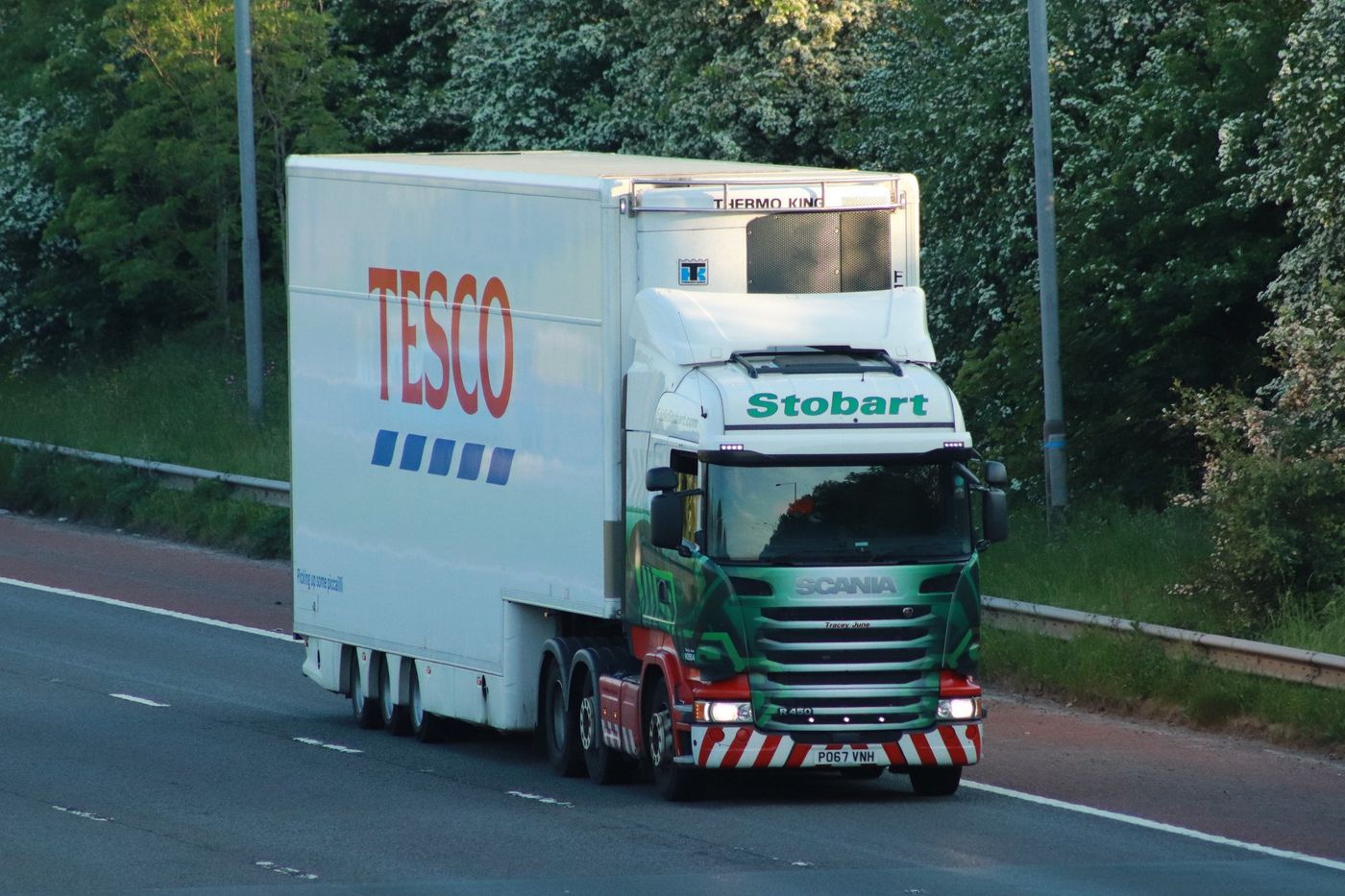
A goods vehicle operator licence is the authorisation that section 2(1) of the Goods Vehicles (Licensing of Operators) Act 1995 requires before anyone uses a goods vehicle on a road for the carriage of goods for hire or reward, or for or in connection with a trade or business carried on by that person. The Act takes small goods vehicles below its weight thresholds out of the requirement and provides for two kinds of licence, standard and restricted, which GOV.UK presents as three types: standard national, standard international and restricted.
The traffic commissioners are the regulators of the road transport industry in Great Britain, and the guide they publish says they are appointed by the Secretary of State for Transport but act independently from Government and the enforcement agencies, for example the Driver and Vehicle Standards Agency. GOV.UK states that the goods vehicle operator licensing scheme is administered by the Driver and Vehicle Standards Agency (DVSA) on behalf of the traffic commissioners. The guide names as its main legislation the 1995 Act, the Goods Vehicles (Licensing of Operators) Regulations 1995 and the Goods Vehicles (Licensing of Operators) (Fees) Regulations 1995. It is concerned with goods vehicles only and points to a separate PSV Operator Licensing guide for Public Service Vehicles, and GOV.UK says the rules are different if you are in Northern Ireland. The EU framework is set out in Road transport operator licence: the four EU conditions.
Which vehicles and which work need a licence
Section 2(1) names two uses that need a licence: carriage for hire or reward, and carriage for or in connection with any trade or business carried on by the user. Using a vehicle in contravention of the section is an offence under section 2(5), liable on summary conviction to a fine not exceeding level 5 on the standard scale. For this purpose the guide says “goods” means burden of any description: a tractor unit conveying empty trailers to and from the testing station is regarded as carrying goods, and in that case the goods are the trailers.
The Act does not draw one weight line. It measures hire-or-reward work and work for or in connection with the user’s own trade or business differently, and the sources use different weight terms, each kept here as its source words it: maximum laden weight in paragraphs 1A and 1B, relevant plated weight in paragraph 2, gross plated weight on the GOV.UK overview page, and maximum authorised mass on the GOV.UK van page. The terms themselves are explained in truck weights: GVW and GCW.
| Use | Provision | Condition as the Act words it |
|---|---|---|
| Carriage for hire or reward | Section 2(1B), Schedule 1 paragraph 1A | The vehicle, or a vehicle combination including the vehicle, has a maximum laden weight not exceeding 2.5 tonnes. |
| Carriage for hire or reward | Section 2(1B), Schedule 1 paragraph 1B | The vehicle, or a vehicle combination including the vehicle, has a maximum laden weight not exceeding 3.5 tonnes and is used only for national transport operations. |
| For or in connection with a trade or business | Section 2(1C), Schedule 1 paragraph 2 | The vehicle does not form part of a vehicle combination and has a relevant plated weight not exceeding 3.5 tonnes or, if it does not have a relevant plated weight, an unladen weight not exceeding 1525 kilograms. |
| For or in connection with a trade or business | Section 2(1C), Schedule 1 paragraph 3 | The vehicle forms part of a vehicle combination, other than an articulated combination, and, in a case where all the vehicles comprised in it, or all of those vehicles except any small trailer, have relevant plated weights, the aggregate of the relevant plated weights of those vehicles, exclusive of any small trailer, does not exceed 3.5 tonnes (paragraph 3(1)(a)); a small trailer is a trailer having an unladen weight not exceeding 1020 kilograms (paragraph 3(2)). |
Section 2(1C) also refers to paragraph 4 of Schedule 1, which this page does not cover. Legislation.gov.uk records the insertion of the words in section 2(1B) and the substitution of the word in Schedule 1 paragraph 1A as taking effect at 11.00 p.m. on 20 May 2022, under S.I. 2022/293.
GOV.UK’s overview words the thresholds in its own terms: “a gross plated weight (the maximum weight that the vehicle can have at any one time) of over 3,500 kilograms (kg)”, and “an unladen weight of more than 1,525 kg (where there is no plated weight)”. It adds that you do not need an operator’s licence if your trailer’s unladen weight is less than 1,020 kg and you only carry your own goods.
For vans and cars with trailers used abroad, the GOV.UK page Transport goods in Europe in vans or car and trailers says a standard international goods vehicle operator licence is needed to transport goods for hire or reward in the EU, Iceland, Liechtenstein, Norway and Switzerland. It applies that to vans with a maximum authorised mass (MAM) over 2,500kg (2.5 tonnes) and up to and including 3,500kg (3.5 tonnes), to vans towing a trailer with a gross train weight (GTW) over 2.5 tonnes and up to and including 3.5 tonnes, and to cars towing a trailer with a GTW over 2.5 tonnes and up to and including 3.5 tonnes. The same page lists two cases in which no goods vehicle operator licence is needed: you only use your vehicles in the UK, or you are transporting goods not for “hire or reward”. The Act itself names no countries: paragraph 1B speaks only of national transport operations, and the country list is GOV.UK’s.
Restricted, standard national, standard international
Section 3(1) says an operator’s licence may be either a standard licence or a restricted licence. Section 3(5) adds that a standard licence may authorise a goods vehicle to be used for the carriage of goods on both national and international transport operations, or on national transport operations only. GOV.UK says there are 3 different types, and they map onto the Act as follows.
| GOV.UK type | In the Act | What it allows, in GOV.UK’s words |
|---|---|---|
| Standard national | Standard licence for national transport operations only (section 3(5)(b)) | “your own goods in the UK and internationally”; “other people’s goods in the UK”; loaded trailers to or from ports within the UK as part of an international journey, “as long as your vehicles do not leave the country” |
| Standard international | Standard licence for national and international transport operations (section 3(5)(a)) | “carry your own goods, and other people’s goods, both in the UK and on international journeys” |
| Restricted | Restricted licence (section 3(3)) | “carry your own goods, but not other people’s goods” |
Section 3(3) defines a restricted licence as one under which a goods vehicle may be used on a road for the carriage of goods for or in connection with any trade or business carried on by the holder of the licence, other than that of carrying goods for hire or reward. The guide says a restricted licence only usually allows you to carry your own goods within the United Kingdom and the EU. Section 3(4) lets a company use a goods vehicle for the carriage of goods for hire or reward under a restricted licence instead of a standard licence if, but only if, the goods concerned are the property of a company which is a subsidiary of the first company, a holding company for the first company, or a subsidiary of a company which is a holding company both for that subsidiary and for the first company.
Except as provided in section 3(4), section 3(6) makes it an offence, liable on summary conviction to a fine not exceeding £500, to use a goods vehicle under a restricted licence for carrying goods for hire or reward. Section 3(7) sets the same fine for using a goods vehicle for carrying goods for hire or reward on international transport operations under a standard licence which covers national transport operations only.
The guide is not a legal document, as it says itself, and in its section on the correct licence type it gives three questions and says that if the answers are yes, “it is likely to suggest that the operation is likely to require a standard licence”:
- is the transport of the goods a predominant part of the service provided?
- does the operator hold, and rely on when carrying those goods, a type of insurance policy that covers carriage of goods for reward?
- does the carrying result in payment, direct or indirect, which benefits the owner or user of the vehicle?
The guide also sorts licences by vehicle class. A licence authorising the use of vehicles or combinations over 3.5 tonnes is called a heavy goods vehicle licence, and that also applies to licences that authorise a mixture of heavy goods vehicles and light goods vehicles. A licence that only authorises vehicles 3.5 tonnes or less is called a light goods vehicle licence. Holders of light goods vehicle licences are not required to specify an operating centre.
On who holds the licence, the guide says it should be applied for in the name of the person, company or partnership that is the “user” of the vehicle: you are the driver and owner of the vehicle, or it is in your lawful possession under an agreement for hire, hire purchase or loan, or the driver is your employee or agent. If a holding company is applying, it can include the vehicles of any named subsidiary of which it owns more than 50%.
Standard international licence holders can also obtain a UK Licence for the Community. DVSA says you need one if you make journeys for hire or reward within the EU, Liechtenstein and Switzerland, and that you must have a standard international vehicle operator licence for Great Britain, or one for Northern Ireland, to apply. The page says UK Licences for the Community can be used in the 27 EU countries and 3 other countries; its list of countries names Liechtenstein, Switzerland and the UK, and Norway and Iceland are not on it. Its change history records, for 18 July 2024, that a bilateral road haulage permit is now needed to travel to or through Norway instead of the UK Licence for the Community. The licences are valid until the 5-yearly renewal date of the operator’s licence, there is no fee for them if you have a standard international vehicle operator licence, and you can get a certified copy for each of the vehicles authorised by the standard international licence; the copies are not specific to any one vehicle. The EU-side rules on cabotage are set out in cabotage and posted drivers.
What every applicant has to show, and what a standard licence adds
Section 13C sets requirements for both kinds of licence. The operator must have satisfactory arrangements for securing compliance with Part 6 of the Transport Act 1968 (drivers’ hours), which the site covers in driving time and rest rules, and for securing that vehicles used under the licence are not overloaded. It must also have satisfactory facilities and arrangements for maintaining the vehicles used under the licence in a fit and serviceable condition; the EU inspection and roadside-check framework is described in HGV roadworthiness and roadside checks. Under section 13C(5), a heavy goods vehicle licence must specify at least one place in the traffic area concerned as an operating centre of the licence-holder.
For a restricted licence, section 13B adds that the applicant is not unfit to hold an operator’s licence by reason of the activities and convictions the section refers to.
For a standard licence, section 13A(2) requires that the applicant has an effective and stable establishment in Great Britain (as determined in accordance with paragraph A1 of Schedule 3), is of good repute (as determined in accordance with paragraphs 1 to 5 of Schedule 3), and has appropriate financial standing (as determined in accordance with paragraph 6A of Schedule 3). Section 13A(3) adds professional competence, met through designated individuals, and section 13A(5) defines “transport manager” as an individual designated under subsection (3)(a)(ii) or (b).
Paragraph A1(2) of Schedule 3 sets out six requirements, (a) to (f), for the establishment condition; two of them, as the Act words them, are:
- premises in Great Britain at which the person is able to access, in electronic or any other form, the originals of the person’s core business documents, and carries out effectively and continuously, with appropriate equipment and facilities, the administration of the person’s transport service;
- if required under the Value Added Tax Act 1994 to charge value added tax on the supply of the person’s transport service, a VAT registration number.
The guide adds that a PO Box or third-party address cannot be used as a correspondence address.
On good repute the guide says the term refers to the conduct and fitness of the applicant or licence holder, and that this includes relevant convictions and fixed penalty notices that the operator or any of their employees have had in the last five years. Under the heading “Ability to obey all the rules” it lists speed limits; driver obligations; driver licensing/driver CPC; drivers’ hours rules and the Working Time Directive; taxation and insurance of vehicles; and authorised weights. The driver CPC is explained in driver CPC explained and, for Great Britain, in Driver CPC in Great Britain, and is a different certificate from the Transport Manager CPC discussed below. The lorry driving licence itself is covered in HGV licences in Great Britain.
Financial standing, in pounds
Paragraph 6A(1) of Schedule 3 says an operator has appropriate financial standing if it is able to demonstrate that it has at its disposal at all times capital and reserves of the amounts in the table. Paragraph 6A was inserted with effect from 17 March 2022. For restricted licences the amounts are not in the Act: Statutory document 2 says the levels for restricted licences are set after consultation with the traffic commissioners.
| Licence | First vehicle | Each additional vehicle |
|---|---|---|
| Standard, heavy goods vehicle licence | £8,000 for the first heavy goods vehicle | £4,500 for each additional heavy goods vehicle; £800 for each light goods vehicle (if any) |
| Standard, light goods vehicle licence | £1,600 for the first light goods vehicle | £800 for each additional light goods vehicle |
| Restricted | £3,100 | £1,700 |
Statutory document 2 says the standard amounts are now fixed in legislation and will not be subject to alteration without a further change to the legislation. For multiple licence holders or applicants it says the sum required for the first vehicle should be applied only once across the licences.
Paragraph 6A(2) allows the operator to demonstrate the amounts on the basis of its annual accounts if certified by a qualified auditor, or by producing other evidence to the satisfaction of a traffic commissioner that the operator has, in its own name, the necessary capital and reserves, such as a bank guarantee, a document issued by a financial institution establishing access to credit, or any other binding document. Statutory document 2 says original statements must be supplied for the past 28 days, the last balance of which must not be more than two months from the date of receipt of the application. The average balance over that period is calculated and added to any overdraft or credit facility demonstrated by a formal written commitment by the bank, and it adds that an offer of such a facility will not suffice. For existing operators it says the traffic commissioners will normally ask for evidence covering a period of three months and consider the average figure over the whole period.
The guide states that financial standing is not a fee that must be paid for a licence: it is resources that must be available for the duration of the licence.
Statutory document 2, section 2.5, sets the maximum allowable periods of grace when a requirement stops being met, and says the Senior Traffic Commissioner has set a starting point of three months period of grace. If a period of grace expires without the mandatory requirement being met, the traffic commissioner is obliged to revoke the operator’s licence.
| Requirement | Maximum allowable period of grace |
|---|---|
| Departure of a transport manager | Six months |
| Death or physical incapacity of a transport manager | Six months, rising to nine months |
| Effective and stable establishment | Six months |
| Financial standing | Six months to demonstrate that the requirement will be met on a permanent basis |
The transport manager
Section 13A(3) ties the professional competence requirement of a standard licence to designated individuals, who under section 13A(5) are the transport managers; the guide says there is no requirement to nominate a transport manager on a restricted licence. Paragraph 14A(1) of Schedule 3 says a transport manager must be a resident of the United Kingdom, of good repute, professionally competent, and able to manage effectively and continuously the operator’s transport service.
For an individual designated under section 13A(3)(a)(ii), where the applicant is an individual who is professionally competent, paragraph 14A(2) lists the connections to the operator: the operator itself, an employee, director, owner or shareholder of the operator, or any other individual a traffic commissioner is satisfied has a genuine link to the operator. For an individual designated under section 13A(3)(b), where the applicant is not an individual or is an individual who is not professionally competent, paragraph 14A(3) requires among other things that the individual be a party to a transport management contract linking the individual to the operator and, subject to sub-paragraph (4), not be at the same time designated in relation to any other operator’s licence or Northern Ireland-issued licence. Paragraph 14A(4) lets a traffic commissioner, if the commissioner considers it appropriate, allow otherwise, provided the individual is designated in relation to no more than four operators’ licences and Northern Ireland-issued licences authorising the use of a combined total fleet of no more than 50 motor vehicles or vehicle combinations. GOV.UK words the limit for a freelance transport manager as up to 4 different vehicle operators at a time and a maximum total of 50 vehicles. Paragraph 14A(5) lists the contract’s tasks as vehicle maintenance, vehicle management, verification of contracts and documents relating to the transport service, basic accounting, the assignment of drivers and vehicles to transport services, and the verification of safety procedures.
GOV.UK says the qualification is the Transport Manager Certificate of Professional Competence (CPC) and that a driving licence is not needed. The exam has 2 parts, multiple-choice questions and case study questions. The page names these organisations: Chartered Institute of Logistics and Transport (CILT); City & Guilds; Innovate Awarding; National Logistics Training Consortium (NLTC); NOCN Group; and Skills and Education Group (SEG) Awards. It adds that the traffic commissioner may ask how a manager has kept their knowledge up to date if the qualification is more than 10 years old, and that a manager who stops working for a vehicle operator needs to tell the traffic commissioner within 28 days. The guide records that since December 2011 the national Transport Manager CPC examination has been discontinued, that all examinations are now for the international Transport Manager CPC, and that existing national CPCs remain valid but national CPCs issued before 2011 cannot be used on international licences.
The Traffic Commissioners’ annual report 2024-25 says operators of light goods vehicles who relied upon a transport manager with Acquired Rights were required to appoint a suitably qualified transport manager by the time those rights expired in law on 20 May 2025. Under paragraph 16(2) of Schedule 3, if the commissioner determines that the person is no longer of good repute or, as the case may be, professionally competent, the commissioner must order the person to be disqualified, either indefinitely or for such period as the commissioner thinks fit, from acting as a transport manager.
GOV.UK says there are recommended working hours for all transport managers, set by the traffic commissioner and based on how many vehicles the manager will be managing, and that longer hours may be needed if the vehicles are pulling trailers.
| Vehicles managed | Recommended hours per week |
|---|---|
| 2 vehicles or less | 2 to 4 hours |
| 3 to 5 vehicles | 4 to 8 hours |
| 6 to 10 vehicles | 8 to 12 hours |
| 11 to 14 vehicles | 12 to 20 hours |
| 15 to 29 vehicles | 20 to 30 hours |
| 30 to 50 vehicles | 30 hours to full time |
| More than 50 vehicles | Full time and another staff member needed |
Operating centres, traffic areas and the advertisement
GOV.UK defines an operating centre as where your vehicles are normally kept when not in use. It says an application has to be advertised in a local newspaper with details of the proposed operating centre, at least once in the period from 21 days before to 21 days after the application is made, to give people the chance to object. The guide adds that there is no requirement to advertise if only light goods vehicles are operated, and that an operator of both heavy and light goods vehicles need advertise only in respect of the heavy goods vehicles. Its example: an application received on 1 June must be advertised between 11 May and 22 June. Details are also published in Applications and Decisions, which is sent to various organisations, including local authorities, the police and industry associations, all of which have a statutory right to object to the application within 21 days of the publication.
In deciding environmental suitability, the guide says, a traffic commissioner must, by law, take into account seven factors:
- the effect (or potential harm) that granting an application would have on the nature and the use of any other land in the vicinity of the operating centre;
- any planning permission (or planning application) relating to the operating centre or the land in its vicinity (if the land has not previously been used as an operating centre);
- the number, type and size of the authorised vehicles that will use the operating centre;
- the parking arrangements for the authorised vehicles that will use the operating centre;
- the effect that the nature and times of these activities may have on residents living in the vicinity of that operating centre;
- the nature and times of use of the equipment at the operating centre;
- how many vehicles would be entering and leaving the operating centre, and how often.
The guide states that authorisation under an operator’s licence does not convey any approval under planning law, and likewise that approval under planning law is not a pre-condition for the granting of an operator’s licence. After an operating centre is specified on a licence, anyone can complain about its suitability at any time, and a traffic commissioner then has the opportunity to review those centres at five-year intervals.
GOV.UK says there are 8 traffic areas in Great Britain, with a traffic commissioner responsible for each, and that you need a goods vehicle operator’s licence for each traffic area where you have an operating centre. Annex 2 of the guide names them as North Eastern, North Western, Eastern, Ardal Traffig Cymru/Welsh, West Midland, Western, South Eastern and Metropolitan, and Scottish, and says its list acts as a guide only.
Fees, the five-year continuation and keeping the licence current
The Goods Vehicles (Licensing of Operators) (Fees) Regulations 1995 (legislation.gov.uk version start 1 October 2023) and the GOV.UK page Being a goods vehicle operator (updated 29 January 2025) list the same figures, read on 28 September 2026. No later change to them was found in the sources read.
| Item | Fee | When, as the Regulations word it |
|---|---|---|
| Application for a licence | £257 | with the application |
| Issue of a licence | £401 | within the period of 15 working days beginning with the date of grant of the application for a licence |
| Continuation of a licence after 5 years | £401 | before the end of the month which precedes the date of expiry of a period of 5 years, beginning with the date of either the issuing of the licence or the most recent 5 year anniversary of that date, whichever is the later |
| Interim licence under section 24(1) or interim direction under section 25(1), other than in the two upgrade cases described below | £68 | within the period of 15 working days beginning with the date of decision to grant the request for an interim licence or interim direction |
| Major change to a licence (GOV.UK’s wording) | £257 | the Regulations set £257 with an application for the variation of a licence |
The Regulations carve two upgrades out of the £257 application fee and out of the £68 interim fee: a variation from a restricted licence to a standard licence, and a variation of a standard licence which covers national transport operations only to a standard licence which covers both international and national transport operations. For a request to upgrade the licence type, the guide says that if the changes requested are granted, no fee is charged. The GOV.UK van page says a £257 fee is payable to make a “major variation” if you need to increase the vehicle limit on your licence.
The guide says a licence remains in force unless the holder operates outside the terms of the licence and a traffic commissioner takes regulatory action, or surrenders it, or fails to pay the required fees in time to continue the licence. Every five years it must be continued through payment of a fee and confirming details of the operation to the traffic commissioner. GOV.UK puts it as: the licence continues to be valid as long as you pay your continuation fee every 5 years and operate within the terms of your licence.
On timing, the guide says that in straightforward cases a licence is usually issued within nine weeks, but it can take longer. GOV.UK says you will usually get a decision on your application within 7 weeks. The Traffic Commissioners’ annual report 2024-25 gives a target of 35 days and a performance of 31 days for the average processing time to determine applications for goods vehicle operator licences (or to provide interim authority) where a PI or Preliminary Hearing is not held. The guide states that it is illegal to operate a vehicle before a licence, or interim licence, is issued, and that an operator who does so could be liable to prosecution and the vehicle could be impounded.
A licence authorises the holder to use a maximum number of vehicles and, if applicable, trailers. The guide defines the margin as the number of vehicles authorised minus the number of vehicles in possession: its example is a licence specifying 10 motor vehicles and 10 trailers with six of each specified, giving a margin of four motor vehicles and four trailers. Additional vehicles are specified on a licence by recording their registration number on the vehicle operator licence system, which the guide says must be done immediately if there is no margin, or within one month of the vehicle coming into possession if there is a margin. Light goods vehicles operated internationally for hire or reward must also be included within the licence authorisation limits.
The guide says an identity disc for each specified vehicle shows the licence type, the licence holder’s name and number, the vehicle registration mark and the date the disc expires, and that it is displayed on the near side and near the lower edge of the windscreen with the front side facing forwards on vehicles fitted with a front windscreen. Licence holders have an obligation to advise a traffic commissioner of relevant changes that affect the operator’s licence within 28 days. Licences are not transferable, so it is against the law to operate as a new or different entity without informing a traffic commissioner, and a new licence for the new entity must be obtained before operating.
GOV.UK says the operator keeps records of all safety inspections and maintenance that the operator or its maintenance contractor do for a minimum of 15 months, must make sure drivers carry out a “walkaround check” before driving a vehicle for the first time each day, and remains responsible for the condition of its vehicles and trailers even if someone else maintains them.
The traffic commissioners and what they can do
Administrative support to the traffic commissioners is provided by staff based in the Office of the Traffic Commissioner, in the Licensing Team in Leeds or in the Compliance Team, which is based in eight regional locations. According to the guide, a traffic commissioner can:
- refuse to grant a licence;
- refuse to vary an existing licence;
- attach conditions to a licence;
- grant a licence allowing fewer vehicles than the number applied for;
- reduce the authority of a licence;
- suspend an existing licence;
- revoke a licence;
- disqualify an individual or a company from having a licence;
- disqualify transport managers.
A licence holder, applicant or transport manager who is dissatisfied with a traffic commissioner’s decision can appeal to the Administrative Appeals Chamber of the Upper Tribunal. The notice of appeal must be received within one month of the date on which notice of the decision was sent to the appellant. The guide adds that there is no right of appeal to the tribunal for individuals who have made representations against an application on environmental grounds.
For the year ending 31 March 2025 the Traffic Commissioners’ annual report gives 66,222 valid goods vehicle operator licences and 376,044 goods vehicles authorised. Those are counts of licences and of vehicles authorised on them, not a count of trucks in use in Great Britain, and the report’s statistical note says that from the 2022-23 annual report the figures include Standard International licences issued to operators of Light Goods Vehicles.
Exemptions
Schedule 3 to the Goods Vehicles (Licensing of Operators) Regulations 1995 lists classes of vehicles for which a licence is not required, and the guide says the full list of exemptions can be found at its Annex 3. This page quotes a selection. The guide says these exemptions cover national journeys only, and that any use of a vehicle which relies on an exemption must fall exclusively within that exemption: any operation outside an exemption requires an operator’s licence no matter how short the period.
| Class | Wording |
|---|---|
| Between private premises | A vehicle used on a road only in passing from private premises to other private premises in the immediate neighbourhood belonging (except in the case of a vehicle so used only in connection with excavation or demolition) to the same person, provided that the distance travelled on a road by any such vehicle does not exceed in the aggregate 9.654 kilometres, (6 miles), in any one week. |
| Goods vehicle first used before 1 January 1977 | A goods vehicle first used before 1 January 1977 which has an unladen weight not exceeding 1525 kilograms and for which the maximum gross weight, as shown on a plate affixed to the vehicle by virtue of regulation 66 of the Motor Vehicles (Construction and Use) Regulations 1986 or any provision which that regulation replaced, exceeds 3500 kilograms but does not exceed 3556.21 kilograms (3½ tons). |
| Alternative fuel | A vehicle fuelled entirely by alternative fuel, with a maximum laden weight not exceeding 4.25 tonnes, currently used in Great Britain for the carriage of goods, and which has not been so used outside Great Britain. |
| Electrically propelled vehicle | An electrically propelled vehicle first registered before 1st March 2015. |
| Dual-purpose vehicle | A dual-purpose vehicle and any trailer drawn by it. |
| Funerals | A vehicle which is being used for funerals. |
| Trade licence | A vehicle which is being used under a trade licence. |
| Passenger-carrying motor vehicle | A motor vehicle constructed or adapted primarily for the carriage of passengers and their effects, and any trailer drawn by it, while being so used. |
| Recovery vehicle | A recovery vehicle. |
| Snow and ice | A vehicle which is being used for snow clearing, or for the distribution of grit, salt or other materials on frosted, icebound or snow-covered roads or for going to or from the place where it is to be used for the said purposes or for any other purpose directly connected with those purposes. |
Regulation 3 defines “alternative fuel” as one or more of electricity; hydrogen; natural gas, including biomethane, in gaseous form and liquefied form; and liquefied petroleum gas. Legislation.gov.uk records paragraph 31 as inserted with effect from 1 September 2018, with words in paragraph 31(b) substituted with effect from 17 March 2022; Annex 3 of the guide also gives a maximum laden weight not exceeding 4.25 tonnes. On recovery vehicles the guide says the returning of a vehicle to a customer after repair does not constitute the transportation of a disabled vehicle, and that a standard operator’s licence is required for this.
GOV.UK lists vehicles that are never exempt: mobile exhibition vehicles, catering vehicles, mobile shops, mobile medical screening vehicles, and vehicles with fixed equipment carrying goods not strictly for use in connection with that equipment, or towing a trailer that is carrying goods.
Quick answers
- Do I need an operator licence for a 3.5 tonne van?
- Not in every case, because the Goods Vehicles (Licensing of Operators) Act 1995 uses different weight measures for different work. For carriage for hire or reward, paragraph 1A of Schedule 1 covers a vehicle or vehicle combination with a maximum laden weight not exceeding 2.5 tonnes, and paragraph 1B covers one not exceeding 3.5 tonnes that is used only for national transport operations. For use for or in connection with the user's own trade or business, paragraph 2 covers a vehicle that does not form part of a vehicle combination and has a relevant plated weight not exceeding 3.5 tonnes. GOV.UK adds that a standard international goods vehicle operator licence is needed to transport goods for hire or reward in the EU, Iceland, Liechtenstein, Norway and Switzerland with vans of a maximum authorised mass over 2,500kg (2.5 tonnes) and up to and including 3,500kg (3.5 tonnes).
- How much money do you need for an operator licence?
- For a standard licence, paragraph 6A of Schedule 3 to the 1995 Act sets capital and reserves of £8,000 for the first heavy goods vehicle, £4,500 for each additional heavy goods vehicle and £800 for each light goods vehicle (if any) under a heavy goods vehicle licence, or £1,600 for the first light goods vehicle and £800 for each additional light goods vehicle under a light goods vehicle licence. For restricted licences, the Traffic Commissioners' Statutory document 2 lists £3,100 for the first vehicle and £1,700 for each additional vehicle under the heading Rates for restricted licences from 1 January 2021. The guide says financial standing is not a fee that must be paid for a licence: it is resources that must be available for the duration of the licence.
- What is the difference between a restricted and a standard operator licence?
- The Act has two kinds of licence, standard and restricted, while GOV.UK presents 3 types: standard national, standard international and restricted. Section 3(3) limits a restricted licence to carrying goods for or in connection with the holder's own trade or business, other than carrying goods for hire or reward, and, except in the company-group case of section 3(4), a person who uses a goods vehicle under a restricted licence for carrying goods for hire or reward commits an offence with a fine not exceeding £500 (section 3(6)). A standard licence adds the professional competence requirement, met through a designated transport manager, and the guide says there is no requirement to nominate a transport manager on a restricted licence. The financial standing sums differ too: £8,000 and £4,500 for standard heavy goods vehicle licences against £3,100 and £1,700 for restricted licences.
- How much does an operator licence cost?
- The Goods Vehicles (Licensing of Operators) (Fees) Regulations 1995 list £257 with an application for a licence, £401 for the issue of a licence, £401 for the continuation in force of a licence and £68 for an interim licence or interim direction. GOV.UK's Being a goods vehicle operator page, updated 29 January 2025, gives the same four figures and adds £257 for a major change to a licence. The Regulations version read here starts on 1 October 2023, and the sources give no date for a later change.
- How long does an operator licence last?
- The guide says that every five years a licence must be continued through payment of a fee and confirming details of the operation to the traffic commissioner; the Fees Regulations list £401 for the continuation in force of a licence. Between those dates the guide says a licence remains in force unless the holder operates outside the terms of the licence and a traffic commissioner takes regulatory action, or surrenders it, or fails to pay the required fees in time to continue the licence.
- Can one transport manager work for more than one operator?
- Yes, within limits: GOV.UK says a freelance transport manager can work for up to 4 different vehicle operators at a time, with a maximum total of 50 vehicles. For an individual designated under section 13A(3)(b) of the Act, paragraph 14A(3) of Schedule 3 requires, subject to paragraph 14A(4), that the individual is not at the same time designated in relation to any other operator's licence; paragraph 14A(4) lets a traffic commissioner, if the commissioner considers it appropriate, allow it provided the individual is designated in relation to no more than four operators' licences and Northern Ireland-issued licences authorising the use of a combined total fleet of no more than 50 motor vehicles or vehicle combinations. For an individual designated under section 13A(3)(a)(ii), paragraph 14A(2) instead requires that the individual is the operator, an employee, director, owner or shareholder of the operator, or another individual a traffic commissioner is satisfied has a genuine link to the operator.
Sources
- Being a goods vehicle operator (page updated 29 January 2025) — GOV.UK — Driver and Vehicle Standards Agency and Traffic Commissioners for Great Britain
- Goods vehicle operator licensing guide (updated 2 October 2025) — GOV.UK — Traffic Commissioners for Great Britain
- Transport goods in Europe in vans or car and trailers (updated 21 May 2025) — GOV.UK — Department for Transport
- UK Licence for the Community for international road haulage (updated 18 July 2024) — GOV.UK — Driver and Vehicle Standards Agency
- Become a transport manager — GOV.UK — Driver and Vehicle Standards Agency and Traffic Commissioners for Great Britain
- Statutory document 2: Finance (updated 31 March 2025) — GOV.UK — Traffic Commissioners for Great Britain
- Traffic Commissioners for Great Britain Annual Report 2024-25 (year ending 31 March 2025) — GOV.UK — Traffic Commissioners for Great Britain
- Goods Vehicles (Licensing of Operators) Act 1995 — section 2, Obligation to hold operator's licence — legislation.gov.uk (The National Archives)
- Goods Vehicles (Licensing of Operators) Act 1995 — section 3, Standard and restricted licences — legislation.gov.uk (The National Archives)
- Goods Vehicles (Licensing of Operators) Act 1995 — section 13A, Requirements for standard licences — legislation.gov.uk (The National Archives)
- Goods Vehicles (Licensing of Operators) Act 1995 — section 13B, Requirements for restricted licences — legislation.gov.uk (The National Archives)
- Goods Vehicles (Licensing of Operators) Act 1995 — section 13C, Requirements for standard and restricted licences — legislation.gov.uk (The National Archives)
- Goods Vehicles (Licensing of Operators) Act 1995 — Schedule 1, Meaning of small goods vehicle — legislation.gov.uk (The National Archives)
- Goods Vehicles (Licensing of Operators) Act 1995 — Schedule 3, Qualifications for standard licence (paragraphs A1, 6A, 14A, 16) — legislation.gov.uk (The National Archives)
- The Goods Vehicles (Licensing of Operators) Regulations 1995 (S.I. 1995/2869) — Schedule 3, Classes of vehicles for which a licence is not required — legislation.gov.uk (The National Archives)
- The Goods Vehicles (Licensing of Operators) Regulations 1995 (S.I. 1995/2869) — regulation 3, Interpretation (alternative fuel) — legislation.gov.uk (The National Archives)
- The Goods Vehicles (Licensing of Operators) (Fees) Regulations 1995 (S.I. 1995/3000) — Schedule — legislation.gov.uk (The National Archives)