Driver CPC in Great Britain: the tests, the 35 hours and the card
How GOV.UK describes the Driver CPC for lorry, bus and coach drivers in Great Britain: the five tests, 35 hours every five years, the two card types and the exemptions.
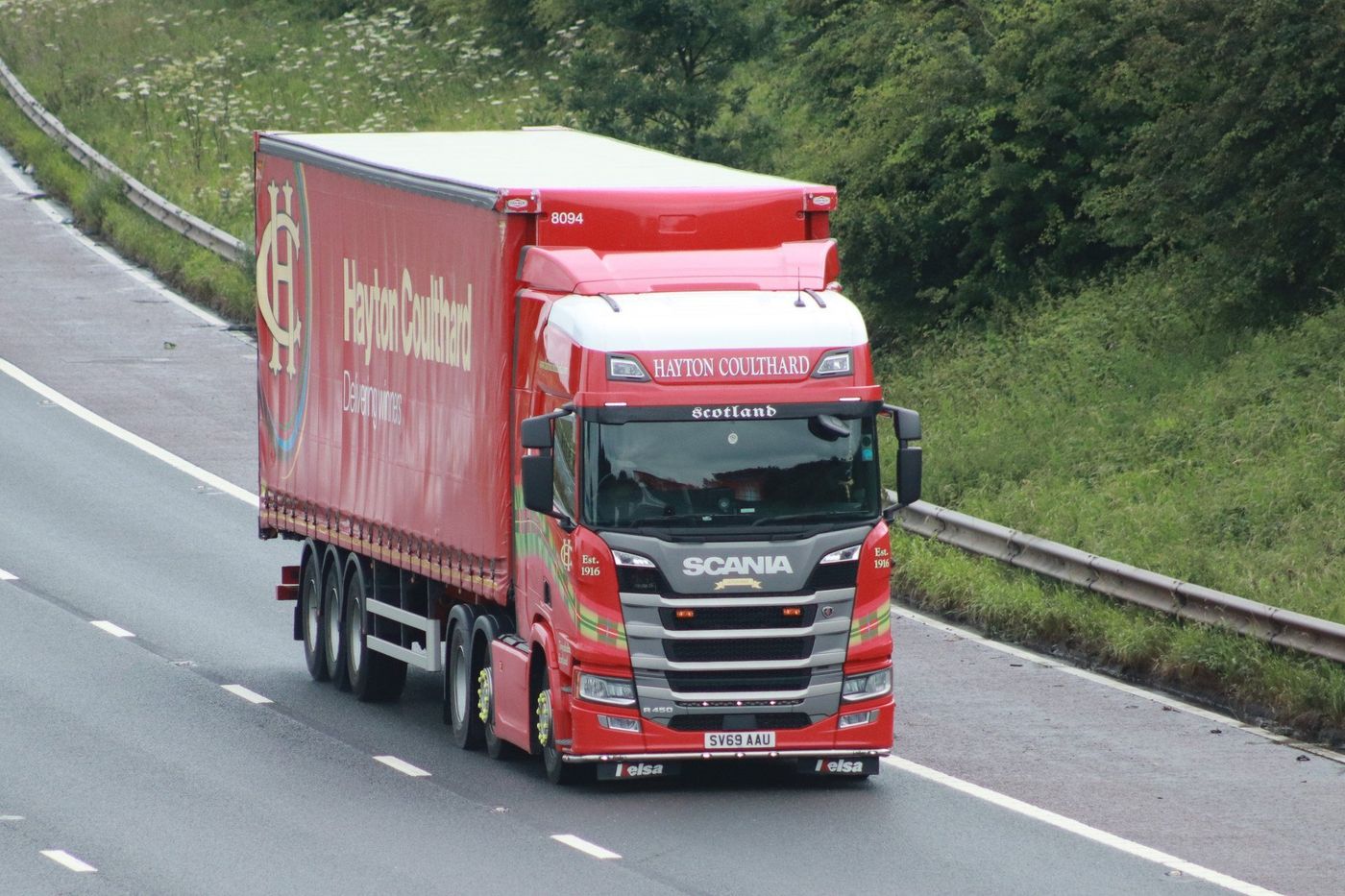
The Driver CPC is the qualification GOV.UK says a driver must have if driving an HGV, bus or coach is the main part of the job: five tests to qualify, then 35 hours of periodic training every five years. The hours on a driver’s record are checked on DVSA’s own service, Check your Driver CPC periodic training hours, and the card now comes as International or National, every card issued before 3 December 2024 being International.
This article follows what GOV.UK says for England, Scotland and Wales, with the 2024 amending regulations as the legal background; the records and the cards are DVSA’s. There is a different process in Northern Ireland, which is not covered here, and the European framework is in Driver CPC explained. The GOV.UK pages and the regulations were read on 28 September 2026, and the figures are those pages’ figures on that date.
The rules behind it: the 2007 Regulations and the 2024 amendment
The base text is the Vehicle Drivers (Certificates of Professional Competence) Regulations 2007, S.I. 2007/605. The Explanatory Note to the 2024 amendment says those Regulations implemented Directive 2003/59/EC, and that the requirements, which it calls “largely equivalent”, are now set out in the relevant provisions of the Trade and Cooperation Agreement (TCA), Part 2, Heading 3, Title I: Transport of Goods by Road, and Annex 31.
The Vehicle Drivers (Certificates of Professional Competence) (Amendment) Regulations 2024, S.I. 2024/1160, were made on 12 November 2024. They came into force on 3 December 2024, and on 1 February 2025 to the extent that they relate to national return to driving courses. The Explanatory Note says they revoke and replace regulations 6 to 9, 12, 13 and 14A of the 2007 Regulations and amend various other regulations. Regulation 1(4) says they extend to England and Wales, Scotland and Northern Ireland, subject to what follows it; this article follows the Great Britain process GOV.UK describes. Only the amending instrument as made was read, so nothing here states the 2007 Regulations as currently in force.
What the amendment sets out:
- New national periodic training, completion of which entitles a person to a five-year national driver qualification card, and a national return to driving course of 7 hours of TCA-compliant periodic training, completion of which entitles a person to a one-year national driver qualification card.
- A definition of “national periodic CPC”: a written record certifying a qualification obtained by completing 35 hours of, among other limbs, national periodic training, or a combination of national periodic training and periodic training.
- Regulation 9(1), as replaced: a CPC, national periodic CPC or Swiss CPC is valid for a period of five years beginning with the relevant day, subject to paragraphs (2) and (3), which this article does not describe.
- Regulation 14A: the Secretary of State must review the regulatory provision and publish a report before 16 May 2029, with subsequent reports at intervals not exceeding five years.
Getting qualified: four parts, five tests
GOV.UK’s steps for someone qualifying for the first time are to apply for a provisional HGV or bus licence (a D2 application form and a D4 medical examination report filled in by a doctor, with no application fee), pass the 5 tests that make up the Driver CPC, and take 35 hours of Driver CPC training every 5 years to stay qualified. It adds that a driver might not need to take all 5 tests, for example when retraining after having qualified as an HGV driver before. Licence categories and ages are in truck driving licences and bus driving licences.
GOV.UK’s test pages are part 1 (in two parts, multiple choice and hazard perception, booked separately), part 2, part 3a, part 3b and part 4. GOV.UK says 5 tests make up the full Driver CPC, its part 2 page speaks of “all 4 parts of the test”, and the NVT concession page speaks of 4 Driver CPC tests; the pages read do not say which five are counted. Fees are in the last section.
| Test | Format | Pass mark |
|---|---|---|
| Part 1, multiple choice | 100 multiple-choice questions in 1 hour and 55 minutes | 85 out of 100 |
| Part 1, hazard perception | 19 video clips, each with at least one developing hazard, one clip with 2; up to 5 points for each developing hazard | 67 out of 100 |
| Part 2, case studies | 7 case studies worked through on a computer, 5 to 10 multiple-choice questions on each; 1 hour and 15 minutes | 40 out of 50 |
| Part 3a, off-road exercises | Up to 30 minutes; includes an ‘S’ shaped reverse into a bay and, in a test with a trailer, showing the uncoupling and recoupling procedure | — |
| Part 3b, on-road driving | Vehicle safety questions and 1 hour of practical road driving; there will also be 10 minutes of independent driving | 12 or fewer driving faults and no serious or dangerous faults |
| Part 4, practical demonstration | 5 topics from the Driver CPC syllabus, up to 20 points for each topic | At least 15 out of 20 in each topic area and at least 80 out of 100 overall |
For part 4, GOV.UK says the driver is tested on being able to load the vehicle following safety rules and keep it secure, stop trafficking in illegal immigrants, assess emergency situations, reduce physical risks to themselves or others, and do a walkaround vehicle safety check.
The time limits GOV.UK states:
- Part 1: both sections must be passed within 2 years of each other to get the theory test certificate, which is valid for 2 years from passing the first section. Parts 3a and 3b must be passed within 2 years, otherwise part 1 must be passed again.
- Part 2: the pass letter is valid for 2 years, and part 4 must be passed within those 2 years, otherwise part 2 must be passed again. Part 2 does not need part 1 to have been passed first, and part 4 cannot be booked until part 2 has been passed.
- Part 3a: part 3b must be passed within 6 months of getting the part 3a certificate, otherwise part 3a must be passed again.
- Retakes: part 1, part 2 and part 4 cannot be retaken for another 3 clear working days; part 3a needs at least 24 hours; part 3b cannot be retaken for another 3 working days, not including the day of the first test.
Part 3a can be booked with an approved private test provider or with DVSA. If the organisation that runs the training is also the test provider, the assessor must not have been involved in the training. The test vehicle follows the category wanted: for a licence for an articulated lorry (category CE), an articulated lorry must be used for the test.
Drivers who need only parts 1, 3a and 3b
GOV.UK’s page on when the full Driver CPC is not needed (exemptions are further down) gives the route to a licence in those situations as applying for a provisional HGV or bus licence and passing the part 1 (theory), part 3a (off-road exercises) and part 3b (on-road driving) tests.
A driver moving up within the same category, for example from C to C+E, books and passes only parts 3a and 3b. GOV.UK says there is no need to apply for a new provisional licence or take part 1 again, and that the upgrade works this way only within the same category. It also notes that category C may be known as an ‘HGV 2’ licence, and towing heavier trailers as ‘HGV 1’. The categories, ages and provisional entitlement themselves are set out in HGV licences in Great Britain.
Periodic training: 35 hours every five years
GOV.UK says a driver must do 35 hours of periodic training every 5 years to keep the Driver CPC to drive a lorry, bus or coach. A driver who drives both lorries and buses professionally needs to complete only one set of training every 5 years. The deadline is shown on the card; if the card has 2 deadlines (one for lorries, one for buses), the training must be completed by the earliest one, and the next card carries the same deadline for both.
The training has to be done in the country where the driver works or normally lives. Courses carry no tests or exams: the driver gets a certificate of attendance, which belongs to the driver, and the employer is not allowed to keep it. To attend, a driver brings one of a photocard driving licence, a valid passport, a digital tachograph card or a Driver CPC card.
Training already done counts for 5 years from the date the course was taken; it does not count towards the 35 hours if taken more than 5 years ago.
International or National Driver CPC
GOV.UK’s names are International Driver CPC and National Driver CPC. The amending regulations define a “driver qualification card” and a “national driver qualification card”.
| International Driver CPC | National Driver CPC | |
|---|---|---|
| Hours | 35 hours every 5 years | 35 hours every 5 years |
| Courses that count | Only International Driver CPC training courses | National Driver CPC training courses only, or a mix of National and International |
| Minimum length of a course | At least 7 hours; can be taken over 2 consecutive days and can include e-learning | At least 3 hours 30 minutes; in person or online as e-learning |
| Card | Lets a driver drive professionally in the UK and Europe, in GOV.UK’s words | States “Domestic UK use only” at the bottom; GOV.UK says a driver with National courses in the hours will not be able to drive professionally in Europe |
The hours and the five-year cycle are the same for both. Every Driver CPC card issued before 3 December 2024 is International. GOV.UK says a driver who includes any National course among the 35 hours gets a National Driver CPC.
The amending regulations put the course lengths this way. A “periodic training course”, defined by reference to the TCA, is a course of at least 7 hours of training. A national periodic training course may be delivered in periods of no less than three and a half hours, which may be delivered on separate days that need not be consecutive, and it must be carried out in the United Kingdom. In the amending regulations’ new regulation 8AA, on applying for a driver qualification card, “required training” is defined as 35 hours of periodic training where at least 7 hours of that training is periodic training undertaken in the United Kingdom; the definition has further limbs that this article does not describe.
Two more rules on the choice. The Check your Driver CPC periodic training hours service can be used to ‘opt out’ and stop any National courses counting towards training hours. And if a driver receives a National Driver CPC card, any International hours on the record cannot be reused to get an International Driver CPC card.
What counts towards the 35 hours
- E-learning (online courses that use interactive videos or presentations): up to 12 hours of the 35.
- Courses that are not Driver CPC courses: up to 14 hours of training for transporting dangerous goods (ADR), and up to 7 hours for other courses such as the Transport Manager CPC, refresher training excepted.
- The same course taken more than once in a 5-year period: only with a good reason, for example maintaining a dangerous goods qualification. Without one, DVSA can cancel the hours from the course. Two 7-hour ADR courses can be taken in a 5-year period, and if that is done, no other non-Driver CPC courses count.
- Price: training providers set their own prices for courses, and there is no maximum price.
Checking your hours: the DVSA service
GOV.UK’s Check your Driver CPC periodic training hours service lets a driver:
- check how many hours of Driver CPC training have been done;
- ‘opt out’ and stop any National Driver CPC training courses counting towards the 35 hours;
- check which courses have been attended;
- check when the next Driver CPC card will arrive;
- create a temporary password for an employer so they can view the record, and, for an employer, view an employee’s record if the employee has given a temporary password.
Registration is not possible until the training centre has recorded the first Driver CPC course. It needs the driving licence number and the home postcode, and a password is sent by post to the address on the driving licence. GOV.UK says that a driver who lives in England, Scotland or Wales and has not received the password letter within 7 days should contact DVSA. Training providers must record training within 5 working days of it ending.
This article does not replace the service and does not walk through its screens; DVSA’s contact details are on the official page. GOV.UK says a driver in Northern Ireland contacts DVA.
The Driver CPC card (DQC)
The card is sometimes called a “driver qualification card” or “DQC”. A driver must carry it while driving a lorry, bus or coach professionally, and GOV.UK says a £50 fixed penalty can be given for driving professionally without the card. That is a separate matter from the figure GOV.UK gives for driving without a Driver CPC at all: a fine of up to £1,000 for driving professionally without Driver CPC. Both amounts are as GOV.UK states them; this article does not give the legal provision behind either.
- Types. An International card lets a driver drive professionally in the UK and Europe, in GOV.UK’s words; a National card states “Domestic UK use only” at the bottom. GOV.UK says the card is issued when a driver has done 35 hours of periodic training or completed a Return to Driving CPC course.
- When it arrives. The new card arrives straight away if the training was completed in the 12 months before the deadline; otherwise it does not arrive until nearer the time the current card expires.
- Where it goes. It is sent automatically to the address on the driving licence. The card does not carry an address, and the photo and signature on the photocard driving licence are used on it.
- While waiting. A driver can still drive professionally while waiting if both the periodic training has been done and the training provider has recorded it. After qualifying for the first time, a driver who has passed the tests can drive without the card while waiting for it; GOV.UK says it should arrive within 20 days of passing the final test or of requalifying through training.
- If it does not come. GOV.UK says to contact DVSA if the card has not arrived within 20 days of the date it was due, and that a driver pays £25 if they take longer than 3 months to tell DVSA it has not arrived, or if it was sent to an old address because the licence had not been updated.
- Lost, stolen or damaged. A replacement costs £25. A driver can drive professionally as soon as the payment confirmation email has arrived (by phone, the payment reference number). If the driver applied and paid online, a copy of the payment confirmation email must be kept while driving.
Missed deadlines, acquired rights and Return to Driving
If a training deadline is missed, GOV.UK says a driver cannot drive professionally until the training is finished, and the next deadline is set for 5 years after the date the training was finished.
Acquired rights. GOV.UK says having “acquired rights” means the driver did not have to take the initial qualification because of existing driving experience, and that a driver has them if they got their vocational licence before the dates in its table: before 10 September 2009 for the lorry categories C, C1, C+E and C1+E, and before 10 September 2008 for the bus or coach categories D, D1, D+E and D1+E. It states that the training deadlines for drivers with acquired rights have passed. The table has two further rows, for not-for-hire-or-reward D(101) and D1(101) entitlements, which are not used here.
Returning drivers. GOV.UK’s page on returning to HGV or bus driving divides drivers by when the licence was obtained:
- An HGV licence before 10 September 2009 or a bus licence before 10 September 2008: a driver who had a Driver CPC card before must complete 35 hours of training. A driver who did not have a card before can complete 35 hours or take and pass part 2 (case studies) and part 4 (practical demonstration); the test option can be chosen only once, after which periodic training is needed to keep the qualification in future, and these tests are booked by phone, not online.
- An HGV licence on or after 10 September 2009 or a bus licence on or after 10 September 2008: 35 hours of training must be completed. Any training done in the last 5 years counts, valid for 5 years from the date of the course.
Return to Driving CPC course. GOV.UK says it can be taken if the Driver CPC expired less than 2 years ago, and only once every 5 years. If the Driver CPC has not expired, or expired fewer than 60 days ago, 7 hours of international training are added to the record. The course is 7 hours long and can include 2 hours of e-learning.
- To drive in the UK: after the 7-hour course a driver can start driving professionally as soon as the training provider has recorded it, and must complete a further 28 hours within 12 months to stay qualified. A driver who does not complete the 28 hours in the first year cannot continue driving professionally in the UK.
- To drive in Europe: 35 hours of International Driver CPC training must be completed, which can include the 7-hour course, and GOV.UK says a driver cannot drive professionally in Europe until all 35 hours are done.
The amending regulations, as made, give the national return to driving course these conditions. The person has held a valid driver qualification card, national driver qualification card or Swiss CPC within the two years immediately preceding the start date; that card expired a minimum of 60 days before the start date; and the person has not completed a national return to driving course within the five years immediately preceding the start date. The course comprises 7 hours of periodic training, which may be delivered over two days provided those two days are consecutive, and a maximum of 2 hours may be delivered by e-learning. Before the one-year national card expires the person may complete an additional 28 hours.
When the full Driver CPC is not needed
GOV.UK’s list is short, and DVSA’s examples come with a warning: they say what DVSA thinks, “However, only a court can make a decision on Driver CPC rules.”
GOV.UK says the full Driver CPC is not needed for using the vehicle for:
- non-commercial carriage of passengers or goods;
- carrying material or equipment used for the job, as long as driving is less than 30% of the rolling monthly working time;
- driving lessons for anyone who wants to get a driving licence or a Driver CPC;
- driving to or from pre-booked appointments at official vehicle testing centres;
- driving within 62 miles (100 kilometres) of the base, but the vehicle cannot be carrying passengers or goods, and driving an HGV, bus or coach cannot be the main job;
- maintaining public order, when the vehicle is being used or controlled by a local authority;
- rescue missions or states of emergency;
- driving for an agriculture, horticulture, forestry, farming or fisheries business, as long as driving is less than 30% of the rolling monthly working time.
GOV.UK also says the full Driver CPC is not needed when the vehicle is limited to a top speed of 28mph, or is used or controlled by the armed forces, police, fire and rescue service, emergency ambulance service, prison service or people running a prison or young offender institution. DVSA’s examples add vehicles being road tested for repair, maintenance or technical development purposes, and vehicles that are either new or rebuilt and not yet put into service. The 30% figure is written against only two of these entries.
28 mph. DVSA’s wording: Driver CPC is not needed if the vehicle is not allowed to exceed 28 miles per hour (45 kilometres per hour) on any road. In its example, a driver for a city bus company whose buses are fitted with speed limiters that stop them exceeding 40km/h needs Driver CPC, because the law allows the bus to be driven at more than 45km/h even though it has been limited to 40km/h.
The 100 km case. DVSA lists four conditions for the vehicle within a 62 mile (100km) radius of the base: the main work activity is not driving lorries, buses or coaches; the vehicle is driven within that radius; the driver is the only person in the vehicle; and the vehicle is empty, except for equipment (including machinery) permanently fixed to it. The “driver’s base” is the place the driver starts work on that particular day, and it is not restricted to one place.
Non-commercial. DVSA’s examples of journeys the term “non-commercial” can be applied to include those where no payment is made, either to the operator or the driver, for carriage per se, and those where any financial contributions do not exceed the running costs of the vehicle for that journey, for example contributions towards fuel costs. If a person or organisation is required to hold a PSV operator’s licence, DVSA says the vehicles are being used for commercial carriage of passengers and it is likely the drivers will need to hold a Driver CPC for the journeys the licence is necessary for.
Put into service. DVSA says vehicles count as being “put into service” once they are taxed. A car transporter needs Driver CPC, because the vehicle being driven has been put into service.
DVSA’s selected examples:
- A mobile lorry fitter driving to a site with their tools to service lorries: does not need Driver CPC.
- A worker in a car parts supply company’s stores department occasionally delivering parts to retail outlets: needs Driver CPC, even though the driving takes up a small amount of working time, because it is carrying materials for someone else’s use.
- An employee carrying colleagues in a minibus: needs Driver CPC, as they are transporting other employees, not carrying materials or equipment.
- A driver of a passenger transport ambulance under contract to the NHS: needs Driver CPC, as it is used for passenger transport and is not an emergency service.
- A workshop manager delivering empty trailers: needs Driver CPC, even though driving is not their main activity.
Driving while training: the NVT concession
After passing parts 1, 3a and 3b, a driver can drive professionally for up to 12 months before taking both part 2 and part 4, under the National Vocational Training (NVT) concession. GOV.UK sets these conditions:
- The driver is registered for an eligible training course or apprenticeship that lasts at least 6 months and leads to a qualification, and has not used an NVT concession before.
- It costs £25 to apply, with no refund if the application is unsuccessful. GOV.UK says a driver can be fined £50 for driving professionally without the concession card.
- The concession lasts 12 months from the start date, and ends sooner if the driver stops the training course or completes it. A driver must stop driving professionally if the tests have not been passed by then.
As examples of eligible courses, GOV.UK’s page, last publicly updated on 16 February 2026, lists the apprenticeships “Large goods vehicle (LGV) driver C and E (level 2)” and “Urban driver (level 2)” for HGV, and for buses says the only course currently eligible is the Highfield Level 2 NVQ Diploma in Passenger Carrying Vehicle Driving (Bus and Coach) (RQF). The page has more entries than these.
Training or licences from outside Great Britain
- Training in an EU country, Switzerland, Norway, Iceland or Liechtenstein. A driver with a UK or Great Britain licence who did the final 7 hours of periodic training in England, Scotland or Wales applies in writing to add the training taken abroad. It costs £25, and the original documents must be included: photocopies are not accepted.
- A licence from another country. GOV.UK gives two ways to a GB Driver CPC card: complete the periodic training in England, Scotland or Wales, or exchange the licence for a GB licence, which needs a code 95 entitlement on the non-GB licence. On the training route, a driver who has done the final 7 hours of periodic training in England, Scotland or Wales, lives or works there and has a driving licence from an EU country, Gibraltar, Guernsey, Iceland, Isle of Man, Jersey, Liechtenstein, Norway or Switzerland can get a GB Driver CPC card, and applies by emailing DVSA asking for form DQC1. On the exchange route, the qualification still lasts until the date it was due to run out when first obtained, and the card should arrive within 20 days of receiving the GB driving licence.
- An EU Driver CPC card and a GB driving licence. The current card can be exchanged for a GB Driver CPC card, which DVSA sends with the same number as the driving licence.
- Northern Ireland. GOV.UK says there is a different process for residents, run through nidirect and DVA.
Fees listed by GOV.UK
GOV.UK fees page, as read on 28 September 2026. These are the prices to book tests with DVSA using the official service.
| Item | Weekday | Evening, weekend and bank holiday |
|---|---|---|
| Provisional HGV or bus licence | Free | |
| Part 1, multiple choice | £26 | £26 |
| Part 1, hazard perception | £11 | £11 |
| Part 2, case studies | £23 | £23 |
| Part 3a, off-road exercises | £40 | £40 |
| Part 3b, on-road driving | £115 | £141 |
| Part 4, practical demonstration | £55 | £63 |
| Driver CPC card (non-UK driving licences only) | £25 | |
| Replacement for a lost, stolen or damaged card | £25 | |
| NVT concession card, to apply | £25 | |
GOV.UK adds that a part 3a test may cost up to £40 with an approved test provider instead of DVSA, and that a driver may be charged more when booking through an unofficial website. Training providers set their own prices for periodic training courses, and there is no maximum price.
Quick answers
- How do I check my Driver CPC hours?
- Use the Check your Driver CPC periodic training hours service run by DVSA on GOV.UK. It shows how many hours of Driver CPC training have been done, which courses were attended and when the next Driver CPC card is due. Registration needs the driving licence number and home postcode, and is not possible until the training centre has recorded the first Driver CPC course; a password is then sent by post to the address on the driving licence. Training providers must record training within 5 working days of it ending.
- How many hours of Driver CPC training do I need, and how often?
- 35 hours of periodic training every 5 years, according to GOV.UK. A driver who drives both lorries and buses professionally needs to complete only one set of training every 5 years, and training already done counts for 5 years from the date the course was taken.
- What is the difference between International and National Driver CPC?
- Both need 35 hours every 5 years. International Driver CPC needs 35 hours of only International courses, each at least 7 hours long, and GOV.UK says the card lets a driver drive professionally in the UK and Europe. National Driver CPC can be earned from National courses only, or a mix of National and International courses, with National courses at least 3 hours 30 minutes long; the card states 'Domestic UK use only' at the bottom. All cards issued before 3 December 2024 are International.
- What happens if my Driver CPC has expired?
- If the Driver CPC expired less than 2 years ago, GOV.UK offers a 7-hour Return to Driving CPC course, followed by 28 further hours of training within 12 months to stay qualified for driving in the UK; the course can be taken only once every 5 years. For driving in Europe GOV.UK says all 35 hours of International Driver CPC training must be completed. A driver who misses a training deadline cannot drive professionally until the training is finished.
- Do I need a Driver CPC if driving is not my main job?
- Not always, but GOV.UK lists the exemptions and DVSA says only a court can make a decision on Driver CPC rules. The figure of 30% of rolling monthly working time appears in only two of the listed exemptions: carrying material or equipment used for the job, and driving for an agriculture, horticulture, forestry, farming or fisheries business. In one DVSA example a worker in a car parts supply company's stores department who occasionally delivers parts to retail outlets needs Driver CPC even though the driving takes up a small amount of working time, because the vehicle is carrying materials for someone else's use.
- What happens if I lose my Driver CPC card?
- A replacement for a lost, stolen or damaged card costs £25. A driver can drive professionally as soon as the payment confirmation email has arrived, or the payment reference number when applying by phone; if the application and payment were made online, a copy of the confirmation email must be kept while driving. GOV.UK says a £50 fixed penalty can be given for driving professionally without the card.
Sources
- Driver CPC training for qualified drivers — GOV.UK (Driver and Vehicle Standards Agency)
- Become a qualified heavy goods vehicle (HGV) or bus driver — GOV.UK (DVLA and DVSA)
- Check your Driver CPC periodic training hours — GOV.UK (Driver and Vehicle Standards Agency)
- Check if you need Driver CPC to drive a lorry, bus or coach — GOV.UK (Driver and Vehicle Standards Agency)
- Drive an HGV or bus professionally while you're training (NVT concession) — GOV.UK (Driver and Vehicle Standards Agency)
- Replace a lost, stolen or damaged Driver CPC card — GOV.UK (Driver and Vehicle Standards Agency)
- The Vehicle Drivers (Certificates of Professional Competence) (Amendment) Regulations 2024 (S.I. 2024/1160), as made — legislation.gov.uk, The National Archives