Form 2290 and the Heavy Vehicle Use Tax: who pays and when
Form 2290 reports the federal HVUT on vehicles of 55,000 lb or more: $100 plus $22 per 1,000 lb over 55,000, $550 over 75,000 lb, due by the end of the month after first use.
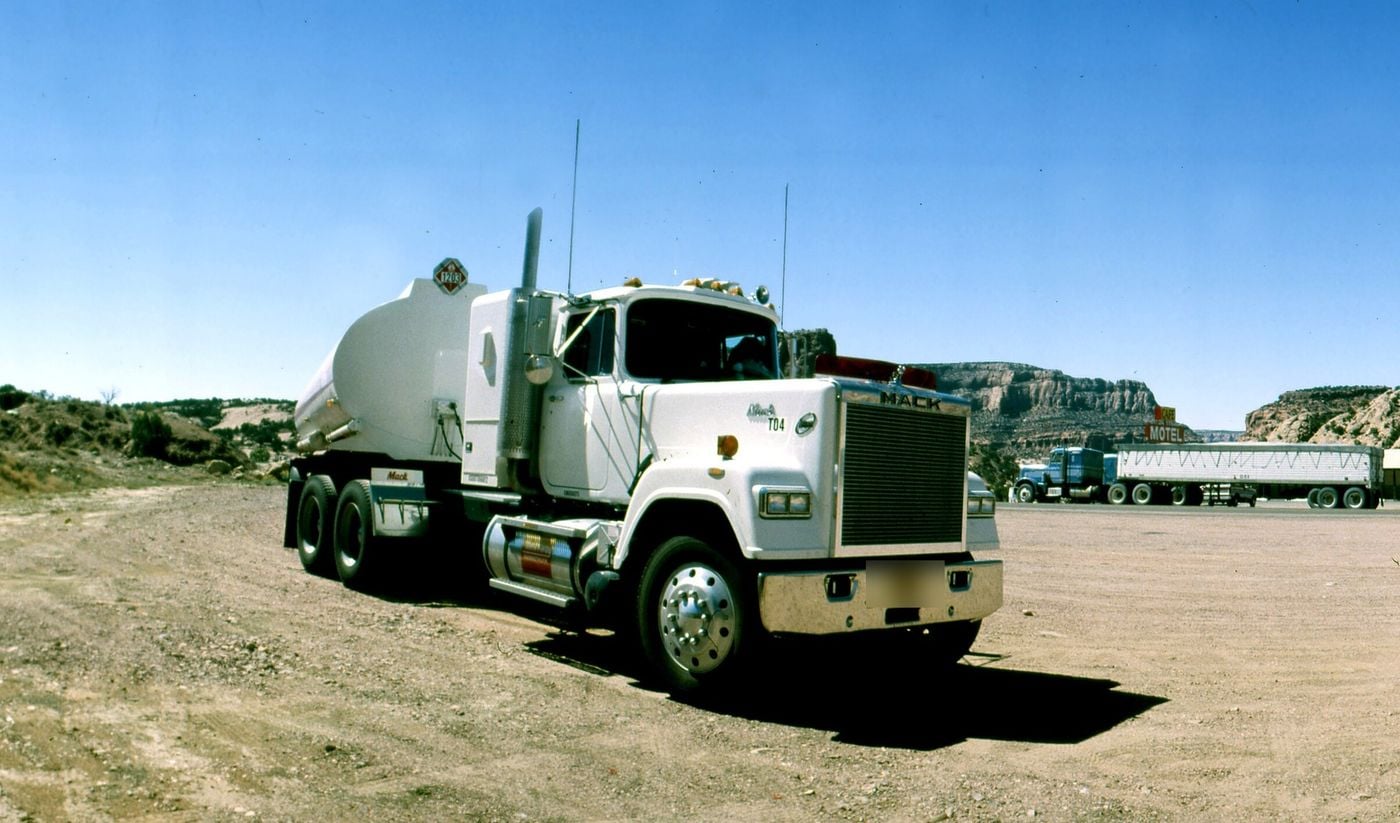
Form 2290 is the IRS return for the federal tax on the use of highway motor vehicles, such as trucks, truck tractors and buses, with a taxable gross weight of 55,000 pounds or more on public highways, and the tax is paid by the person in whose name the vehicle is, or must be, registered. A vehicle over 75,000 pounds pays $550 for a full tax period, which runs from July 1 to June 30. The return is due by the last day of the month after the month the vehicle is first used in the period, which is August 31 only for vehicles first used in July, and the IRS-stamped Schedule 1 is the proof of payment that states generally ask for at registration and that U.S. Customs and Border Protection requires for Canadian and Mexican vehicles entering the United States.
Status: 13 November 2026. Read on that day: the IRS Instructions for Form 2290 and Form 2290 itself, both revised July 2026, for the tax period July 1, 2026, to June 30, 2027; the IRS page About Form 2290, last reviewed or updated on November 12, 2026, which lists “Recent developments” as “None at this time.”; and sections 4481, 4482 and 4483 of the Internal Revenue Code (26 U.S.C.) in the 2024 edition of the United States Code on govinfo, the current edition there. Public Law 119-21 of July 4, 2025, which the instructions name as the 2025 tax reform law, does not amend these three sections.
| Item | Rule | Source |
|---|---|---|
| Return | Form 2290, Heavy Highway Vehicle Use Tax Return, with Schedule 1 | IRS, Rev. July 2026 |
| Who pays | The person in whose name the vehicle is, or is required to be, registered | 26 U.S.C. 4481(b) |
| Taxable vehicles | Highway motor vehicles with a taxable gross weight of at least 55,000 pounds | 26 U.S.C. 4481(a) |
| Rate | $100 a year plus $22 per 1,000 pounds (or fraction) over 55,000, up to 75,000 pounds; $550 over 75,000 pounds | 26 U.S.C. 4481(a) |
| Logging vehicles | Tax reduced by 25 percent ($75.00 to $412.50 for a full period) | 26 U.S.C. 4483(e); Form 2290 |
| Tax period | July 1 to June 30; current period July 1, 2026, to June 30, 2027 | 26 U.S.C. 4482(c); instructions |
| Due date | Last day of the month following the month of first use; next business day if that day is a Saturday, Sunday or legal holiday | Instructions |
| Suspension | Vehicles expected to be used 5,000 miles or less on public highways in the period (7,500 for agricultural vehicles), reported as category W | 26 U.S.C. 4483(d); instructions |
| Electronic filing | Required for a return reporting and paying tax on 25 or more vehicles | 26 U.S.C. 4481(e); instructions |
| Proof of payment | Schedule 1 stamped by the IRS, used for state registration and for CBP entry of Canadian or Mexican vehicles | Instructions |
| End of the tax | Applies only to use before October 1, 2029 | 26 U.S.C. 4481(f) |
What is Form 2290?
The return carries the tax that section 4481(a) of the Internal Revenue Code imposes: “A tax is hereby imposed on the use of any highway motor vehicle which (together with the semitrailers and trailers customarily used in connection with highway motor vehicles of the same type as such highway motor vehicle) has a taxable gross weight of at least 55,000 pounds”. The IRS instructions list what the form is used for:
- figure and pay the tax on highway motor vehicles used during the period with a taxable gross weight of 55,000 pounds or more;
- figure and pay the tax on a suspended vehicle that later exceeded the mileage use limit, and the additional tax when a vehicle’s taxable gross weight increases into a new category;
- claim suspension of the tax for a vehicle expected to be used 5,000 miles or less (7,500 miles or less for agricultural vehicles);
- claim a credit for tax paid on vehicles that were destroyed, stolen, sold, or used 5,000 miles or less (7,500 for agricultural vehicles);
- report the acquisition of a used taxable vehicle on which the tax has been suspended, and pay the tax on a used taxable vehicle acquired and used during the period.
Use, in section 4482(c)(3), “means use in the United States on the public highways”. The instructions define a public highway as “any road in the United States that isn’t a private roadway”, including federal, state, county and city roads, and give the drive home from the dealership as an example of a first taxable use.
Who pays the heavy vehicle use tax?
Section 4481(b): “The tax imposed by this section shall be paid by the person in whose name the highway motor vehicle is, or is required to be, registered under the law of the State or contiguous foreign country in which such vehicle is, or is required to be, registered”. For a vehicle owned by the United States, the agency operating it pays.
The instructions turn this into the filing rule for the current period: Form 2290 and Schedule 1 are filed if a taxable highway motor vehicle “is registered, or required to be registered, in your name under state, District of Columbia, Canadian, or Mexican law at the time of its first use during the tax period and the vehicle has a taxable gross weight of 55,000 pounds or more.” The filer may be an individual, a limited liability company, a corporation, a partnership or any other type of organization. If a vehicle is registered in the name of both the owner and another person, “the owner is liable for the tax”, also for a leased vehicle, and a vehicle operated under a dealer’s tag, license or permit is considered registered in the dealer’s name. The return needs an employer identification number; the instructions say a social security number cannot be used.
The carrier registrations that run alongside the tax (the USDOT number, operating authority, UCR, IRP plates and IFTA) are explained on the page on USDOT number, MC number, UCR, IRP and IFTA.
The 55,000-pound line: taxable gross weight
The tax does not use the manufacturer’s weight ratings explained on the page on GVWR, GCWR and GAWR. Section 4482(b) defines its own term: taxable gross weight is the sum of the actual unloaded weight of the vehicle fully equipped for service, the actual unloaded weight of the semitrailers and trailers fully equipped for service customarily used with vehicles of the same type, and “the weight of the maximum load customarily carried” on them. A trailer or semitrailer counts as customarily used with a vehicle “if such vehicle is equipped to tow such semitrailer or trailer” (4482(c)(5)).
The instructions add the details:
- “Fully equipped for service” includes the body, all accessories and equipment for the vehicle’s operation, and a full supply of fuel, oil and water; it does not include the driver, equipment other than the body that handles, protects or preserves cargo, or special equipment such as an air compressor, crane or specialized oilfield equipment.
- Buses: “The taxable gross weight of a bus is its actual unloaded weight fully equipped for service plus 150 pounds for each seat provided for passengers and driver.”
- State registration weight: if a state requires a declaration of a specific gross weight, the taxable gross weight “must be no less than the highest gross weight declared for the vehicle in any state”, and for a tractor-trailer or truck-trailer combination no less than the highest combined gross weight declared. Weights declared for special temporary travel permits are not counted, unless the permits cover more than 60 days, or more than 2 months if issued monthly, in a tax year.
- Vans, pickup trucks, panel trucks and similar trucks are generally not taxed “because they have a taxable gross weight less than 55,000 pounds.”
The federal gross weight limit for a loaded semi-truck on the Interstate System is on the page How much a semi-truck weighs.
How much is the 2290 tax?
Section 4481(a) sets the rate:
| Taxable gross weight | Rate of tax |
|---|---|
| At least 55,000 pounds, but not over 75,000 pounds | $100 per year plus $22 for each 1,000 pounds (or fraction thereof) in excess of 55,000 pounds. |
| Over 75,000 pounds | $550. |
Form 2290 (Rev. July 2026) prints the same rate as 22 categories for a vehicle used during July, with a second column for logging vehicles, which section 4483(e) taxes at 25 percent less when the vehicle is used exclusively to carry products harvested from a forested site and is registered as such:
| Category | Taxable gross weight (pounds) | Vehicles except logging | Logging vehicles |
|---|---|---|---|
| A | 55,000 | $100.00 | $75.00 |
| B | 55,001 – 56,000 | $122.00 | $91.50 |
| C | 56,001 – 57,000 | $144.00 | $108.00 |
| E | 58,001 – 59,000 | $188.00 | $141.00 |
| F | 59,001 – 60,000 | $210.00 | $157.50 |
| K | 64,001 – 65,000 | $320.00 | $240.00 |
| P | 69,001 – 70,000 | $430.00 | $322.50 |
| U | 74,001 – 75,000 | $540.00 | $405.00 |
| V | over 75,000 | $550.00 | $412.50 |
Each category between A and U adds $22.00 ($16.50 for logging vehicles); the table shows a selection. Category W is for tax-suspended vehicles.
A vehicle first used after July pays for part of the period. Section 4481(c)(1) says the tax “shall be reckoned proportionately from the first day of the month in which such use occurs to and including the last day in such taxable period”, and the instructions print the result as Table I (Table II for logging vehicles). For category V, Table I gives $504.17 for first use in August (11 months), $275.00 in January (6 months) and $45.83 in June (1 month). Once the tax is paid for a vehicle for a period, “no further tax shall be imposed by this section for such taxable period with respect to such vehicle” (4481(d)).
For a used vehicle bought privately from a seller who has paid the tax, the instructions give this example: the seller paid the full-period tax of $550 on July 2, 2026, for a truck with a taxable gross weight of 80,000 pounds and sold it on September 9, 2026; the buyer first drove it on the public highway the next day, in the month of sale, so the buyer’s tax runs from October 1 and is “9/12 of $550 = $412.50”, and the seller may claim a credit or refund for the 9 months after the sale.
The tax period: July 1 to June 30
Section 4482(c)(2) defines a year as “the one-year period beginning on July 1”, and the taxable period is that year. The current period, in the instructions, “begins July 1, 2026, and ends June 30, 2027.” The July 2026 revision of Form 2290 is for this period, and its cover sheet says not to use it for a tax period that began on or before June 30, 2026.
When is Form 2290 due?
The instructions: “Form 2290 must be filed for the month the taxable vehicle is first used on public highways during the current period.” It “must be filed by the last day of the month following the month of first use”, and: “If any due date falls on a Saturday, Sunday, or legal holiday, file by the next business day.” A filer who first uses vehicles in more than one month files a separate return for each month, and the rule applies whether the tax is paid or suspended. The due dates printed in the instructions for the current period:
| Vehicle first used in | File and pay by | Date entered on line 1 |
|---|---|---|
| July 2026 | August 31, 2026 | 202607 |
| August 2026 | September 30, 2026 | 202608 |
| September 2026 | November 2, 2026 | 202609 |
| October 2026 | November 30, 2026 | 202610 |
| November 2026 | December 31, 2026 | 202611 |
| December 2026 | February 1, 2027 | 202612 |
| January 2027 | March 1, 2027 | 202701 |
| February 2027 | March 31, 2027 | 202702 |
| March 2027 | April 30, 2027 | 202703 |
| April 2027 | June 1, 2027 | 202704 |
| May 2027 | June 30, 2027 | 202705 |
| June 2027 | August 2, 2027 | 202706 |
August 31 is therefore the due date only for vehicles first used in July. Five of the dates above are later than the last day of the following month because of the Saturday, Sunday and legal holiday rule; in the instructions’ own example, “Because October 31, 2026, falls on a Saturday”, the return for a September first use is due on November 2, 2026.
The instructions also say: “The filing deadline isn’t tied to the vehicle registration date.” An extension of time to file may be requested in writing before the due date, for no more than 6 months except for taxpayers abroad, but it “doesn’t extend the time to pay the tax.” The same last-day-of-the-following-month rule applies to an amended return when a vehicle’s taxable gross weight increases into a new category, or when a suspended vehicle exceeds the mileage use limit.
The 5,000-mile suspension
Section 4483(d)(1) suspends collection of the tax when “it is reasonable to expect that the use of any highway motor vehicle on public highways during any taxable period will be less than 5,000 miles”, and the suspension “shall cease to apply” when use on public highways during the period “exceeds 5,000 miles”. For an agricultural vehicle, 4483(d)(5) substitutes 7,500 for 5,000. The IRS instructions describe the mileage use limit as “the use of a vehicle on public highways 5,000 miles or less (7,500 miles or less for agricultural vehicles)”, applying to the total mileage in the period “regardless of the number of owners.”
- The suspended vehicle is still reported: it is listed as category W on Form 2290 and Schedule 1, and returns with only suspended vehicles follow the same due dates.
- An agricultural vehicle is one used primarily for farming purposes, meaning more than half of its mileage in the period, and registered under state law as a farm vehicle for the entire period. Miles driven on the farm do not count toward the 7,500-mile limit.
- When the limit is exceeded, the tax becomes due, figured from the month of first use in the period.
- If a vehicle under suspension is sold and the seller gives the buyer the statement the instructions describe, the new owner is liable if the limit is later exceeded; without the statement, the former owner is also liable.
- Tax already paid on a vehicle that ends the period at or under the limit may be claimed as a credit on the first Form 2290 for the next period, or as a refund on Form 8849 after the period ends.
For a suspended vehicle, the instructions require the registrant to keep a record of actual highway mileage and to keep the records for at least 3 years after the end of the period.
Which vehicles are exempt?
The instructions list uses that are exempt and not reported on Form 2290: vehicles used and actually operated by the federal government, the District of Columbia, a state or local government, the American National Red Cross, a nonprofit volunteer fire department, ambulance association or rescue squad, an Indian tribal government for an essential tribal government function, or a mass transportation authority created under a statute that gives it certain powers normally exercised by the state; qualified blood collector vehicles; and specially designed mobile machinery for nontransportation functions.
Section 4483(c) separately exempts “any bus which is of the transit type (rather than of the intercity type)” when the operator meets a 60-percent passenger fare revenue test. Under section 4483(i), the state and local government exemption in 4483(a) and the transit bus exemption in 4483(c) “shall not apply on and after October 1, 2029.”
What is Schedule 1 (Form 2290)?
Schedule 1 lists every vehicle on the return by category and vehicle identification number, with the month of first use. The filer completes both copies; “The second copy will be stamped and returned to you for use as proof of payment.” On an electronically filed return, a copy of Schedule 1 with an IRS watermark is sent electronically to the provider that transmitted it.
The instructions on proof of payment:
- “Generally, states will require verification of payment of the tax for any taxable vehicle before they will register the vehicle.”
- “U.S. Customs and Border Protection also requires this proof of payment for entering a Canadian or Mexican vehicle into the United States.” A 1987 note to section 4481 (Public Law 100-17) required regulations with “a procedure by which the operator of such motor vehicle shall evidence that such operator has paid such tax at the time such motor vehicle enters the United States.”
- A state that receives a registration application in July, August or September may accept the previous period’s stamped Schedule 1.
- No proof of payment is required for a new or used vehicle bought within the last 60 days if the bill of sale is shown, but the return must still be filed and the tax paid.
- A limited number of states take part in an alternate proof of payment program in which the motor vehicle department may forward the return to the IRS if certain requirements are met.
By signing the consent on Schedule 1, the filer allows the IRS to share the vehicle identification numbers and the verification of payment with the Department of Transportation, U.S. Customs and Border Protection and state motor vehicle departments.
Electronic filing for 25 or more vehicles
Section 4481(e): “Any taxpayer who files a return under this section with respect to 25 or more vehicles for any taxable period shall file such return electronically.” The instructions specify that tax-suspended vehicles in category W are not counted toward the 25, “since you aren’t paying tax on them”, and that electronic returns go through a provider participating in the IRS e-file program for excise taxes. Paper returns go to the IRS addresses printed in the instructions, which differ depending on how the tax is paid.
When does the heavy vehicle use tax end?
Section 4481(f), “Period tax in effect”: “The tax imposed by this section shall apply only to use before October 1, 2029.” Section 4482(c)(4) defines the taxable period as any year beginning before July 1, 2029, “and the period which begins on July 1, 2029, and ends at the close of September 30, 2029.” For that last, three-month period, section 4482(d) reduces “each dollar amount in the table contained in section 4481(a) by 75 percent”; worked from that rule, not from any IRS form, the amounts would be $25 plus $5.50 per 1,000 pounds over 55,000, and $137.50 over 75,000 pounds.
Congress has moved the end date many times. The amendment notes in the 2024 edition of the Code record the changes to subsection (f): to 2006 and 2011 in 2005, to 2012 in 2011, to 2013 and 2017 in 2012, to 2023 in 2015 (Public Law 114-94) and to 2029 in 2021 (Public Law 117-58, effective October 1, 2021). The text quoted on this page is from that 2024 edition, the current edition on govinfo on 13 November 2026. The instructions point to IRS.gov/Form2290 for developments “such as legislation enacted after they were published”, and the IRS page About Form 2290 listed “Recent developments” as “None at this time.”
What this page does not cover
- How to prepare or transmit the return, payment methods, penalties and interest, and the regulations in 26 CFR Part 41.
- State registration fees, IRP apportioned registration and IFTA fuel tax, which are on the page on USDOT number, MC number, UCR, IRP and IFTA.
- Federal excise taxes on the first retail sale of heavy trucks, trailers and tires, and on fuel.
- Road user charges in other countries, such as the HGV levy in the UK.
Quick answers
- What is IRS Form 2290?
- Form 2290, Heavy Highway Vehicle Use Tax Return, is the IRS return used to figure and pay the federal tax on highway motor vehicles used on public highways with a taxable gross weight of 55,000 pounds or more. The same form is used to report vehicles on which the tax is suspended because they are expected to be used 5,000 miles or less (7,500 miles or less for agricultural vehicles), and to claim credits for vehicles sold, destroyed or stolen.
- When is Form 2290 due?
- By the last day of the month following the month in which the vehicle is first used on public highways during the tax period. For vehicles first used in July 2026 that is August 31, 2026; for vehicles first used in August 2026 it is September 30, 2026. The instructions say that if a due date falls on a Saturday, Sunday or legal holiday, the return is filed by the next business day, and that the deadline is not tied to the vehicle's registration date.
- How much is the heavy vehicle use tax?
- Under 26 U.S.C. 4481(a), $100 per year plus $22 for each 1,000 pounds (or fraction thereof) over 55,000 pounds for a taxable gross weight of 55,000 to 75,000 pounds, and $550 over 75,000 pounds. Form 2290 turns this into categories A ($100.00 at 55,000 pounds) to V ($550.00 over 75,000 pounds). Logging vehicles pay 25 percent less, and a vehicle first used after July pays a prorated amount for the months left in the period.
- What is Schedule 1 for Form 2290?
- Schedule 1 lists the vehicles reported on Form 2290 by category and vehicle identification number. The IRS stamps the second copy and returns it as proof of payment; the instructions say states generally require this verification before they register a taxable vehicle, and U.S. Customs and Border Protection requires it for entering a Canadian or Mexican vehicle into the United States. On an electronically filed return, a copy with an IRS watermark is sent to the e-file provider.
- Does a truck that runs under 5,000 miles a year pay the HVUT?
- The tax is suspended, but the vehicle is still reported. Section 4483(d) suspends collection when the vehicle's expected use on public highways during the period is less than 5,000 miles (7,500 for agricultural vehicles); the instructions describe the limit as 5,000 miles or less. The vehicle is listed in category W on Form 2290 and Schedule 1, and the tax becomes due once the mileage use limit is exceeded.
- When does the heavy vehicle use tax end?
- Section 4481(f) of the Internal Revenue Code says the tax applies only to use before October 1, 2029. The last taxable period under section 4482 runs from July 1 to September 30, 2029, and for it each dollar amount in the tax table is reduced by 75 percent. Congress has extended the end date several times; the latest change recorded in the 2024 edition of the Code was made in 2021 (Public Law 117-58), which replaced 2023 with 2029.
Sources
- Instructions for Form 2290 (Rev. July 2026), Heavy Highway Vehicle Use Tax Return — Internal Revenue Service, 1 Jul 2026
- Form 2290 (Rev. July 2026), Heavy Highway Vehicle Use Tax Return, with Schedule 1 — Internal Revenue Service, 1 Jul 2026
- About Form 2290, Heavy Highway Vehicle Use Tax Return (page last reviewed or updated November 12, 2026) — Internal Revenue Service, 12 Nov 2026
- 26 U.S.C. 4481 — Imposition of tax (United States Code, 2024 edition) — U.S. Government Publishing Office (govinfo)
- 26 U.S.C. 4482 — Definitions (United States Code, 2024 edition) — U.S. Government Publishing Office (govinfo)
- 26 U.S.C. 4483 — Exemptions (United States Code, 2024 edition) — U.S. Government Publishing Office (govinfo)
- Public Law 119-21 (July 4, 2025), An Act To provide for reconciliation pursuant to title II of H. Con. Res. 14 — U.S. Government Publishing Office (govinfo), 4 Jul 2025