DOT drug and alcohol tests: test types, drugs and cutoffs
Six test types in Part 382, five drug classes in 40.82, urine and oral fluid cutoffs in ng/mL; on November 2, 2026 no lab was certified for oral fluid.
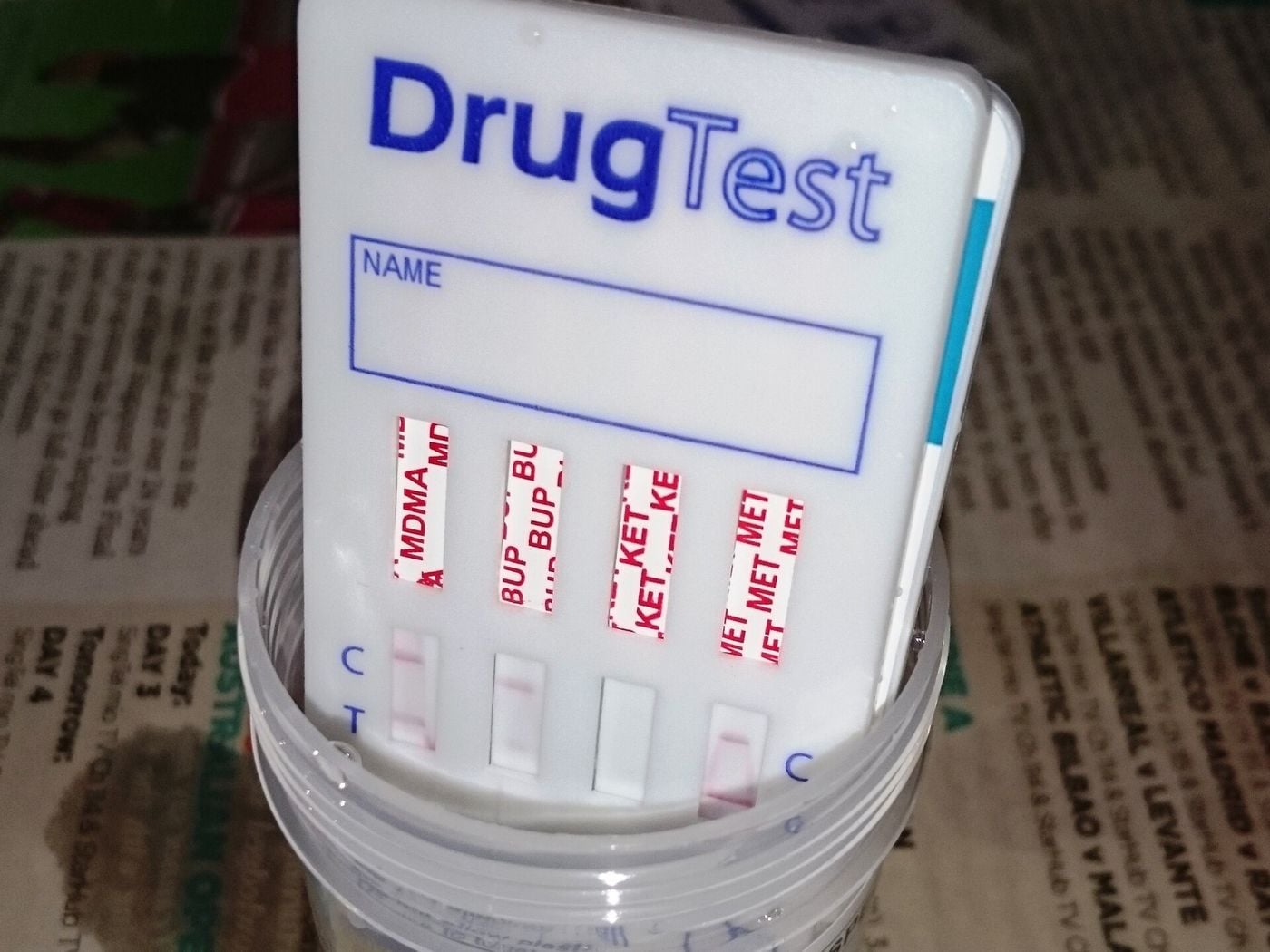
A DOT drug test looks for five drugs or classes of drugs, which section 40.82 of 49 CFR Part 40 lists as marijuana metabolites, cocaine metabolites, amphetamines, opioids and phencyclidine (PCP). For drivers, FMCSA’s Part 382 sets six types of test: pre-employment, post-accident, random, reasonable suspicion, return-to-duty and follow-up. Urine is the specimen in use: Part 40 also authorizes oral fluid, but only once there are at least two HHS-certified oral fluid laboratories, and the HHS list of November 2, 2026 named none.
Status: 22 November 2026. This page follows sections 382.301 to 382.311 of 49 CFR Part 382 and sections 40.82, 40.85, 40.91, 40.229, 40.231 and 40.247 of 49 CFR Part 40 in the annual edition of the Code of Federal Regulations revised as of October 1, 2025; the Department of Transportation’s final rule of May 11, 2026 (91 FR 25507, effective June 10, 2026), which amended sections 40.65, 40.67, 40.69 and 40.145 after that edition; the HHS list of certified laboratories of November 2, 2026 (91 FR 68964); DOT’s fentanyl proposal of September 2, 2025 (90 FR 42363); and the two HHS proposals of October 29, 2026 (91 FR 68398 and 91 FR 68364). All were read on 21 November 2026. On that day the Federal Register listed no document affecting Part 382 published since October 1, 2025, and five documents affecting Part 40 published since January 1, 2025: the May 2026 rule, a document of March 4, 2026 on the substance abuse professional and the return-to-duty process, DOT’s proposals of September 2 and October 1, 2025, and a notification of October 1, 2026 of a petition for rulemaking on invalid specimen determinations. None of them is a final rule on fentanyl. It gives the federal rules only.
| Item | Rule | Source |
|---|---|---|
| Types of test | Pre-employment, post-accident, random, reasonable suspicion, return-to-duty, follow-up | 382.301 to 382.311 |
| Drugs tested | Five drugs or classes of drugs: marijuana metabolites, cocaine metabolites, amphetamines, opioids, phencyclidine (PCP) | 40.82 |
| Urine cutoff, marijuana metabolites | 50 ng/mL initial; 15 ng/mL THCA confirmatory | 40.85(a) |
| Oral fluid cutoff, marijuana | 4 ng/mL initial; 2 ng/mL THC confirmatory | 40.91 |
| Alcohol screening result that leads to a confirmation test | 0.02 or higher | 40.247(b) |
| Alcohol confirmation device | Only evidential breath testing devices (EBTs) on the ODAPC list that meet 40.231(b) | 40.231 |
| Condition for oral fluid testing | At least two HHS-certified oral fluid drug testing laboratories | 40.67(g)(5) |
| Certified oral fluid laboratories | None on the HHS list of November 2, 2026 | 91 FR 68964 |
| Where oral fluid is required but not available | Directly observed urine collection, since June 10, 2026 | 91 FR 25507; 40.67(g)(3) |
| Fentanyl | Proposed on September 2, 2025; no final rule listed on November 21, 2026 | 90 FR 42363 |
The six types of DOT test
Subpart C of Part 382 carries the heading “Tests Required”. Who Part 382 covers, and the conduct its Subpart B prohibits, are described on the page on the FMCSA Drug and Alcohol Clearinghouse; the license classes are in CDL classes and endorsements.
| Test | Section | When, as the section words it | Alcohol / controlled substances |
|---|---|---|---|
| Pre-employment | 382.301 | “Prior to the first time a driver performs safety-sensitive functions for an employer” | Controlled substances required, unless the exception of 382.301(b) applies; alcohol at the employer’s choice |
| Post-accident | 382.303 | “As soon as practicable following an occurrence involving a commercial motor vehicle operating on a public road in commerce”, in the cases of the table below | Both |
| Random | 382.305 | “Every driver shall submit to random alcohol and controlled substance testing as required in this section.” | Both |
| Reasonable suspicion | 382.307 | When the employer has reasonable suspicion that the driver has violated the alcohol or controlled substances prohibitions of Subpart B | Both |
| Return-to-duty | 382.309 | Performed in accordance with Part 40, Subpart O | As Subpart O sets |
| Follow-up | 382.311 | Performed in accordance with Part 40, Subpart O | As Subpart O sets |
The minimum annual rates of random testing, the substance abuse professional (SAP), the return-to-duty process and follow-up testing are described on the Clearinghouse page.
Pre-employment testing (382.301)
No employer may allow a driver it intends to hire or use to perform safety-sensitive functions “unless the employer has received a controlled substances test result from the MRO or C/TPA indicating a verified negative test result for that driver”, the MRO being the medical review officer and the C/TPA the consortium or third-party administrator. Under paragraph (b) the test is not required if the driver has taken part in a controlled substances testing program that meets Part 382 within the previous 30 days, and in that program either was tested within the past 6 months or took part in the random testing program for the previous 12 months, both counted from the date of application with the employer, and if the employer ensures that no prior employer of the driver of whom it has knowledge has records of a violation of Part 382, or of another DOT agency’s controlled substances use rule, within the previous six months. An employer using the exception obtains and keeps the information listed in paragraph (c), and must conduct the test if it cannot verify the driver’s participation.
Pre-employment alcohol testing is optional: “An employer may, but is not required to, conduct pre-employment alcohol testing under this part.” An employer that does so must test every covered employee before the first performance of safety-sensitive functions, treat all of them the same, test after a contingent offer of employment or transfer, use the procedures of Part 40, and not allow an employee to begin unless the result “indicates an alcohol concentration of less than 0.04.”
When is a post-accident test required? (382.303)
The section requires an alcohol test and a controlled substances test for each surviving driver in the cases set out in its own table. Where the accident did not involve a death, the citation has to be issued “within 8 hours of the occurrence” for the alcohol test and “within thirty-two hours of the occurrence” for the controlled substances test, under State or local law, for a moving traffic violation arising from the accident.
| Type of accident involved | Citation issued to the CMV driver | Test must be performed by employer |
|---|---|---|
| Human fatality | Yes | Yes |
| Human fatality | No | Yes |
| Bodily injury with immediate medical treatment away from the scene | Yes | Yes |
| Bodily injury with immediate medical treatment away from the scene | No | No |
| Disabling damage to any motor vehicle requiring tow away | Yes | Yes |
| Disabling damage to any motor vehicle requiring tow away | No | No |
- Time limits (paragraph (d)). If an alcohol test is not administered within two hours following the accident, the employer records the reasons; after eight hours it “shall cease attempts to administer an alcohol test”. For controlled substances the limit is 32 hours. The records are submitted to FMCSA upon request.
- Availability (paragraph (e)). “A driver who is subject to post-accident testing shall remain readily available for such testing or may be deemed by the employer to have refused to submit to testing.” The section does not require the delay of necessary medical attention for injured people, nor prohibit a driver from leaving the scene for the period necessary to obtain assistance in responding to the accident or necessary emergency medical care.
- Tests by the authorities (paragraph (g)). A breath or blood alcohol test, or a urine test for controlled substances, conducted by Federal, State or local law enforcement or public safety officials “having independent authority for the test” meets the requirements, provided it conforms to the applicable requirements and the employer obtains the results.
- Exceptions (paragraph (h)). The section does not apply to an occurrence involving only boarding or alighting from a stationary motor vehicle, or only the loading or unloading of cargo, or to the operation of a passenger car or a multipurpose passenger vehicle unless it is transporting passengers for hire or hazardous materials that require marking or placarding under section 177.823, the placards described in hazmat placards and the hazmat endorsement.
Reasonable suspicion testing (382.307)
The employer’s determination “must be based on specific, contemporaneous, articulable observations concerning the appearance, behavior, speech or body odors of the driver”; for controlled substances, “The observations may include indications of the chronic and withdrawal effects of controlled substances.” They are made by a supervisor or company official trained in accordance with section 382.603, and “The person who makes the determination that reasonable suspicion exists to conduct an alcohol test shall not conduct the alcohol test of the driver.”
Alcohol testing under the section is authorized only if the observations are made during, just preceding or just after the period of the work day in which the driver must comply with Part 382. If the alcohol test is not administered within two hours of the determination, the employer records the reasons; after eight hours it ceases attempts. Even without such a test, a driver who is under the influence of or impaired by alcohol, as shown by behavioral, speech and performance indicators, may not report for or remain on duty requiring safety-sensitive functions until an alcohol test measures less than 0.02 or 24 hours have elapsed after the determination (paragraph (e)(2)). The supervisor or official signs a written record of the observations “within 24 hours of the observed behavior or before the results of the alcohol or controlled substances tests are released, whichever is earlier.”
What drugs does a DOT drug test check for?
Section 40.82 reads: “As a laboratory, you must test for the following five drugs or classes of drugs in a DOT drug test. You must not test ‘DOT specimens’ for any other drugs.” The five are (a) marijuana metabolites, (b) cocaine metabolites, (c) amphetamines, (d) opioids and (e) phencyclidine (PCP). The cutoff tables of sections 40.85(a) and 40.91, which DOT’s fentanyl proposal of 2025 calls its “drug-testing panels”, give the analytes the laboratory measures; MDMA is methylenedioxymethamphetamine and MDA methylenedioxyamphetamine.
DOT drug test cutoffs for urine (40.85)
“All cutoff concentrations are expressed in nanograms per milliliter (ng/mL).” On an initial test a result below the cutoff is reported as negative, and a result at or above it requires a confirmation test; on the confirmation test a result at or above the cutoff is reported as “confirmed positive” (paragraphs (b) and (c)).
| Initial test analyte | Initial test cutoff | Confirmatory test analyte | Confirmatory test cutoff |
|---|---|---|---|
| Marijuana metabolites (THCA) | 50 ng/mL | THCA | 15 ng/mL |
| Cocaine metabolite (Benzoylecgonine) | 150 ng/mL | Benzoylecgonine | 100 ng/mL |
| Codeine/Morphine | 2,000 ng/mL | Codeine; Morphine | 2,000 ng/mL each |
| Hydrocodone/Hydromorphone | 300 ng/mL | Hydrocodone; Hydromorphone | 100 ng/mL each |
| Oxycodone/Oxymorphone | 100 ng/mL | Oxycodone; Oxymorphone | 100 ng/mL each |
| 6-Acetylmorphine | 10 ng/mL | 6-Acetylmorphine | 10 ng/mL |
| Phencyclidine | 25 ng/mL | Phencyclidine | 25 ng/mL |
| Amphetamine/Methamphetamine | 500 ng/mL | Amphetamine; Methamphetamine | 250 ng/mL each |
| MDMA/MDA | 500 ng/mL | MDMA; MDA | 250 ng/mL each |
When a laboratory uses an alternate technology initial test for THCA or benzoylecgonine, it “must use the same cutoff for the initial and confirmatory tests (i.e., 15 ng/mL for THCA and 100ng/mL for Benzoylecgonine)” (footnote 3). Paragraph (d) adds: “You must report quantitative values for morphine or codeine at 15,000 ng/mL or above.”
Oral fluid cutoffs (40.91)
Table 1 to section 40.91 sets the cutoffs “for initial and confirmatory drug tests for oral fluid specimens”, also in ng/mL.
| Initial test analyte | Initial test cutoff | Confirmatory test analyte | Confirmatory test cutoff |
|---|---|---|---|
| Marijuana (THC) | 4 ng/mL | THC | 2 ng/mL |
| Cocaine/Benzoylecgonine | 15 ng/mL | Cocaine; Benzoylecgonine | 8 ng/mL each |
| Codeine/Morphine | 30 ng/mL | Codeine; Morphine | 15 ng/mL each |
| Hydrocodone/Hydromorphone | 30 ng/mL | Hydrocodone; Hydromorphone | 15 ng/mL each |
| Oxycodone/Oxymorphone | 30 ng/mL | Oxycodone; Oxymorphone | 15 ng/mL each |
| 6-Acetylmorphine | 4 ng/mL | 6-Acetylmorphine | 2 ng/mL |
| Phencyclidine | 10 ng/mL | Phencyclidine | 10 ng/mL |
| Amphetamine/Methamphetamine | 50 ng/mL | Amphetamine; Methamphetamine | 25 ng/mL each |
| MDMA/MDA | 50 ng/mL | MDMA; MDA | 25 ng/mL each |
For an alternate technology initial test specific for THC or 6-acetylmorphine, the confirmatory cutoff applies: 2 ng/mL for each (footnote 3).
Is DOT oral fluid testing available?
Not yet: Part 40 requires at least two HHS-certified oral fluid laboratories, and the HHS list of November 2, 2026 names none. The May 2026 rule describes the program in these words: “DOT requires urine drug testing and authorizes oral fluid drug testing as an alternative methodology”. Oral fluid was authorized by DOT’s rule of May 2, 2023 (88 FR 27596), which went into effect on June 1, 2023. Part 40 defines an oral fluid specimen as one “collected from an employee’s oral cavity” that is “a combination of physiological fluids produced primarily by the salivary glands”, and “An oral fluid specimen is considered to be a direct observation collection for all purposes of this part” (section 40.3, as the 2026 rule quotes it).
The condition is in section 40.67(g)(5): “For an employer to use oral fluid testing, there must be at least two HHS-certified oral fluid drug testing laboratories.” The rule explains that one laboratory tests the primary specimen and “a different HHS-certified laboratory” tests the split specimen if the employee requests it after a verified positive, adulterated or substituted result. A qualified oral fluid collector and a conforming oral fluid collection device must also be available at the collection site, and for employers subject to the FAA rule at 14 CFR 120.123(a) the two laboratories must be located in the United States.
HHS publishes the list of certified laboratories in the Federal Register monthly. The list of November 2, 2026 (91 FR 68964) reads: “At this time, there are no laboratories certified to conduct drug and specimen validity tests on oral fluid specimens.” The same list carries a note that DOT does not allow instrumented initial testing facilities (IITFs) to test DOT-regulated specimens.
Directly observed urine collection instead (since June 10, 2026)
Section 40.67 requires a directly observed collection in certain cases, for example, in the rule’s words, “if the original sample was invalid without an adequate medical explanation or the test is for a return to duty.” The 2023 rule required such a collection to be an oral fluid test where an observer could not easily be provided, and in certain other situations; with no certified laboratory, DOT called this an “inadvertent factual impossibility”. Its final rule of May 11, 2026 (91 FR 25507), effective June 10, 2026, rewrote paragraph 40.67(g):
- (g)(3). If oral fluid testing is not yet available and a same sex observer is not present at the collection site, the collector contacts the designated employer representative (DER), who either arranges for a same sex observer or sends the employee to a collection site acceptable to the employer “for a directly observed urine collection”.
- (g)(4). Once oral fluid testing is available and a same sex observer cannot be found, the collector follows the employer’s standing order to allow oral fluid testing; without one, the DER directs the collector either to conduct an oral fluid test, if the site is able to, or to send the employee to a collection site acceptable to the employer for it.
- (g)(6). “Once HHS gives notification of a second HHS-certified oral fluid drug testing laboratory, there will be an 18-month grace period” in which employers may continue to conduct directly observed urine collections until they are set up for oral fluid testing; an employer that has decided to use oral fluid and is ready “must do so.” ODAPC, DOT’s Office of Drug and Alcohol Policy and Compliance, “will publish a Federal Register notice” when the period begins and ends.
DOT had proposed a period of one year and adopted 18 months after a comment from Airlines for America (A4A). The same rule added section 40.65(d), under which, where a new urine collection using direct observation procedures or an oral fluid collection is required under section 40.65(b)(5) or (c)(1), the collector checks whether the employer has a standing order on which specimen collection to perform and otherwise contacts the DER, and replaced the word “gender” with “sex” in sections 40.67, 40.69 and 40.145; section 40.67(g) now reads “the observer is the same sex (i.e., male or female) as the employee.” Of the 2023 rule DOT writes that, outside the situations of its paragraph 40.67(g)(3), “an employer may choose whether to conduct a urine or an oral fluid test”.
DOT alcohol tests: screening and confirmation
Screening tests may be conducted only with the alcohol screening devices (ASDs) on ODAPC’s web page “Approved Screening Devices to Measure Alcohol in Bodily Fluids” and the evidential breath testing devices (EBTs) on its page “Approved Evidential Breath Measurement Devices”, and “An ASD can be used only for screening tests for alcohol, and must not be used for confirmation tests” (40.229). Confirmation tests are conducted only on EBTs from that list with the capabilities of section 40.231(b), among them a printed triplicate result, a unique number for each test, and the ability to distinguish “alcohol from acetone at the 0.02 alcohol concentration level”.
Under section 40.247, after a screening result of less than 0.02 the testing form is signed and dated and the result is transmitted to the DER “in a confidential manner”. At 0.02 or higher, the employee must be directed to take a confirmation test. What a confirmed concentration of 0.02 or more but less than 0.04, or of 0.04 or more, means for the driver and for the Clearinghouse report is set out on the Clearinghouse page.
Pending changes: fentanyl and the HHS guidelines
Fentanyl: proposed, not adopted
On September 2, 2025 DOT proposed (90 FR 42363) “to add fentanyl (a synthetic opioid) and norfentanyl (a metabolite of fentanyl) to its drug testing panels”: fentanyl to both the urine and the oral fluid panels, norfentanyl to the urine panel. The proposal would “harmonize part 40 with” the HHS Mandatory Guidelines for Federal Workplace Drug Testing Programs, “which DOT must follow for the minimum list of drugs for which DOT requires testing”. Its proposed urine table lists fentanyl at 1 ng/mL for the initial test and fentanyl and norfentanyl at 1 ng/mL each for confirmation, and raises the confirmatory cutoff for morphine from 2,000 ng/mL to 4,000 ng/mL. Comments were due by October 17, 2025. On November 21, 2026 the Federal Register listed no final rule on it, and the cutoff tables of sections 40.85(a) and 40.91 in the edition revised as of October 1, 2025 do not list fentanyl.
HHS proposals of October 29, 2026: comments until December 28, 2026
On October 29, 2026 HHS proposed to revise its Mandatory Guidelines using Urine (UrMG, 91 FR 68398, docket SAMHSA-2026-0002) and using Oral Fluid (OFMG, 91 FR 68364, docket SAMHSA-2026-0001), both published on October 12, 2023. The two proposals were open for comment on 22 November 2026: “Submit comments on or before December 28, 2026.” DOT’s fentanyl proposal recounts that in November 2023 DOT reminded readers that any change to the HHS analyte table “may affect the DOT testing program under part 40, but only after DOT conducts its own conforming rulemaking.”
| Date | Event | Status | Source |
|---|---|---|---|
| June 1, 2023 | DOT rule of May 2, 2023 authorizing oral fluid drug testing went into effect | In force | 91 FR 25507 (background) |
| September 2, 2025 | Proposal to add fentanyl and norfentanyl; comments by October 17, 2025 | Proposal; no final rule listed on November 21, 2026 | 90 FR 42363 |
| June 10, 2026 | Directly observed urine collection where oral fluid testing is required but not yet available; provision for an 18-month grace period (40.67(g)(6)) | In force | 91 FR 25507 |
| October 29, 2026 | HHS proposed revisions of the urine and oral fluid Mandatory Guidelines | Proposals | 91 FR 68398; 91 FR 68364 |
| November 2, 2026 | HHS list: no laboratory certified for oral fluid | Monthly notice | 91 FR 68964 |
| December 28, 2026 | End of the comment period on the two HHS proposals | Open on 22 November 2026 | 91 FR 68398; 91 FR 68364 |
| Not yet set | HHS notification of a second certified oral fluid laboratory, followed by the 18-month grace period | ODAPC notice in the Federal Register to follow | 40.67(g)(6) |
The driver’s medical examination is described in DOT physical and the medical examiner’s certificate, and the maximum civil penalties under the FMCSA rules in FMCSA civil penalties.
What this page does not cover
- Random testing rates and selection, the substance abuse professional, the return-to-duty process, follow-up testing plans, the prohibited conduct of Part 382, Subpart B, and Clearinghouse reporting, all on the Clearinghouse page.
- Collection procedures, chain of custody, specimen validity testing, split specimens and the medical review officer’s verification under Part 40.
- What the two HHS proposals of October 29, 2026 would change.
- Testing rules of DOT agencies other than FMCSA, State law and testing outside the DOT program.
- Laboratories, collection sites and their prices.
Quick answers
- What are the six types of DOT drug and alcohol tests?
- Subpart C of 49 CFR Part 382, “Tests Required”, lists pre-employment (382.301), post-accident (382.303), random (382.305), reasonable suspicion (382.307), return-to-duty (382.309) and follow-up (382.311) testing. A pre-employment test for controlled substances is required before a driver first performs safety-sensitive functions for an employer, unless the exception of 382.301(b) applies; a pre-employment alcohol test is optional for the employer. Return-to-duty and follow-up tests are performed under Part 40, Subpart O.
- What drugs does a DOT drug test check for?
- Five drugs or classes of drugs. Under 49 CFR 40.82 laboratories must test for marijuana metabolites, cocaine metabolites, amphetamines, opioids and phencyclidine (PCP), and “must not test ‘DOT specimens’ for any other drugs.” The cutoff tables of sections 40.85 (urine) and 40.91 (oral fluid) name the analytes, among them THCA or THC, benzoylecgonine, codeine, morphine, hydrocodone, hydromorphone, oxycodone, oxymorphone, 6-acetylmorphine, amphetamine, methamphetamine, MDMA and MDA. Fentanyl is not among the analytes of those tables: DOT proposed adding it to the urine and oral fluid tables on September 2, 2025, and on November 21, 2026 the Federal Register listed no final rule adding it.
- What are the DOT drug test cutoff levels?
- For urine, section 40.85 sets initial and confirmatory cutoffs in nanograms per milliliter (ng/mL): marijuana metabolites 50 ng/mL initial and 15 ng/mL for THCA on confirmation; cocaine metabolite 150 and 100 ng/mL; codeine and morphine 2,000 ng/mL; hydrocodone and hydromorphone 300 and 100 ng/mL; oxycodone and oxymorphone 100 ng/mL; 6-acetylmorphine 10 ng/mL; phencyclidine 25 ng/mL; amphetamine, methamphetamine, MDMA and MDA 500 and 250 ng/mL. For oral fluid, section 40.91 sets for example 4 and 2 ng/mL for marijuana (THC). A result below the cutoff is reported as negative; a result at or above it on the initial test goes to a confirmation test.
- When is a post-accident DOT drug and alcohol test required?
- Under 49 CFR 382.303, after an occurrence involving a commercial motor vehicle operating on a public road in commerce, the employer tests each surviving driver who was performing safety-sensitive functions if the accident involved the loss of human life, with or without a citation. If a person was injured and immediately received medical treatment away from the scene, or a vehicle had disabling damage requiring it to be transported away from the scene by a tow truck or other motor vehicle, a test is required only if the driver receives a citation for a moving traffic violation arising from the accident: within 8 hours for the alcohol test, within thirty-two hours for the controlled substances test. The employer stops attempting the alcohol test after 8 hours and the drug test after 32 hours.
- Can a DOT drug test use oral fluid instead of urine?
- Part 40 has authorized oral fluid as an alternative to urine since June 1, 2023, but section 40.67(g)(5) requires at least two HHS-certified oral fluid laboratories before an employer can use it. The HHS list of November 2, 2026 (91 FR 68964) says that “there are no laboratories certified to conduct drug and specimen validity tests on oral fluid specimens.” Since June 10, 2026 a directly observed urine collection is required where an oral fluid test is required but oral fluid testing is not yet available. Once HHS gives notification of a second certified laboratory, there will be an 18-month grace period, with a Federal Register notice of its start and end.
- What alcohol level leads to a DOT confirmation test?
- Under 49 CFR 40.247, a screening result of 0.02 or higher means the employee must be directed to take a confirmation test, which may be conducted only on an evidential breath testing device (EBT) on the list of DOT’s Office of Drug and Alcohol Policy and Compliance that has the capabilities of 40.231(b). A screening result of less than 0.02 is transmitted to the designated employer representative (DER). If an employer conducts a pre-employment alcohol test, the result must indicate an alcohol concentration of less than 0.04 before the employee may begin safety-sensitive functions (382.301(d)(5)).
Sources
- 49 CFR 382.301 — Pre-employment testing (Code of Federal Regulations, annual edition revised as of October 1, 2025) — U.S. Government Publishing Office (govinfo)
- 49 CFR 382.303 — Post-accident testing (Code of Federal Regulations, annual edition revised as of October 1, 2025) — U.S. Government Publishing Office (govinfo)
- 49 CFR 382.305 — Random testing (Code of Federal Regulations, annual edition revised as of October 1, 2025) — U.S. Government Publishing Office (govinfo)
- 49 CFR 382.307 — Reasonable suspicion testing (Code of Federal Regulations, annual edition revised as of October 1, 2025) — U.S. Government Publishing Office (govinfo)
- 49 CFR 382.309 — Return-to-duty testing (Code of Federal Regulations, annual edition revised as of October 1, 2025) — U.S. Government Publishing Office (govinfo)
- 49 CFR 382.311 — Follow-up testing (Code of Federal Regulations, annual edition revised as of October 1, 2025) — U.S. Government Publishing Office (govinfo)
- 49 CFR 40.82 — What drugs do laboratories test for? (Code of Federal Regulations, annual edition revised as of October 1, 2025) — U.S. Government Publishing Office (govinfo)
- 49 CFR 40.85 — What are the cutoff concentrations for urine drug tests? (Code of Federal Regulations, annual edition revised as of October 1, 2025) — U.S. Government Publishing Office (govinfo)
- 49 CFR 40.91 — What are the cutoff concentrations for oral fluid drug tests? (Code of Federal Regulations, annual edition revised as of October 1, 2025) — U.S. Government Publishing Office (govinfo)
- 49 CFR 40.229 — What devices are used to conduct alcohol screening tests? (Code of Federal Regulations, annual edition revised as of October 1, 2025) — U.S. Government Publishing Office (govinfo)
- 49 CFR 40.231 — What devices are used to conduct alcohol confirmation tests? (Code of Federal Regulations, annual edition revised as of October 1, 2025) — U.S. Government Publishing Office (govinfo)
- 49 CFR 40.247 — What procedures does the BAT or STT follow after a screening test result? (Code of Federal Regulations, annual edition revised as of October 1, 2025) — U.S. Government Publishing Office (govinfo)
- Procedures for Transportation Workplace Drug and Alcohol Testing Programs — final rule, FR Doc. 2026-09290, 91 FR 25507 (May 11, 2026), effective June 10, 2026 — U.S. Department of Transportation, Office of the Secretary (Federal Register), 11 May 2026
- Current List of HHS-Certified Laboratories and Instrumented Initial Testing Facilities Which Meet Minimum Standards To Engage in Urine and Oral Fluid Drug Testing for Federal Agencies — notice, FR Doc. 2026-22321, 91 FR 68964 (November 2, 2026) — Substance Abuse and Mental Health Services Administration, HHS (Federal Register), 2 Nov 2026
- Procedures for Transportation Workplace Drug and Alcohol Testing Programs: Addition of Fentanyl to the Department of Transportation’s Drug-Testing Panel; Harmonization With Certain Items in the HHS Mandatory Guidelines for Urine and Oral Fluid; and Technical Amendments — notice of proposed rulemaking, FR Doc. 2025-16720, 90 FR 42363 (September 2, 2025), comments by October 17, 2025 — U.S. Department of Transportation, Office of the Secretary (Federal Register), 2 Sept 2025
- Mandatory Guidelines for Federal Workplace Drug Testing Programs Using Urine (UrMG) — proposed revisions, FR Doc. 2026-22122, 91 FR 68398 (October 29, 2026), comments by December 28, 2026 — Substance Abuse and Mental Health Services Administration, HHS (Federal Register), 29 Oct 2026
- Mandatory Guidelines for Federal Workplace Drug Testing Programs Using Oral Fluid (OFMG) — proposed revisions, FR Doc. 2026-22121, 91 FR 68364 (October 29, 2026), comments by December 28, 2026 — Substance Abuse and Mental Health Services Administration, HHS (Federal Register), 29 Oct 2026
- Federal Register documents affecting 49 CFR Part 40, published from January 1, 2025 (API listing, read November 21, 2026) — Office of the Federal Register (federalregister.gov)
- Federal Register documents affecting 49 CFR Part 382, published from October 1, 2025 (API listing, read November 21, 2026) — Office of the Federal Register (federalregister.gov)