Hazmat placards and the hazmat endorsement: US rules
Table 1 hazmat is placarded in any amount; Table 2 is exempt below 1,001 lb. The H endorsement needs a knowledge test and TSA check at least every 5 years.
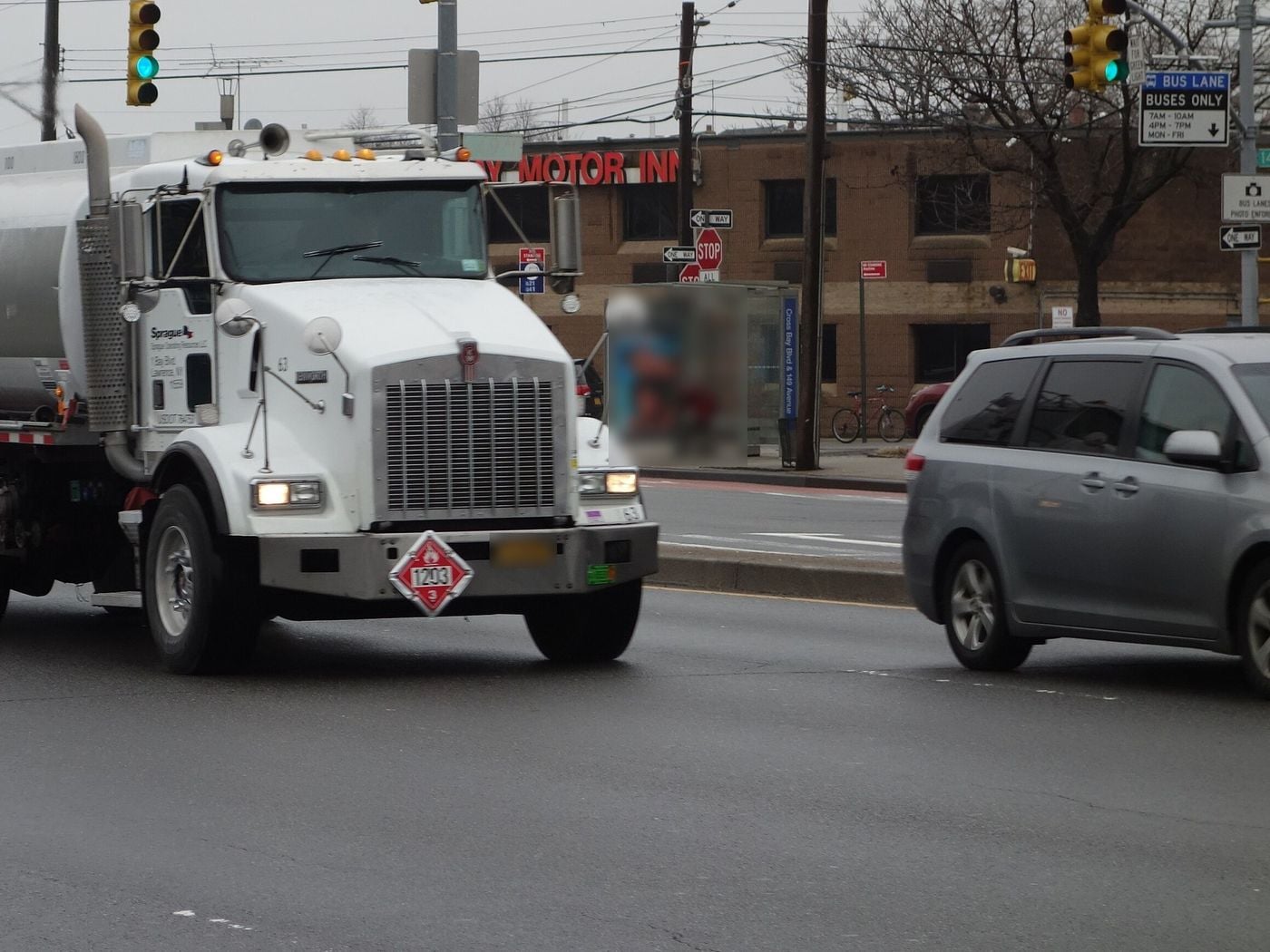
A hazmat placard is the diamond-shaped sign that federal rules require on each side and each end of a vehicle or bulk packaging carrying hazardous materials, and 49 CFR 172.504 sorts the materials into two tables. Table 1 materials, such as Divisions 1.1 to 1.3 explosives and poison gas, need placards in any quantity; Table 2 materials, such as flammable liquids and corrosives, are excepted on a transport vehicle or freight container holding less than 454 kg (1,001 pounds) aggregate gross weight of them. A driver of a vehicle that must be placarded needs the H endorsement on a commercial driver’s license, which takes a knowledge test and a Transportation Security Administration security threat assessment at least every five years.
Status: 13 November 2026. Read on that day: 49 CFR Part 172, Subpart F and sections 171.8, 172.332 and 172.334, Part 383 and Part 1572 in the annual Code of Federal Regulations edition revised as of October 1, 2025, and 49 U.S.C. 5103a. The List of CFR Sections Affected for September 2026 shows four amendments since that edition that touch the text used here: section 172.504(d) and 172.514(b) (effective September 3, 2026), table 1 to section 172.336(c) (effective February 13, 2026) and section 383.3(i) with a new definition of jet fuel in section 383.5 (effective March 10, 2026); the page gives the amended text. It also lists amendments to section 171.8 without naming the definitions changed; the definitions quoted here are those of the 2025 edition. It shows no amendment to Part 1572 or to sections 383.93, 383.121 and 383.141. The Federal Register’s lists of parts affected for October 2026 and for November 2026 up to the issue of November 12 show no final rule on Parts 172, 383 or 1572. These are the federal rules; State procedures and fees are not described here.
| Rule | Figure | Section |
|---|---|---|
| Table 1 materials | Placarded when carried in any quantity | 172.504(a), (e) |
| Table 2 materials, highway or rail | No placards on a transport vehicle or freight container with less than 454 kg (1,001 pounds) aggregate gross weight; not for bulk packagings | 172.504(c) |
| DANGEROUS placard for mixed Table 2 loads | Specific placard required once 1,000 kg (2,205 pounds) of one category is loaded at one facility | 172.504(b) |
| Where placards go | Each side and each end | 172.504(a) |
| Placard size | At least 250 mm (9.84 inches) on each side; class or division numerals at least 41 mm (1.6 inches) high | 172.519(c) |
| Orange panel for the identification number | 160 mm (6.3 inches) high by 400 mm (15.7 inches) wide; numerals 100 mm (3.9 inches) | 172.332(b) |
| Endorsement codes | H hazardous materials; X tank vehicle and hazardous materials | 383.153(a)(9) |
| Test for the H endorsement | A knowledge test | 383.93(c)(4) |
| Security check | TSA determination of no security risk, or a valid TWIC | 383.141(b); 49 U.S.C. 5103a |
| Renewal | Every 5 years or less | 383.141(d) |
| State notice before the endorsement expires | At least 60 days | 383.141(c); 1572.13(b) |
What counts as a hazardous material
Section 171.8 defines a hazardous material as “a substance or material that the Secretary of Transportation has determined is capable of posing an unreasonable risk to health, safety, and property when transported in commerce, and has designated as hazardous under section 5103”. It includes hazardous substances, hazardous wastes, marine pollutants, elevated temperature materials, the materials in the Hazardous Materials Table of section 172.101, and materials that meet the criteria for the hazard classes and divisions of Part 173. The placard tables below name the classes and divisions by number, from 1 to 9; the European ADR rules are described on the page on dangerous goods classes and orange plates.
For the commercial driver’s license the definition is narrower. Section 383.5 counts as hazardous materials “any material that has been designated as hazardous under 49 U.S.C. 5103 and is required to be placarded under subpart F of 49 CFR part 172 or any quantity of a material listed as a select agent or toxin in 42 CFR part 73.” Whether a driver needs the H endorsement therefore follows from the placarding rules below. The statute, 49 U.S.C. 5103a(b), ties the security check to the same line: it applies to any hazardous material “for which the Secretary of Transportation requires placarding of a commercial motor vehicle transporting that material in commerce.”
When placards are required
Subpart F applies to “each person who offers for transportation or transports any hazardous material” subject to the Hazardous Materials Regulations (section 172.500(a)). It does not apply to infectious substances; to limited quantities identified as such on a shipping paper or marked as such; to materials prepared under section 173.13; to small quantities packaged under sections 173.4, 173.4a and 173.4b; or to combustible liquids in non-bulk packagings (section 172.500(b)).
The general rule is in section 172.504(a): “each bulk packaging, freight container, unit load device, transport vehicle or rail car containing any quantity of a hazardous material must be placarded on each side and each end with the type of placards specified in tables 1 and 2 of this section”. Each cargo-carrying body, such as a trailer, is a separate transport vehicle (section 171.8).
The 1,001-pound exception. Paragraph (c) is headed “Exception for less than 454 kg (1,001 pounds)”. Except for bulk packagings and materials subject to section 172.505, when Table 2 materials are transported by highway or rail, placards are not required on “A transport vehicle or freight container which contains less than 454 kg (1001 pounds) aggregate gross weight of hazardous materials covered by table 2”. The exception does not prohibit displaying placards on vehicles that need none, and section 172.502(c) allows placards “even when not required” if they conform to the subpart. A bulk packaging, under section 171.8, has a maximum capacity greater than 450 L (119 gallons) as a receptacle for a liquid, a maximum net mass greater than 400 kg (882 pounds) and a capacity greater than 450 L (119 gallons) for a solid, or a water capacity greater than 454 kg (1000 pounds) for a gas.
Empty packages. Since September 3, 2026, section 172.504(d) has two parts. A non-bulk packaging that contains only the residue of a Table 2 material “need not be included in determining placarding requirements”, except for materials subject to section 172.505. A new paragraph (d)(2) adds that “Transport vehicles or freight containers used to transport empty IBCs in accordance with § 173.29(d) of this subchapter are not subject to placarding requirements of this part.” Section 173.29(d) covers steel, rigid plastic or composite intermediate bulk containers (IBCs) of not more than 2,100 L (550 gallons) holding only the residue of packing group II or III materials of Class or Division 3, 4.1, 5.1, 6.1, 8 and 9, carried by motor vehicle or rail only to a reconditioning, remanufacturing, requalification, disposal or repair facility, with the other conditions that paragraph lists. A bulk packaging that had to be placarded when full otherwise stays placarded when emptied unless it is cleaned and purged, refilled with a material requiring different placards or none so that any residue is no longer hazardous, or meets the Class 9 residue condition (section 172.514(b)).
Subsidiary hazards. A vehicle carrying a material subject to the “Poison Inhalation Hazard” shipping description gets a POISON INHALATION HAZARD or POISON GAS placard in addition to the others; a load of 454 kg (1,001 pounds) or more of uranium hexafluoride gets CORROSIVE and POISON placards in addition to RADIOACTIVE; and a material with a subsidiary hazard of dangerous when wet gets DANGEROUS WHEN WET placards (section 172.505).
Who provides the placards. A person offering a hazardous material to a motor carrier must provide the required placards before or when the material is offered, unless the vehicle is already placarded for it, and “No motor carrier may transport a hazardous material in a motor vehicle, unless the placards required for the hazardous material are affixed thereto as required by this subpart” (section 172.506).
The placard chart: Tables 1 and 2 of section 172.504
The two tables name the placard for each category of material and the section that sets its design. The colours in the third column are those the design sections prescribe; except for size and colour, the printing, inner border and symbol must be as shown in those sections (section 172.519(b)(1)).
| Category of material | Placard name | Colours as the design section states them | Section |
|---|---|---|---|
| 1.1, 1.2, 1.3 | EXPLOSIVES 1.1, EXPLOSIVES 1.2, EXPLOSIVES 1.3 | Orange background; symbol, text, numerals and inner border black | 172.522 |
| 2.3 | POISON GAS | Background and symbol white; upper diamond black; text, class number and inner border black | 172.540 |
| 4.3 | DANGEROUS WHEN WET | Blue background; symbol, text, class number and inner border white | 172.548 |
| 5.2 (Organic peroxide, Type B, liquid or solid, temperature controlled) | ORGANIC PEROXIDE | Red top half, yellow lower half; text, division number and inner border black; symbol black or white | 172.552 |
| 6.1 (material poisonous by inhalation) | POISON INHALATION HAZARD | Background and symbol white; upper diamond black; text, class number and inner border black | 172.555 |
| 7 (Radioactive Yellow III label only) | RADIOACTIVE | White lower portion with a yellow triangle in the upper portion; symbol, text, class number and inner border black | 172.556 |
A footnote to Table 1 adds that RADIOACTIVE placards are also required for all shipments of unpackaged LSA-I material or SCO-I, for shipments that sections 173.427, 173.441 and 173.457 require to be operated under exclusive use, and for closed vehicles used under section 173.443(d).
| Category of material | Placard name | Colours as the design section states them | Section |
|---|---|---|---|
| 1.4, 1.5, 1.6 | EXPLOSIVES 1.4, EXPLOSIVES 1.5, EXPLOSIVES 1.6 | Orange background; text, numerals and inner border black; division numeral at least 64 mm (2.5 inches) high | 172.523, 172.524, 172.525 |
| 2.1 | FLAMMABLE GAS | Red background; symbol, text, class number and inner border white | 172.532 |
| 2.2 | NON-FLAMMABLE GAS | Green background; symbol, text, class number and inner border white | 172.528 |
| 3 | FLAMMABLE | Red background; symbol, text, class number and inner border white | 172.542 |
| Combustible liquid | COMBUSTIBLE | Red background; symbol, text, class number and inner border white | 172.544 |
| 4.1 | FLAMMABLE SOLID | White with seven vertical red stripes; symbol, text, class number and inner border black | 172.546 |
| 4.2 | SPONTANEOUSLY COMBUSTIBLE | Red lower half, white upper half; symbol, text, class number and inner border black | 172.547 |
| 5.1 | OXIDIZER | Yellow background; symbol, text, division number and inner border black | 172.550 |
| 5.2 (other than organic peroxide, Type B, liquid or solid, temperature controlled) | ORGANIC PEROXIDE | Red top half, yellow lower half; text, division number and inner border black; symbol black or white | 172.552 |
| 6.1 (other than material poisonous by inhalation) | POISON | White background; symbol, text, class number and inner border black; “TOXIC” may replace “POISON” | 172.554 |
| 6.2 | NONE | – | – |
| 8 | CORROSIVE | Black lower portion with a white triangle in the upper portion; text and class number white; symbol and inner border black | 172.558 |
| 9 | CLASS 9 (see § 172.504(f)(9)) | White, with seven black vertical stripes on the top half; class number 9 underlined at the bottom | 172.560 |
Two placards are outside the tables. The DANGEROUS placard (section 172.521) “must have a red upper and lower triangle”, with a white centre area and border and a black inscription. Section 172.504(b) allows it on a freight container, unit load device, transport vehicle or rail car carrying non-bulk packages of two or more Table 2 categories that require different placards, but “when 1,000 kg (2,205 pounds) aggregate gross weight or more of one category of material is loaded therein at one loading facility”, the placard for that category must be applied. The OXYGEN placard (section 172.530) has a yellow background with black symbol, text, class number and inner border, and may be used instead of NON-FLAMMABLE GAS for the domestic transportation of oxygen, compressed, or oxygen, refrigerated liquid (section 172.504(f)(7)). On a cargo tank or portable tank, “GASOLINE” may replace “FLAMMABLE” for gasoline by highway, and “FUEL OIL” may replace “COMBUSTIBLE” for fuel oil not classed as a flammable liquid (sections 172.542(c) and 172.544(c)).
Further exceptions in section 172.504(f)
Paragraph (f) lists eleven additional placarding exceptions. Among them:
- for Class 1, when more than one division placard is required, “only the placard representing the lowest division number must be displayed” (f)(1);
- a FLAMMABLE placard may be used in place of a COMBUSTIBLE placard on a cargo tank or portable tank (f)(2);
- a NON-FLAMMABLE GAS placard is not required if the vehicle also carries flammable gas or oxygen and is placarded FLAMMABLE GAS or OXYGEN (f)(3);
- for domestic transportation, a POISON INHALATION HAZARD placard is not required on a vehicle already placarded POISON GAS, and a POISON placard is not required on a vehicle that must display POISON INHALATION HAZARD or POISON GAS (f)(8) and (f)(11);
- “For Class 9, a CLASS 9 placard is not required for domestic transportation”, including the part of an international journey within the United States, but a bulk packaging must still show the identification number on a CLASS 9 placard, an orange panel or a white square-on-point (f)(9);
- for Division 6.1, packing group III materials, a POISON placard may show “PG III” below its mid line (f)(10).
How placards are made and displayed
Each diamond placard “must measure at least 250 mm (9.84 inches) on each side” and have a solid inner border about 12.5 mm inside the edge; the hazard class or division number, shown in the lower corner, must be at least 41 mm (1.6 inches) high, as must the letters of any hazard text (sections 172.519(b)(4) and (c)). Placards made before January 1, 2017 under the earlier size rule may stay in domestic service until the end of their useful life. A placard may be plastic, metal or another material able to withstand a 30-day exposure to open weather, and text indicating the hazard is not required except on Class 7 and DANGEROUS placards (sections 172.519(a) and (b)(3)). For transport under subpart C of Part 171, a placard conforming to the UN Recommendations, the ICAO Technical Instructions, the IMDG Code or the Transport Canada TDG Regulations may replace the corresponding US placard, except for materials poisonous by inhalation (section 172.519(f)).
Under section 172.516, each placard on a motor vehicle must be clearly visible from the direction it faces, except toward a coupled vehicle, and the front placard may be on the front of the truck-tractor instead of or in addition to the front of the cargo body. Each placard must be securely attached or placed in a holder, kept clear of ladders, pipes, doors and tarpaulins, located “at least 3 inches (76.0 mm.) away” from advertising or similar markings, read horizontally from left to right, and set against a contrasting background or given a contrasting border. Section 172.502 forbids a placard on a vehicle that does not carry a hazardous material with that hazard, and any “sign, advertisement, slogan (such as ‘Drive Safely’), or device” that could be confused with a placard.
Identification numbers on placards and orange panels
Where the regulations require the material’s identification number on a bulk packaging or vehicle, it is shown on an orange panel, on a placard, or on a white square-on-point configuration (section 172.332(a)). Tank vehicles are described on the page on tank trucks and tank trailers.
| Display | Dimensions and design | Section |
|---|---|---|
| Orange panel | 160 mm (6.3 inches) high by 400 mm (15.7 inches) wide with a 15 mm (0.6 inches) black outer border; 100 mm (3.9 inches) black Helvetica Medium numerals; tolerance plus or minus 5 mm (0.2 inches) | 172.332(b) |
| Number on a placard | 88 mm (3.5 inches) black Alpine Gothic or Alternate Gothic No. 3 numerals across the centre, on a white background 100 mm (3.9 inches) high and about 215 mm (8.5 inches) wide, its top about 40 mm (1.6 inches) above the placard’s horizontal centre line | 172.332(c) |
An identification number “may be displayed only on a placard corresponding to the primary hazard class of the hazardous material” (section 172.332(c)(3)), and section 172.334(a) states that “No person may display an identification number on a RADIOACTIVE, EXPLOSIVES 1.1, 1.2, 1.3, 1.4, 1.5 or 1.6, DANGEROUS, or subsidiary hazard placard.” The number must be the one specified in section 172.101 and the vehicle or package must contain that material, except as section 172.336(c)(4) or (c)(5) provides (section 172.334(b)). Table 1 to section 172.336(c), revised with effect from February 13, 2026, lists where numbers are not required: a cargo tank carrying only gasoline may instead be marked “Gasoline” or placarded under section 172.542(c), one carrying only fuel oil may be marked “Fuel Oil” or placarded under section 172.544(c), and a cargo tank used for more than one petroleum distillate fuel “in different trips on the previous or current business day” displays the number of the fuel with the lowest flash point. The European orange plates and their numbers are described on the pages on dangerous goods classes and orange plates and ADR tank trailers.
The hazmat endorsement: H and X
Section 383.93(b) requires State-issued endorsements to operate commercial motor vehicles that are “Used to transport hazardous materials as defined in § 383.5”, and the test for it is “a knowledge test” (section 383.93(c)(4)). Section 383.153 puts the endorsements on the license as codes: “H for hazardous materials” and “X for a combination of tank vehicle and hazardous materials endorsements”. The H endorsement is not among the endorsements allowed on a commercial learner’s permit, which section 383.93(a)(2) limits to passenger (P), school bus (S) and tank vehicle (N). The CDL classes and the other endorsements are on the page on CDL classes and endorsements.
Since February 7, 2022, a person must complete the training in Part 380, Subpart F from a provider on the Training Provider Registry before taking “the knowledge test for a hazardous materials (H) endorsement for the first time” (section 383.71(b)(11)). A lawful permanent resident requesting the endorsement must also provide his or her U.S. Citizenship and Immigration Services alien registration number (section 383.71(b)(8)).
State waivers for fuel. Section 383.3(i) lets a State waive the endorsement for a Class A CDL holder employed by a custom harvester operation, agrichemical business, farm retail outlet and supplier or livestock feeder, within the State of domicile or another State with the same exemption, who operates a service vehicle carrying diesel in a quantity of 3,785 liters (1,000 gallons) or less. A rule effective March 10, 2026 extended the waiver to jet fuel and to agricultural aviation operations, and the vehicle must now be “Clearly placarded in accordance with 49 CFR part 172 subpart F”. Section 383.77(b)(3) also lets a State waive the hazardous materials knowledge test for current or former military service members who meet the conditions and limitations of section 383.77(c)(4); States must continue to meet the requirements for the endorsement in Subpart I of Part 383.
Hazmat endorsement knowledge test topics
Section 383.121 requires each applicant to have “such knowledge as is required of a driver of a hazardous materials laden vehicle, from information contained in 49 CFR parts 171, 172, 173, 177, 178, and 397” on the following topics, listed here as the section words them.
| Paragraph | Topics |
|---|---|
| (a) Hazardous materials regulations | Hazardous materials table; shipping paper requirements; marking; labeling; placarding requirements; hazardous materials packaging; hazardous materials definitions and preparation; other regulated material (e.g., ORM-D); reporting hazardous materials accidents; tunnels and railroad crossings |
| (b) Hazardous materials handling | Forbidden materials and packages; loading and unloading materials; cargo segregation; passenger carrying buses and hazardous materials; attendance of motor vehicles; parking; routes; cargo tanks; “Safe havens” |
| (c) Operation of emergency equipment | Use of equipment to protect the public; special precautions for equipment to be used in fires; special precautions for use of emergency equipment when loading or unloading a hazardous materials laden motor vehicle; use of emergency equipment for tank vehicles |
| (d) Emergency response procedures | Special care and precautions for different types of accidents; special precautions for driving near a fire and carrying hazardous materials, and smoking and carrying hazardous materials; emergency procedures; existence of special requirements for transporting Class 1.1 and 1.2 explosives |
| (e) | Operating practices and procedures not otherwise specified |
The knowledge test comes back at renewal. To keep the endorsement at a CDL renewal, a person “must comply with the requirements specified in paragraph (b)(8) of this section and pass the test specified in § 383.121 for such endorsement” (section 383.71(d)(3)). When a driver moves to a new State of domicile, the new State must ensure that the driver has, within the 2 years before the transfer, either passed that test or completed a third-party hazardous materials test or training the State deems to cover the same knowledge (section 383.73(c)(4)).
The TSA security threat assessment (49 CFR Part 1572)
The statute sets the condition: “A State may not issue to any individual a license to operate a motor vehicle transporting in commerce a hazardous material unless” the Secretary of Homeland Security has determined that the individual “does not pose a security risk warranting denial of the license”, or the individual holds a valid transportation security card; “issue” includes renewal (49 U.S.C. 5103a(a)). Section 383.141(b) repeats it for the CDL, naming the Transportation Security Administration (TSA) and the Transportation Worker Identification Credential (TWIC), and section 1572.5(e)(5) states that TSA has found the threat assessment for a hazardous materials endorsement (HME) comparable to the one for a TWIC.
Under section 1572.15, the assessment “includes a fingerprint-based criminal history records check (CHRC), an intelligence-related background check, and a final disposition.” The applicant submits fingerprints and the information listed in section 1572.9 (section 1572.11(c)(1)), which include a signed statement on criminal history, mental capacity, immigration status and military service. The outcomes are:
- a Determination of No Security Threat, served on the State, which may then issue or renew the endorsement (sections 1572.13(a) and 1572.15(d)(1));
- an Initial Determination of Threat Assessment, served on the applicant, which becomes final if the applicant neither appeals nor asks for more time within 60 days of receipt (section 1572.15(d)(2));
- an Initial Determination of Threat Assessment and Immediate Revocation, served on the applicant, the State and, where appropriate, the employer, when TSA finds that the applicant may pose an imminent threat; the State must then revoke the endorsement immediately (sections 1572.13 and 1572.15(d)(3)).
Within 15 days of receiving a Determination of No Security Threat or a Final Determination of Threat Assessment, the State must update the driver’s record and notify the Commercial Drivers License Information System operator (section 1572.13(d)). If no determination has arrived before the expiry date, the issuing State may extend the endorsement for 90 days, and any further extension needs TSA’s prior approval (section 1572.13(c)). A driver who transfers the endorsement to another State is not assessed again until the renewal period of the previous State, “not to exceed five years”, expires (section 1572.13(e)). A holder must surrender the endorsement to the State within 24 hours if convicted of, wanted or under indictment or complaint for a disqualifying offense, found not guilty by reason of insanity, adjudicated as lacking mental capacity or committed to a mental health facility, or on renouncing or losing U.S. citizenship or lawful permanent resident status, violating immigration status or being ordered removed from the United States (section 1572.11(b)).
Renewal timing. The State must notify the holder at least 60 days before the expiry date (sections 383.141(c) and 1572.13(b)). The texts give different deadlines for starting: section 383.141(c) says the notice must advise the driver to file a renewal application “not later than 30 days before the date of expiration of the endorsement”, and section 1572.15(b)(1) speaks of beginning the assessment “no later than 30 days before”, while section 1572.13(b) says the individual may initiate it “at any time after receiving the notice, but no later than 60 days before the expiration date”.
Fees. For an individual who applies to obtain or renew an HME, TSA publishes the Threat Assessment Fee, and under section 1572.405 also the Information Collection Fee, “as a Notice in the FEDERAL REGISTER” and reviews the amounts “at least once every two years” (sections 1572.403(a)(2) and 1572.405(a)(2)).
Disqualifying criminal offenses
Section 1572.103 divides felonies into two groups. A conviction, or a finding of not guilty by reason of insanity, in a civilian or military jurisdiction counts in both.
| Group | When it disqualifies | Offenses |
|---|---|---|
| Permanent, 1572.103(a) | At any time | Espionage; sedition; treason; a federal crime of terrorism or comparable State law; a crime involving a transportation security incident; improper transportation of a hazardous material under 49 U.S.C. 5124 or comparable State law; unlawful possession, use, sale, manufacture, transport or dealing in an explosive or explosive device; murder; threats or false information about an explosive or other lethal device against a place of public use, a government facility, a public transportation system or an infrastructure facility; certain Racketeer Influenced and Corrupt Organizations Act violations; and attempts or conspiracies as that paragraph lists |
| Interim, 1572.103(b) | Conviction within seven years of the date of the application, or release from incarceration within five years | Unlawful possession, use, sale or transport of a firearm or other weapon; extortion; dishonesty, fraud or misrepresentation, including identity fraud; bribery; smuggling; immigration violations; distribution, possession with intent to distribute or importation of a controlled substance; arson; kidnapping or hostage taking; rape or aggravated sexual abuse; assault with intent to kill; robbery; fraudulent entry into a seaport; other Racketeer Influenced and Corrupt Organizations Act violations; conspiracy or attempt |
Paragraph (b)(1)(ii) words the release condition as “within five years of the date of the TWIC application”; the statement an HME applicant signs under section 1572.9(b)(2) refers to the five years before the date of the application. Welfare fraud and passing bad checks do not count as dishonesty or fraud. An applicant who is wanted or under indictment for a listed felony is disqualified until the want or warrant is released or the indictment dismissed (section 1572.103(c)). TSA may also find a security threat from database searches, from “extensive foreign or domestic criminal convictions”, from a serious crime not on the list, or from imprisonment that “exceeds 365 consecutive days” (section 1572.107), and an applicant who has been adjudicated as lacking mental capacity or formally committed to a mental health facility, which does not include commitment for observation or voluntary admission, does not meet the standards (sections 1572.5(a)(4) and 1572.109). Applicants may apply for a waiver of certain standards under section 1515.7 (section 1572.5(d)).
Immigration status
Section 1572.105(a) admits nationals of the United States; lawful permanent residents; refugees admitted under 8 U.S.C. 1157; aliens granted asylum under 8 U.S.C. 1158; certain M-1 students of the U.S. Merchant Marine Academy or a comparable State maritime academy; nonimmigrants admitted under the Compacts of Free Association with Micronesia, the Marshall Islands and Palau; aliens in lawful nonimmigrant status with unrestricted authorization to work, except S-5, S-6, K-1 and K-2 status; holders of the restricted-work statuses that paragraph (a)(7) names, among them H-1B, E-1, E-2, E-3, L-1, O-1 and TN; and commercial drivers licensed in Canada or Mexico admitted to conduct business in the United States. Section 1572.101 adds that HME applicants are also subject to the requirements of Part 383 and of the issuing State, “including additional immigration status and criminal history standards.”
Drivers licensed in Canada or Mexico
A commercial driver licensed by Canada or Mexico “may not transport hazardous materials into or within the United States unless the driver has undergone a background check similar to the one required of U.S.-licensed operators” with an HME (section 1572.201(c)). A current Free and Secure Trade (FAST) program card or a TWIC satisfies the requirement (section 1572.201(d) and (e)). The hazardous materials covered are those required to be placarded under Part 172, Subpart F, or any quantity of a listed select agent or toxin.
A pending proposal
On October 27, 2026 the Pipeline and Hazardous Materials Safety Administration published a notice of proposed rulemaking on harmonization with international standards (HM-215S). Among other changes it would replace the edition of the IMDG Code referenced in sections 172.502 and 172.519, and in other sections, with the 2026 edition (Amendment 43–26). Comments are due by December 28, 2026; it is a proposal and changes no text quoted above.
Not covered here
State procedures, forms and fees; shipping papers, labels and package markings; loading, segregation and routing rules; the emergency response information of Part 172, Subpart G and the Emergency Response Guidebook; hazardous materials employee training under section 172.704; placarding for rail, air and vessel transport; and the drug and alcohol rules that apply to every CDL driver.
Quick answers
- When is a hazmat placard required?
- Under 49 CFR 172.504, a bulk packaging, freight container, unit load device, transport vehicle or rail car containing any quantity of a hazardous material must be placarded on each side and each end. For the materials in Table 2 of that section, placards are not required on a transport vehicle or freight container carrying less than 454 kg (1,001 pounds) aggregate gross weight of them when moved by highway or rail; that exception does not cover bulk packagings, the materials in Table 1, or the subsidiary-hazard materials of section 172.505.
- What is the hazmat endorsement?
- It is the H endorsement on a commercial driver's license, which section 383.93 of 49 CFR requires to operate a commercial motor vehicle used to transport hazardous materials, meaning material designated under 49 U.S.C. 5103 that must be placarded under Part 172, Subpart F, or any quantity of a listed select agent or toxin. Code X on the license stands for the combination of the tank vehicle and hazardous materials endorsements.
- What are the requirements for a hazmat endorsement?
- The applicant must pass the hazardous materials knowledge test described in 49 CFR 383.121, and the State may issue, renew, upgrade or transfer the endorsement only if the Transportation Security Administration has determined that the individual does not pose a security risk warranting denial, or the individual holds a valid TWIC. States must require renewal every 5 years or less, and since February 7, 2022 a person taking the knowledge test for the H endorsement for the first time must first complete the training prescribed in 49 CFR Part 380, Subpart F.
- What does the TSA background check for the hazmat endorsement include?
- Under 49 CFR 1572.15, a fingerprint-based criminal history records check, an intelligence-related background check, and a final disposition. TSA applies the standards of section 1572.5: disqualifying criminal offenses, immigration status, other analyses, and mental capacity. If TSA finds no security threat, it serves a Determination of No Security Threat on the State.
- What do the numbers on a hazmat placard mean?
- The number in the lower corner is the hazard class or division of the material, at least 41 mm (1.6 inches) high under section 172.519. A number displayed across the centre is the identification number specified for the material in the Hazardous Materials Table of section 172.101; section 172.332 sets how it is shown on a placard or on an orange panel.
- What is a DANGEROUS placard?
- A placard with a red upper and lower triangle and a white centre that section 172.504(b) allows on a freight container, unit load device, transport vehicle or rail car holding non-bulk packages of two or more Table 2 categories that require different placards. Once 1,000 kg (2,205 pounds) aggregate gross weight or more of one category is loaded at one loading facility, the placard specified for that category must be applied.
Sources
- 49 CFR Part 172, Subpart F — Placarding, sections 172.500 to 172.560 (Code of Federal Regulations, annual edition revised as of October 1, 2025) — U.S. Government Publishing Office (govinfo)
- 49 CFR 172.332 — Identification number markings (Code of Federal Regulations, annual edition revised as of October 1, 2025) — U.S. Government Publishing Office (govinfo)
- 49 CFR 172.334 — Identification numbers; prohibited display (Code of Federal Regulations, annual edition revised as of October 1, 2025) — U.S. Government Publishing Office (govinfo)
- 49 CFR 171.8 — Definitions and abbreviations (Code of Federal Regulations, annual edition revised as of October 1, 2025) — U.S. Government Publishing Office (govinfo)
- 49 CFR Part 383 — Commercial Driver's License Standards; Requirements and Penalties, sections 383.3, 383.5, 383.71, 383.73, 383.77, 383.93, 383.121, 383.141 and 383.153 (Code of Federal Regulations, annual edition revised as of October 1, 2025) — U.S. Government Publishing Office (govinfo)
- 49 CFR Part 1572 — Credentialing and Security Threat Assessments (Code of Federal Regulations, annual edition revised as of October 1, 2025) — U.S. Government Publishing Office (govinfo)
- 49 U.S.C. 5103a — Limitation on issuance of hazmat licenses (United States Code, 2024 edition) — U.S. Government Publishing Office (govinfo)
- Hazardous Materials: Adoption of Department of Transportation Special Permit 21478 (HM-268P) — final rule, 91 FR 49335 (August 4, 2026), effective September 3, 2026 — Pipeline and Hazardous Materials Safety Administration (Federal Register, govinfo), 4 Aug 2026
- Transportation of Fuel for Agricultural Aircraft Operations — final rule, 91 FR 918 (January 9, 2026), effective March 10, 2026 — Federal Motor Carrier Safety Administration (Federal Register, govinfo), 9 Jan 2026
- Hazardous Materials: Eliminating Unnecessary Regulatory Burdens on Fuel Transportation (HM-265), including table 1 to 49 CFR 172.336(c) — final rule, 91 FR 1433 (January 14, 2026), effective February 13, 2026 — Pipeline and Hazardous Materials Safety Administration (Federal Register, govinfo), 14 Jan 2026
- Hazardous Materials: Harmonization With International Standards (HM-215S) — notice of proposed rulemaking, 91 FR 67720 (October 27, 2026) — Pipeline and Hazardous Materials Safety Administration (Federal Register, govinfo), 27 Oct 2026
- List of CFR Sections Affected, September 2026 (Title 49: changes October 1, 2025 through September 30, 2026) — Office of the Federal Register (govinfo)
- Federal Register, Reader Aids: CFR parts affected during October 2026 (issue of October 30, 2026) — Office of the Federal Register (govinfo), 30 Oct 2026
- Federal Register, Reader Aids: CFR parts affected during November 2026 (issue of November 12, 2026) — Office of the Federal Register (govinfo), 12 Nov 2026