Oversize and overweight loads in the US: nondivisible loads, State permits, flags and signs
US oversize and overweight permits come from the States. Federal rules define nondivisible loads and require flags at least 18 inches square on projecting loads.
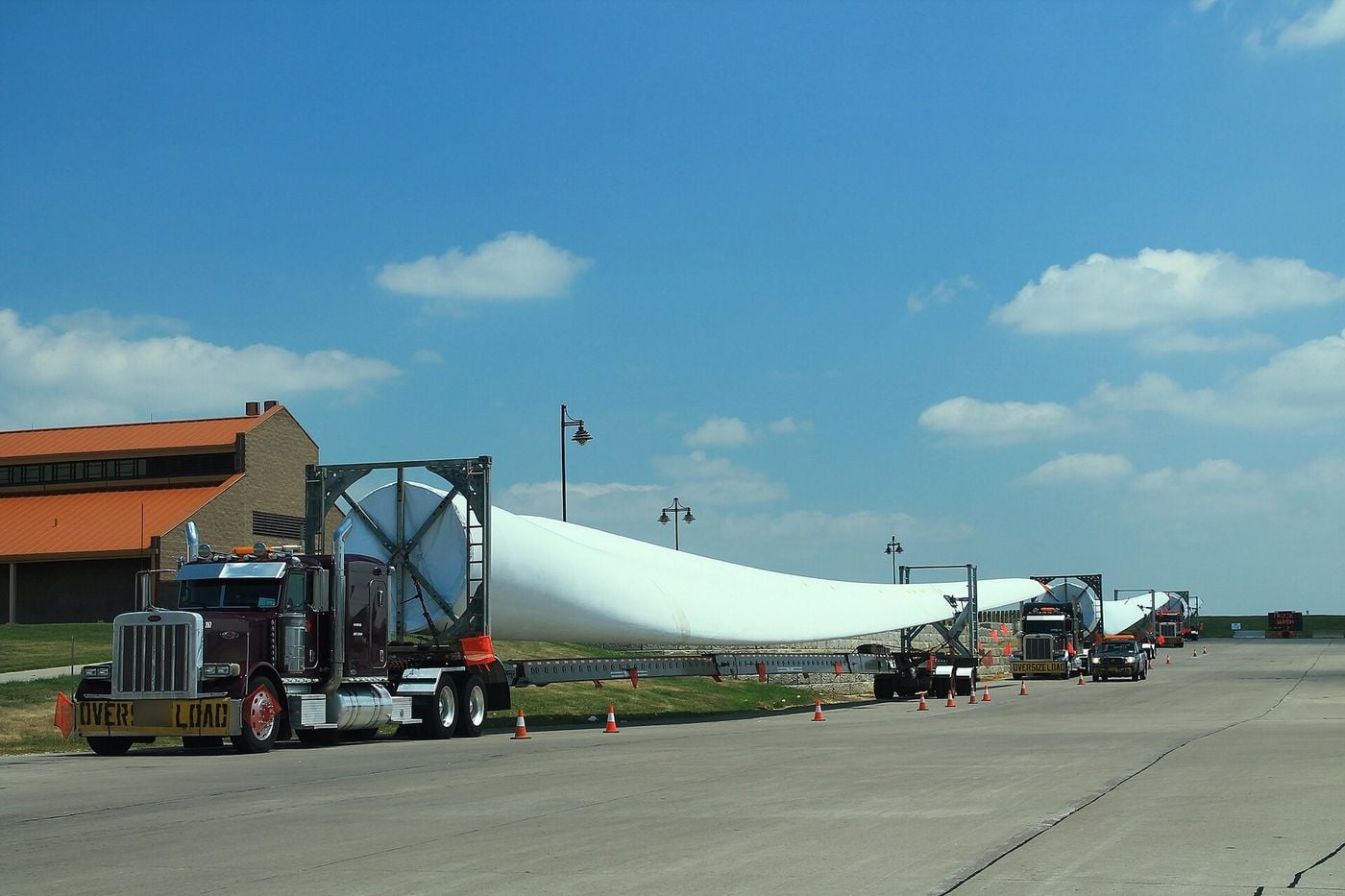
Oversize and overweight permits in the United States are issued by the States, not by the federal government. Federal rules let a State issue special permits for a nondivisible vehicle or load, one that, if separated into smaller loads or vehicles, would compromise the vehicle’s intended use, destroy the value of the load or vehicle, or require more than 8 workhours to dismantle, without regard to the federal axle, gross weight and bridge formula limits. Under the Federal Motor Carrier Safety Regulations, a commercial motor vehicle whose load extends more than 4 inches beyond the sides or more than 4 feet beyond the rear must have the extremities of the load marked with red or orange fluorescent warning flags at least 18 inches square.
Status: 22 November 2026. This page follows 23 CFR 658.5 and 658.17 in the annual edition of the Code of Federal Regulations revised as of April 1, 2025, 49 CFR 393.87 in the edition revised as of October 1, 2025, the Federal Highway Administration’s (FHWA) Oversize/Overweight Load Permits page, FHWA’s pamphlet Federal Size Regulations for Commercial Motor Vehicles (FHWA-HOP-04-022, October 2004), and the permit pages of the Texas Department of Motor Vehicles (TxDMV) and the Minnesota Department of Transportation (MnDOT), all read on that day. It gives the federal rules and, as examples, the rules of those two States; permits are issued State by State.
| Item | Rule, as the text gives it | Source |
|---|---|---|
| Who issues permits | The States: “The Federal government does not issue permits for oversize or overweight vehicles. This is a State option.” | FHWA permit page |
| Nondivisible load | A load or vehicle exceeding applicable length or weight limits which, if separated, would compromise the intended use of the vehicle, destroy the value of the load or vehicle, or require more than 8 workhours to dismantle using appropriate equipment | 23 CFR 658.5 |
| Burden of proof | On the applicant for a nondivisible load permit, as to the number of workhours required to dismantle the load | 23 CFR 658.5 |
| Permits for nondivisible loads | States may issue special permits without regard to the axle, gross or Federal Bridge Formula requirements | 23 CFR 658.17(h) |
| Divisible loads | Designated divisible load permits based upon historic State “grandfather” rights or Congressional authorization | FHWA permit page |
| Width above 102 inches | States may grant special use permits, including for manufactured housing; no federal requirement of an overwidth permit for special mobile equipment | FHWA permit page; FHWA-HOP-04-022 |
| Warning flags | Load more than 4 inches (102 mm) beyond the sides or 4 feet (1,219 mm) beyond the rear: red or orange fluorescent flags, each at least 18 inches (457 mm) square | 49 CFR 393.87(a) |
| Texas | OS/OW permit and, when applicable, an authorized route issued by TxDMV before travel; 12-inch red flags on the load; escort sign “OVERSIZE LOAD” or “WIDE LOAD” | TxDMV |
| Minnesota | Permit generally needed above 8 feet 6 inches wide, 13 feet 6 inches high, 75 feet long for combination vehicles or 80,000 lbs.; not valid on county, municipal, township or other local roads | MnDOT |
Who issues oversize and overweight permits?
FHWA’s page on oversize/overweight load permits opens with the federally mandated maximum weights for the Interstate System and reasonable access to it under 23 CFR 658.17, described in how much a semi-truck weighs, and the federal bridge formula. Under the heading “Permits” it then says: “The Federal government does not issue permits for oversize or overweight vehicles. This is a State option.” The federal width and length rules for the National Network are described in semi-truck dimensions.
The same page says: “To obtain State permits, you will need to contact the State(s) in which you wish to travel.” It lists a permitting office telephone number for each of the 50 States, the District of Columbia and Puerto Rico, with the Port of Long Beach under California, and for the Canadian provinces and territories. The permit, the escorts it sets and the equipment escort vehicles carry are also described, from FHWA’s pilot/escort vehicle operator guidelines, in low-loader trailers and abnormal loads.
What is a nondivisible load?
Section 658.5 of 23 CFR, the definitions of the federal truck size and weight rules, says:
(1) As used in this part, nondivisible means any load or vehicle exceeding applicable length or weight limits which, if separated into smaller loads or vehicles, would:
(i) Compromise the intended use of the vehicle, i.e., make it unable to perform the function for which it was intended;
(ii) Destroy the value of the load or vehicle, i.e., make it unusable for its intended purpose; or
(iii) Require more than 8 workhours to dismantle using appropriate equipment.
The same paragraph adds: “The applicant for a nondivisible load permit has the burden of proof as to the number of workhours required to dismantle the load.”
Paragraph (2) lists loads and vehicles that “A State may treat as nondivisible”:
- emergency response vehicles, including those loaded with salt, sand, chemicals or a combination thereof, with or without a plow or blade attached in front, and being used for the purpose of spreading the material on highways that are or may become slick or icy;
- casks designed for the transport of spent nuclear materials;
- military vehicles transporting marked military equipment or materiel.
Section 658.17, which applies to the National System of Interstate and Defense Highways and reasonable access to it (paragraph (a)), says in paragraph (h): “States may issue special permits without regard to the axle, gross, or Federal Bridge Formula requirements for nondivisible vehicles or loads.” FHWA’s permit page gives the same definition and the three tests under the heading “Nondivisible Loads”.
Divisible loads and grandfather rights
Under the heading “Divisible Loads”, FHWA’s permit page says: “Designated divisible load permits may be issued by the State based upon historic State ‘grandfather’ rights or Congressional authorization for a State-specific commodity or route movement at a greater size or weight.” It adds that State grandfathered rights regarding longer combination vehicles are found in Appendix C to 23 CFR Part 658, described in long truck combinations.
Section 658.17(i) deals with grandfathered weights. The federal gross, single-axle and tandem-axle limits of paragraphs (b), (c) and (d) “shall not apply to single-, or tandem-axle weights, or gross weights legally authorized under State law on July 1, 1956”, and the group of axles requirement does not apply to vehicles legally grandfathered under State groups of axles tables or formulas on January 4, 1975. “Grandfathered weight limits are vested on the date specified by Congress and remain available to a State even if it chooses to adopt a lower weight limit for a time.”
Width and height above the legal limits
FHWA’s permit page, under “Overwidth Permits”, says: “States may grant special use permits to motor vehicles, including manufactured housing, that exceed the Federal 102 inch width limitation.” The 102-inch limit, and the 108 inches of Hawaii, are described in semi-truck dimensions; trailer types such as the lowboy are described in semi-trailer types in the US.
FHWA’s pamphlet Federal Size Regulations for Commercial Motor Vehicles (FHWA-HOP-04-022, October 2004) states that it paraphrases the regulations of 23 CFR Part 658 and that “In case of a dispute, the actual regulations govern.” On width it says that federal width limits do not apply to special mobile equipment, and: “Federal rules do not require States to issue overwidth permits before allowing operation of special mobile equipment. However, if States wish to allow other vehicles more than 102 inches wide (i.e. non-special mobile equipment) to operate on the NN, then States must issue special overwidth permits.”
Section 658.5 defines special mobile equipment as “Every self-propelled vehicle not designed or used primarily for the transportation of persons or property and incidentally operated or moved over the highways, including military equipment, farm equipment, implements of husbandry, road construction or maintenance machinery, and emergency apparatus which includes fire and police emergency equipment.” The definition adds that the list “is partial and not exclusive”.
On height the same pamphlet says: “There is no Federal vehicle height requirement for CMVs. Thus, States may set their own height restrictions.” It gives most height limits as ranging from 13 feet 6 inches to 14 feet; this is covered in semi-truck dimensions.
Warning flags on projecting loads: 49 CFR 393.87
Section 393.87, “Warning flags on projecting loads”, is part of the Federal Motor Carrier Safety Regulations on parts and accessories necessary for safe operation. Paragraph (a) says:
Any commercial motor vehicle transporting a load which extends beyond the sides by more than 102 mm (4 inches) or more than 1,219 mm (4 feet) beyond the rear must have the extremities of the load marked with red or orange fluorescent warning flags. Each warning flag must be at least 457 mm (18 inches) square.
Paragraph (b), on the position of flags:
There must be a single flag at the extreme rear if the projecting load is two feet wide or less. Two warning flags are required if the projecting load is wider than two feet. Flags must be located to indicate maximum width of loads which extend beyond the sides and/or rear of the vehicle.
The section’s source note gives 70 FR 48054, August 15, 2005. Texas, below, sets flag, light and sign rules of its own.
Texas: permits, escorts, flags and signs
TxDMV’s oversize/overweight page, read on 22 November 2026, says: “Vehicles or loads that exceed Texas legal size and weight limits must have an oversize/overweight (OS/OW) permit and an authorized route, when applicable, issued by the TxDMV before traveling on Texas’s public roadways.” The page lists 29 permit options (counted on that day); some of them are shown below as TxDMV describes them.
| Permit | What TxDMV lists |
|---|---|
| General Single-Trip | Non-divisible load; single, continuous movement from Point A to Point B |
| Superheavy | Non-divisible load; “Gross weight may exceed 254,300 lbs. or 200,000 lbs. with less than 95 feet of axle spacing”; may exceed maximum permit weights on axle or axle group |
| 30/60/90 Day Width or Length | Non-divisible loads; width and length permits used in conjunction with one another; 30, 60 or 90 day effective period |
| Annual Length Permit | Non-divisible overlength loads; valid for one year |
| Company Specific Envelope | Non-divisible loads; can be used to operate any truck owned or leased by the company, one at a time; valid for one year |
| Vehicle Specific Envelope | Non-divisible loads; valid for one year |
| Manufactured Housing Single-Trip | Manufactured housing and industrialized buildings and housing; valid for five days |
| House Move | Houses that exceed 20 feet wide |
| Over Axle/Over Gross Weight Tolerance | Divisible commodities; state-maintained and county roads in select counties; valid for one year |
| Federal Disaster Relief Permit | Relief supplies (the entire load) or expediting debris removal; expires 120 days from the date of the President’s disaster declaration |
TxDMV’s escort and equipment page says that, in addition to private escorts, TxDMV may require law enforcement escorts. It sets the number of escort flag vehicles by dimension, for most loads and permit types; manufactured housing and portable buildings have rules of their own, not given here.
| Dimension | Measurement | Escorts |
|---|---|---|
| Width | Exceeding 14 feet to 16 feet | 1 front on a two-lane highway; 1 rear on a multi-lane highway |
| Width | Exceeding 16 feet | 1 front and 1 rear on all roads |
| Height | Exceeding 17 feet | 1 front, equipped with a height pole |
| Height | Exceeding 18 feet | 1 front and 1 rear on all roads; the front one equipped with a height pole |
| Length | Exceeding 110 feet to 125 feet | 1 front on a two-lane highway; 1 rear on a multi-lane highway |
| Length | Exceeding 125 feet | 1 front and 1 rear on all roads |
| Overhang | Front or rear overhang exceeding 20 feet | 1 rear on all roads |
If a load exceeds the escort requirements in two dimensions, front and rear escorts are required. TxDMV’s example: a load 16 feet wide and 112 feet long needs one escort for the width and one for the length.
On the load itself, the same page says: “A vehicle transporting a load that extends beyond the vehicle’s sides or more than four feet beyond the vehicle’s rear must have 12-inch red flags marking the extremities of the load.” A load that extends to the rear more than four feet beyond the bed or body of the vehicle must also have, on its extreme end, two red lamps visible at a distance of at least 500 feet from the rear and two red reflectors that indicate the maximum width, and two red lamps, one on each side, that indicate the maximum overhang and are visible at a distance of at least 500 feet from the side; on such a load the flags go where a lamp is required. Each permitted load in a convoy must have a rotating amber beacon or an amber pulsating light at the top rear of the load.
Except under manufactured housing and portable building permits, the escort flag vehicle must be a single unit with a gross vehicle weight of not less than 1,000 pounds and not more than 10,000 pounds. TxDMV lists its equipment:
- Lights: two flashing amber lights, one rotating amber beacon of not less than eight inches in diameter, or alternating or flashing blue and amber lights fixed to the roof, visible from all sides.
- Sign: on the roof, or on the front and rear of the vehicle, with the words “OVERSIZE LOAD” or “WIDE LOAD”; yellow background with black lettering; 5 to 7 feet in length and 12 to 18 inches in height; lettering 8 to 10 inches high with a brush stroke at least 1.41 inches wide; visible from the front and rear while escorting. “The sign must not be used at any other time.”
- Radio: two-way communications with the permitted vehicle and the other escort flag vehicles of the movement.
- Height pole: a permitted vehicle that exceeds 17 feet in height must have a front escort flag vehicle equipped with a height pole to measure overhead obstructions.
The federal rule of 49 CFR 393.87 speaks of red or orange fluorescent flags at least 18 inches square; the TxDMV page speaks of 12-inch red flags.
Minnesota: permits and escorts
MnDOT’s oversize/overweight page, read on 22 November 2026, says MnDOT issues oversize/overweight (OSOW) permits “to ensure safe transport of loads that exceed size and weight limits prescribed under state and federal laws”, and that a permit is required when a vehicle or load exceeds legal sizes and weight limits and will be moved upon or across a highway or road in Minnesota. Permits “may include specific route instructions to limit risks and prevent damage to infrastructure”; MnDOT offers annual, seasonal and single trip permits.
| Dimension | Vehicle and load exceed |
|---|---|
| Width | 8 feet 6 inches |
| Height | 13 feet 6 inches |
| Length | 45 feet (single vehicles); 48 feet (mobile cranes); 75 feet (combination vehicles) |
| Weight | 80,000 lbs. |
The same page says: “A MnDOT permit is not valid on county, municipal, township or other local roads.” It adds that “Having an oversize/overweight permit does not increase your vehicle’s registered weight”; a temporary weight increase permit comes from the Minnesota Department of Public Safety.
On escorts MnDOT says: “Pilot car escorts are required by law.” Minnesota requires drivers of pilot cars and escort vehicles to hold a current Minnesota certification; holders of Colorado, Florida, North Carolina, Oklahoma, Utah, Virginia and Washington certifications may escort overdimensional loads in Minnesota, provided that they meet Minnesota insurance, driver, vehicle, signage, lighting and safety equipment requirements.
| Roadway | Vehicle or load exceeds | Escorts |
|---|---|---|
| Multi-lane, divided | 15 feet wide measured at the bottom or 16 feet wide measured at the top; or 110 feet long | A certified rear escort |
| Multi-lane, divided | 150 feet long | Certified front and rear escorts |
| Undivided | 15 feet wide measured at the bottom or 16 feet wide measured at the top; or 110 feet long | Certified front and rear escorts |
| Undivided | Any part of the load or vehicle extends beyond the left of the centerline | A certified licensed lead Peace Officer plus certified front and rear escorts |
MnDOT may require additional escorts when deemed necessary to protect public safety or to ensure against undue damage to the road foundations, surfaces or structures.
What this page does not cover
- The rules, permit types and dimensions of States other than Texas and Minnesota; no State-by-State table is given.
- Permit fees, routes, restricted bridges and roads, travel hours, holiday and seasonal restrictions, and how permits are ordered.
- Temporary waivers and executive orders that suspend or relax permit requirements, such as for disaster response.
- Escort driver training and certification procedures, and Minnesota’s flag, light and sign requirements.
- The escort, light, flag and sign rules for manufactured housing and portable building permits in Texas.
- The federal weight, length and width limits themselves: see how much a semi-truck weighs and semi-truck dimensions.
- Canadian provinces and territories.
Quick answers
- Who issues oversize and overweight permits in the US?
- The States. The Federal Highway Administration's permit page says: “The Federal government does not issue permits for oversize or overweight vehicles. This is a State option.” Under 23 CFR 658.17(h), States may issue special permits without regard to the axle, gross or Federal Bridge Formula requirements for nondivisible vehicles or loads. FHWA's page adds: “To obtain State permits, you will need to contact the State(s) in which you wish to travel.”
- What is a nondivisible load?
- Under 23 CFR 658.5, a nondivisible load or vehicle is one exceeding applicable length or weight limits which, if separated into smaller loads or vehicles, would compromise the intended use of the vehicle, destroy the value of the load or vehicle, or require more than 8 workhours to dismantle using appropriate equipment. The applicant for a nondivisible load permit has the burden of proof as to the number of workhours. A State may also treat as nondivisible emergency response vehicles, including those loaded with salt, sand or chemicals for spreading on highways that are or may become slick or icy, casks designed for the transport of spent nuclear materials, and military vehicles transporting marked military equipment or materiel.
- What flags does an oversize load need?
- Under 49 CFR 393.87, a commercial motor vehicle whose load extends more than 4 inches (102 mm) beyond the sides or more than 4 feet (1,219 mm) beyond the rear must have the extremities of the load marked with red or orange fluorescent warning flags, each at least 18 inches (457 mm) square: one flag at the extreme rear if the projecting load is two feet wide or less, two if it is wider. Texas's TxDMV page gives 12-inch red flags for loads that extend beyond the sides or more than four feet beyond the rear.
- How wide can a load be without a permit?
- The federal width limit on the National Network is 102 inches, 108 inches in Hawaii. FHWA's permit page says States may grant special use permits, including for manufactured housing, to vehicles that exceed the federal 102-inch width limitation, and FHWA's 2004 pamphlet says a State that allows vehicles other than special mobile equipment more than 102 inches wide on the National Network must issue special overwidth permits. Minnesota's MnDOT says a permit is generally needed above 8 feet 6 inches wide.
- What does an OVERSIZE LOAD sign have to look like?
- In Texas, except under manufactured housing and portable building permits, TxDMV requires an escort flag vehicle to display, on its roof or on its front and rear, a sign with the words “OVERSIZE LOAD” or “WIDE LOAD”: yellow background with black lettering, 5 to 7 feet long and 12 to 18 inches high, with letters 8 to 10 inches high and a brush stroke at least 1.41 inches wide, visible from the front and rear while escorting. The sign must not be used at any other time.
- Can a divisible load get an overweight permit?
- FHWA's permit page says designated divisible load permits may be issued by a State based upon historic State “grandfather” rights or Congressional authorization for a State-specific commodity or route movement at a greater size or weight. TxDMV's list of permit options includes an Over Axle/Over Gross Weight Tolerance permit, valid for one year, to haul divisible commodities on state-maintained and county roads in select counties.
Sources
- 23 CFR 658.5 — Definitions (Code of Federal Regulations, annual edition revised as of April 1, 2025) — U.S. Government Publishing Office (govinfo)
- 23 CFR 658.17 — Weight (Code of Federal Regulations, annual edition revised as of April 1, 2025) — U.S. Government Publishing Office (govinfo)
- 49 CFR 393.87 — Warning flags on projecting loads (Code of Federal Regulations, annual edition revised as of October 1, 2025) — U.S. Government Publishing Office (govinfo)
- Oversize/Overweight Load Permits — FHWA Freight Management and Operations web page, with State permit contacts (read November 22, 2026) — Federal Highway Administration, U.S. Department of Transportation
- Federal Size Regulations for Commercial Motor Vehicles — pamphlet FHWA-HOP-04-022 (October 2004) — Federal Highway Administration, Office of Freight Management and Operations
- Oversize/Overweight Permits — TxDMV motor carrier web page with the list of permit options (read November 22, 2026) — Texas Department of Motor Vehicles
- Escort and Equipment Requirements — TxDMV oversize/overweight web page (read November 22, 2026) — Texas Department of Motor Vehicles
- Minnesota Oversize/Overweight Permits — MnDOT overview web page (read November 22, 2026) — Minnesota Department of Transportation
- Find out if you need a permit — MnDOT oversize/overweight web page (read November 22, 2026) — Minnesota Department of Transportation
- Escort requirements — MnDOT oversize/overweight web page (read November 22, 2026) — Minnesota Department of Transportation