Trailer number plates in Europe: own plate or the towing vehicle's, and why some trailers carry two
Which countries give a trailer its own number and which repeat the towing vehicle's: Spain's red R plate, the UK scheme for trips abroad, and the rules in France, Germany, Italy and Poland.
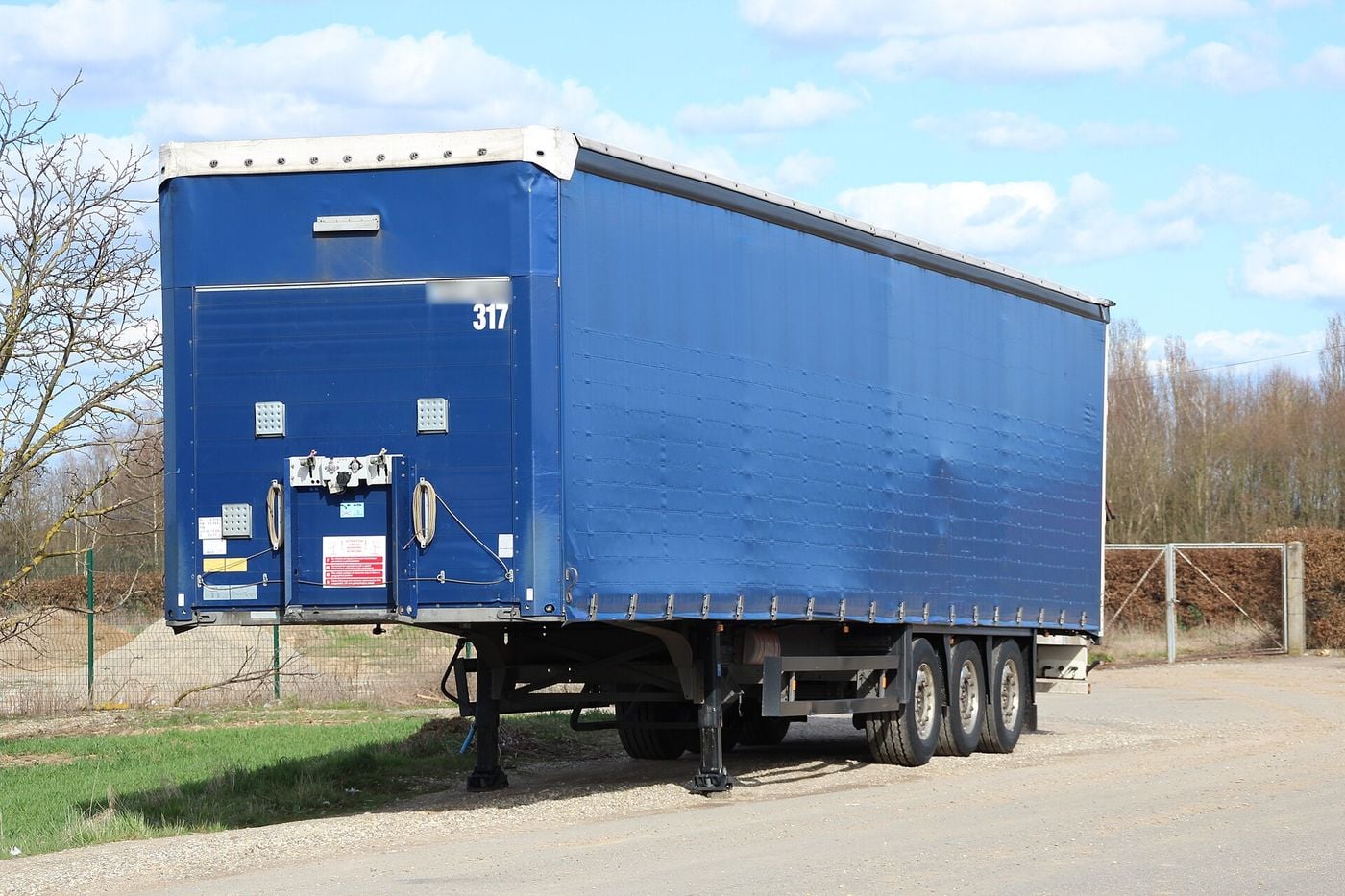
Whether a trailer carries a number of its own or the number of the vehicle towing it is a national rule, and in several countries it turns on the trailer’s mass. Spain registers trailers and semi-trailers over 750 kg: they carry a red plate beginning with R and, on the right side, a second plate with the towing vehicle’s number. France gives a trailer over 500 kg its own plate. The German, Italian and Polish texts read set no mass threshold, so trailers there carry their own registration apart from the types the texts list. Great Britain has no domestic trailer registration, but since 28 March 2019 certain trailers have had to be registered with the DVLA for journeys to or through most European countries; GOV.UK now says this for all trailers over 750 kg, and such a trailer shows its own plate as well as the towing vehicle’s.
Status as at 14 November 2026. Read on that day: GOV.UK’s trailer registration guidance (last updated 26 August 2025) and the DVLA’s guidance INF291 (updated 30 April 2026), the DVLA bulletin of 26 March 2019 and the Department for Transport and DVLA consultation on amending the scheme; Spain’s Reglamento General de Vehículos in the consolidated text of the Boletín Oficial del Estado; §§ 3, 4, 9, 10 and 12 of Germany’s Fahrzeug-Zulassungsverordnung (FZV); Articles 56 and 100 of Italy’s Codice della strada on Normattiva (act last updated 24 April 2026); the Service-Public.fr page F21112 (verified 11 March 2026); and Article 71 of Poland’s road traffic act in the unified text Dz.U. 2024 poz. 1251. Not read: the text of the UK’s Trailer Registration Regulations 2018 and any later amendment to them, Italy’s implementing regulation and the earlier wording of Article 100(4) of the Codice della strada, France’s Code de la route, and Poland’s regulation on number plates.
Own number or the towing vehicle’s, country by country
The thresholds below are written as each text gives them: maximum authorised mass in Spain, PTAC (poids total autorisé en charge, total authorised laden weight) in France and gross weight in Great Britain. The O1 to O4 trailer categories are explained in vehicle categories M, N and O.
| Country | Trailer with its own number | Trailer with the towing vehicle’s number | Where the plates go | Source |
|---|---|---|---|---|
| France | PTAC over 500 kg: own registration certificate and a plate with its own number | PTAC 500 kg or less: a plate identical to the towing vehicle’s, no certificate of its own | Not stated on the page read | Service-Public.fr F21112, verified 11 Mar 2026 |
| Germany | Every trailer that needs admission (FZV § 3(1)), with no mass threshold; some admission-free types still carry their own number (§ 4(2) no. 3) | Admission-free trailers listed in § 12(9): a number the keeper of the towing vehicle may use for one of his towing vehicles | At the rear (§ 12(5) and (9)); repeated if a load carrier or the load hides it (§ 12(10)) | FZV §§ 3, 4 and 12 |
| Great Britain | No domestic scheme; for journeys to or through the countries GOV.UK lists, all trailers over 750 kg (GOV.UK); legal scope at the 2019 start: commercial trailers over 750 kg, others over 3,500 kg | Displayed as well as the trailer’s own plate (INF291) | Own plate at the rear, vertical, as far as reasonably possible from the towing vehicle’s plate; on both sides if it cannot go at the rear | GOV.UK, 26 Aug 2025; DVLA INF291, 30 Apr 2026; DVLA bulletin, 26 Mar 2019; DfT and DVLA consultation |
| Italy | Rimorchi: one rear plate with their own registration data (Art. 100(3)), with no mass threshold in Article 100 | Carrelli appendice: a repeater plate with the towing vehicle’s registration data (Art. 100(4); a Normattiva note defers this wording until the implementing regulation is amended) | At the rear | Codice della strada Arts 56 and 100, Normattiva, act updated 24 Apr 2026 |
| Poland | Przyczepa: registered and fitted with legalised number plates (Art. 71(1) and (2)), with no mass threshold in Article 71; motorcycle trailers and special trailers drawn by agricultural tractors or slow-moving vehicles need only meet the conditions of Article 66 (Art. 71(3)) | Not stated in Article 71 | Not stated in Article 71; the plate regulation was not read | Prawo o ruchu drogowym, Dz.U. 2024 poz. 1251 |
| Spain | Maximum authorised mass over 750 kg (Art. 25(1)): own red R plate | Over 750 kg: a second plate with the towing vehicle’s number; 750 kg or less: one plate with the towing vehicle’s number only | Own plate at the rear in the centre, towing vehicle’s plate on the right side; at 750 kg or less, one rear plate on the left or in the centre (Annex XVIII, III.4) | Reglamento General de Vehículos, BOE consolidated text |
Why some trailers carry two plates
In two of the texts read, a trailer that has its own number also carries the towing vehicle’s. In Spain, Annex XVIII (section III, point 4) of the Reglamento General de Vehículos gives a trailer over 750 kg its own plate at the rear “y, además, en el lado derecho, de otra placa con la matrícula del vehículo remolcador” (and, in addition, on the right side, another plate with the towing vehicle’s registration). In Great Britain the DVLA’s guidance INF291 says the trailer registration plate “must be displayed as well as the towing vehicle’s registration plate and must be fixed as far as reasonably possible from this plate” (section 19).
In the German text a registered trailer needs one plate, its own, and only at the rear; a towing vehicle’s number appears on a trailer there only where the trailer has no number of its own, on the admission-free trailers of FZV § 12(9), which carry a number the towing vehicle’s keeper may use for one of his towing vehicles. Italy’s Article 100 gives a trailer one rear plate with its own registration data (paragraph 3) and a carrello appendice a repeater plate with the towing vehicle’s data (paragraph 4), but a note on Normattiva defers the current wording of paragraph 4 until the implementing regulation is amended; neither those amendments nor the earlier wording were read. In France and Spain a trailer carries the towing vehicle’s number instead of its own at 500 kg or less and at 750 kg or less respectively.
Spain: the red R plate and the tractor’s number
Article 25(1) of the Reglamento General de Vehículos (Real Decreto 2822/1998) requires motor vehicles, and “remolques y semirremolques de masa máxima autorizada superior a 750 kilogramos”, to be registered and to carry number plates as Annex XVIII sets out.
- Colours and characters. For trailers and semi-trailers the plate background is retroreflective red and the embossed characters are painted matt black (Annex XVIII, I.A.c). The number has three groups: the letter R, a number from 0000 to 9999 and three letters from BBB to ZZZ, leaving out the five vowels and the letters Ñ, Q, CH and LL.
- Placement. A trailer, semi-trailer or towed agricultural or works machine over 750 kg carries its own plate at the rear, vertical or nearly vertical, in the median longitudinal plane, and the towing vehicle’s plate on the right side. The others carry a single rear plate on the left or in the centre “de igual contenido que la del vehículo remolcador”, with the same content as the towing vehicle’s (III.4).
- Sizes. Table 1 of Annex XVIII gives two trailer plates: a long one of 520 × 110 mm and a tall one of 340 × 220 mm, both with characters 77 mm high and 45 mm wide.
A red plate with white characters is a different plate: the temporary permit for companies, whose number begins with S for unregistered vehicles or V for registered ones (I.C.b). For UK-registered trailers, GOV.UK lists Spain among the countries where no UK trailer registration is needed.
Great Britain: trailer registration for journeys abroad
The DVLA’s bulletin of 26 March 2019 announced that “From 28 March 2019, trailers will need to be registered for international journeys” and called the scheme “a result of the UK ratifying the UN 1968 Vienna Convention on Road Traffic”. The Department for Transport and DVLA consultation names the Haulage Permits and Trailer Registration Act 2018 and the Trailer Registration Regulations 2018 as the instruments that introduced the scheme. INF291 gives the Act’s definition of a trailer as “anything on wheels which is intended or adapted to be drawn by a motor vehicle”, caravans and animal carriers included.
The rule as GOV.UK states it today. The guidance page, last updated on 26 August 2025, says all trailers over 750 kg must be registered “to drive to or through most countries in Europe, apart from Ireland, Cyprus, Malta and Spain”. Such trailers on international journeys display “their own registration plate (separate from the vehicle towing them)” and have a registration certificate that can be shown to a foreign authority on request. The page lists 41 countries (counted for this page): Albania, Andorra, Armenia, Austria, Azerbaijan, Belarus, Belgium, Bosnia and Herzegovina, Bulgaria, Croatia, Czech Republic, Denmark, Estonia, Finland, France, Georgia, Germany, Greece, Hungary, Italy, Kazakhstan, Latvia, Lithuania, Luxembourg, Macedonia, Moldova, Monaco, Montenegro, Netherlands, Norway, Poland, Portugal, Romania, Russia, San Marino, Serbia, Slovakia, Slovenia, Sweden, Switzerland and Ukraine. Trailers used only in the UK or for journeys between the UK and Ireland, and trailers used in Cyprus, Malta or Spain, need no registration, but GOV.UK adds that trailers must be registered to tow them through a listed country to reach Cyprus, Malta or Spain. INF291, updated on 30 April 2026, gives the same 750 kg rule and says foreign authorities may take enforcement action if a trailer is not registered and its certificate cannot be shown on request; this “applies to commercial and non-commercial trailers (for example, caravans and animal carriers)” (section 2).
The legal scope of the 2018 Regulations. Two days before the start, the DVLA bulletin described the scheme as follows: “Registration is mandatory for all commercial use trailers travelling internationally with a gross weight of over 750kg”, and also for non-commercial trailers travelling internationally with a gross weight over 3,500 kg; lighter non-commercial trailers could be registered voluntarily. The Department for Transport and DVLA consultation on amending the scheme gives the same two classes for the Trailer Registration Regulations 2018, which came into force on 20 November 2018, and adds: “There is no domestic scheme.” Trailers over 750 kg may be registered voluntarily even if they do not travel abroad, and trailers of 750 kg or less cannot be registered. That consultation, which closed on 2 July 2021 and put the DVLA’s records at around 25,500 registered trailers, proposed technical amendments to the 2018 Regulations; whether the Regulations have been amended since was not read for this page. Both the current GOV.UK wording and the 2019 scope cover commercial trailers over 750 kg.
Number and plate. A DVLA trailer number is one letter followed by 7 digits, set out on 2 lines, and never starts with the letter C. The plate has the shape of a standard motorcycle plate, with solid black characters on a white background and no designs or patterns; the characters are 64 mm tall (INF291, section 18). It goes on the rear of the trailer in a visible, vertical position, in addition to the towing vehicle’s plate; if it cannot be displayed at the rear, a plate goes on both sides of the trailer (section 19). A plate that does not display the number correctly can lead to a fine of up to £1,000 (section 16). INF291 adds that some foreign countries may also require a UK sticker on the trailer, displayed next to the trailer plate and not on it (section 20).
Certificate and fees. The registration certificate is posted within 3 to 5 working days, stays with the trailer and is valid for 10 years. GOV.UK gives the fees as £26 to register a trailer for the first time, £21 for a new registration certificate for a new registered keeper and £10 for a replacement certificate. An abnormal load trailer also needs a keeper’s certificate from the DVSA to be taken abroad.
Germany, Italy, France and Poland
Germany. Under § 3(1) FZV, “Ein Kraftfahrzeug und seine Anhänger” may be used on public roads only if admitted to traffic, and admission is given by allocating a number, stamping the plates and issuing a registration certificate. § 3 sets no mass threshold for trailers; § 3(3) no. 2 lists the trailers that need no admission, among them agricultural and forestry trailers used at no more than 25 km/h, mobile site huts and toilet trailers drawn at no more than 25 km/h, work machines, special trailers used only to carry sports equipment, animals for sport or rescue boats of the emergency services, and single-axle trailers behind motorcycles. Work machines and those special trailers carry a number of their own all the same when they are not marked for 25 km/h (§ 4(2) no. 3). The number serves to identify the keeper (§ 9(1)); it is black on a white ground with a black border (§ 12(1)) and on a trailer goes at the rear (§ 12(5)). The admission-free trailers listed in § 12(9) carry at the rear a number “das der Halter des Zugfahrzeuges für eines seiner Zugfahrzeuge verwenden darf”, one that the keeper of the towing vehicle may use for one of his towing vehicles, with no stamp needed. A green plate, with green characters on a white ground, is also allocated to a trailer when it is applied for under the special rule for trailers in § 10 of the vehicle tax act, the Kraftfahrzeugsteuergesetz (§ 10(2) FZV).
Italy. Article 56 of the Codice della strada defines the rimorchi, among them semi-trailers (paragraph 3), and treats carrelli appendice, with no more than two wheels and used for luggage, tools and the like, as integral parts of the vehicle that tows them, within the dimension and mass limits (paragraph 4). Article 100(3) reads: “I rimorchi devono essere muniti di una targa posteriore contenente i dati di immatricolazione”, that is one rear plate with the trailer’s own registration data. A carrello appendice hitched to a towing vehicle carries at the rear a repeater plate with the towing vehicle’s registration data (Article 100(4)). A note on Normattiva quotes Article 11(8) of Law no. 120 of 29 July 2010: paragraph 4 in its current wording applies “a decorrere dalla data di entrata in vigore delle modifiche del regolamento”, from the entry into force of the amendments to the implementing regulation, and only to trailers registered after that date. Whether those amendments are in force, and the earlier wording of paragraph 4, were not read for this page. The plates are retroreflective (paragraph 5). Placement and design are left to the implementing regulation (paragraph 9), which was not read.
France. The Service-Public.fr page F21112 says a trailer or caravan with a PTAC over 500 kg needs its own registration certificate and carries a plate with the number of that certificate; its territorial identifier may differ from the towing vehicle’s. At 500 kg or less, the trailer carries “une plaque d’immatriculation identique à celle du véhicule qui la tracte” and needs no certificate of its own. The page lists articles R322-1 to R322-14 of the Code de la route among its legal references; they were not read for this page.
Poland. Under Article 71 of the Prawo o ruchu drogowym, the document admitting a trailer (przyczepa) to traffic is the registration certificate or a temporary permit (paragraph 1), and the vehicle is admitted if it meets the conditions of Article 66 and is registered and fitted with “zalegalizowane tablice (tablicę) rejestracyjne”, legalised number plates or a plate (paragraph 2). Motorcycle trailers and special trailers drawn by an agricultural tractor or a slow-moving vehicle need only meet the conditions of Article 66 (paragraph 3). Article 71 sets no mass threshold. The text read is the unified text of 2024; later amendments were not read.
What this page does not cover
- Russia and Türkiye: the plate rules of GOST R 50577 and of Türkiye’s Highway Traffic Regulation were not read in an official text for this page, so neither country has a row. Other countries are not covered.
- Caravans beyond one line: the UK scheme counts them as trailers, and the French page treats a caravan like a trailer.
- Insurance documents for trailers, plates in the United States, and how plates are made or ordered.
- The vehicle tax rules behind Germany’s green plate for trailers.
- The plate that records a trailer’s weights, which is not a number plate; in Great Britain it is covered in HGV and PSV roadworthiness in Great Britain. The trailer bodies themselves are described in trailer types.
Quick answers
- Why do some lorries and trailers have two number plates?
- Because some countries put the towing vehicle's number on the trailer as well as the trailer's own. In Spain a trailer or semi-trailer over 750 kg carries its own red plate in the centre at the rear and, on the right side, a second plate with the towing vehicle's number (Reglamento General de Vehículos, Annex XVIII, section III, point 4). A trailer registered with the DVLA for journeys abroad displays its own plate at the rear as well as the towing vehicle's plate, as far from it as reasonably possible (DVLA guidance INF291). In Germany a trailer with its own registration needs a plate only at the rear; for Italy, a note on Normattiva defers the current wording of the Codice della strada's repeater-plate paragraph until the implementing regulation is amended.
- Why do Spanish lorries have a red number plate?
- The red plate with black characters belongs to the trailer or semi-trailer. Spain registers trailers and semi-trailers over 750 kg maximum authorised mass (Article 25(1) of the Reglamento General de Vehículos), and their plates have a red retroreflective background with matt black characters: the letter R, four digits and three letters (Annex XVIII). A second plate, on the right side, repeats the towing vehicle's number. A red plate with white characters is a different plate, the temporary permit for companies.
- Does a trailer need its own number plate in Europe?
- It depends on the country and, in some, on the trailer's mass. Spain registers trailers and semi-trailers over 750 kg, France gives a trailer over 500 kg PTAC its own certificate and plate, and the German, Italian and Polish texts read set no mass threshold; they make exceptions only for the types they list. Lighter or listed trailers carry a towing vehicle's number instead: in Spain at 750 kg or less, in France at 500 kg or less, in Italy the carrelli appendice (in the wording of Article 100(4) that a note on Normattiva defers until the implementing regulation is amended), and in Germany the admission-free trailers of FZV § 12(9), which carry a number the towing vehicle's keeper may use for one of his towing vehicles. Great Britain has no domestic trailer registration scheme.
- Do UK trailers need to be registered to go to Europe?
- GOV.UK, in guidance last updated on 26 August 2025, says all trailers over 750 kg must be registered to drive to or through most countries in Europe, apart from Ireland, Cyprus, Malta and Spain, and lists 41 countries (counted for this page). Registration is still needed to tow through a listed country to reach Cyprus, Malta or Spain. In a bulletin of 26 March 2019, two days before the scheme started on 28 March 2019, DVLA described registration as mandatory for commercial trailers over 750 kg and non-commercial trailers over 3,500 kg gross weight travelling internationally. Trailers of 750 kg or less cannot be registered. The fees are £26 for a first registration, £21 for a new keeper's certificate and £10 for a replacement certificate.
- What does a UK trailer registration plate look like?
- It has the shape of a standard motorcycle plate, with solid black characters 64 mm tall on a white background, and shows one letter followed by 7 digits on two lines; a DVLA trailer number never starts with the letter C (INF291). It goes on the rear of the trailer, vertical, in addition to the towing vehicle's plate; if it cannot go at the rear, a plate goes on both sides of the trailer.
Sources
- Check if you need to register a trailer before towing it abroad (guidance, published 25 October 2018, last updated 26 August 2025) — GOV.UK: Department for Transport, Driver and Vehicle Licensing Agency, Driver and Vehicle Standards Agency and Traffic Commissioners for Great Britain
- Trailer registration service guidance (INF291), updated 30 April 2026 — sections 1 to 4, 8 and 14 to 20 — Driver and Vehicle Licensing Agency (GOV.UK), 30 Apr 2026
- Trailer registration scheme in force from 28 March 2019 (e-mail bulletin of 26 March 2019) — Driver and Vehicle Licensing Agency, 26 Mar 2019
- Amending the UK trailer registration scheme: altering inspector location, removing further inspection fee and addition of trailer type information (consultation closed 2 July 2021; page updated 12 October 2023) — background and amendment 5 — Department for Transport and Driver and Vehicle Licensing Agency (GOV.UK)
- Real Decreto 2822/1998, Reglamento General de Vehículos — consolidated text, last update published 26 June 2026: Article 25 and Annex XVIII (sections I, III and IV, Table 1) — Boletín Oficial del Estado (Spain)
- Fahrzeug-Zulassungsverordnung (FZV) — § 3 Notwendigkeit einer Zulassung — Bundesministerium der Justiz, gesetze-im-internet.de (Germany)
- Fahrzeug-Zulassungsverordnung (FZV) — § 4 Voraussetzungen für die Inbetriebsetzung eines zulassungsfreien Fahrzeuges — Bundesministerium der Justiz, gesetze-im-internet.de (Germany)
- Fahrzeug-Zulassungsverordnung (FZV) — § 9 Zuteilung von Kennzeichen — Bundesministerium der Justiz, gesetze-im-internet.de (Germany)
- Fahrzeug-Zulassungsverordnung (FZV) — § 10 Besondere Kennzeichen — Bundesministerium der Justiz, gesetze-im-internet.de (Germany)
- Fahrzeug-Zulassungsverordnung (FZV) — § 12 Ausgestaltung und Anbringung der Kennzeichen — Bundesministerium der Justiz, gesetze-im-internet.de (Germany)
- Decreto legislativo 30 aprile 1992, n. 285, Nuovo codice della strada — Article 100, Targhe di immatricolazione degli autoveicoli, dei motoveicoli e dei rimorchi (act last updated 24 April 2026) — Normattiva (Italy)
- Decreto legislativo 30 aprile 1992, n. 285, Nuovo codice della strada — Article 56, Rimorchi — Normattiva (Italy)
- Faut-il immatriculer une caravane ou une remorque ? (page F21112, vérifié le 11 mars 2026) — Service-Public.fr, Direction de l'information légale et administrative (France), 11 Mar 2026
- Ustawa z dnia 20 czerwca 1997 r. Prawo o ruchu drogowym — unified text Dz.U. 2024 poz. 1251 (announced 21 June 2024), Article 71 — Sejm of the Republic of Poland, ELI, 21 Jun 2024