US truck idling rules: CARB's 5 minutes and 550 lb for APUs
California limits diesel trucks and buses over 10,000 lb GVWR to 5 consecutive minutes of idling; federal law adds up to 550 lb for idle reduction technology.
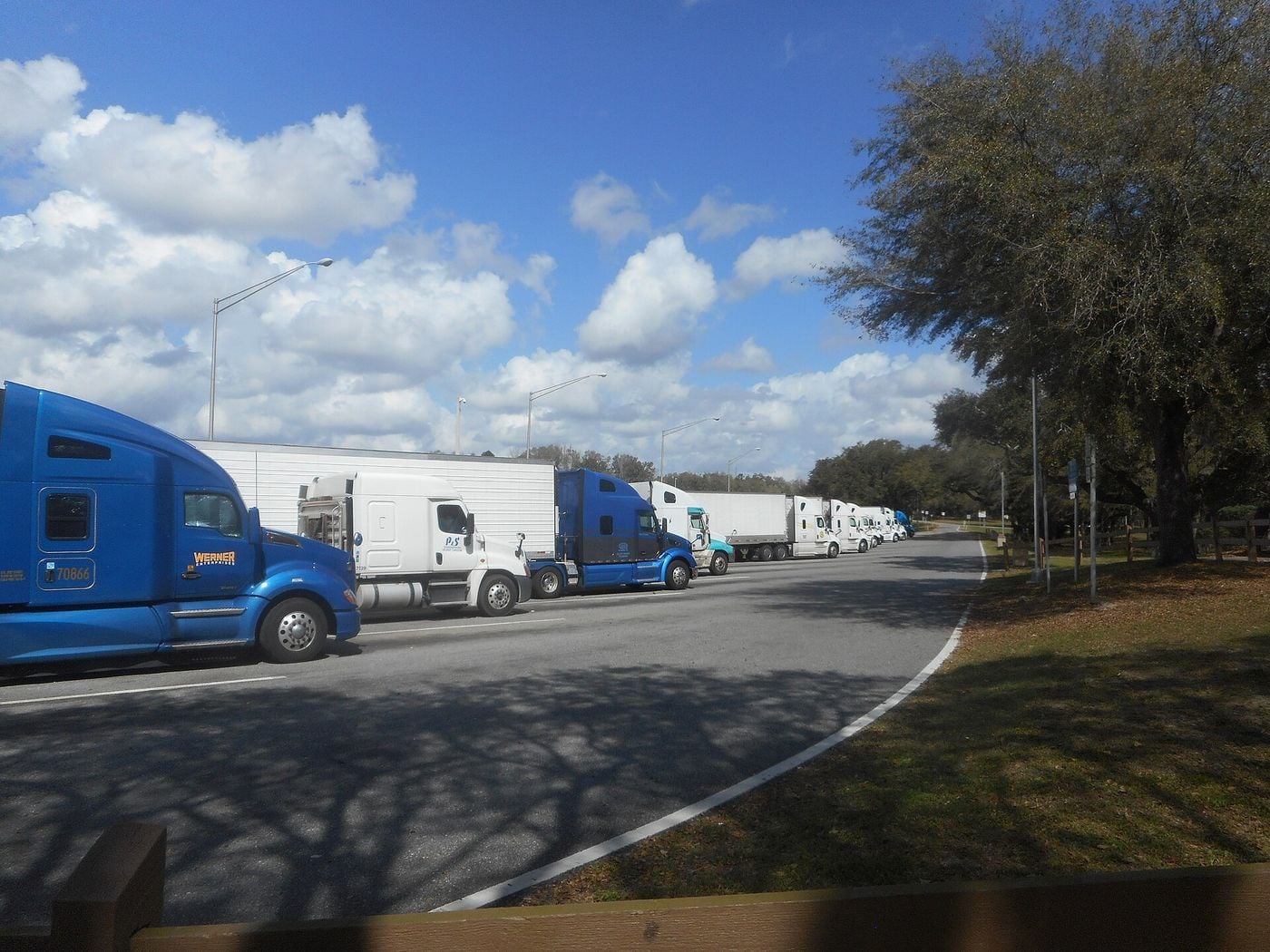
In California, a diesel-fueled truck or bus with a gross vehicle weight rating over 10,000 pounds may not idle for more than 5 consecutive minutes at any location, and a diesel auxiliary power system on it may not run for more than 5 minutes within 100 feet of property zoned for homes, schools, hotels, motels, hospitals, senior care facilities or child care facilities. The rule is the state’s Airborne Toxic Control Measure in title 13, section 2485 of the California Code of Regulations, and it applies to vehicles based outside California too. The two federal provisions on this page concern the equipment used instead of the engine: 23 U.S.C. 127 raises the Interstate System weight limits of vehicles with idle reduction technology by up to 550 pounds, and 26 U.S.C. 4053(9) exempts idling reduction devices from the tax imposed by section 4051, one of the Internal Revenue Code’s retail excise taxes, in its subchapter on heavy trucks and trailers.
Status: 14 November 2026. Read on that day: 23 U.S.C. 127 and 26 U.S.C. 4053 in the 2024 edition of the United States Code on govinfo; 23 CFR 658.17 in the annual edition of the Code of Federal Regulations revised as of April 1, 2025, on govinfo; the text of 13 CCR 2485 that the California Air Resources Board (CARB) links from its program page, which includes the amendment filed on December 22, 2021 and operative April 1, 2022, together with that program page; and EPA’s SmartWay Verified List of Idling Reduction Technologies, last updated on April 15, 2026. Idling rules of other States and of cities and counties are not covered.
| Item | What the text says | Source |
|---|---|---|
| California idling limit | No more than 5 consecutive minutes at any location | 13 CCR 2485(c)(1)(B)1 |
| Vehicles covered in California | Diesel-fueled commercial motor vehicles over 10,000 pounds GVWR that are or must be licensed for highways, California-based or not | 13 CCR 2485(b)(1) |
| Diesel APS near a restricted area | No more than 5 minutes within 100 feet | 13 CCR 2485(c)(1)(B)2 |
| Federal weight allowance, statute | Not greater than 550 pounds | 23 U.S.C. 127(a)(12)(B) |
| Federal weight allowance, regulation | Up to 400 lbs., or the certified weight if that is less | 23 CFR 658.17(n), 2025 edition |
| Federal excise tax | No section 4051 tax on idling reduction devices sold or installed after October 3, 2008 | 26 U.S.C. 4053(9); Public Law 110-343, section 206(b) |
| SmartWay technology types | APU/GS, BAC, EPS/TSE, FOH aka DFH, TSS | EPA SmartWay list |
What counts as idling and as idle reduction technology
The California rule defines idling as the state in which “the vehicle engine is running at any location while the vehicle is stationary” (13 CCR 2485(h)(12)). It defines two of the alternatives to idling:
- Auxiliary power system (APS): a device “permanently dedicated to the vehicle” that provides electrical, mechanical or thermal energy to the primary diesel engine, the truck cab or sleeper berth, a bus’s passenger compartment or another commercial vehicle’s cab, “as an alternative to idling the primary diesel engine” (section 2485(h)(3)).
- Fuel-fired heater: “a fuel burning device that creates heat” to warm the cab or sleeper berth, or to warm the engine oil or coolant for easy start-up, and that does not contribute to the propulsion of the vehicle (section 2485(h)(9)).
Section 2485(c)(3)(C) names other technologies that reduce idling emissions: batteries, fuel cells, power inverter/chargers for on-shore electrical power, on-shore electric power infrastructure “also known as truck stop electrification”, and other technologies that produce minimal or no emissions. Apart from battery and fuel cell powered APSs, power inverter/chargers and electric power infrastructure, such technologies need advance approval from CARB’s Executive Officer and must be at least as effective in reducing idling emissions as the internal combustion APSs described in subsection (c)(3)(A) or the NOx idling emission standard of 13 CCR 1956.8(a)(6)(C).
The federal tax provision describes an idling reduction device as a device or system “designed to provide to a vehicle those services (such as heat, air conditioning, or electricity) that would otherwise require the operation of the main drive engine” while the vehicle is temporarily parked or remains stationary (26 U.S.C. 4053(9)(A)).
The SmartWay technology types
EPA’s SmartWay list shows the idling reduction technologies verified for long-haul Class 8 trucks equipped with sleeper cabs and for school buses. It names five technology types; each row of the list gives the type, the company and, where provided, the model.
| Type | Name in the list | Verified for |
|---|---|---|
| APU/GS | Auxiliary Power Units and Generator Sets | Trucks |
| BAC | Battery Air Conditioning Systems | Trucks |
| EPS/TSE | Electrified Parking Spaces/Truck Stop Electrification | Trucks |
| FOH aka DFH | Fuel Operated Heaters aka Direct Fired Heaters | Trucks and school buses |
| TSS | Thermal Storage Systems | Trucks |
The sleeper cab and the other US cab and tractor terms are set out in 18-wheeler, bobtail, cabover and other US truck terms.
How much extra weight is allowed for idle reduction technology?
The statute and the regulation give different figures. 23 U.S.C. 127(a)(12)(A) provides that, “in order to promote reduction of fuel use and emissions because of engine idling”, the maximum gross vehicle weight limit and the axle weight limit of a heavy-duty vehicle equipped with idle reduction technology “shall be increased by a quantity necessary to compensate for the additional weight of the idle reduction system.” Subparagraph (B) caps the increase: it “shall be not greater than 550 pounds.” On request by a regulatory or law enforcement agency, the operator must prove, through demonstration or certification, that the technology is fully functional at all times and that the 550-pound increase is used for nothing else (subparagraph (C)).
Paragraph (12) was added to section 127 by Public Law 109-58 of August 8, 2005. Section 1510 of Public Law 112-141 replaced “400” with “550”, effective October 1, 2012.
23 CFR 658.17(n), in the 2025 annual edition of the Code of Federal Regulations, still provides that a vehicle using “an auxiliary power or idle reduction technology unit” may be allowed “up to an additional 400 lbs. total in gross, axle, tandem, or bridge formula weight limits.” The operator must be able to prove the weight of the APU by written certification and show, by demonstration or certification, that the technology is fully functional at all times; the certification must be available to law enforcement officers if the vehicle is found in violation of weight laws, and “the additional weight allowed cannot exceed 400 lbs. or the weight certified, whichever is less.” The last amendment listed in the section’s source note is 72 FR 7748 of February 20, 2007.
How these allowances sit beside the 80,000-pound gross limit, the axle limits and the bridge formula on the Interstate System is set out in how much a semi-truck weighs.
California’s five-minute idling limit
CARB’s program page gives the history of the measure: adopted on July 22, 2004, then amended on October 20, 2005, October 19, 2009, December 12, 2013 and September 9, 2021. In the page’s words it applies to drivers of diesel-fueled commercial motor vehicles with gross vehicle weight ratings greater than 10,000 pounds, “including buses and sleeper berth equipped trucks”, and also requires owners and motor carriers that own or dispatch these vehicles to ensure compliance.
Section 2485(b) covers diesel-fueled commercial motor vehicles that operate in California, both California-based and non-California-based, and the alternative idle reduction technologies installed on them. A zero emission vehicle, and a pickup truck as defined in California Vehicle Code section 471, are excluded from the rule’s definition of a commercial motor vehicle (section 2485(h)(6)).
From January 1, 2015, section 2485(c)(1)(B) applies to any person that owns, operates or causes to operate a vehicle subject to the rule:
- “No vehicle subject to this section shall idle for more than 5 consecutive minutes at any location.”
- “No diesel-fueled APS subject to this section shall be operated for greater than 5 minutes at any location when within 100 feet of a restricted area.”
A restricted area is “any real property zoned for individual or multifamily housing units, schools, hotels, motels, hospitals, senior care facilities or child care facilities, that has one or more of such units on it” (section 2485(h)(21)). Subsection (c)(1)(A), which applied from February 1, 2005 through December 31, 2014, set the same 5.0-minute and 100-foot limits for the driver and tied the APS limit to its use “during sleeping or resting in a sleeper berth”. Until January 1, 2008, the rule also let the primary engine idle to power a heater, air conditioner or other equipment during sleeping or resting in a sleeper berth, except within 100 feet of a restricted area (section 2485(d)(2)(B)). How sleeper berth periods count under the federal driving limits is set out in hours of service rules for truck and bus drivers.
On request, the driver must give authorized enforcement personnel the driver’s license, the vehicle registration and the motor carrier’s information; a motor carrier that dispatches a vehicle must give the driver its business name, street address, state and zip code, and the name and business phone number of a contact person (section 2485(c)(1)(C) and (D)). The rule may be enforced by CARB, by peace officers and by the air pollution control or air quality management districts (section 2485(f)). For violations before January 1, 2015, section 2485(g) sets a minimum civil penalty of 300 dollars for the driver; for violations on or after that date it refers to the penalties of a list of Health and Safety Code sections.
Exceptions
Except within 100 feet of a restricted area, the 5-minute limit does not apply to a vehicle whose primary diesel engine meets the optional NOx idling emission standard of 13 CCR 1956.8(a)(6)(C) and that carries the corresponding label (section 2485(d)(1)). Under section 2485(d)(2), subsection (c)(1) also does not apply during the periods when:
- a bus idles for up to 10.0 minutes before passenger boarding, or when passengers are onboard;
- the vehicle must remain motionless because of traffic, an official traffic control device or signal, or at the direction of a peace officer;
- the vehicle is queuing and at all times beyond 100 feet from any restricted area;
- the vehicle is forced to remain motionless by immediate adverse weather affecting safe operation, or by mechanical difficulties the driver cannot control;
- idling is mandatory to verify that the vehicle is in safe operating condition as required by law, or for testing, servicing, repairing or diagnostic purposes, including regeneration or maintenance of the exhaust emission control device during engine idling when the dashboard indicator light, if so equipped, shows that regeneration or maintenance is in progress;
- the primary diesel engine powers equipment through a power take-off or equivalent mechanism, for example to control cargo temperature or operate a lift, crane, pump, drill, hoist or mixer;
- defrosters, heaters, air conditioners or other equipment run solely to prevent a safety or health emergency;
- an authorized emergency vehicle, an armored car or a workover rig is doing the work it is designed for, or a military tactical vehicle is in training, testing or deployment;
- a wheelchair or people assist lift is operated as prescribed by the Americans with Disabilities Act.
Section 2485(e) adds that nothing in the rule allows idling in violation of other applicable law, naming among others California Vehicle Code section 22515, title 13 CCR section 2480 and any ordinance or rule as stringent or more stringent.
Engine shutdown on newer engines
Under CARB’s new engine requirements, as its program page describes them, “2008 and newer model year heavy-duty diesel engines need to be equipped with a non-programmable engine shutdown system that automatically shuts down the engine after five minutes of idling or optionally meet a stringent oxides of nitrogen idling emission standard.”
APUs and fuel-fired heaters under the California rule
The requirements for the alternatives depend on the model year of the primary engine:
- Engines of 2007 and later. An internal combustion APS must meet California off-road or federal nonroad emission standards for its fuel type and power category. A diesel APS must also either have a verified Level 3 in-use strategy for particulate matter control, or have its exhaust routed into the vehicle’s exhaust pipe upstream of the diesel particulate matter aftertreatment device, or be certified to a 0.02 g/kW-hr PM emission standard (section 2485(c)(2)(D)1 and (c)(3)(A)); the third option was added by the amendment filed on December 22, 2021 and operative April 1, 2022. The vehicle needs a label on the hood to operate the APS in California (section 2485(c)(3)(D)).
- Fuel-fired heaters on vehicles with 2007 and later engines may be operated in California only if they meet the California emission standards and test procedures of the Low Emission Vehicle program (section 2485(c)(2)(D)2 and (c)(3)(B)). Subsection (c)(3)(B) adds: “However, the specified requirement that limits fuel-fired heaters from being operated above 40°F does not apply.” CARB’s program page states that these heaters must meet the Ultra-Low Emission Vehicle requirements, effective beginning in 2008.
- Engines of 2006 and earlier. Any internal combustion APS with a California or federally certified off-road engine, or any other certified alternative idle reduction technology, may be installed and operated, and is exempt from the requirements of subsection (c)(3) (section 2485(c)(2)(D)3).
The federal excise tax exemption for idling reduction devices
Section 4053 of the Internal Revenue Code, in the subchapter on retail excise taxes on heavy trucks and trailers, begins: “No tax shall be imposed by section 4051 on any of the following articles”. Paragraph (9) lists any device or system of devices which:
- is designed to provide services such as heat, air conditioning or electricity that would otherwise require the operation of the main drive engine while the vehicle is temporarily parked or remains stationary, “using one or more devices affixed to a tractor”; and
- “is determined by the Administrator of the Environmental Protection Agency, in consultation with the Secretary of Energy and the Secretary of Transportation, to reduce idling of such vehicle at a motor vehicle rest stop or other location where such vehicles are temporarily parked or remain stationary.”
Public Law 110-343 of October 3, 2008 added paragraph (9), together with paragraph (10) on advanced insulation with an R value of not less than R35 per inch. The amendment applies “to sales or installations after the date of the enactment of this Act”, that is after October 3, 2008.
What this page does not cover
- Idling laws of other States, counties and cities, and the other California provisions that section 2485(e) names.
- The rate of the section 4051 tax, and which devices EPA has determined to qualify under section 4053(9).
- CARB’s periodic emissions testing of heavy-duty vehicles, a separate program described in Clean Truck Check.
- Equipment choice, prices, fitting and the operation of individual products.
Quick answers
- How long can a truck idle in California?
- No more than 5 consecutive minutes at any location. The limit in 13 CCR 2485(c)(1)(B) applies to diesel-fueled commercial motor vehicles with a gross vehicle weight rating over 10,000 pounds that operate in California, whether or not they are based there, including buses and sleeper berth equipped trucks. Section 2485(d) lists the exceptions, such as idling in traffic, for a power take-off or because of adverse weather.
- How much extra weight is allowed for an APU or other idle reduction technology?
- Up to 550 pounds under 23 U.S.C. 127(a)(12), which raises the Interstate System gross and axle weight limits of a heavy-duty vehicle with idle reduction technology by the weight of the system. The 550 pounds replaced 400 pounds through section 1510 of Public Law 112-141, effective October 1, 2012. 23 CFR 658.17(n), in the 2025 edition of the Code of Federal Regulations, still allows up to 400 pounds, or the certified weight of the unit if that is less.
- Can a driver run a diesel APU while resting in the sleeper berth in California?
- Within 100 feet of a restricted area, for no more than 5 minutes: 13 CCR 2485(c)(1)(B)2 says no diesel-fueled auxiliary power system may be operated for more than 5 minutes at any location within 100 feet of a restricted area, which section 2485(h)(21) defines as property zoned for housing, schools, hotels, motels, hospitals, senior care or child care facilities with one or more such units on it. On a vehicle with a 2007 or later primary engine the APS must also meet the rule's emission requirements, including particulate matter control for a diesel APS, and the vehicle must carry a label.
- Does California's idling limit apply to buses?
- Yes, to diesel-fueled buses with a gross vehicle weight rating over 10,000 pounds: CARB names buses among the vehicles covered. Section 2485(d)(2)(A) lets a bus idle for up to 10 minutes before passenger boarding, and when passengers are on board.
- What idle reduction technologies does EPA SmartWay verify?
- The SmartWay list names five technology types: auxiliary power units and generator sets (APU/GS), battery air conditioning systems (BAC), electrified parking spaces or truck stop electrification (EPS/TSE) and thermal storage systems (TSS) for trucks, and fuel operated heaters, also called direct fired heaters (FOH aka DFH), for trucks and school buses.
- Are idle reduction devices exempt from the federal retail excise tax on heavy trucks?
- 26 U.S.C. 4053(9) says no tax under section 4051 is imposed on an idling reduction device: a device or system designed to provide services such as heat, air conditioning or electricity that would otherwise require the operation of the main drive engine while the vehicle is temporarily parked or remains stationary, using one or more devices affixed to a tractor, and that EPA, in consultation with the Secretaries of Energy and Transportation, determines to reduce idling. The exemption applies to sales or installations after October 3, 2008.
Sources
- 23 U.S.C. 127 — Vehicle weight limitations—Interstate System (United States Code, 2024 Edition) — U.S. Government Publishing Office (govinfo)
- 23 CFR 658.17 — Weight (Code of Federal Regulations, annual edition revised as of April 1, 2025) — Federal Highway Administration (Code of Federal Regulations, govinfo)
- California Code of Regulations, title 13, section 2485 — Airborne Toxic Control Measure to Limit Diesel-Fueled Commercial Motor Vehicle Idling (text published by CARB, with the amendment operative April 1, 2022) — California Air Resources Board
- Airborne Toxic Control Measure to Limit Diesel-Fueled Commercial Motor Vehicle Idling — About (program page, read November 14, 2026) — California Air Resources Board
- SmartWay Verified List of Idling Reduction Technologies (IRTs) for Trucks and School Buses (last updated April 15, 2026) — U.S. Environmental Protection Agency
- 26 U.S.C. 4053 — Exemptions (United States Code, 2024 Edition) — U.S. Government Publishing Office (govinfo)